(800) 728 8391



Running a virtual open house has become a popular way to showcase a property in 2026. Buyers expect flexible, convenient options, and many prefer to explore homes online before they ever step through the front door.
Zillow found that 59% of millennials would feel confident making an offer after a virtual tour, and 39% would even buy a home online without visiting in person.
And the perks don’t stop there. Clients who request a second viewing often start with a virtual tour. Others will realize quickly that the home isn’t for them–saving everyone time.
So, how does virtual open house work in practice? In this guide, you’ll learn the answer along with benefits, challenges, step-by-step instructions, and common mistakes to avoid.
By the end, you’ll be ready to host real estate events that drive more bids to your listings.
What is a virtual open house?
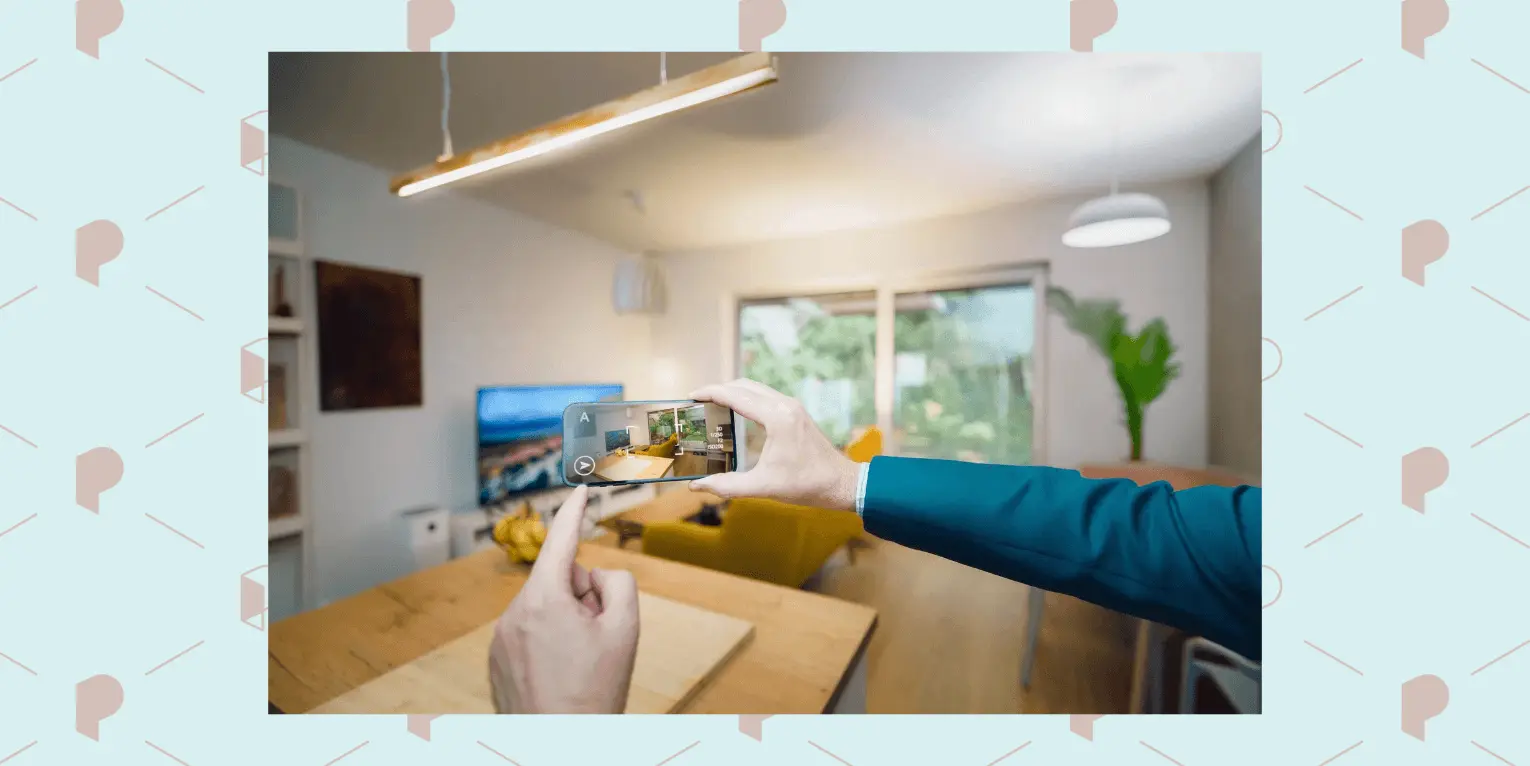
A virtual open house, or VOH in short, is a live or pre-recorded online version of a traditional home showing. You film a walk-through so viewers can see every room, ask questions, and get a feel for the property without an in-person visit.
Virtual open houses became popular in 2020, when pandemic restrictions limited traditional showings. Since then, they’ve evolved into a popular tool for modern real estate marketing.
The idea is simple: bring the property to the buyer. Agents usually host these events through video platforms, real estate apps, or social media (we’ll discuss this further in the article). Sessions can last from 10 to 40 minutes, depending on house size and audience engagement.
Don’t confuse a VOH with a virtual viewing. A virtual viewing is a one-on-one video call tailored to a single client. A virtual open house is more like an event you prepare in advance, where multiple prospective buyers join at the same time.
What are types of virtual open house?
There are three main types of virtual open house events you’ll see in 2026: live, pre-recorded, and 3D/VR tours. Depending on the option, you may need to plan for different tools, time, and budget.
Luxury agents often lean toward high-end 3D/VR tours, while investment-focused agents may prefer efficient pre-recorded formats. Other agents might mix approaches to match their market and audience.
Here are the details for each type of a virtual open house:
Live video open house event
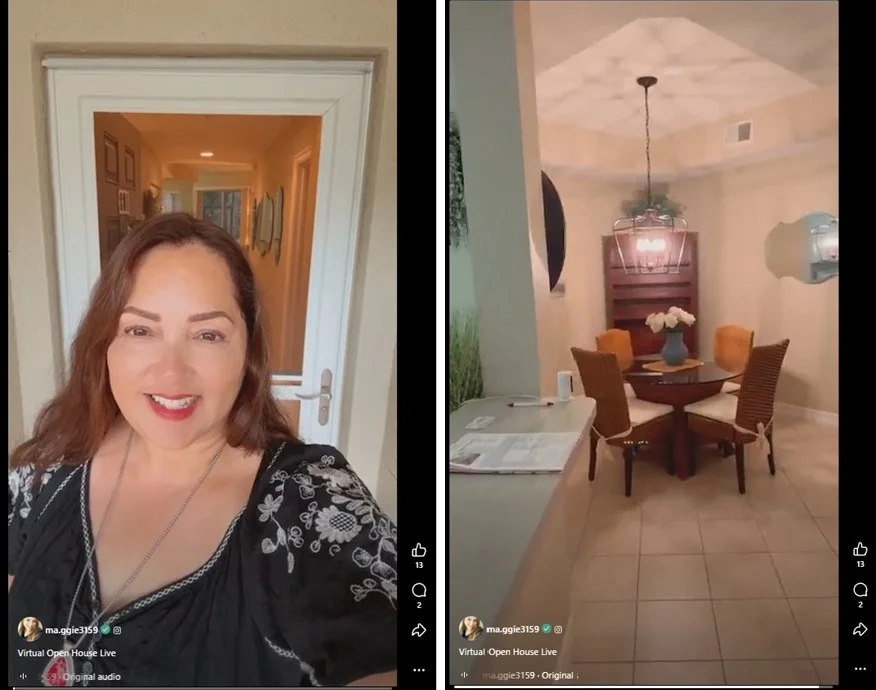
A live tour means the agent streams a walk-through of the property in real time. Viewers join, watch, and ask questions as the tour happens. It’s the closest you can get to an in-person showing.
The challenge is managing many people at once. Questions can overlap and slow the pace. And since attendees can’t move around on their own, you sometimes need to revisit certain rooms or features if someone joins late or asks again.
Barrier to entry: Low – a smartphone with a good camera (HD or 4K) is usually enough.
Example: Maggie Negron, Realtor
Pre-recorded video walkthrough
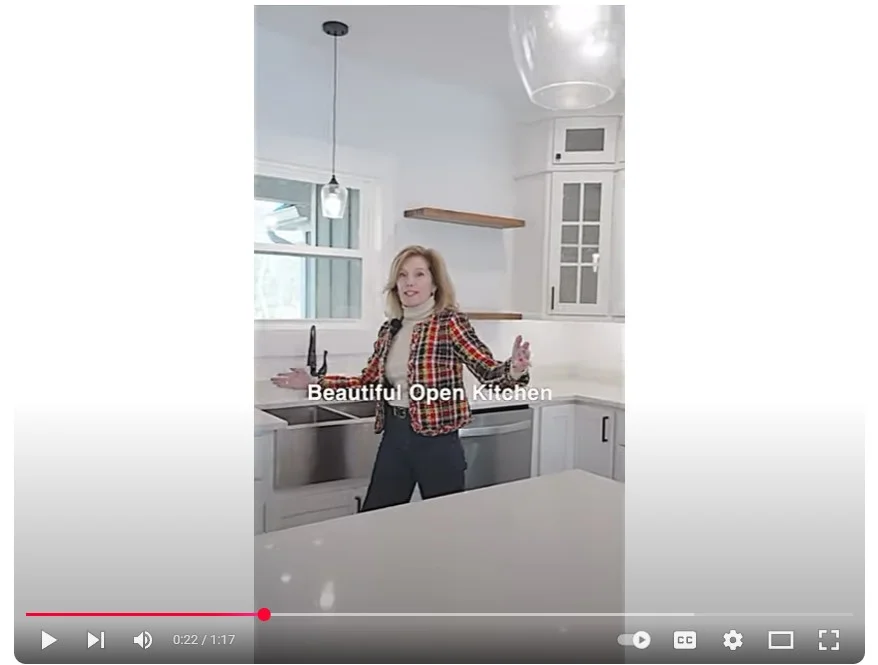
Pre-recorded tours give you more control over how the space is shown. You film in advance, so you can take your time capturing the best angles, editing the footage, and adding captions to highlight key features. There’s no pressure of a live stream, and you can re-record until it looks right.
Many agents publish the video at a scheduled time and pair it with a chat or Q&A.
This way, potential clients and customers watch the walkthrough while still being able to ask questions.
On their own, pre-recorded tours can feel less engaging since potential buyers don’t interact in real time.
Barrier to entry: Medium – you’ll need a smartphone and editing software (although this can be basic).
Example: Kelly Daniele of CC Cenderelli
24/7 access 3D or VR tours
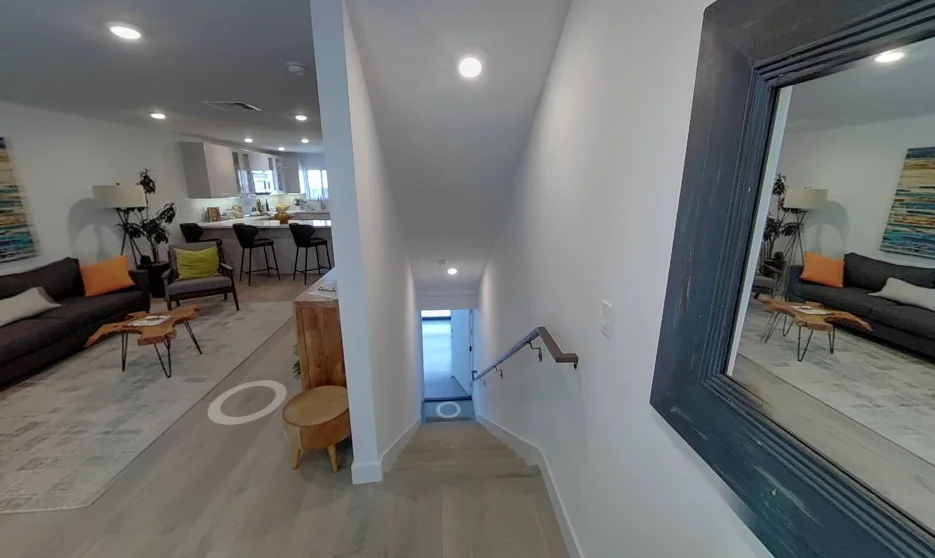
3D and VR home tours are digital models of a property created with 360° cameras or specialized software. Potential clients can access them anytime and explore on their own.
In 3D tours, it’s the users who control the experience. They can click, drag, zoom in on details, and move through each room at their own pace.
VR tours (virtual reality tours) take house hunting to another level. With a VR headset, anyone can ‘step inside’ the property and look around as if they were physically there. This immersive tech gives buyers freedom to explore and helps them imagine living in the home.
However, unless you pair with a live session, interaction with users is limited. It’s harder to gather feedback or track engagement compared to video platforms.
Barrier to entry: High – you’ll need a 3D/360° camera or a professional service to capture and process the tour.
Example: Gary King of Commercial Development Group
Expert tip
If you want to take your 3D /VR tours up a notch, pair them with virtual staging. With software like BoxBrownie or roOomy, you can digitally add furniture or décor to empty rooms. It’s faster and cheaper than traditional staging, and it helps potential clients imagine how the space could look once it’s lived in.
Also, keep in mind that 37% of buyers say the living room is the most important space to stage (NAR report, 2025). It’a a smart place to focus your virtual staging efforts.
Why should you run virtual open houses? 6 Benefits
Virtual open houses are convenient for all three parties involved: buyers, sellers, and agents.
On the buyer’s side, many like being able to revisit a house multiple times before making a decision. Since home buying is an emotional process, home visits can feel overwhelming. Virtual tours give buyers space to slow down, review details, and compare options without feeling rushed.
On the seller’s side, VOHs reduce the hassle of constant showings. Families don’t have to worry about keeping their home spotless every day, and only serious clients make it to in-person visits. That means fewer disruptions and less stress.
For agents, one virtual event can replace several house showings. It also saves you the hassle of prepping snacks, printing flyers, or ordering business cards.
Let’s see what other benefits come from running virtual open houses.
Save time for everyone
You don’t need to prepare multiple in-person showings. One well-organized virtual event lets many buyers see the property at once, saving hours of scheduling and back-and-forth.
As Bartek Drozdz, cofounder of Kuula, explains:
“In L.A., with the traffic, you have to drive for an hour to see a house you don’t like the moment you walk in.”
Virtual tours cut out that wasted time by letting house hunters filter properties more efficiently and focus only on the ones they’re truly interested in.
Reach more buyers
A traditional open house limits how many people can walk through the door. With an online event, your reach is unlimited. At the same time it takes to host one traditional showing, you could attract hundreds of online viewers.
The extra exposure brings in more leads and shows you’re keeping up with marketing trends. It means more chances of selling and gives you a strong advantage as the agent.
Meet out-of-town, busy or homebound buyers
Virtual tours are extremely helpful for people who can’t visit in person. Out-of-town clients, renters, and companies can explore an estate without traveling. Bidders from other cities, or even other countries, can join, increasing your chances of finding high-quality leads.
They also make home shopping more accessible for people with disabilities, who may find in-person showings difficult or inconvenient.
Capture leads more effectively
VOHs are powerful lead-generation tools. Agents and realtors can collect accurate contact details during registration, then track attendance and engagement to make follow-up easier.
Even if buyers decide this property isn’t the right fit, you can keep the relationship alive by sending them updates on similar listings.
>> Additional read: Real Estate Marketing Automation: Ultimate Guide
Reuse and repurpose the recording
A recording of your open house becomes a valuable marketing asset. You can share clips on social media, your real estate website, or email campaigns to attract more interest.
Plus, having reusable video content saves time compared to creating new marketing materials from scratch.
Stand out from the competition
Hosting an online walkthrough will set you apart in the competitive real estate market. Especially if you add extras like branded elements and interactive navigation. It shows buyers you’re a modern and dedicated agent. Sellers will be impressed too, since using innovative tools reflects well on your professionalism.
What are key challenges to tackle when organizing virtual open houses?
Virtual open houses usually take less money and effort than traditional events. However, it’s worth knowing the tricky parts in advance to ensure you run smoother events.
Time investment in learning
The first few events can feel overwhelming. You’ll need to learn the platform, test equipment, and figure out the best way to present. It gets easier with practice, but expect a learning curve in the beginning.
Capturing a high-quality recording
A weak internet connection, poor sound, or shaky video can spoil the experience. Buyers won’t stick around if they can’t follow the tour.
Engagement
It’s harder to hold attention on a screen than in a living room. If you don’t interact, viewers will tune out halfway through.
Trust gap
Some buyers still trust in-person visits more than online ones. Your role is to build confidence with clear visuals and honest answers.
How to host virtual open house? 8 Steps for success
A virtual open house works best when you treat it like a real event. You don’t need to set out snacks or bake cookies, but you do need to plan ahead, prepare your setup, and keep buyers engaged. It may sound technical at first, but it’s very doable once you know the right steps.
Let’s walk through the actions that will help you host a professional and effective virtual open house in 2026.
Step 1. Choose the right listing and talking points
Pick a listing that will benefit most from extra visibility. Perfect candidates for a VOH are luxury properties, homes in high-demand neighborhoods, or listings likely to attract out-of-town buyers. These properties often generate considerable engagement and can move faster when marketed online.
Also, properties with bright spaces, clean layouts, and eye-catching details can make a strong impression. Highlight features that buyers will want to see up close, such as updated kitchens, spacious living areas, or stunning outdoor spaces.
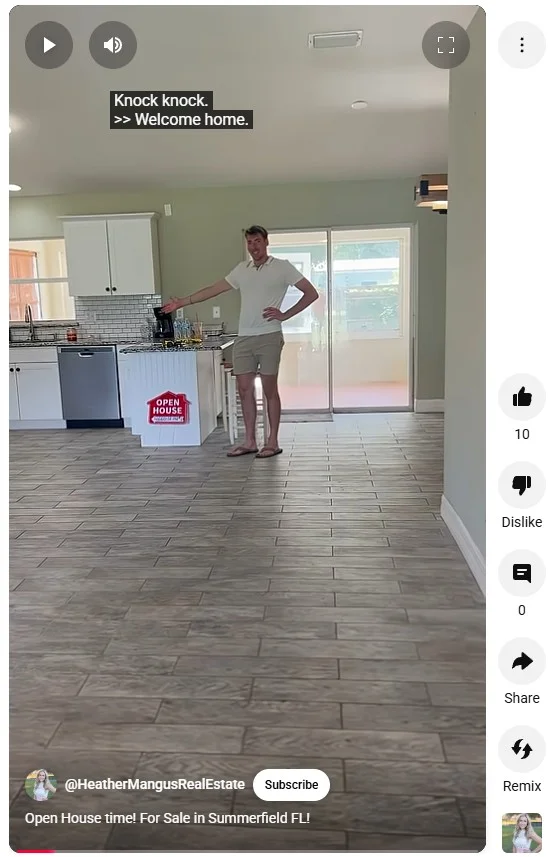
Next, prepare a script to guide your tour. Include the details buyers usually ask about, like recent upgrades, heating systems, roofing, and any unique selling points. A script helps you stay on track and deliver the tour with confidence.
Highlight a few key features in each room. It’ll make the home easier to remember and help buyers stay engaged throughout the tour.
>> You may also like: How To Find Off-Market Properties? 18 Insider Tips
Step 2. Schedule for the best time
Traditional open houses usually take place on weekends, when most buyers are free to visit in person. Stick to the same idea for your virtual event. Late afternoons on a weeknight can also work well for when people are home from work.
Plan around natural light to show the space at its best. Bright daylight makes interiors feel warm and inviting. If the home has a special feature, like a sunset view over the ocean, schedule your shoot to capture it.
Pre-recorded tours give you more options. You can share them anytime, but if you plan to host a live Q&A, you still should schedule when convenient for your target audience.
Step 3. Choose your platform
The platform you choose will shape the entire experience, so it’s worth knowing your options:
- Zoom is simple and interactive. You can share your screen, invite large groups, and record the session for later use. It’s great for more formal events or when you want detailed lead tracking.
- Google Meet works well for real-time tours as well. It’s easy to join with just a link, no downloads needed. The video quality is strong, and it handles bigger groups comfortably.
- FaceTime is best for smaller, more personal tours. You can connect with up to 32 participants, but you’ll need to invite them manually. Works well for private showings rather than large-scale events.
- Facebook Live, Instagram Live and TikTok Live are social media channels especially effective for reaching followers where they already spend time. The casual style encourages interaction, and your sessions can also be saved or clipped for future posts.
- YouTube works well if you want your event to have a longer shelf life. It’s great for search visibility, and your videos remain available for replay. It’s also a good choice if you plan to reuse content in your marketing.
- Virtual and AR platforms give buyers a more immersive experience. Tools like Matterport, EyeSpy360, and Kuula let you create 3D or VR tours that buyers can access anytime. They’re more advanced than simple livestreams, but they help your listing stand out and stay available whenever buyers want to look.
Different tools come with different advantages, so match the choice to your audience and the style of event you want.
>> More on this: 25 Expert Social Media Tips for Real Estate Agents
Step 4. Set up and test your tech
Technical problems can sink your event fast. Check your internet speed in advance. If the connection is weak, arrange a backup like a mobile hotspot to avoid interruptions.
Tool tip
Invest in a good-quality microphone so your voice comes through clearly. Poor sound can drive the participants away. A reliable camera or a modern smartphone works fine as long as the image is sharp and stable. Adding a tripod or gimbal gives your video a polished, professional look.
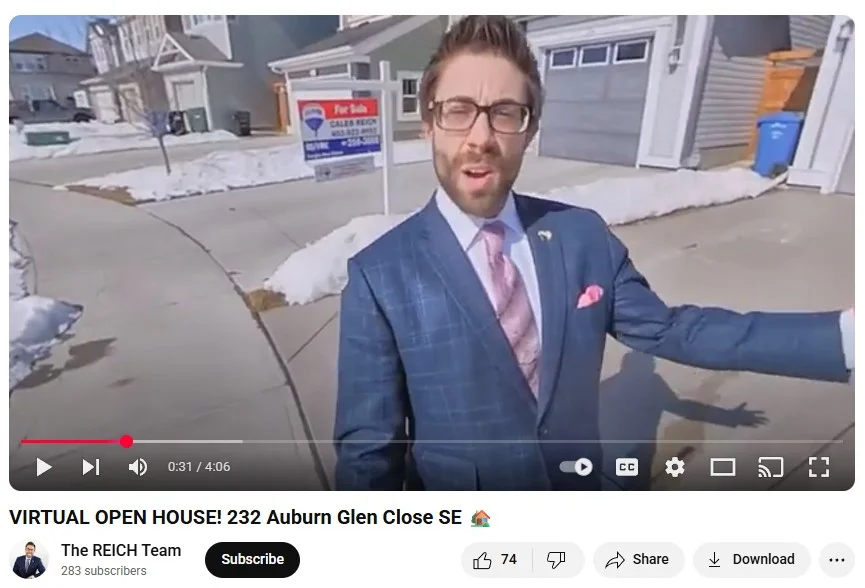
Here’s an example of an agent filming with an Insta360 ONE camera and an invisible selfie stick.
Do a full rehearsal before the event. Walk through the property, record a short clip, and watch it back. Pay attention to sound, lighting, and how steady the footage looks. A few minutes of testing now can save you from awkward surprises during the real event.
Step 5. Prepare the property
Arrive at least an hour prior to the event, so you have enough time to prep the house and get your tech set up. Even though buyers won’t be walking through in person, you still need to make sure every room looks bright and inviting.
→ Turn on lights.
→ Open window shades and blinds.
→ Pick up anything the sellers left out.
→ Hide anything unsightly.
Plan your route before going on air. Know which areas you’ll show first, where to stand, and how to transition smoothly between rooms.
Step 6. Promote your event
This is an extremely important step. For people to attend, you need to send invites, market your event, and basically get the word out there. Start promoting your virtual open house as soon as you’ve nailed down the date, time, and platform, ideally at least a week before.
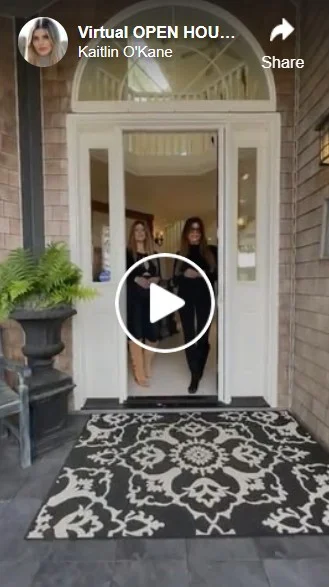
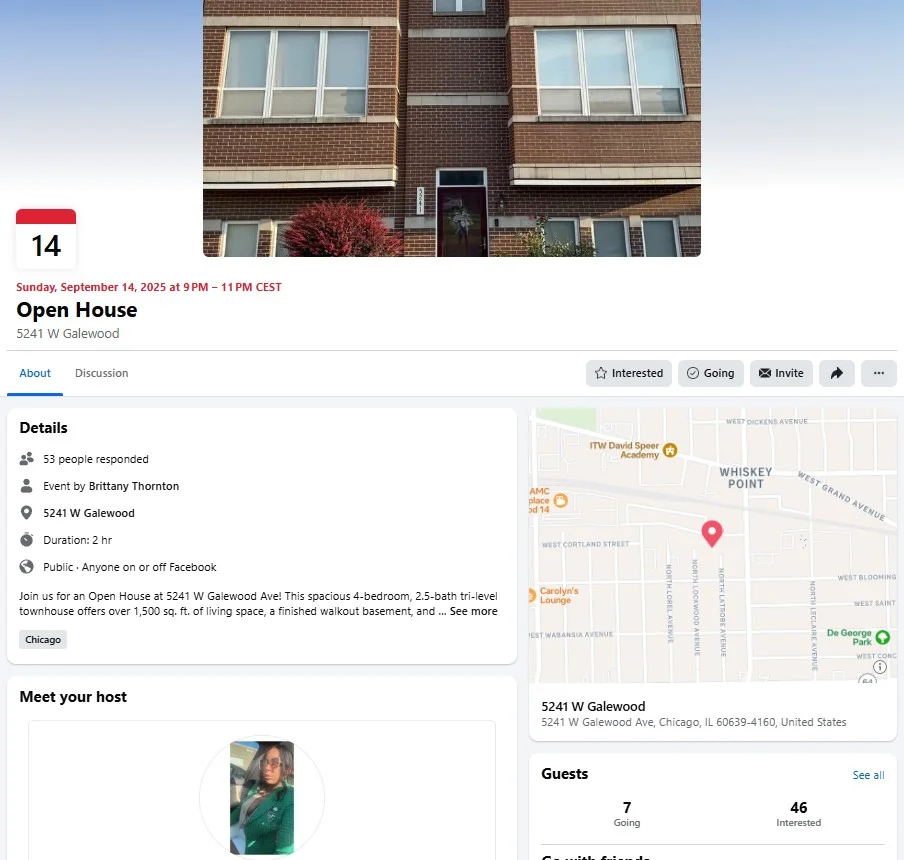
Many agents set up a Facebook Event and pin it to the top of their page. For example:
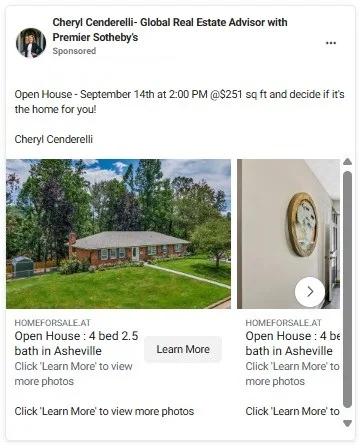
Consider advertising your open house through Meta ads if you need to reach fast. Promote the event post to local audiences and recent website visitors. Cap the budget and run it for five to seven days.
On Instagram, share posts and Stories with countdown stickers. On TikTok, you can post a teaser and mention the live date. If you’re reaching professionals or relocators, schedule a LinkedIn Event.
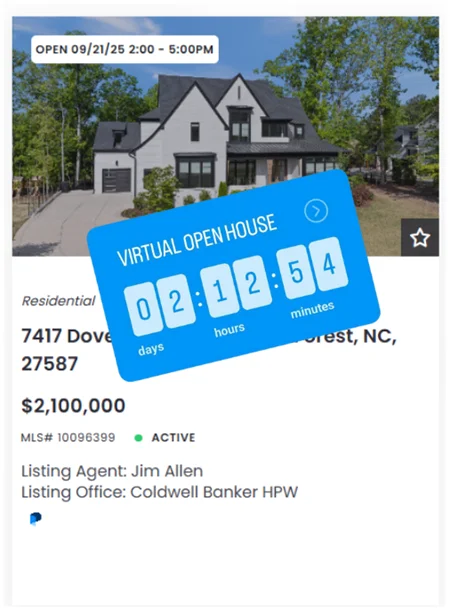
Update your MLS listing with the event date and registration link. Add a short note in the remarks so agents can pass it on.
Then make sure your own website highlights the event too, so house hunters see it directly from you.
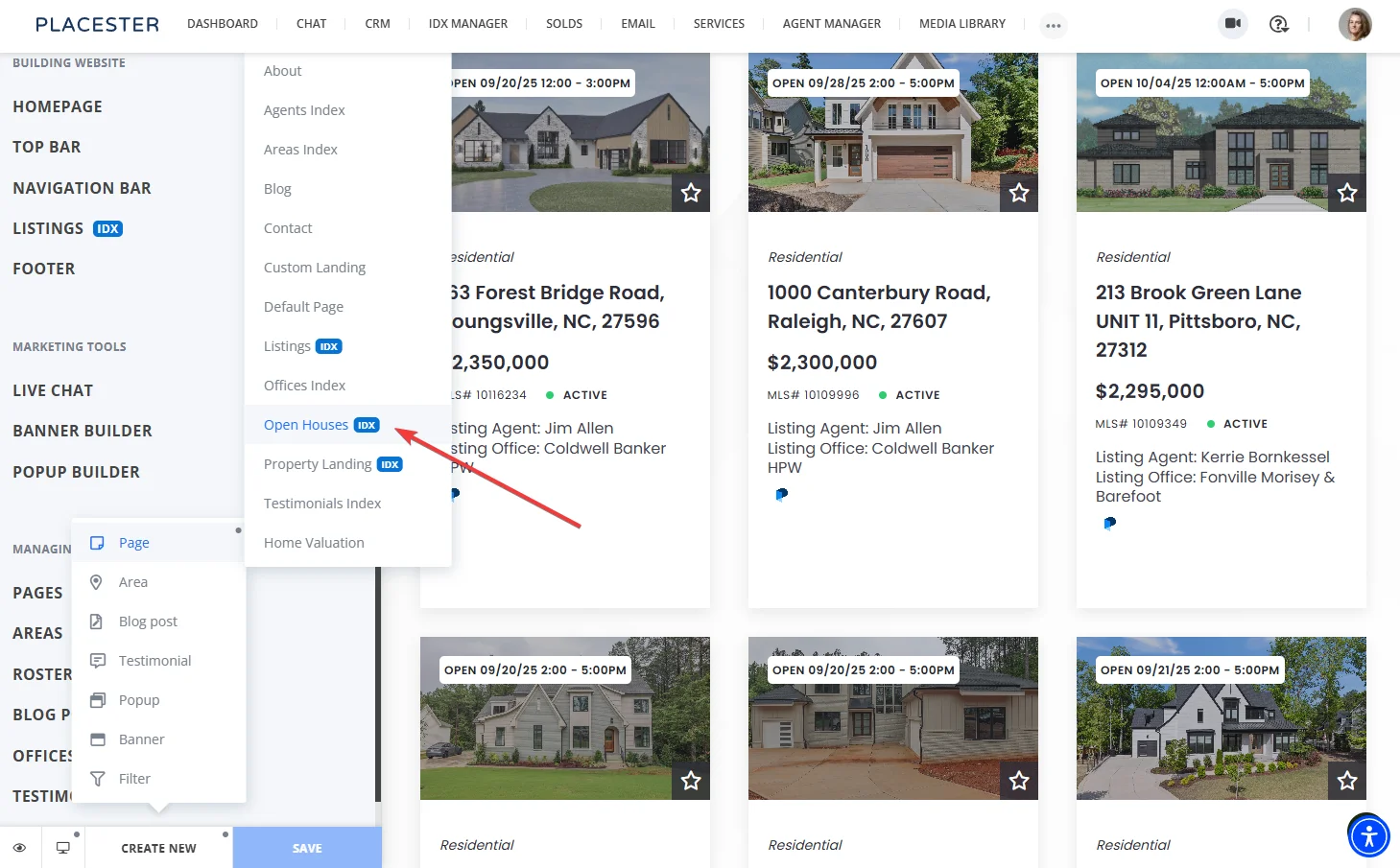
If your site runs on Placester with IDX, the ’Open Houses’ feature updates automatically from the MLS. That means once you’ve set it up, the event details stay accurate and in sync with MLS data, with no extra work on your end.
You can feature the event on your Placester website as a dedicated landing page to share with potential customers and add it to your navigation bar.
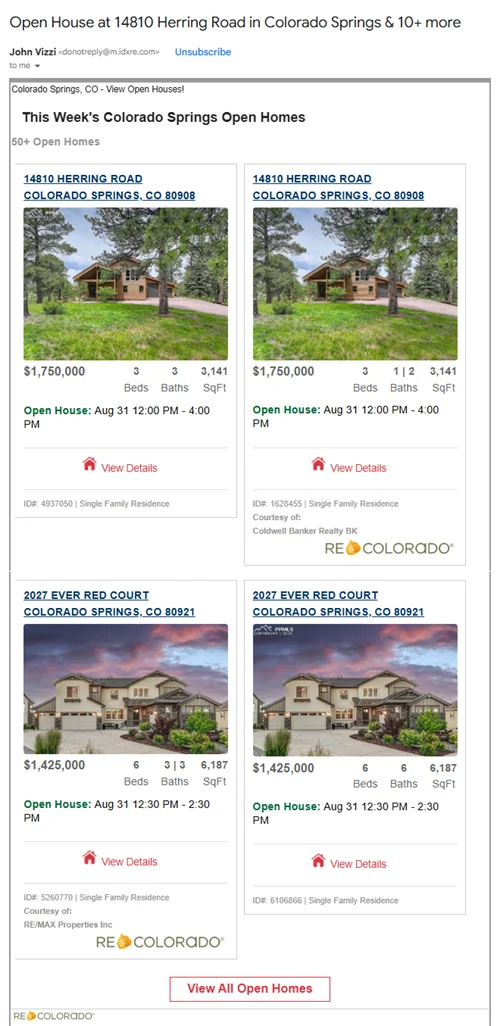
Email is another great way to boost attendance. Send your email list an invite with the registration link. For best results, follow this tested email sequence:
Send a ‘save the date’ 7–10 days out, then reminders 24 hours and 1 hour before.
Add an add to calendar option–most email tools support Google, Outlook, and Apple. A brief agenda also helps buyers know what to expect.
Expert tip
When promoting your event, ask followers to drop questions you’ll answer live. You’ll create anticipation, spark engagement, and make your open house feel more interactive from the very start.
>> More on email strategies: Real Estate Email Drip Campaign 101. Guide, Examples & Tips
Step 7. Host the open house
It’s the big day! After planning, prepping, and promoting, now it’s time to go live and show the property at its best.
Hosting online is similar to in-person, but a few details matter more. Keep an eye on the chat to catch questions quickly, since attendees can’t tap you on the shoulder. Pause longer on key features so viewers have time to process what they see on screen.
If you’re using extras like drone footage, floor plans, or a short slide deck with property details, weave them into the tour naturally. Let people know where they can find these resources afterward, so they stay engaged instead of scrambling for screenshots.
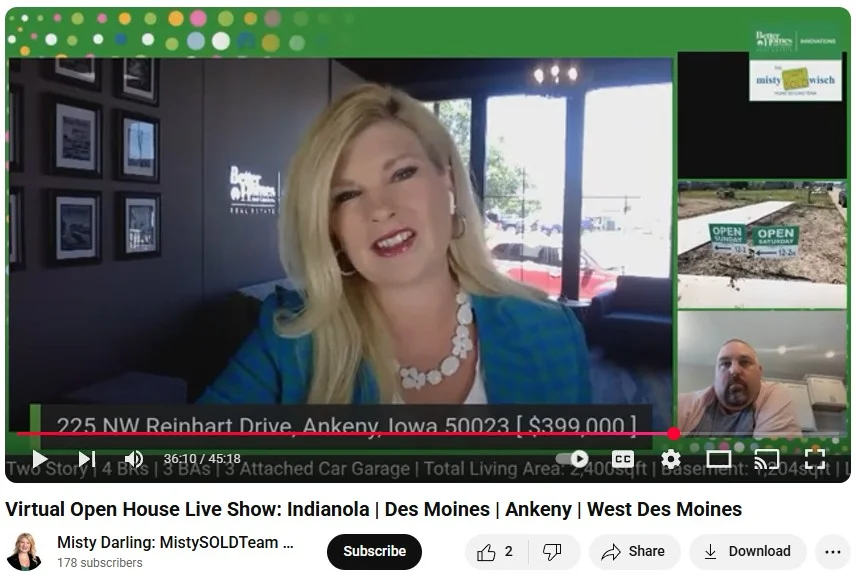
After the tour, set aside time to address questions or comments. If you’re recording it to send out later, provide more details about the property, the buying process, and any other relevant information.
Step 8. Follow up, and then follow up again
For agents, the work doesn’t stop after the event. It’s often the follow-ups that turn interest into signed contracts. In fact,
FitSmallBusiness found it takes 5-8 follow-ups on average to generate a conversion (2024 data).
As a must, send a thank-you email with the recording and extra property details to everyone who attended. Offer to schedule private showings for buyers who show strong intent.
Remember about those who signed up but couldn’t join. Share the recording with them, too. Some could still be interested once they’ve watched the tour.
Keep attendees in the loop. If the property status changes, for example, the price drops or the home goes under contract, send everyone a property update. It’s good service, and it keeps communication open for future opportunities, such as online or in-person open houses in similar locations.
If you’re mixing virtual and traditional open house formats, real estate apps like Open Home Pro help you stay organized. The app manages digital sign-ins when people arrive at your open house, and you can use it across the flow:
- During the event: Collect sign-ups and contact details digitally, so you always have accurate information.
- After the event: Send thank-you emails, share recordings, and invite interested buyers to book a private showing.
Finally, you can export your leads into a CRM to stay on top of them long term.
According to the NAR Technology Survey, 32% of Realtors said a CRM delivered one of the highest numbers of high-quality leads in the past 12 months.
When virtual open house doesn’t work? 6 Common mistakes
Even the best technology won’t save a dull presentation. Smile, stay natural, and keep the energy up–it makes a huge difference on camera.
Let’s look at common situations where online open house events don’t work:
1. When demand is already high
If a property is in a hot market and likely to sell quickly, a VOH is not necessary. Sometimes the fastest way to close is to skip the extra marketing and focus on serious offers right away.
2. Poor video or audio
Viewers won’t stay if they can’t see or hear you clearly. Low-quality equipment or weak internet is the fastest way to lose viewers.
A study by Brightcove found that:
62% of consumers form a negative perception of a brand after seeing poor-quality video.
In practice, this means bad video or audio doesn’t just frustrate viewers. It actively damages trust and reduces engagement.
3. Forgetting to interact
A one-way presentation feels dull. Ignoring comments or rushing through the tour makes viewers feel disconnected.
4. Overloading with details
Bombarding attendees with every technical fact about the property overwhelms them. Focus on highlights and let the attendees ask for specifics.
5. Weak promotion
A well-run event is pointless if no one attends. Skipping posting on social media networks or email reminders can leave you with little to no audience.
6. No follow-up
Failing to reach out after the event wastes your efforts. Without follow-up, you lose the chance to convert interest into real leads.
Expert Tip
Watch your own sessions. You’ll spot mistakes and improve faster.
Wrapping up
A virtual open house is a strong element of modern real estate marketing in 2026. It helps you save time, reach more high-quality leads, and position yourself as a tech-savvy agent.
To avoid unpleasant surprises, make sure you’re prepared. Decide on the right platform, test your setup, promote effectively, and always follow up. Avoid the common mistakes, and you’ll turn virtual tours into a reliable source of qualified leads.
Creating an unforgettable experience for your clients starts with your online presence. Choosing Placester is the fastest, easiest way for real estate professionals to launch beautiful, high-performing websites. Placester combines customization, automation, and support so you can focus on what matters most.
The payoff? Spend your time building real relationships with clients and hosting impressive virtual open houses.
Book a demo today.
Published on