(800) 728 8391


Quick summary:
- Real estate marketing materials help people find you, trust you or remember you.
- Digital materials do most of the heavy lifting, while print and trust-building pieces support local visibility and credibility.
- Your website should be the central hub, connecting listings, emails, social media, reviews and offline materials.
- Clear messaging, consistent branding and true storytelling make your marketing more effective and easier to recognize.
When you run your own real estate business, marketing efforts often fall to the bottom of the to-do list up until you need the next lead.
If you’re handling your own marketing as a real estate agent, you want two things. You want real estate marketing materials that are proven to work because other successful agents already use them. And you want those pieces to feel original to you.
Most real estate marketing materials today live online, and buyer behavior explains why:
- 52% find their home through online searches
- 27% find their property through an agent
(Source: 2025 ”Profile of Home Buyers and Sellers” by NAR)
At the same time, agents still use print materials to stay visible and memorable, especially in local markets.
This guide breaks down leading real estate marketing materials and shows what helps people find you, recognize you and reach out.
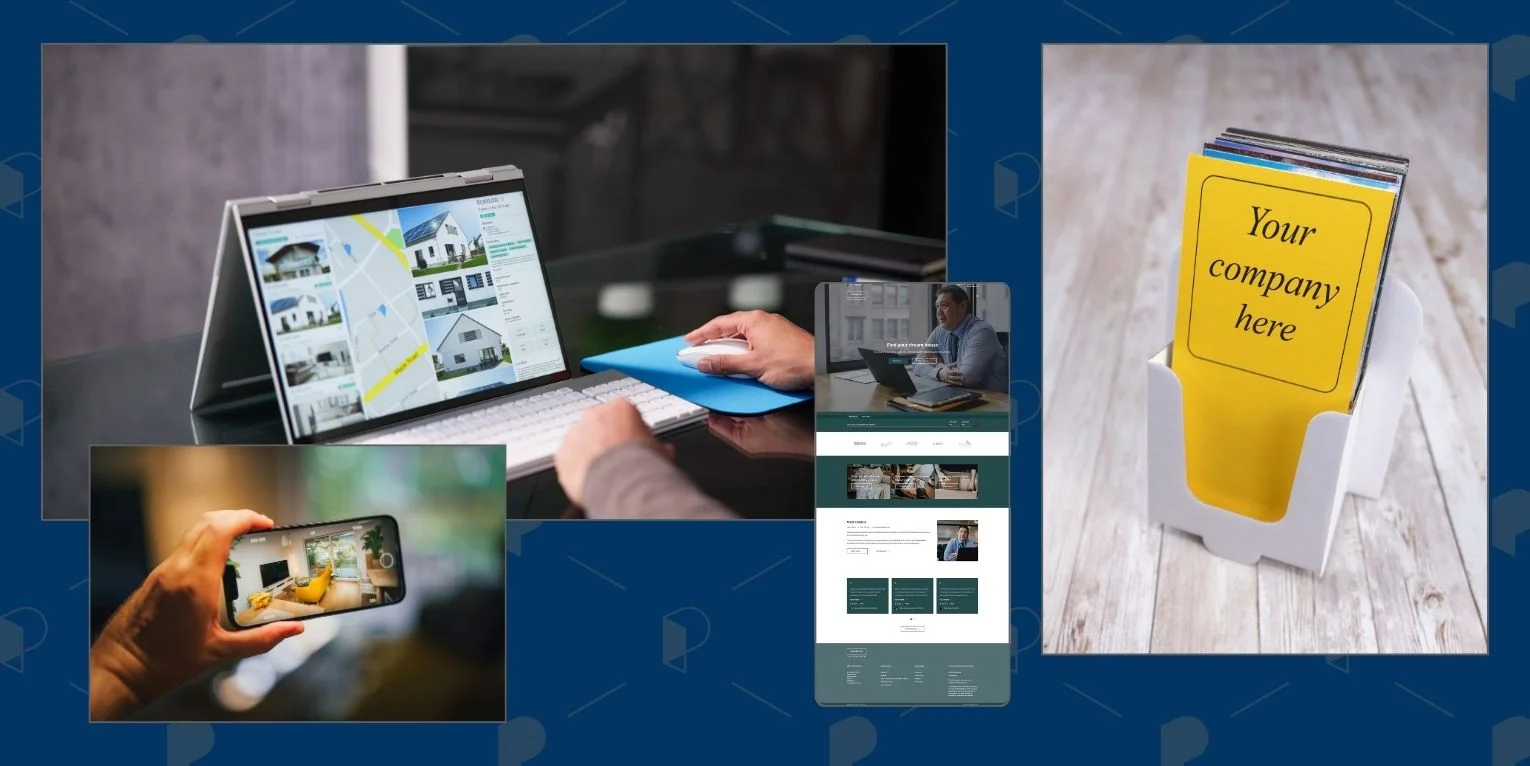
21 Effective real estate marketing materials
The most effective real estate marketing materials include your branded website, property web pages, video, 3D tours, printed promotional items and business cards.
What makes your real estate marketing materials effective comes down to purpose. Some of them help people find you. Others help them trust you or take the next step. And some help people remember you.
These are the traits that make real estate marketing materials work:
- Easy to find
- Memorable
- Relevant to the right audience
- Helpful
- Clear at first glance
- Consistent with your brand
- Built for action
- Focused on trust
- Connected to other promotional materials
Here is how the three groups of real estate marketing materials compare:
| Type of material | What it does best | Key examples |
|---|---|---|
| Digital marketing materials | Help people find and evaluate you online | Website, property pages, video, 3D tours, email, presentations |
| Print materials | Keep you visible locally and in person | Business cards, flyers, brochures, direct mail, yard signs, promotional items |
| Trust-building materials | Show credibility before the first conversation | Reviews, social media, local content, market reports, press features |
The best mix of digital and print real estate marketing materials ideas for your business depends on your market, budget and how you actually work.
Good marketers also understand the power of storytelling. Stories are easier to remember than plain facts. As psychologist Jerome Bruner explained:
“Facts are 20 times more likely to be remembered if they’re part of a story.”
That’s why story-focused and trust-building materials help agents stand out as experts and feel more approachable to potential clients.
Digital real estate marketing materials
What do people do when they hear your name or see your property while driving by? They Google you and see how you show up online. Here are the online real estate marketing materials that shape that first impression.
1. Real estate agent website
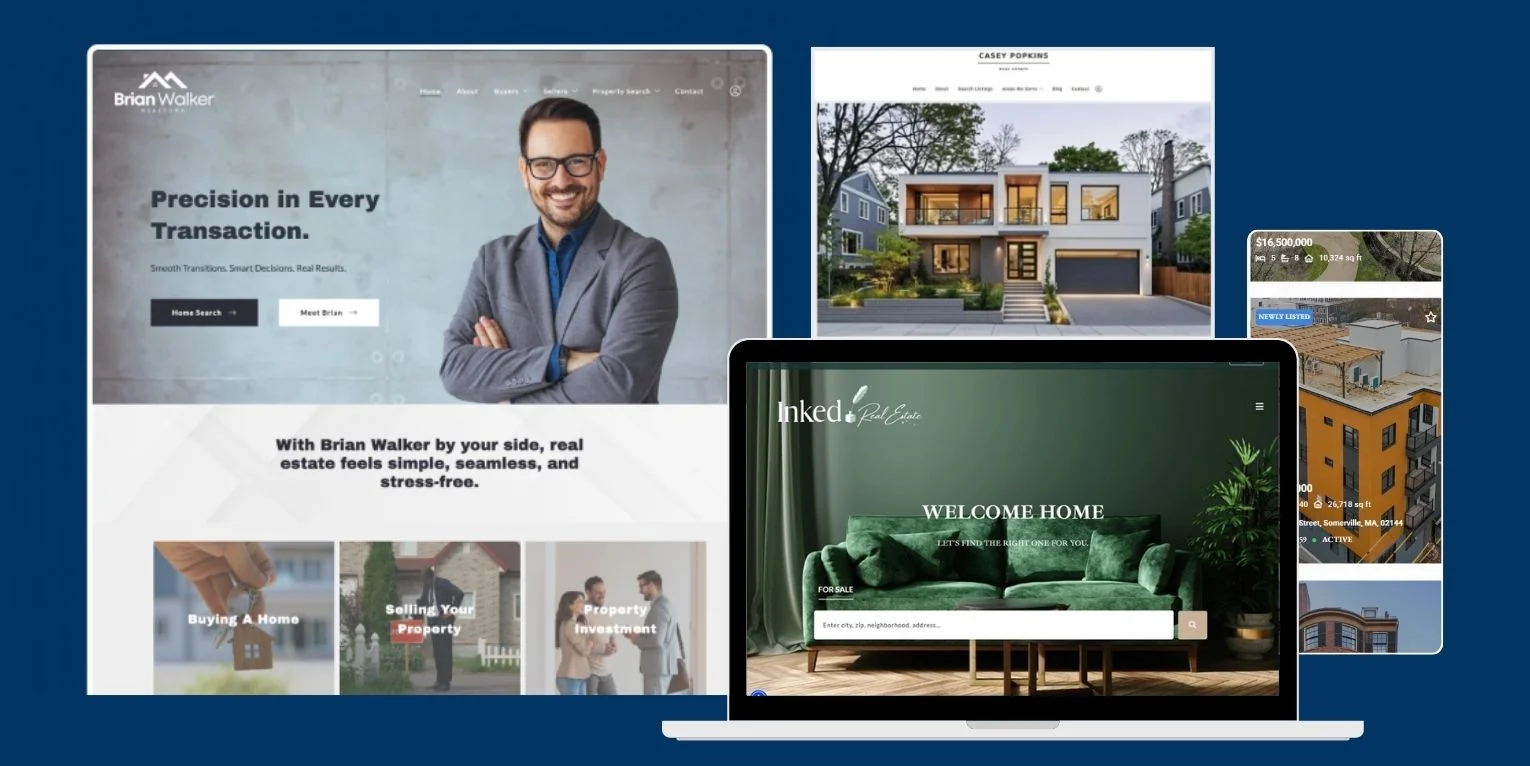
A modern, mobile-friendly website is the foundation of your real estate marketing strategy. Every other channel points back to it, from emails and social posts to business cards and referrals. When someone looks you up, this is where first impressions form.
Your clients expect a real estate agent website that loads fast and looks professional. It should clearly explain who you are, what you offer and how to contact you. Visitors should understand your value within seconds and know what to do next.
There are a few ways to get a professional real estate website. You can hire a freelancer or agency to build one for you, which often costs several thousand dollars and takes a few weeks. Any later changes usually mean more waiting and extra costs.
Another option is using a real estate website builder, which is usually faster, more affordable, and gives you more control over your site.
If you choose a website builder, look for one with real estate templates. Built-in lead capture tools, SEO settings you control, and IDX integration make the site easier to manage and more effective.
When these features come with your website, everything works together from the start.
Whether you’re just starting out or scaling an established business, this is also one of the best ways to get real estate leads that stay in one place instead of scattered across tools.
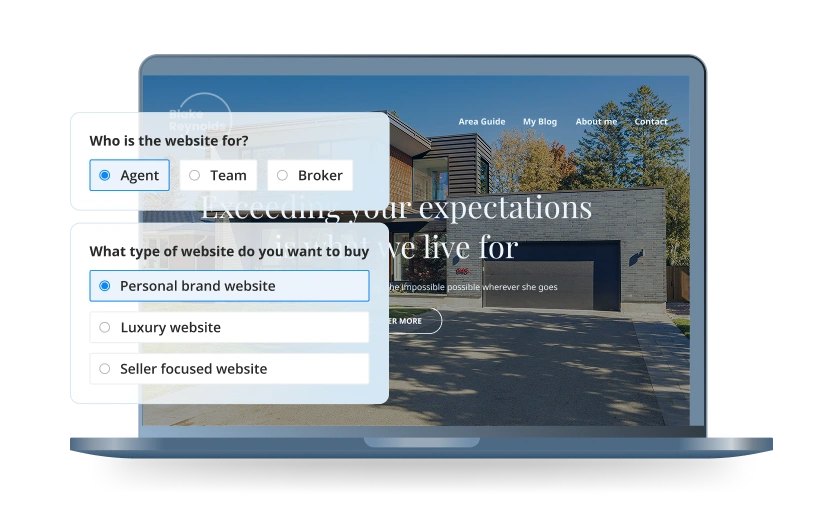
AI Websites for Real Estate
Get a custom, ready-to-edit website
in less than 4 minutes.
2. Property web pages
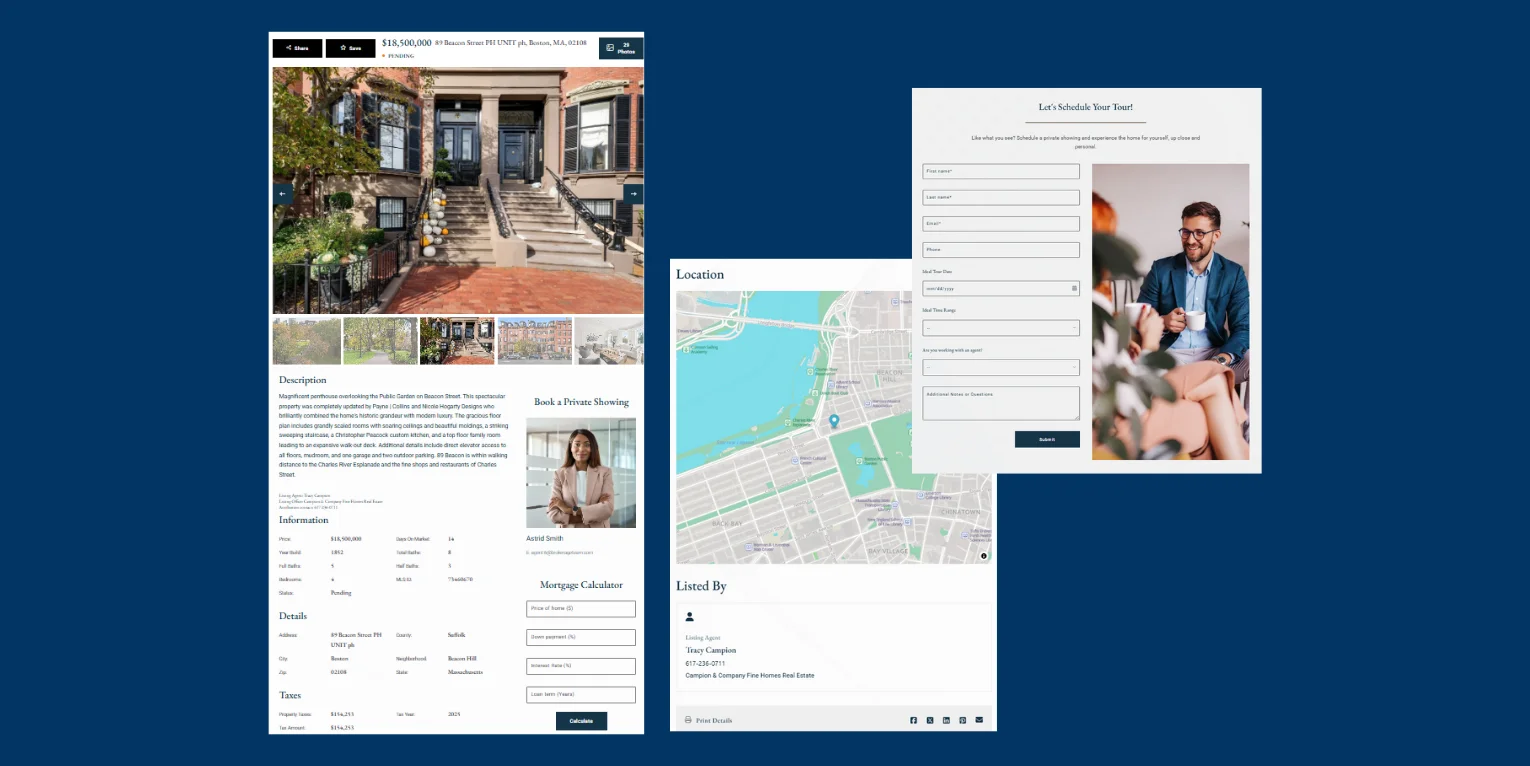
Single property web pages are dedicated pages for your listings. A property page highlights one specific home for sale or rent where potential buyers can find everything they want to know about it. Unlike MLS links or Zillow and Trulia, these pages live on your website and stay under your control.
Here, you can tell the full story. You choose the photos, write the listing description in your own words, and decide what action visitors should take next. You can speed this up with ready-made ChatGPT prompts and still edit in your own voice.
The goal is to capture the attention of the potential client on the home and on your brand, without distractions.
You can share property pages in emails, ads and social posts, and link to them from your print materials. Instead of sending people to a generic listing, you give them a focused page built to inform and convert.
3. Interactive floor plans
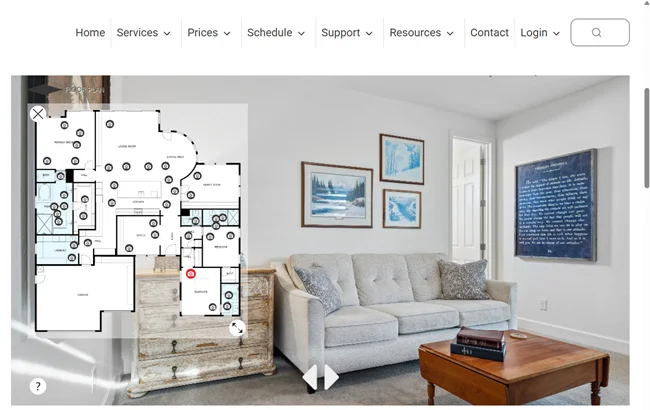
Interactive floor plans are dynamic, digital property layouts that let users click through and explore a space. People can see how rooms connect and how the layout actually works.
When you add interactive floor plans to your website, buyers can explore the property on their own. They get a clear picture before booking a showing, which helps filter out window shoppers and saves time on unnecessary in-person visits.
Interactive floor plans work well for:
- Remote buyers – People relocating or buying from afar get a better sense of the space before scheduling a visit.
- Furniture planning – Buyers can check if their sofa, bed, or dining table will fit.
- Renovation planning – Clear layouts make it easier to assess changes or future updates.
You can embed interactive floor plans on your property pages, share them by email or link to them from ads and social posts. They also work well with printed marketing materials. Include a QR code on the print piece so people can open the floor plan on their phone.
4. Video content
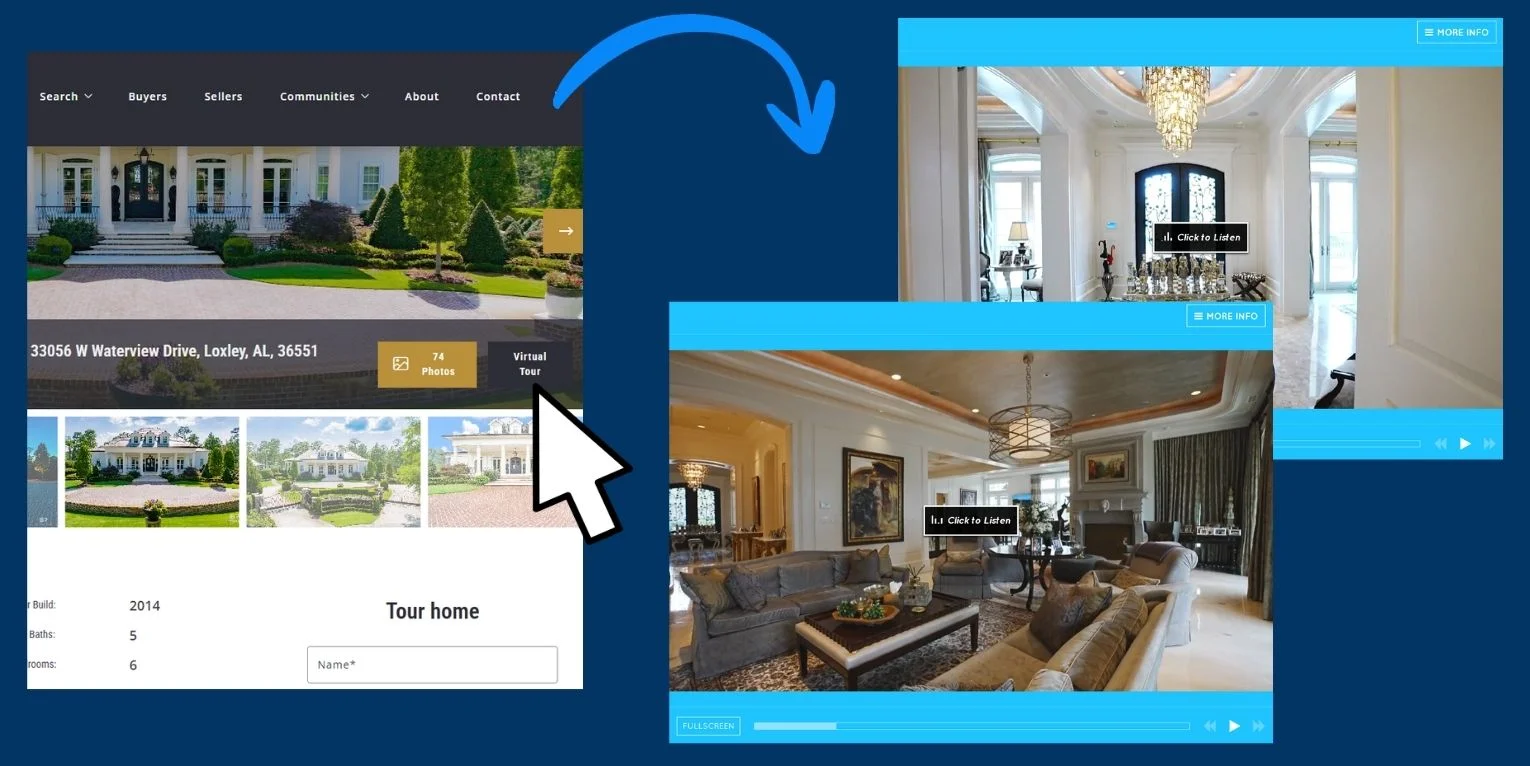
A video walkthrough shows layout, scale and flow better than pictures. Buyers can tell pretty quickly if a home is worth seeing in person. Property videos save everyone’s time.
Video also matches how people browse today. According to REsimpli’s publication from 2025:
403%
Listings with video receive up to 403% more inquiries than listings without video.
Another advantage of listing videos is that they are easy to reuse. You can add them to listing pages, use them in your email campaigns, share them on your real estate business Instagram account or include them in open house follow-ups.
Expert tip: Video works great for virtual open houses. A pre-recorded tour is often enough, and adding a short Q&A at the end helps you cover common questions before people even ask.
>> More on video content: 21 Best Real Estate Videos Every Agent Should Watch in 2026
5. 3D tours
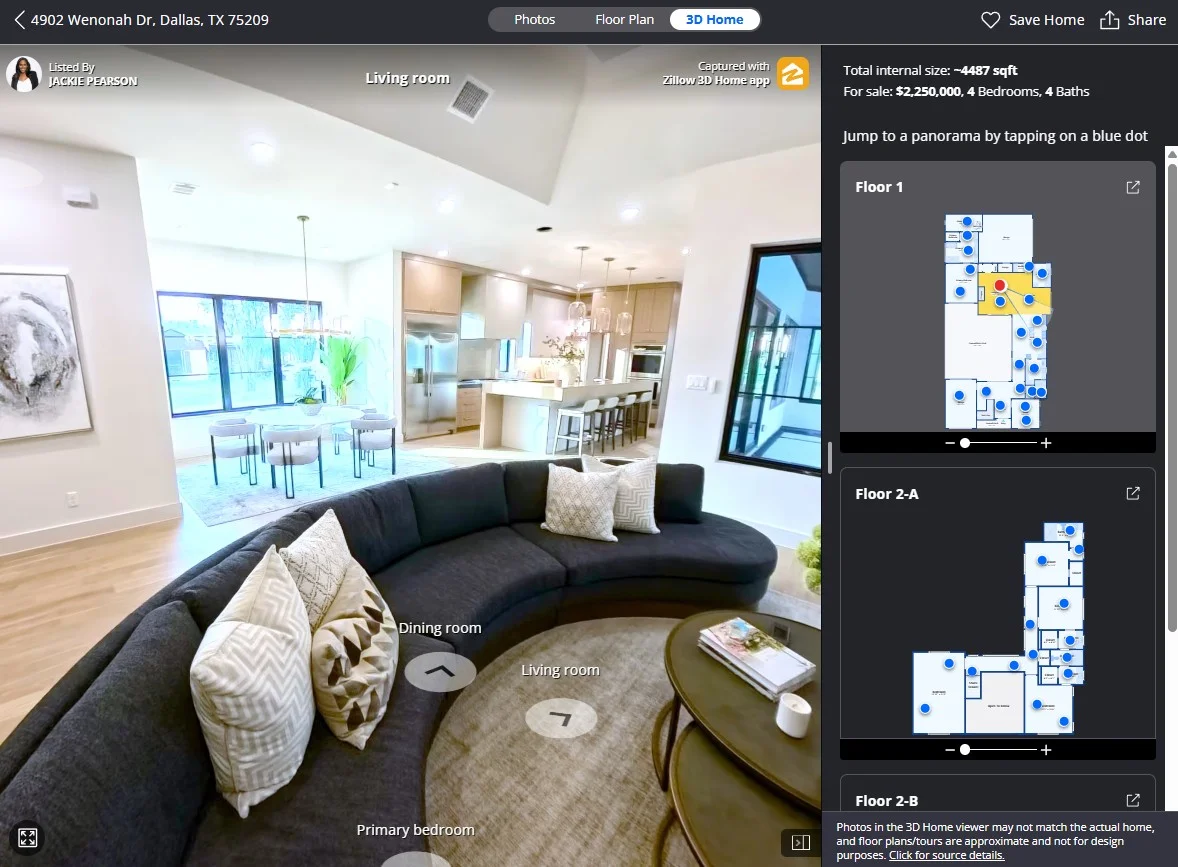
3D tours, sometimes called virtual tours, let people explore a property on their own, at their own pace. Instead of watching a walkthrough, buyers can move through rooms, zoom in and get a real sense of space and layout.
They work especially well for:
- New developments
- Luxury properties
- Commercial spaces
Creating a 3D tour usually requires special equipment and software. Because of that, many agents work with real estate marketing companies that handle the filming, processing, and hosting for them. Some providers even use automated cameras or robots that move through the property and scan it room by room.
This type of marketing material can be expensive.
For example, iTourVista offers Matterport 3D virtual tours starting at around $99 for smaller homes, while Estate Exposure lists basic Matterport tour packages starting at around $279. For higher-value listings, this investment often pays off by reducing casual interest and helping remote buyers decide.
>> Check out our article on How to Become a Luxury Real Estate Agent? 6 Steps Guide
6. Virtual staging
Virtual staging is a more affordable way to show a property’s potential without physically furnishing it. Instead of renting furniture and staging a space in real life, you add furniture digitally to listing photos or videos.
It works well for empty properties or homes with outdated interiors. Buyers can better understand scale, layout, and how rooms could be used, without getting distracted by what’s currently there.
Collov AI is an example of an AI-powered tool that offers virtual staging at rates as low as $0.27 per image when you buy credits in bulk. This means you can test without a big budget. Collov AI also lets you try different styles and layouts with a single click, so you can see what works best for a property.
AI has become a normal part of the toolkit. NAR’s 2025 Technology Survey found 68% of agents have used AI tools, most often to generate content like listing copy and social posts. Used well, AI speeds up the first draft of your materials. Keep your own voice in the final version, and disclose AI-edited photos.
A staged photo or video is a great material to add to your listing web page, property presentation, email and social media post.
Expert tip: If you use virtual staging, disclose it. NAR’s Standard of Practice 12-8 and most MLS rules require you to label a virtually staged or AI-edited photo, usually with a “Virtually staged” note on the image or in the listing remarks. Clear disclosure keeps the listing honest, avoids MLS fines and prevents complaints from buyers who feel misled.
7. Emails
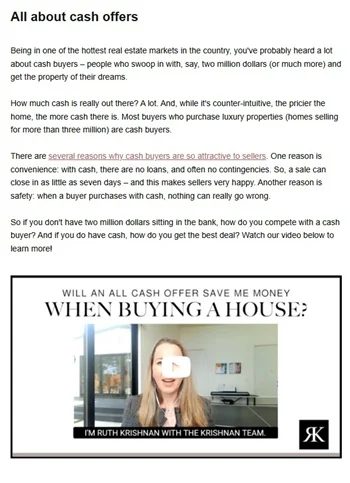
Email is still one of the most reliable ways to stay in touch with clients and prospects. It works before, during and long after a transaction. It’s direct, personal and if someone subscribed to your newsletter, they want to hear from you.
Not sure what to write about in your real estate email campaigns? There’s plenty! Simple, useful updates:
- New listings and open house invites
- Market trends for your area
- Helpful tips for buyers or sellers, like “Fix before you list – a seller checklist”
Email is also a great way to connect your other materials. In your message, you can share listing pages, market guides, videos and open house invites, to name a few. Email marketing boosts your visibility in a space you control and helps you nurture leads over time.
8. Property presentations
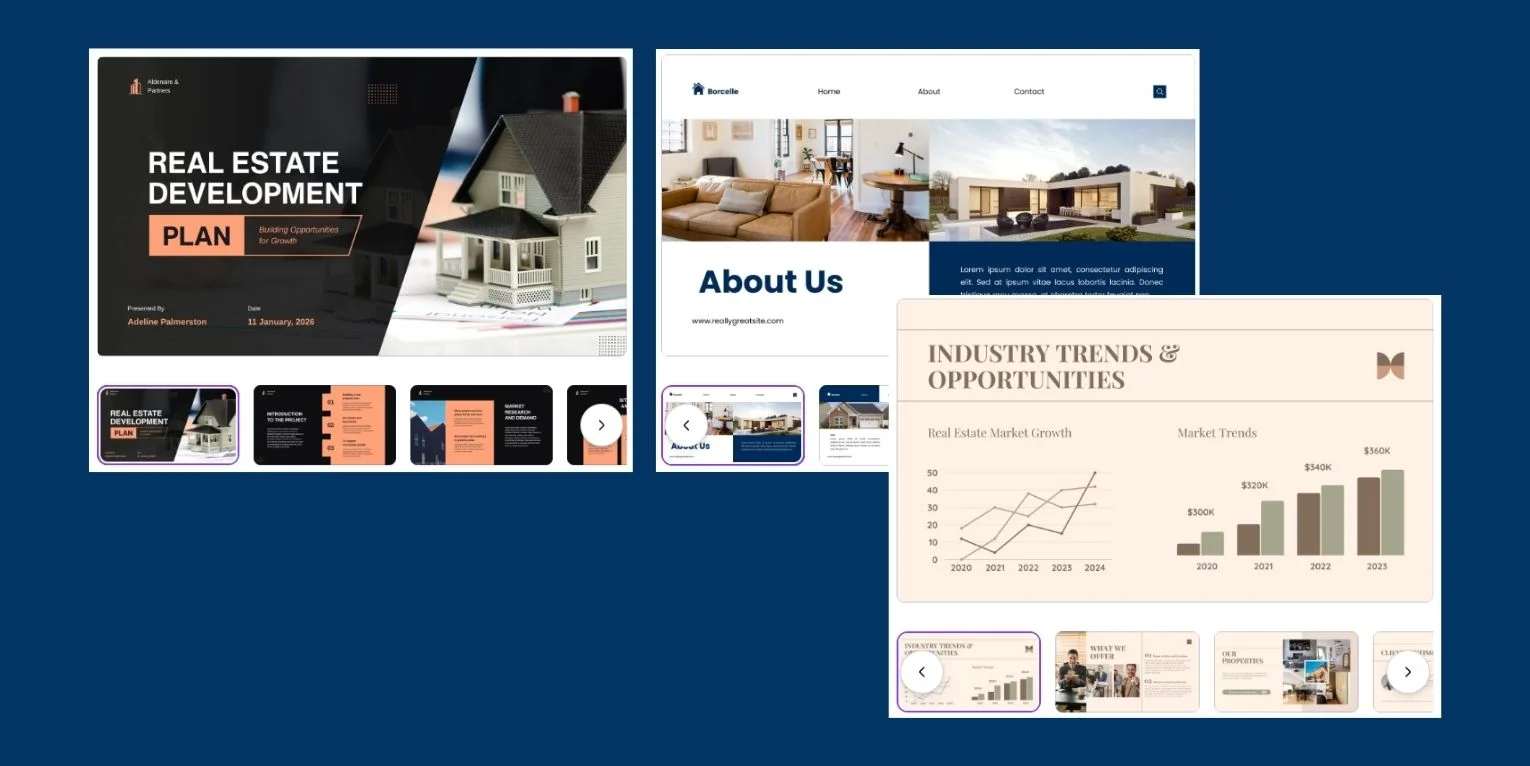
Property presentations are downloadable or shareable materials, like PDFs or slide decks, that walk buyers or renters through a home. Easy to share by email or link, they can be simple documents or more comprehensive multimedia presentations, depending on the property and audience.
Powerful property presentations include high-quality photos, specs, floor plans and explanations that put raw information into context. They also help explain how certain features influence property values. You can create them with PowerPoint, Google Slides, Canva or Keynote.
For brokers and agents, they’re important marketing materials because they help showcase a property’s unique features and benefits. Here, you have room to explain why certain details matter and how they translate into real value for a buyer.
Property presentations are perfect for sharing off-market properties with your selected clients.
9. Listing presentations
Listing presentations are digital materials you use when meeting with potential sellers. A professional, well-prepared presentation helps sellers understand your strategy and decide if they want to work with you. They explain how you would price, market and sell their specific property.
KW agent Jeff Glover puts it this way:
“Share the unique value you have to offer, your status as a local expert and how your expertise has specifically benefited clients.”
A winning listing presentation should include a proposed price range, a marketing plan and how the property will be positioned online. Some agents also outline timelines, fees and next steps.
Since the 2024 changes to how agents are paid, buyers sign a written agreement before touring, and buyer-agent compensation is no longer posted on the MLS. Buyers now compare agents more directly on the value they offer. A clear presentation that spells out your services, your process and your results is one of the best ways to make that value obvious.
>> You may also be interested in: Marketing, online presence and promotion write-offs for real estate agents
Print real estate marketing materials
Print marketing still has its place in real estate, especially when you’re promoting locally or meeting people in person. The print should always guide people to your website or online content.
10. Business cards
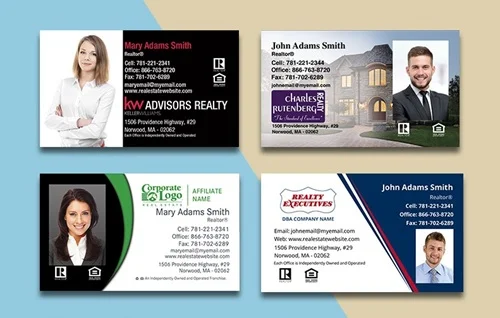
Business cards still show up! It might be an open house conversation, a quick chat after a showing, or your mechanic asking what you do. When that happens, you want to hand over something people won’t forget five minutes later.
10 billion
Around 10 billion business cards are printed every year in the US.
Also,
72%
of people say they judge a business by the quality of the card (CreditDonkey).
CreditDonkey
There are millions of ready-made business card designs. Look for something that’s clean and easy to read. Or, make it distinctive enough to stand out in a crowded market and from the stack of cards people collect at events.
Beyond your name and phone number, add your website URL or QR code that takes people to it.
11. Flyers

Flyers are simple, one-page materials agents use in local markets. They’re easy to hand out, easy to update and work well when you want to stay visible in a specific area.
Flyers come in a few common formats. Most businesses use letter-size or half-page flyers, printed on standard or slightly thicker paper.
How real estate professionals use flyers for buyers:
- Promote listings
- Share details at open houses and showings
- Leave something tangible after a visit
How agents and brokers use flyers for sellers:
- Showcase recent sales or “just listed” properties
- Highlight local market activity
- Show experience and local presence
Branded flyers are quite cheap real estate marketing materials to print, with costs starting at just a few cents per copy. They’re a practical option for hyper-local outreach.
12. Brochures
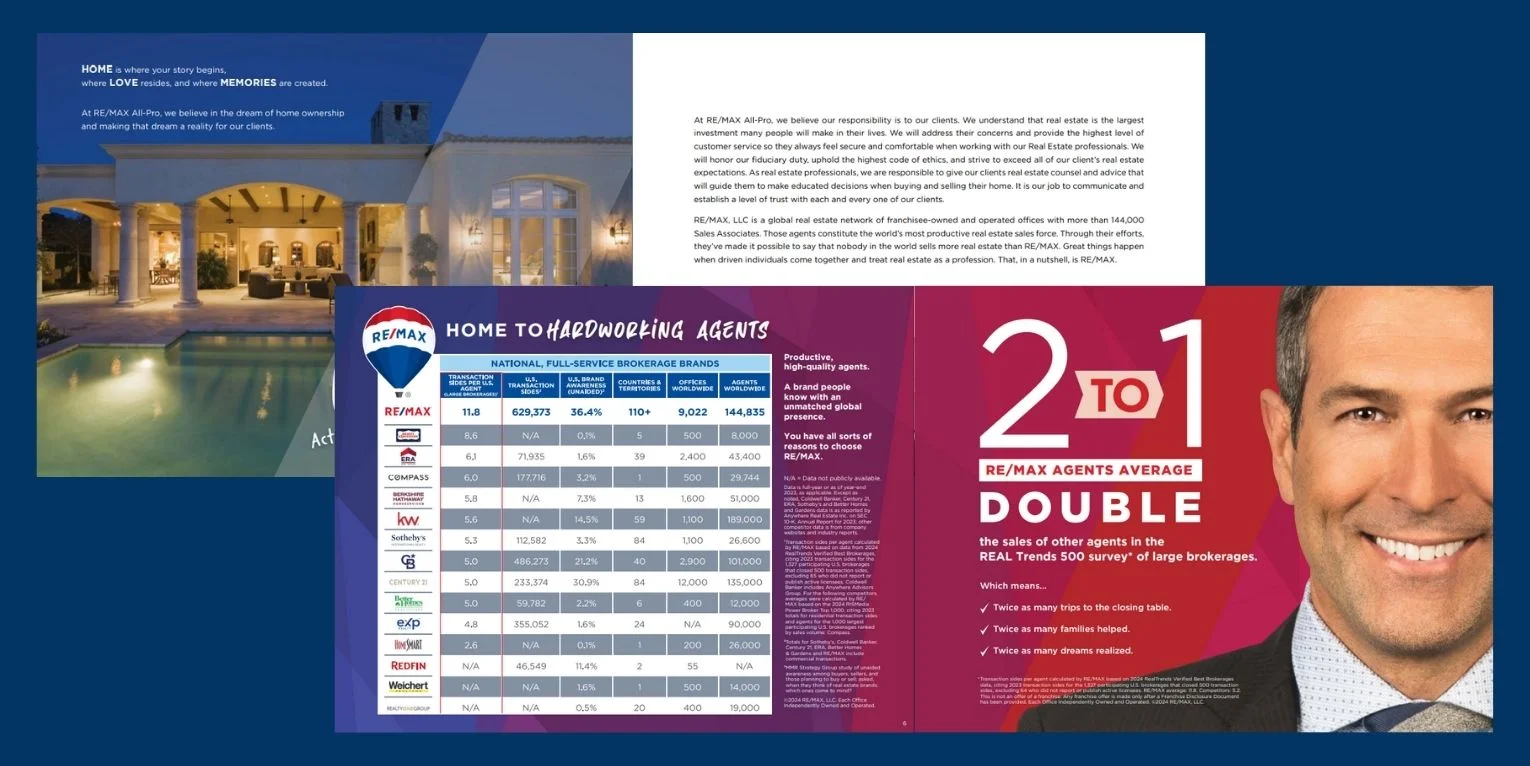
Brochures are multi-page print materials that give more context than a flyer. There’s more space to show photos, explain the property or service in more detail and guide the reader through the story.
Real estate brochures are usually printed on thicker paper and designed to feel more polished. Because of that, agents tend to use them more selectively, for higher-value listings or important conversations, rather than wide distribution.
13. Direct mailers
Direct mailers are printed materials sent to specific neighborhoods or households. Agents often use them to stay visible locally and remind people they work in the area, usually pointing back to a website or dedicated landing page.
Real estate postcards are the most common format. Use them to share recently sold houses, market activity or a short introduction of your business. Because they land directly in someone’s mailbox, they work well for building awareness over time, especially in areas you want to target.
14. Yard signs and sign riders

Yard signs are one of the most recognized real estate agent marketing materials. They work around the clock and reach people who are already interested in the area, which makes them especially valuable for local exposure.
An effective yard sign is easy to read from a distance. Your name, logo, and contact details should stand out straight away. Even before people can read the text, they should recognize you by your brand colors and overall look.
Sign riders are smaller signs attached to the main yard sign. Agents use them to add short messages like “Open House,” “Just Sold,” or a website URL without replacing the entire sign.
Expert tip: If you’re hosting an open house, use a digital sign-in tool like the Open Home Pro app. It lets visitors check in on their phones, captures contact details and automates follow-ups after the event.
15. Promotional, branded items
Promotional items are freebies you give out so people keep them, use them and remember about you. Options range from basic office items to more original ideas.
Classic options still work well. Pens, mugs, notebooks, tote bags and desk accessories are easy to produce and easy to hand out. Some agents also use everyday items like lip balms, mouse pads, printed T-shirts, embroidered caps or door hangers. These tend to last longer than paper materials.
More original things can leave a lasting impression. Things people place on their desk, like paper organizers, folded desk cards, charging stands or planners, stay visible during the workday.
The more useful the item, the better. If it solves a small, everyday need, it is more likely to stick around and keep you top of mind.
Real estate promotional items also work as closing gifts. A branded, useful item handed over after a successful deal helps you stay top of mind long after the keys change hands.
Pro agents also use branded presentation folders, folders for contracts or document sleeves they bring to meetings and showings. Anything with your logo shows professionalism and supports your brand.
Expert tip: Promotional items work best when they’re part of a bigger branding strategy. When your logo, brand elements and tone stay on-brand across digital materials, print, and physical items, people start to recognize you faster. Over time, those small touchpoints add up and help your brand feel familiar and professional.
16. Print ads
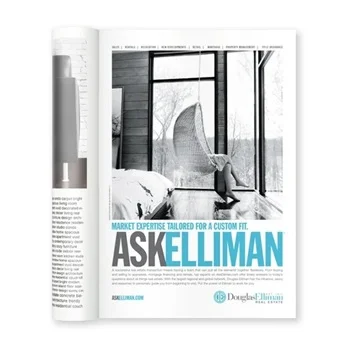
Print ads still have a place in local marketing. They show up in places people already trust, like community newspapers and magazines.
Agents usually use print ads to build name recognition, promote listings or reinforce their presence in a specific area. Baby Boomers and older Gen X buyers often pay more attention to print than digital ads.
Some experienced agents still highlight the value of print within a mixed marketing strategy. As agent Robin Parker observed from his own work:
“Relying only on digital ads would be “most unwise” – you need both online and print exposure to make a listing count and reach buyers across demographics.”
Trust-building marketing materials for real estate
Some marketing materials don’t sell listings. They sell expertise and confidence. Trust-building materials help people understand who you are and why working with you feels like a safe choice.
17. Online reviews and testimonials

Reviews and testimonials are one of the strongest trust signals you can have and a high-impact way to build trust. Clients may look for them before they decide to reach out.
96%
of consumers say they check online reviews when browsing for local businesses.
BrightLocal, ‘Local Consumer Review Survey 2025’
Reviews should live on your website, Google profile, social media channels, Realtor.com and other property websites clients already use. Your Google Business Profile deserves particular attention. Keep it complete, add recent photos, and reply to every review. For many local searches it appears above your website, so it often forms the first impression before someone even clicks through.
Many agents also create a dedicated testimonials page on their website, so people can quickly see proof of their work in one place. Make a habit of asking for a review after closing deals and collaborations. The quotes can also be reused in emails, social posts, landing pages and flyers.
Expert tip: Use tools like RealSatisfied to collect feedback and promote your success stories through your website, Google profile and marketing materials. It’s built specifically for real estate, so testimonials stay organized and easy to share where clients already look.
18. Social media presence
Most of your past and future customers and clients are using social media networks. If you’re not there, you’re easy to miss. Recent data shows that:
82%
of real estate businesses use social media platforms for marketing.
REsimply, ’Real Estate Social Media Statistics’ 2025
According to the same source, agents focus on these key social media platforms for real estate:
- 90% use Facebook
- 52% use Instagram
- 48% use LinkedIn
About 15% of RE agents now use TikTok as part of their marketing. Its fast, trend-driven format works really well for reaching younger buyers. (NAR, 2025 data)
In real estate, people are interested in listings, local market conditions, market facts and industry trends. But they also want to see how you operate day to day. Social media gives you space to explain your approach, share real situations and show your personality.
Share short stories from your work, quick explanations and local observations to help people remember you and build trust over time.
As Aaron Grushow, Senior Social Media Marketing Manager at Luxury Presence, puts it:
“The more authentic, true to yourself you can be, the more trust and likability you can build.”
And then there’s good old YouTube. It’s widely used in real estate for property tours, area guides, and longer videos that keep working through search.
>> Also read: 25 Expert Social Media Tips for Real Estate Agents
19. Local expertise content
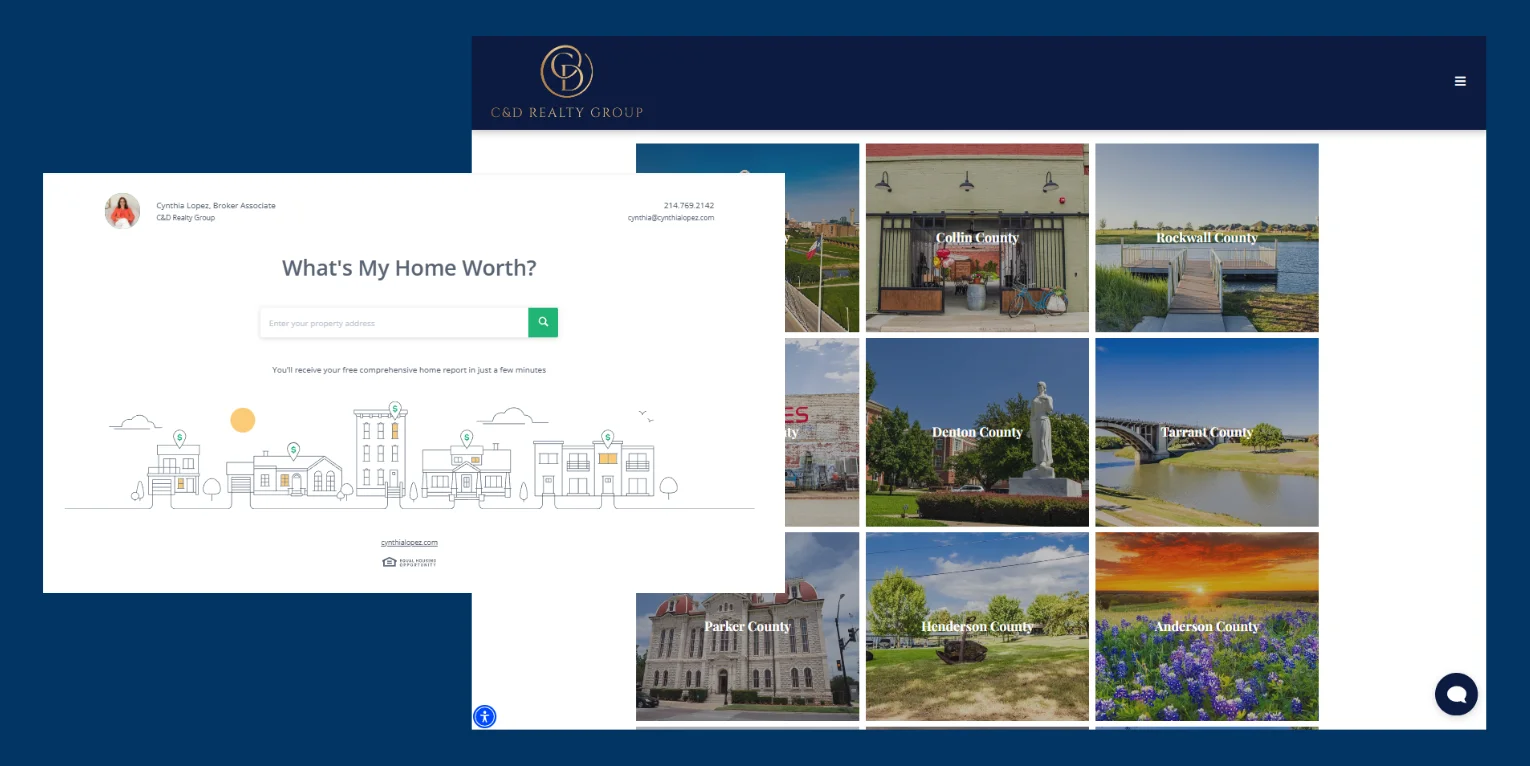
Local agents are expected to know the answers to their clients’ questions. But you can build the authority of your brand before the actual conversation happens.
Your professional agent website is the best place to do this.
Use it to publish local guides, blog articles and downloadable PDFs that answer common questions for buyers, sellers and investors. These resources for real estate buyers and sellers, like neighborhood overviews, local pricing trends and school districts help position you as a trusted local source.
As agent Shannon Gillette put it:
“In 2025, you can’t have that templated brokerage website anymore. If people Google you and don’t see a strong brand, they’re never going to call.”
Source: luxurypresence.com
This type of marketing material also works well across other channels. Share it in emails and social media posts to stay visible and useful over time. Seeing helpful information regularly positions you as a go-to expert and makes reaching out feel like the next step.
20. Market reports and guides

While local expertise content explains what it’s like to live or invest in an area, digital market reports and guides focus on the numbers behind it. They help clients understand what’s happening with prices, demand, interest rates and costs that affect their decisions. Many agents and realtors also cover financing, interest rates and insurance costs in a way that’s easy to follow.
There are plenty of tools that automate building such reports. Agents often use MLS data, Local Logic, Altos Research, and the reporting capabilities of your CRM or real estate websites.
Overall, this trendy type of marketing material helps educate clients, whether it’s printed or on screen. It shows you understand the market and the bigger picture.
21. Press features
Press features are mentions of you or your work in newspapers, online articles, real estate publications or other business blogs. Because someone else is telling the story, these mentions feel more credible than your own marketing.
A local newspaper might quote you on home prices or new developments. You might also be a guest on a podcast, where you give a short interview and comment on the local market.
There’s also a softer side to press features. For example, Peacock Real Estate was featured in the local press for hosting an annual backpack giveaway. Nearly 600 backpacks were given to families in need, which showed direct support for the community.
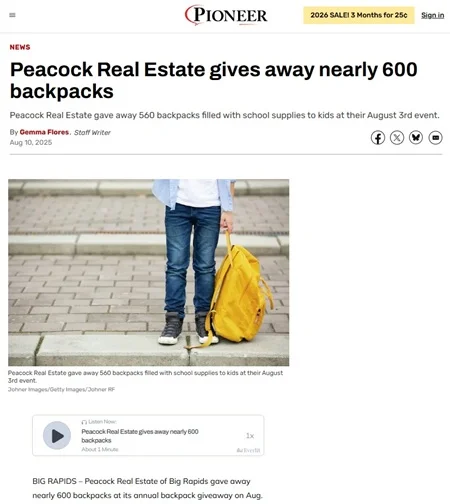
Mentions are also an important element of real estate SEO in 2026. When trusted websites mention or link to you, search engines, like Google or Bing, see you as more reliable. That helps your name and website show up more often when people search locally.
Plus, you can reuse press features in your marketing. Add links or quotes to your website, share them in emails or post them on social media networks.
Outside-the-box real estate marketing ideas and materials
If you’re ready to get creative and stand out from the competition, there are plenty of unique real estate marketing ideas that go beyond the usual flyers and social posts. These can help spark interest, start conversations and give people a memorable reason to think of you first.
Think along the lines of:
- Digital ads that people won’t resist clicking on
- Email courses for leads
- Quizzes and giveaways
- AI use for real estate
- Mentions on Reddit
- Pets in marketing materials
For a big list of ideas you can start using today, check out 107 Outside-the-Box Real Estate Marketing Ideas & Tips (With Examples). Our guide covers practical, unexpected tactics agents have used successfully that you can adapt to your own business.
Conclusions
High-quality marketing materials show your expertise and give real value to the customer, without taking too much of their time. The goal is to choose the right marketing materials for your market, then connect them so they work together. In your strategy, aim to create a seamless bridge between offline and online marketing.
Print materials lead people to your website. Conversations turn into follow-ups by email. When everything connects, your marketing feels intentional instead of scattered.
That kind of consistency is much easier when your marketing lives in one place.
Placester is a leading, AI-powered real estate website and marketing product designed to grow your real estate business. Marketing for real estate works best when everything connects. It brings your whole suite of marketing materials, online presence, listings, and lead capture into one place, without juggling multiple tools, and the best results come from matching several to your marketing needs.
If you’re curious how this could work for your business, you can start with a free trial and have AI build your professional website in under five minutes.
Update Your Website Effortlessly with AI
Add content, images and videos, redesign pages
and create new ones just by chatting with AI.

Frequently asked questions (FAQ)
What are the best marketing tools and materials for real estate agents?
The most important marketing tool for agents in real estate is a strong website. It shows your listings, captures leads, and acts as the main place people return to.
From there, the most effective materials include listing pages, email marketing and social media. These help people find you and stay in touch, while always pointing back to your website.
Other useful tools include property videos, presentations, online reviews, and basic print materials for local visibility. A simple CRM helps keep contacts organized and follow-ups on track.
Check out our list of the best real estate marketing tools for 2026.
Which marketing materials influence property buyers the most?
The biggest influence on today’s property buyers comes from high-quality listing images and video. Up to 85% of homebuyers say photos are the most critical factor when evaluating a property online, and listings including video receive 403% more inquiries than those without. These visuals help buyers form a clearer picture of a home before they visit, increasing engagement and interest.
Which marketing materials work best for commercial real estate?
The best real estate marketing materials for commercial real estate are detailed property presentations, market reports and financial summaries. Commercial real estate marketing materials should help investors understand numbers, risks and potential returns quickly.
What is the best advertising for real estate agents selling luxury homes?
The best advertising for luxury homes combines a strong digital presence with carefully chosen, more personal touchpoints. A professional website, high-quality photos and videos and targeted social media help set the first impression. Exclusive showings, invitation-only events and premium printed materials add to the sense of quality and trust.
Instead of trying to reach everyone, luxury real estate marketing materials focus on the right audience, clear positioning and a story that highlights a high-end lifestyle and attention to detail.
What are some cost-effective real estate marketing strategies?
Cost-effective real estate marketing tactics include using organic social media, running a blog and sending email marketing yourself, all pointing back to your real estate website, with Placester plans starting at around $59 per month. When you manage these channels on your own, your main investment is time, not budget.
Once you have these basics in place, you can start adding paid Facebook ads or simple automation as your business grows.
Overall, modern marketing strategies are designed to be cost-effective. You invest in a tool, like a CRM, and they handle much of the work for you through automation, follow-ups and organization. That way, you spend less time on manual tasks and get more value from the same effort.
What are the key elements of a successful real estate marketing plan?
A successful real estate marketing plan starts with a data-driven approach. You use data to set clear goals, understand your demographics, and choose the right mix of digital and print marketing materials. Consistent branding and regular, streamlined performance tracking help you adjust and improve over time.
What real estate marketing materials work best for social media?
For social media, short video, listing videos and behind-the-scenes clips get the most engagement. Branded graphics, market facts and client reviews also work well because they are easy to save and share. Keep your brand elements consistent across posts so people recognize you as they scroll.
Published on
(Last updated on
)