 (800) 728 8391



Updated on
24 Best Real Estate Agent Website Examples: 2026 Edition

The best real estate website examples inspire and show what other companies in the industry rely on to attract, engage and The best real estate website examples inspire and show what other companies in the industry rely on to attract, engage and convert clients.
As an agent, realtor, or broker, your website is often the first impression of your real estate business. It should represent you and your company in a clear and professional way.
According to the NAR, all home buyers now use the internet to search for a home. The most valuable website features include:
- Photos (41%)
- Full property details (39%)
- Floor plans (31%)
But no matter how great the content, it can fall flat if your real estate website is slow, cluttered, or confusing. Design and usability matter just as much as the features you offer.
In this guide, we’re showcasing 24 of the best examples to inspire your first build or your next redesign.
What are the best real estate agent website examples?
A few standout real estate website examples from this list include:
- Inked Real Estate – Striking, on-brand imagery throughout the site.
- Angela Andronache – Emotional video and strong branding.
- DeLeon Realty – Prime offers up front and easy live chat via QR code.
- Amy Swanson – Interactive floor plans and 3D walkthroughs.
- Damac Properties – Virtual tours of interior and exterior spaces.
The best websites for real estate help visitors trust you, navigate easily, and take action. Apart from showcasing your listings, they create a user-friendly experience that helps people explore, inquire and move closer to a closing.
Now, let’s have a closer look at these and more real estate website examples.
24 great real estate agent and brokerage website examples in 2026
The best real estate websites engage visitors from the first click. Below, you’ll find 25 top-tier examples that show different ways agents build trust and present listings. Each one reflects a clear strategy, so you can find inspiration that fits your business model—whether you focus on first-time homebuyers or high-end clients.
1. Team Diva
Seattle-based real estate Team Diva knows how to make a strong first impression. Right on their homepage, you’ll find awards, media mentions and badges from trusted real estate industry organizations.
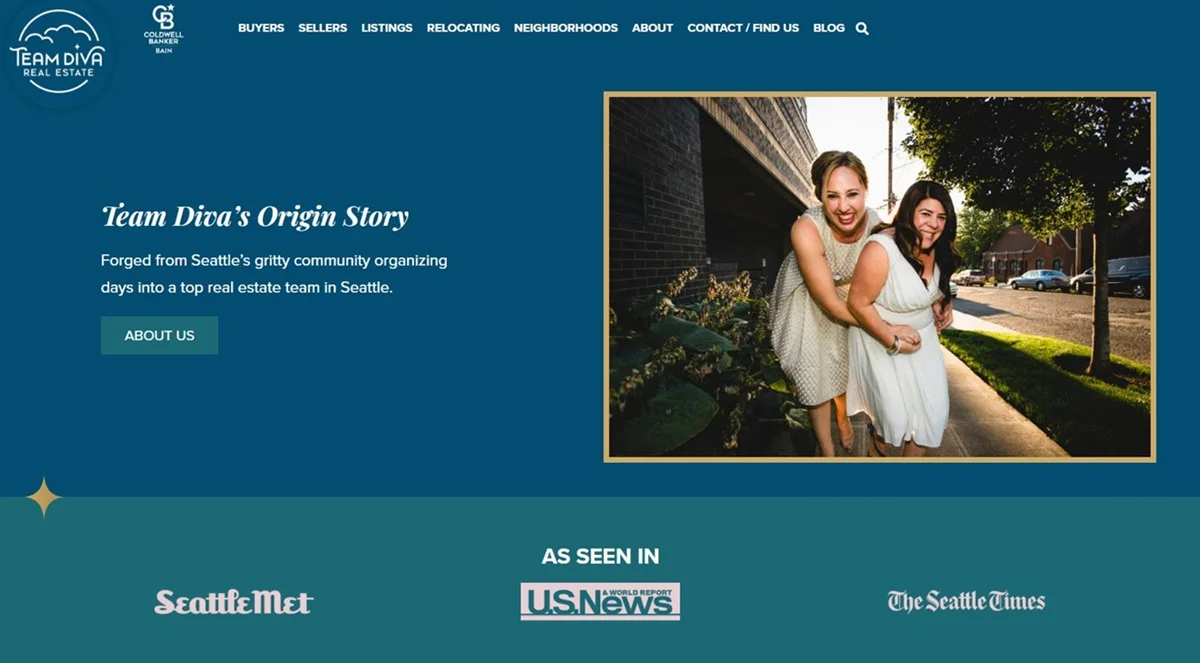
Trust signals provide social proof that you deliver results and are recognized by the real estate market. They are especially important for new visitors who are still deciding whether to get in touch.
Scroll down to the footer, and you’ll find even more:

Team Diva’s agency also has a dedicated awards webpage showcasing community recognition and press features, which adds even more credibility.
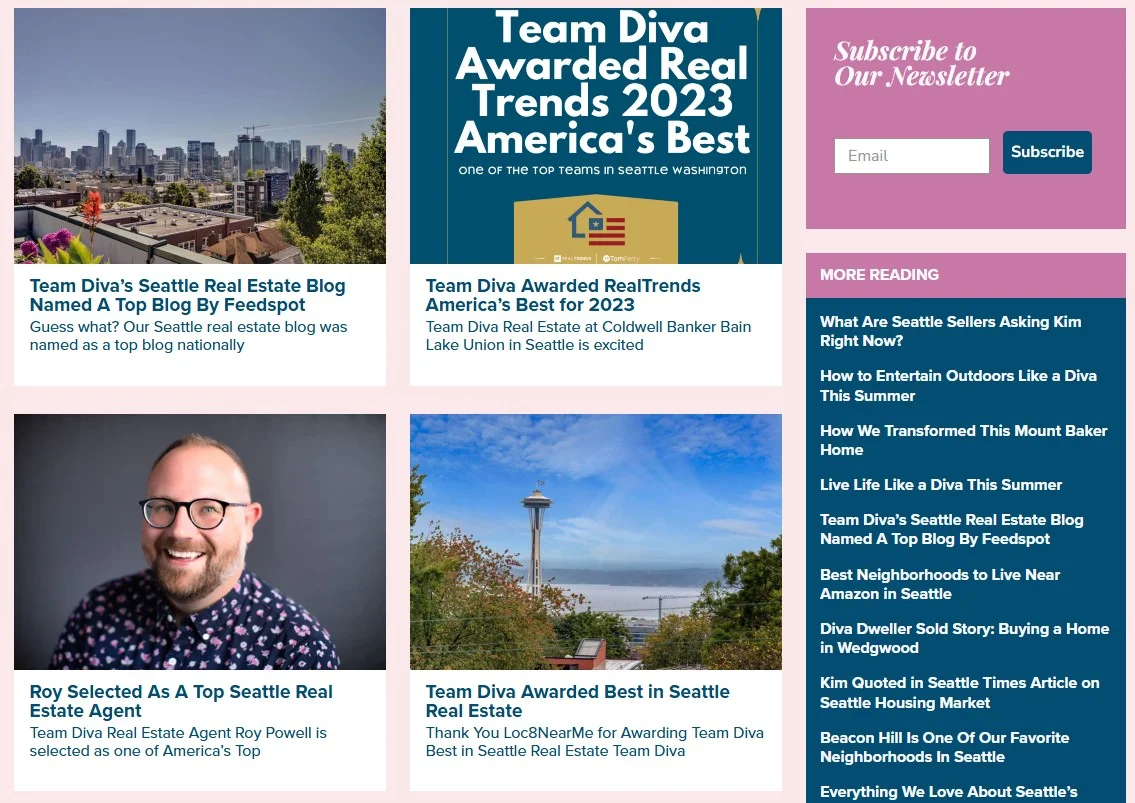
Trust is earned, and showing it clearly helps people feel confident in working with you. Your real estate web design should reflect that credibility.
If you’re just starting out, you can highlight client reviews, community involvement, or even a short personal story to begin building trust early.
To keep your brand consistent and recognizable, carry the same logo, colors, fonts, and tone of voice across your social media networks and on printed materials like business cards, signage, and flyers.
And, if you need help choosing the right domain name, read our another article: Picking The Best Real Estate Domain Name: Ideas, Tips & Examples.
2. Angela Andronache
Luxury real estate advisor Angela Andronache’s homepage opens with a sleek full-screen static hero image styled to look like a video. When you click the play button overlay, a YouTube video pops up.
The video instantly tells visitors they’re in expert hands, setting a luxurious, welcoming tone without needing to scroll or read.
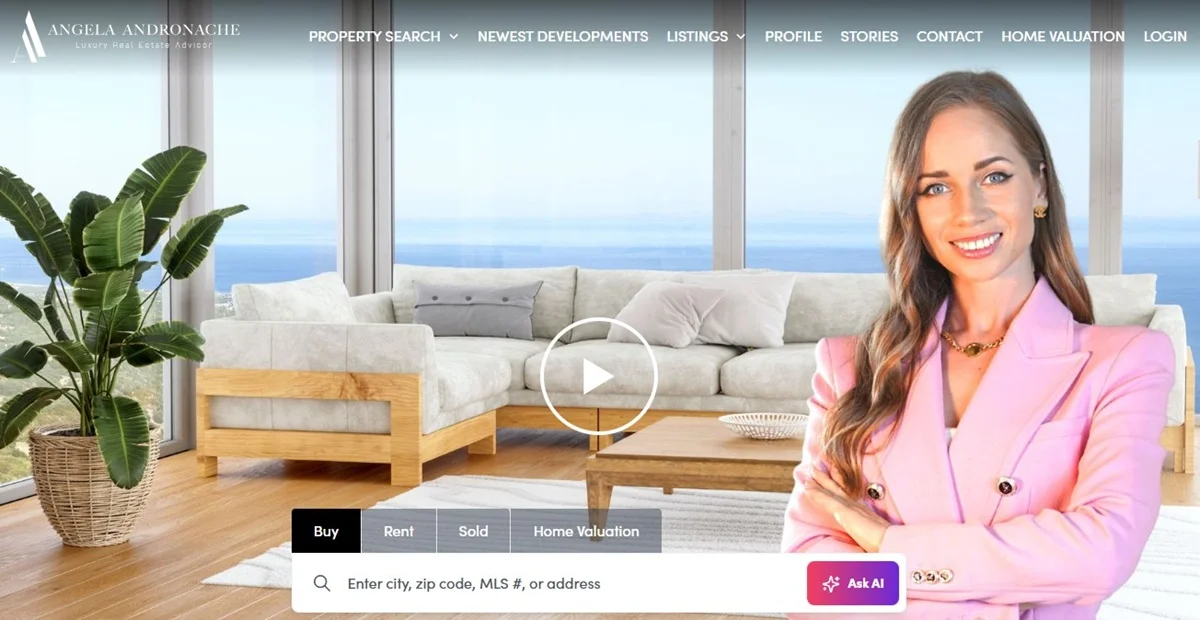
More than just a branding tool, Angela’s recording beautifully shows her local knowledge. The footage builds trust, confidence and familiarity in under a minute.
Video content is powerful, and frankly, most people would rather watch than read. It’s faster to absorb, more emotional, and feels more personal. In fact:
403%
Property listings with video get 403% more inquiries than those without (NAR data, 2024).
Expert tip: Because the actual video only loads after someone clicks, the homepage stays fast and light, ideal for mobile and SEO.
Angela’s video makes a good impression because it’s polished and client-focused. You don’t need a big budget to start. Even a 30-second intro shot on a phone can humanize your brand, show your personality and make people more likely to reach out.
3. Amy Swanson
Amy Swanson’s site is a great example of a real estate agent website that goes beyond the basics. Instead of just showing amenities for featured properties, it invites visitors to explore them.
The site features an interactive floor plan where users can click into rooms and view matching photos. It’s a simple feature that makes it much easier to understand how the space is laid out.
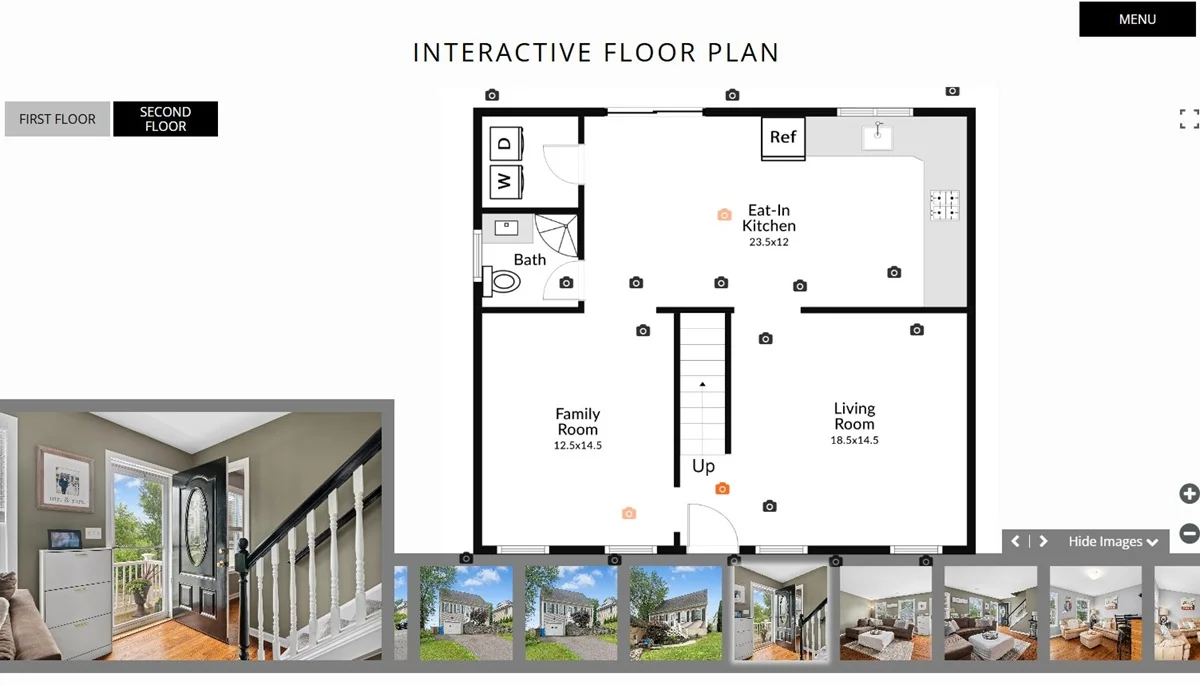
Scroll a little further, and you’ll find a 3D virtual layout that lets users zoom, rotate, and virtually walk through the home. This functionality is especially helpful for out-of-town buyers who can’t visit in person.
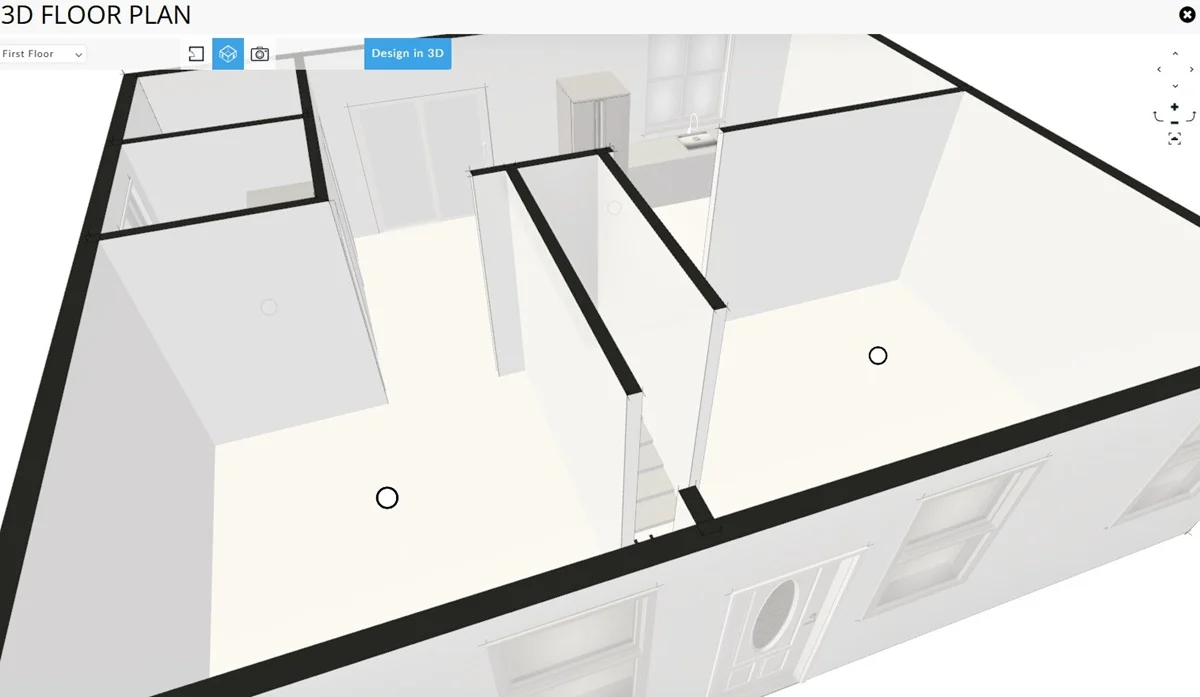
Interactive design elements keep visitors on the page longer and make the property way more memorable. When people can explore a property this way, they feel more confident and informed.
With Placester, you can easily add interactive content to your pages, no coding needed. Just copy the embed code from your MLS or tools like Matterport and paste it into a custom HTML block.
>> Also read: How to Get MLS Listings on Your Website in 7 Steps? + Tips
4. Signature
Social media marketing is one of the most effective ways for agents and brands to stay visible, build trust and connect with potential clients in real time. Your real estate website should support and extend that presence.
Signature Realty NJ highlights its agents actively on social platforms, and the website makes it easy to follow along. A floating social media widget on the right sticks with you as you browse, linking to Instagram, Facebook, and more.
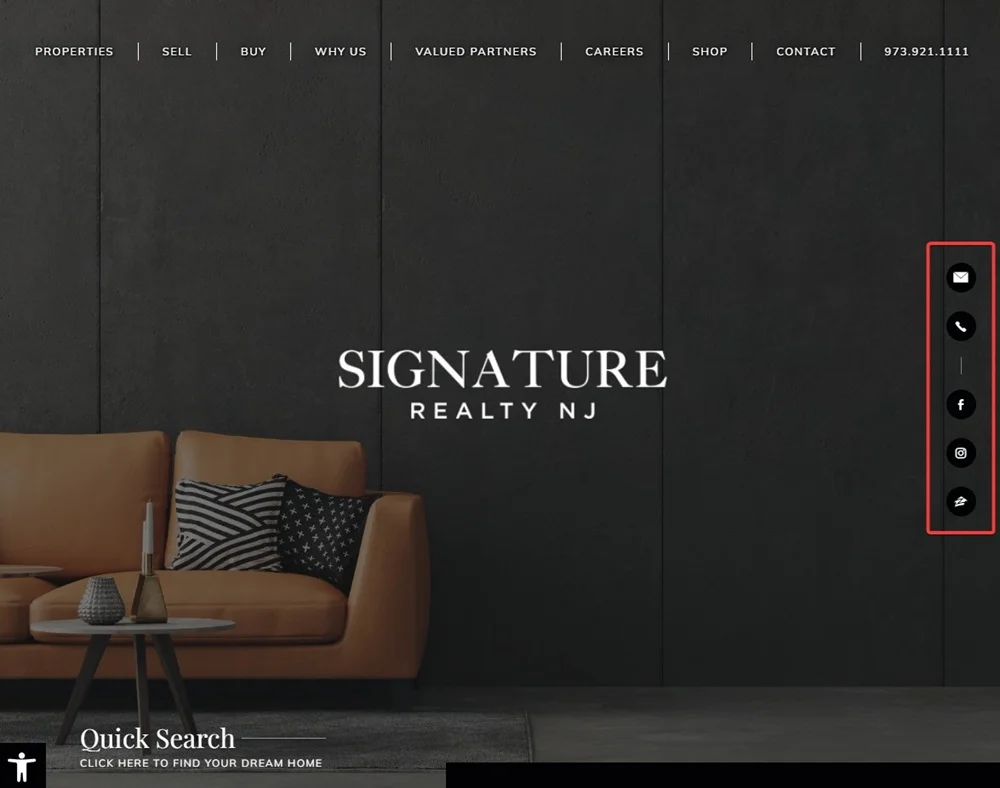
You’ll also find icons neatly placed in the footer, right where users expect them.
Meanwhile, the Contact page features full video episodes of The Signature Sip podcast with Jon & Michelle, embedded directly on the site. Topics like ‘Real Estate Agent to Real Estate Broker’ give visitors a behind-the-scenes look and showcase the team’s personality.
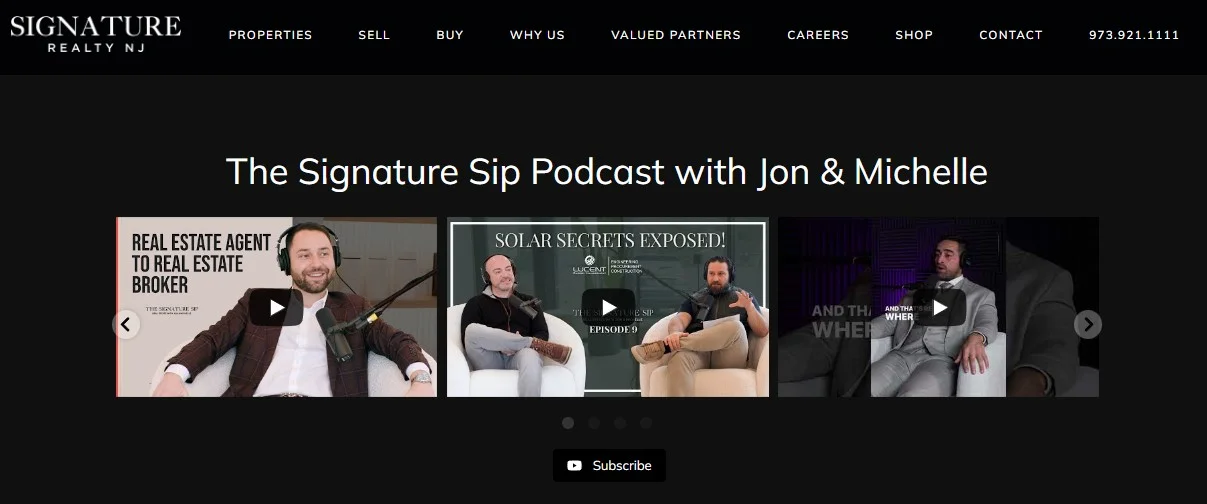
Another way to extend your reach is to add social sharing buttons to your blog posts. It’s an easy way to boost visibility and support SEO through increased engagement and page clicks.
>> Read also: 20+ Best Real Estate Instagram Accounts to Follow
5. Maria Quattrone
Timing is everything when it comes to lead capture, and Maria Quattrone’s real estate website nails it.
As you scroll through the homepage, a bold popup appears halfway through the page. It prompts sellers to take action with two clear options. Each click leads to a tailored offer page, followed by a home valuation form to collect contact details.
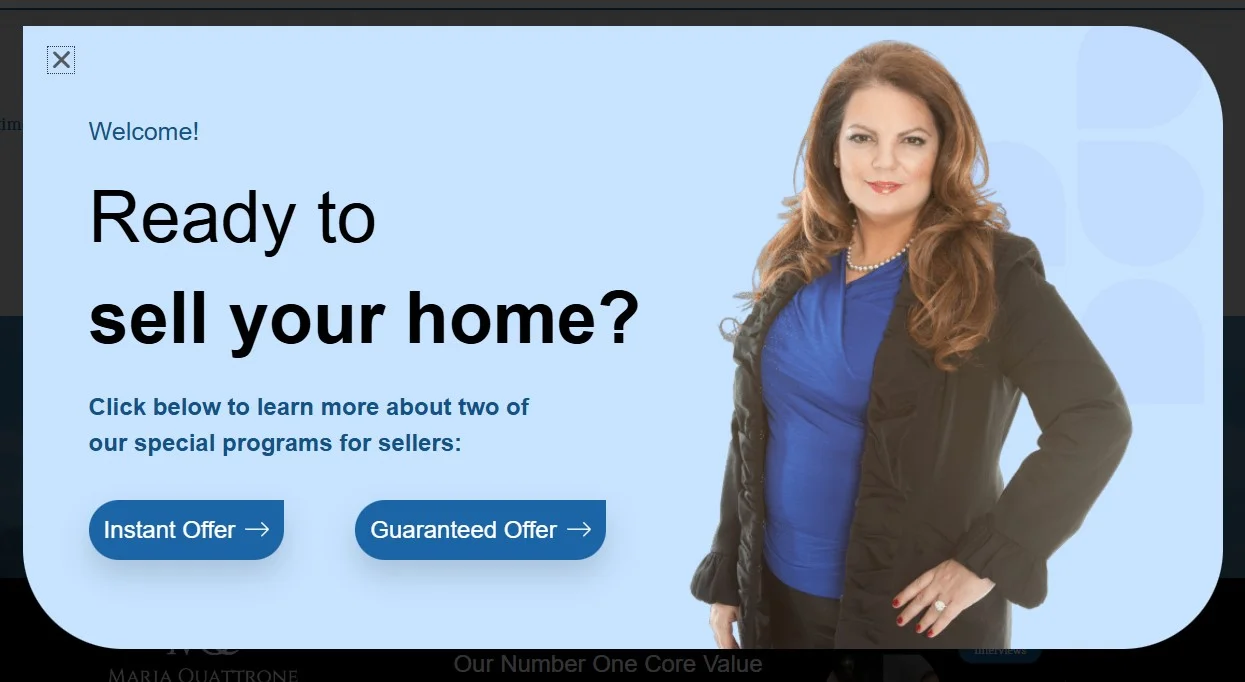
Clear prompts and straightforward forms make it easier for visitors to take action. Just be careful not to crowd your site with too many popups.
Other effective ways to capture leads while visitors browse your real estate website include:
- Downloadable guides for potential buyers and sellers.
- Mortgage calculators that let users email themselves the results.
- Exit-intent popups to catch people before they leave.
- Short forms embedded directly into property pages.
Even without a developer, the best website builders make it easy to add these features and start growing your contact list.
6. Lane Banner
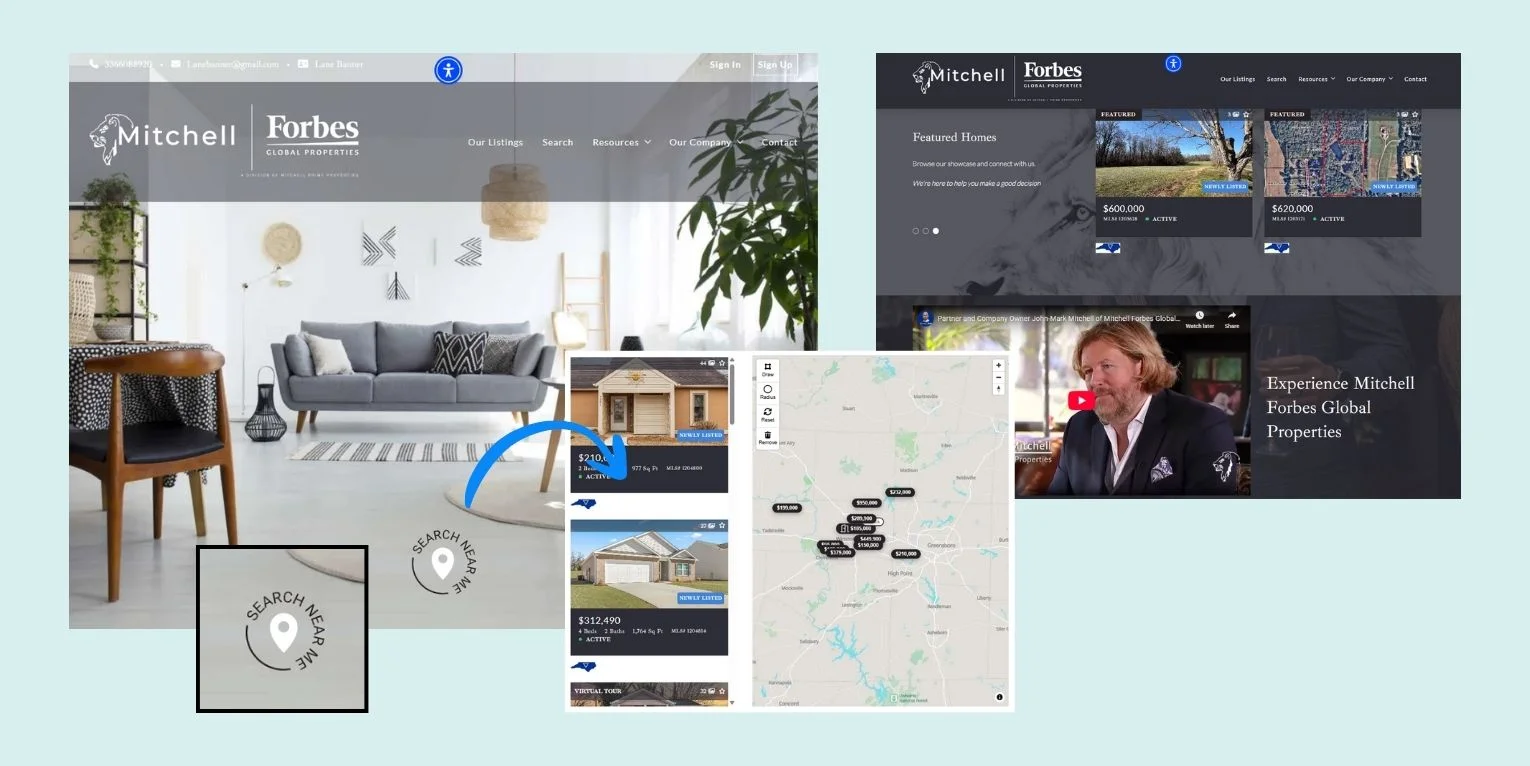
Forbes Global Properties agent Lane Banner’s real estate website is built around helping visitors find relevant offers fast. A standout feature is the “Search Near Me” option. With just one click, it lets users explore homes based on their current location, without manually entering an address.
Combined with a clean layout and clear navigation, the site makes it easy to move from search to inquiry without distractions. The sleek design stays minimal and functional. From the moment you land on the homepage, it feels very professional, intentional and well-organized.
This website was created using Placester. Showing a great example how location-based search and smart UX (user experience) can be implemented without custom development.
7. Jon Weintraub
Jon Weintraub’s NOVA Military Realtor website is built around a single, clear mission: helping military families navigate the home buying and selling process with confidence.
From the first headline, visitors immediately understand who the site is for and why it exists.
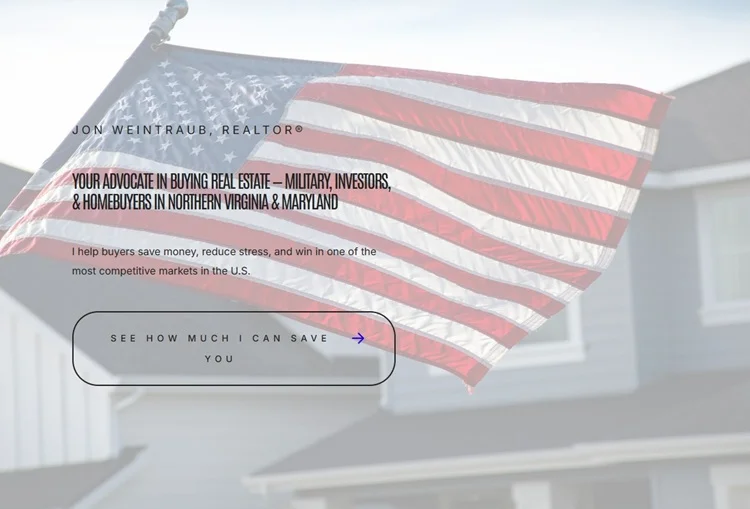
The copy speaks directly to a specific audience and their real challenges, using plain language and a supportive tone. There’s no guessing, no scrolling to figure things out. The message is front and center.
The minimal layout reinforces that focus. With no distractions, visitors are guided toward one primary action: getting in touch. The site is especially effective for mobile users and first-time visitors who just want answers fast.
Expert tip: If you serve a niche audience, take note. Speak directly to them, state your purpose clearly, and remove anything that doesn’t support that goal.
8. Christina Rebhan
Clear navigation helps visitors quickly understand how to use your website. And, it’s just as important for search engines. Platforms like Google, and now AI-powered search tools, favor sites that are easy to navigate and crawl.
The simpler and more intuitive your structure, the more discoverable and useful your site becomes.
Let’s take a look at the example realtor website, Christina Rebhan.
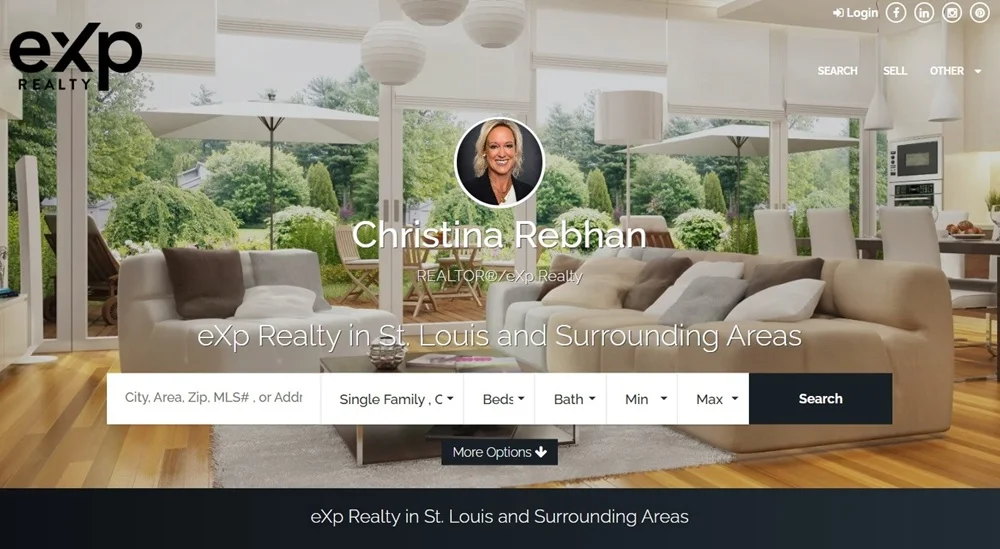
Right from the homepage, visitors can jump straight into the property search bar using filters for location, property type, number of bedrooms, bathrooms, and price range. It’s fast, familiar, and doesn’t require digging through extra menus.
Want more detail? No problem, a ‘More Options’ button reveals a property map and additional search filters to refine results even further.
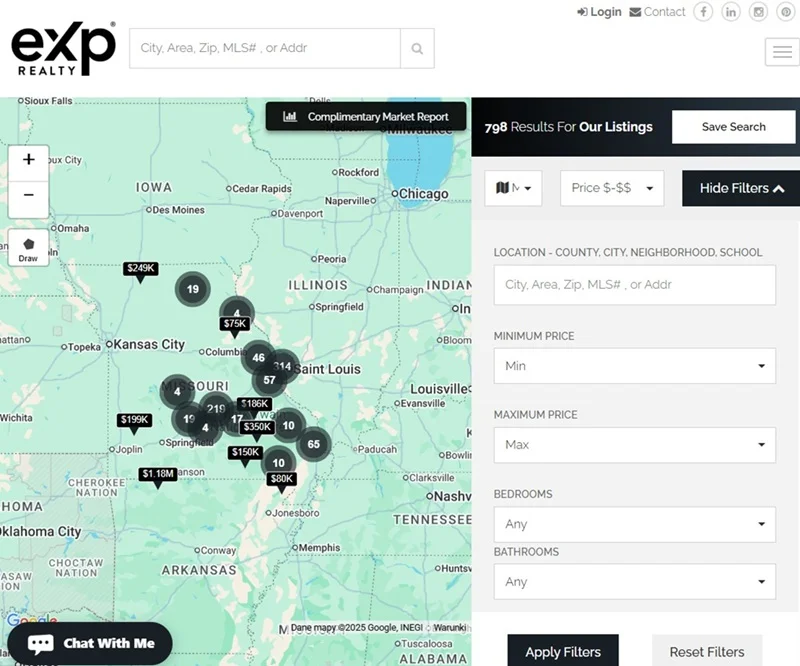
The rest of Christina’s site keeps things just as streamlined.
Complex websites can frustrate users, and in the worst-case scenario, make them go to your competitors. So if you want your real estate website to keep people on your site longer, think your navigation through well.
9. Mike Bauman
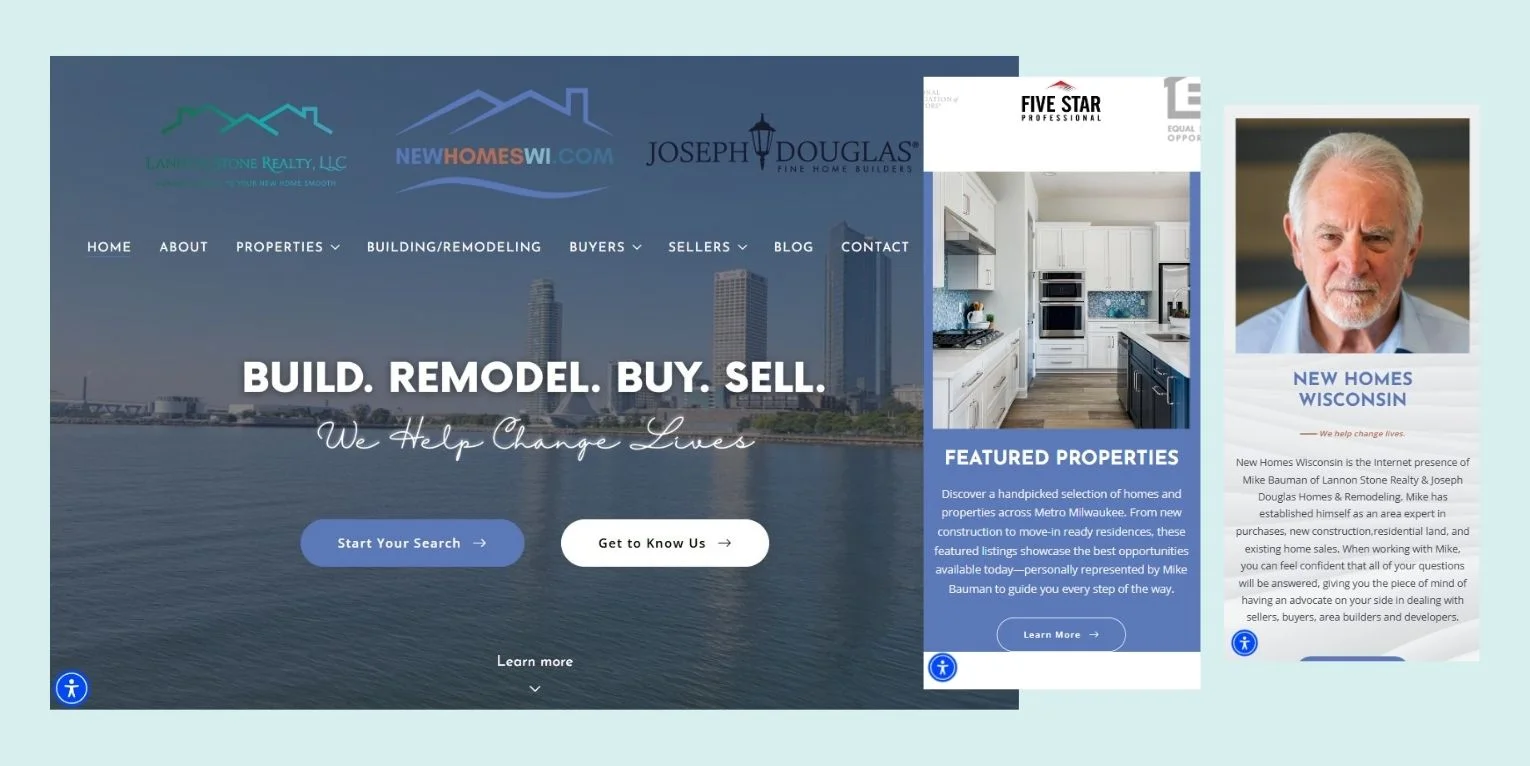
When visitors land on a real estate website, the visuals they see first shape their perception of your brand long before they read a word. Mike Bauman’s New Homes Wisconsin site uses color, photography and layout to create an immediate sense of trust and approachability.
Research shows that:
94%
of first impressions are design related, meaning visitors judge credibility before they read a single word.
Source: British study: “Trust and mistrust of online health sites,” Dr. Elizabeth Sillence
Color plays a big role in how people feel on your site:
Using Color to Shape Brand Perception
| Color | What it tends to evoke |
|---|---|
| Blue | Trust, stability, professionalism |
| Green | Calm, balance, growth |
| White | Clarity, simplicity |
| Black | Authority, confidence, luxury when used sparingly |
| Red | Urgency, energy, attention, best used for small accents or calls to action (CTAs) |
| Orange | Friendliness, enthusiasm, action without the intensity of red |
| Purple | Sophistication, creativity, premium or aspirational feel |
| Warm neutrals (beige, soft gray) | Approachability, comfort, warmth |
| Gold | Luxury, success, quality, works best as a subtle accent |
Human faces increase relatability because people naturally look for faces and social cues online. Friendly visuals can also lower emotional barriers and make a brand feel more approachable.
10. Joanne Sells Chicago
According to research released in 2024 by the National Association of REALTORS®:
69%
of buyers use mobile or tablet devices during their home search.
This means your site needs to work just as well on a small screen as it does on a desktop.
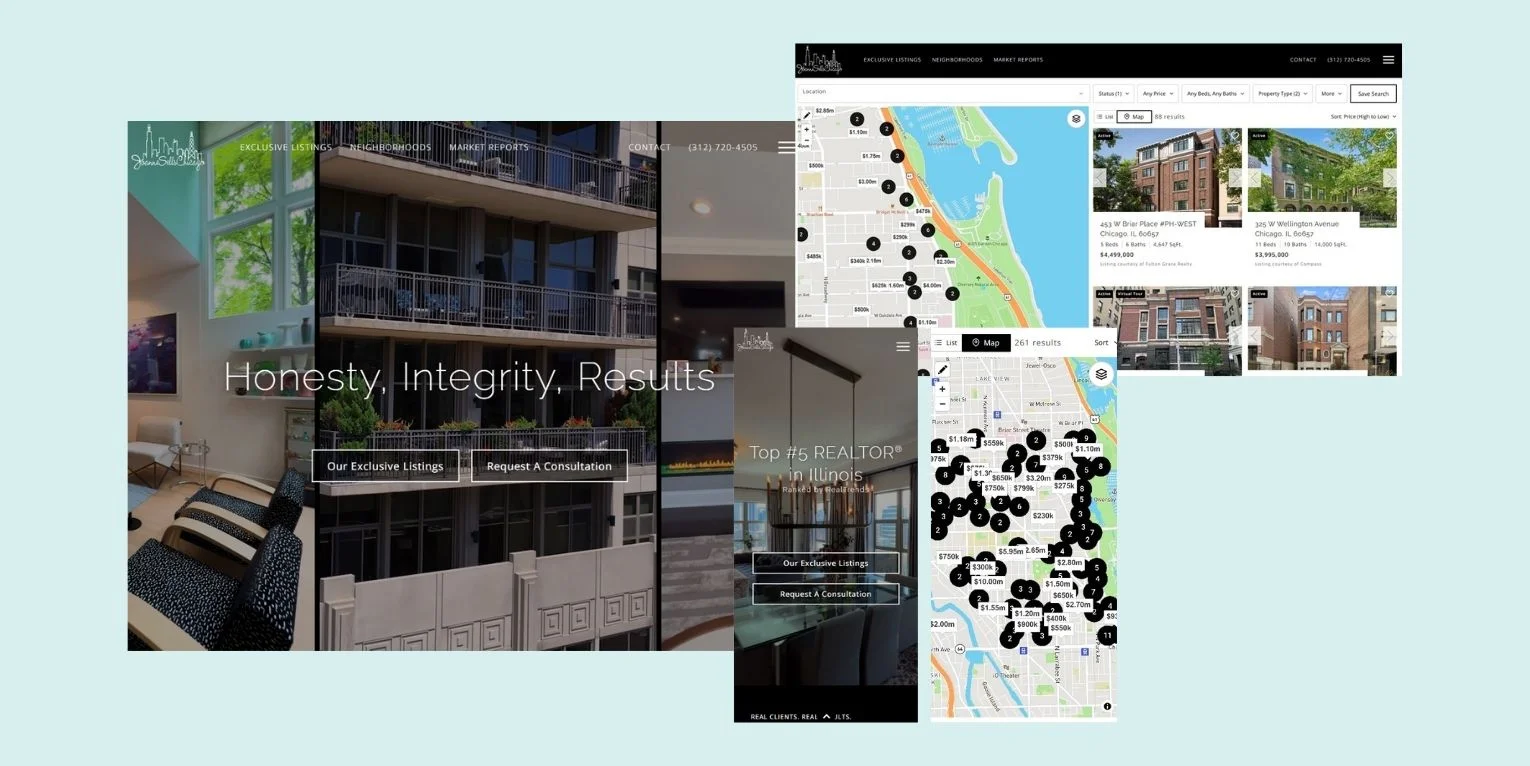
Joanne Sells Chicago’s site has a responsive design and looks great on any device. Just as importantly, key features like an interactive map work smoothly across screen sizes. On mobile, listings stay minimal until tapped, making it easy to browse without clutter.
Not checking how your real estate website looks on mobile? Start now! Otherwise, you could be missing out on a huge number of potential customers.
11. Ben Lalez
When people search for homes, they’re also searching for answers. That’s where content comes in.
Realtor Ben Lalez and his team do a great job of using blogs and videos to explain real estate processes, highlight neighborhoods, and offer tips for the potential buyers, sellers and tenants.
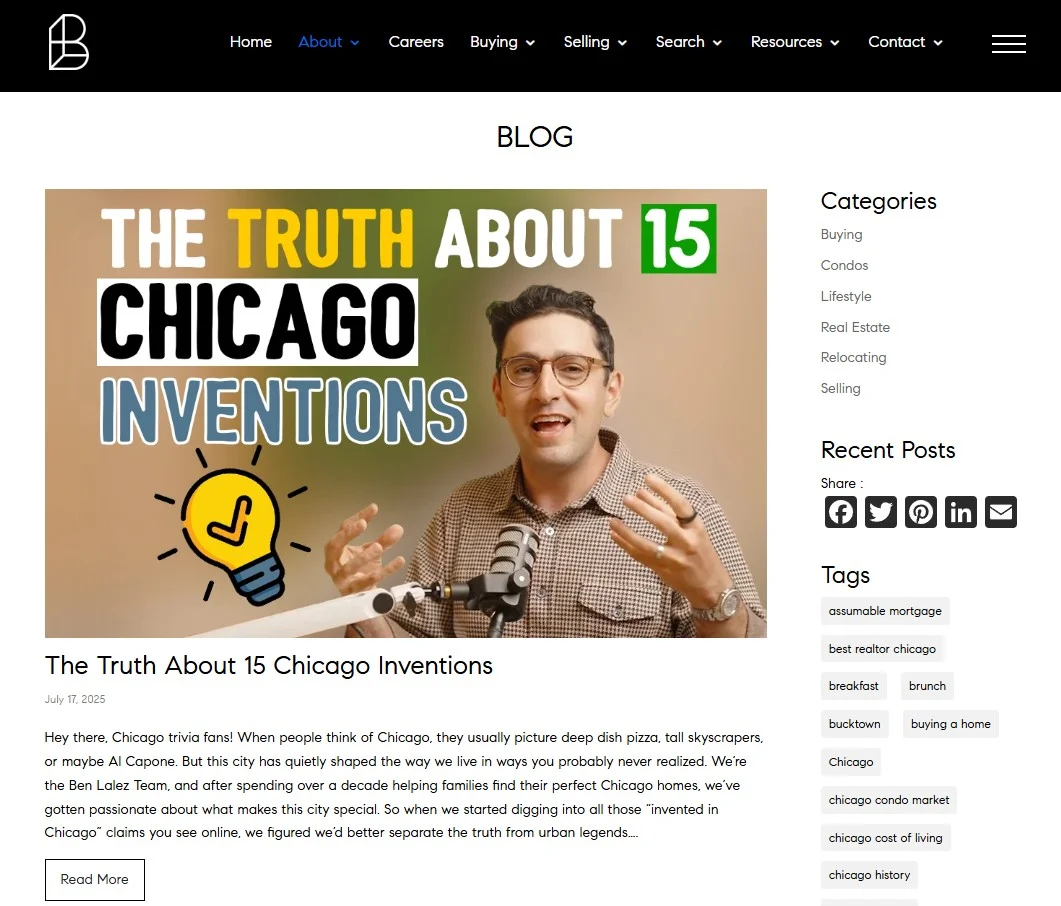
Their YouTube channel and blog cover topics from Chicago history to moving tips, helping potential customers feel more informed and confident.
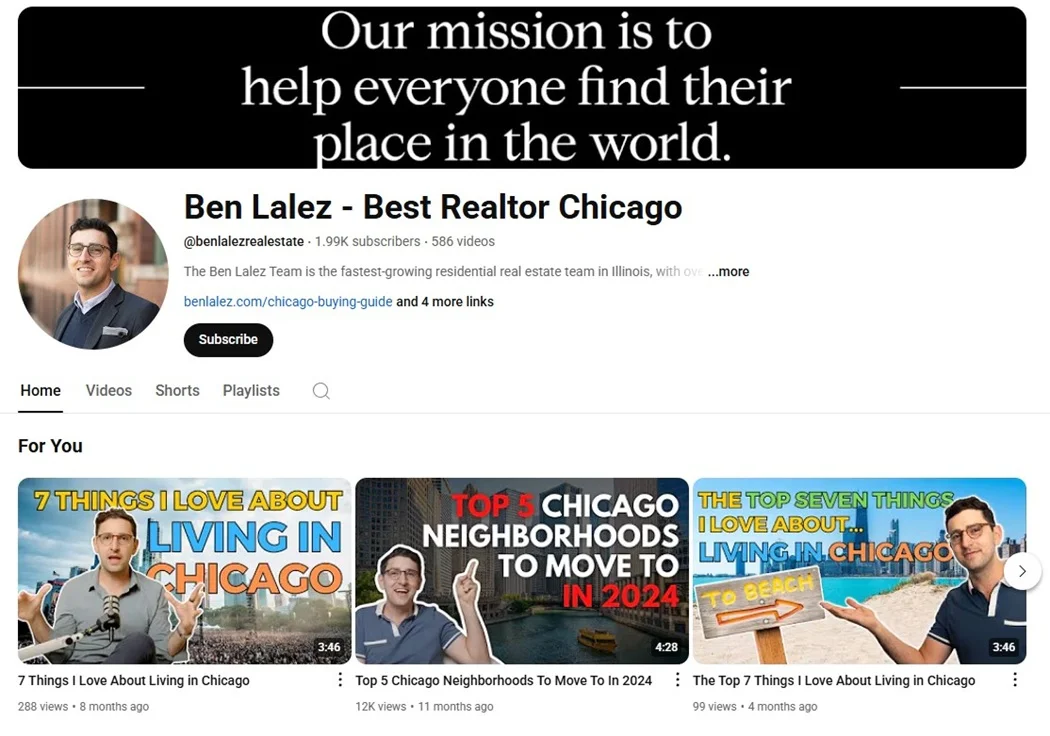
Video marketing is a long-term strategy that delivers results. Consistently sharing valuable content helps Ben build trust with the right audience and elevate his site’s visibility in search results.
12. Graham Pettengill
Building a client base starts with one simple step: getting contact details. Graham Pettengill’s site lets users save their favorite properties but only after signing up.
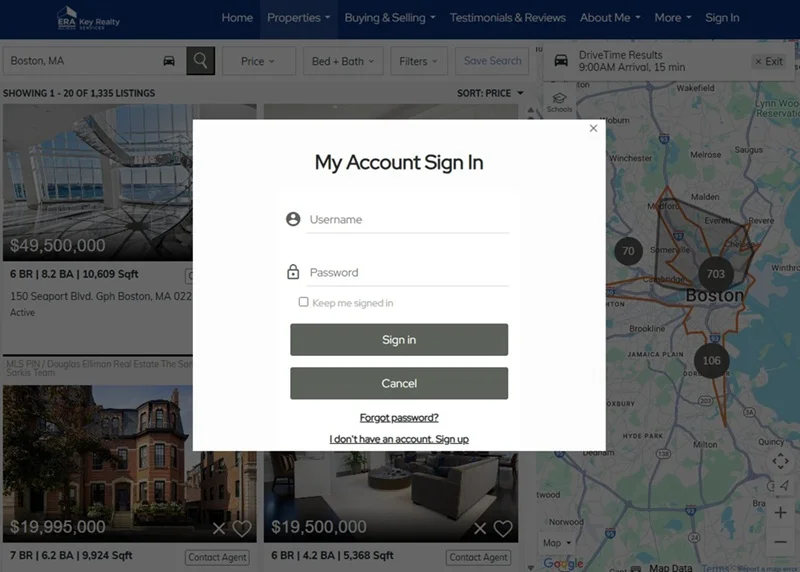
Requesting an email address in exchange for something valuable is a great way to capture contact details from people already browsing and interested in buying.
But there’s more. Graham also uses the Open Home Pro app at open houses to capture visitor info.
“My first year in the business, I received more than 50% of my business from Open Home Pro. I did $9 million in business my first year.”

The app lets attendees sign in on your tablet, which looks professional and makes follow-up easy by syncing with your CRM afterward.
13. DeLeon Realty
DeLeon Realty’s homepage doesn’t waste a pixel. It opens with large, high-quality photos of their top properties, immediately pulling in visitors. The listings are front and center, with clear pricing and locations. Buyers get a sense of what’s on offer right away.
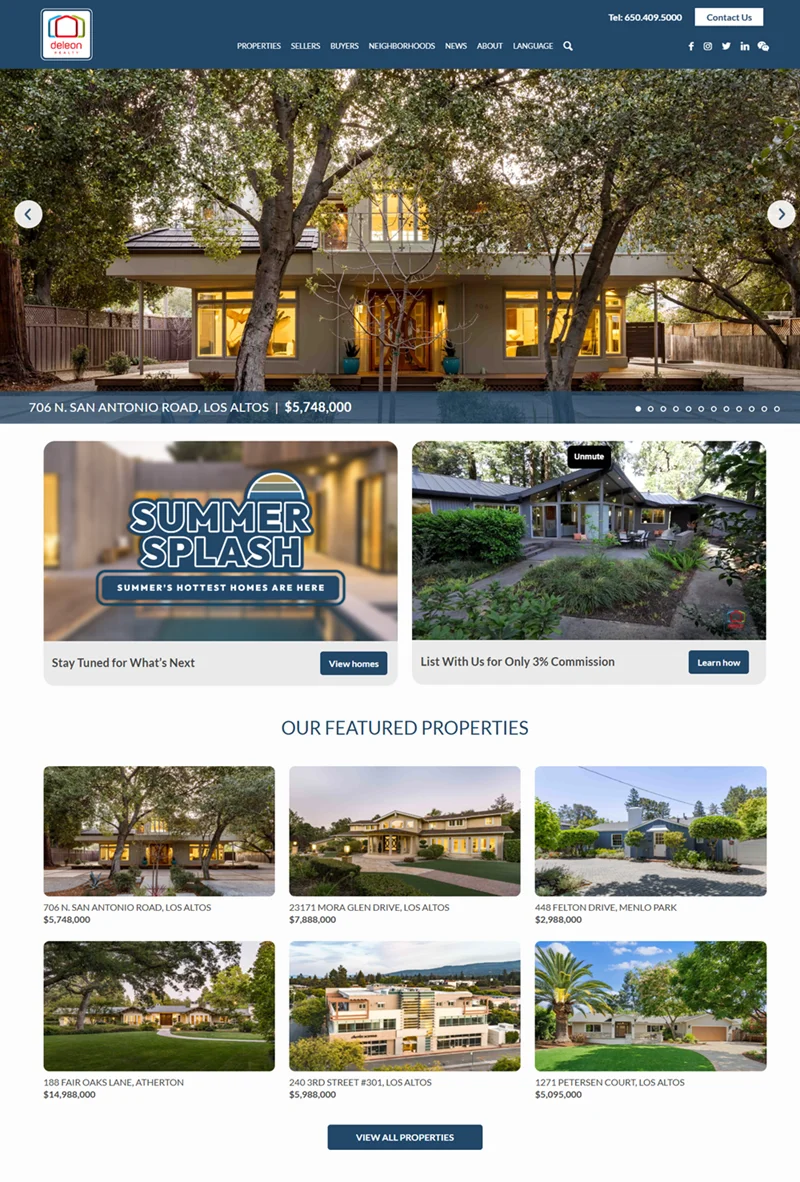
One noticeable little detail on this site is the chat icon that sits alongside social media icons in the website’s header. Once clicked, a QR code pops up.
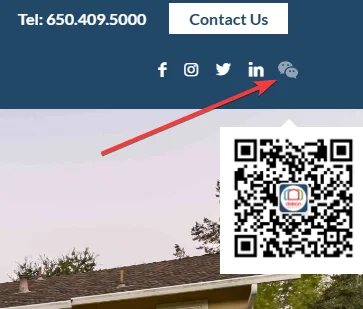
When visitors scan it with their phone, they’re instantly forwarded to a web chat. Quick access enables immediate contact without the need to search for details.
14. Aqua

Aqua’s messaging is clear and consistent across the site. Phrases like “Aqua Cares” immediately communicate values, not just real estate services. The use of blue and green ties the brand to the Pacific Northwest and reinforces ideas of trust, calm and care for the environment.
Instead of selling first, Aqua leads with purpose, community, and responsibility. That approach helps visitors understand what the company stands for before deciding to work with them, which makes the brand more memorable.
Aqua’s website shows clear signs of regular maintenance, which matters more than many agents realize. The homepage features a “Listing of the Month,” which tells visitors right away that the website reflects what’s happening now, not last year.
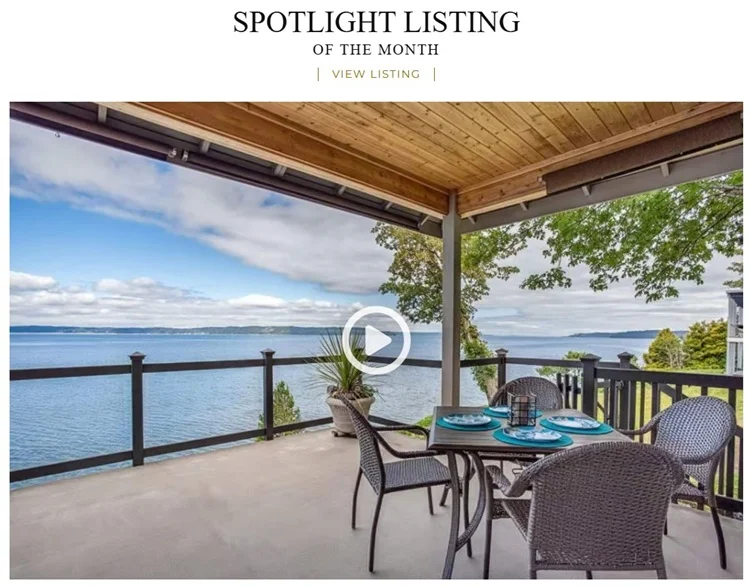
Expert tip: Websites that are updated regularly tend to perform better in search as well. Google prefers sites with current, relevant content and revisits them more often.
15. Inked Real Estate
Property images have a direct impact on engagement. According to Imgix:
60%
Over 60% of viewers’ time on a landing page goes to photos, while only about 20% is spent reading descriptions.
Real estate sites set a strong emotional tone before people even start scrolling.
Inked Real Estate immediately draws you in with a bold, visually appealing homepage. The deep green tones, sculptural furniture, and refined styling create a luxurious atmosphere that says: you’re in good hands. The strong visual identity sets the tone from the very first glance.
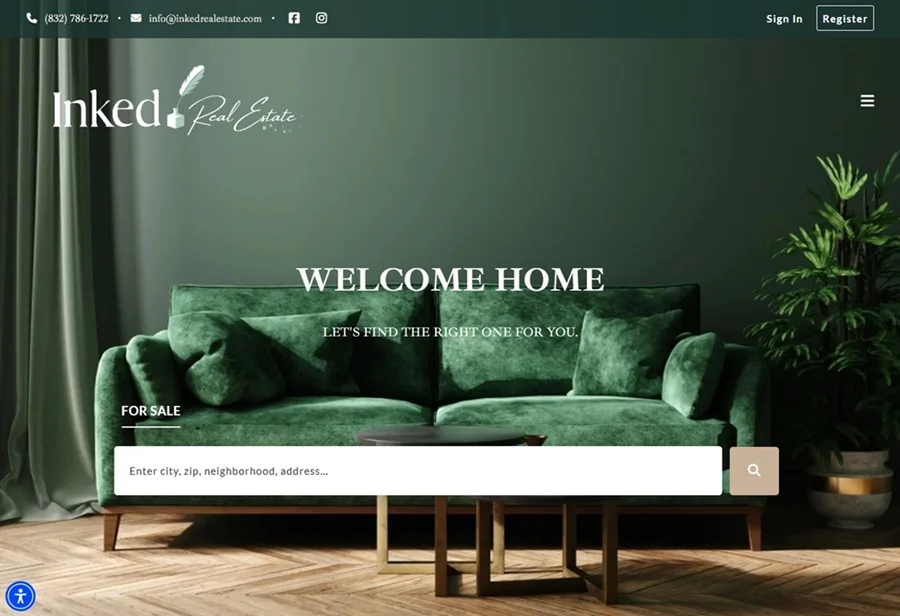
The same visual strategy continues across the site. Consistency makes the user feel they’re dealing with successful real estate professionals who understand design and presentation.
But property photos are often what push buyers to book a viewing. Inked’s property pages are thoughtfully arranged, with clean design that keeps the focus on high-quality visuals.

New trend to note: More agents use drone photography to make listings stand out. Aerial shots highlight property size and surroundings – an easy WOW factor.
16. SPiRALNY
“If people like you, they will listen to you. But if they trust you, they will do business with you.” – Zig Ziglar
And in real estate, trust starts with a face.
That’s why every real estate website should include a clear, easy-to-access and browse team page.
SPiRALNY’s website creators did an excellent job here. Their ‘Our Agents’ page, linked from the top menu, introduces each team member with an elegant headshot, respective contact details and profile links.
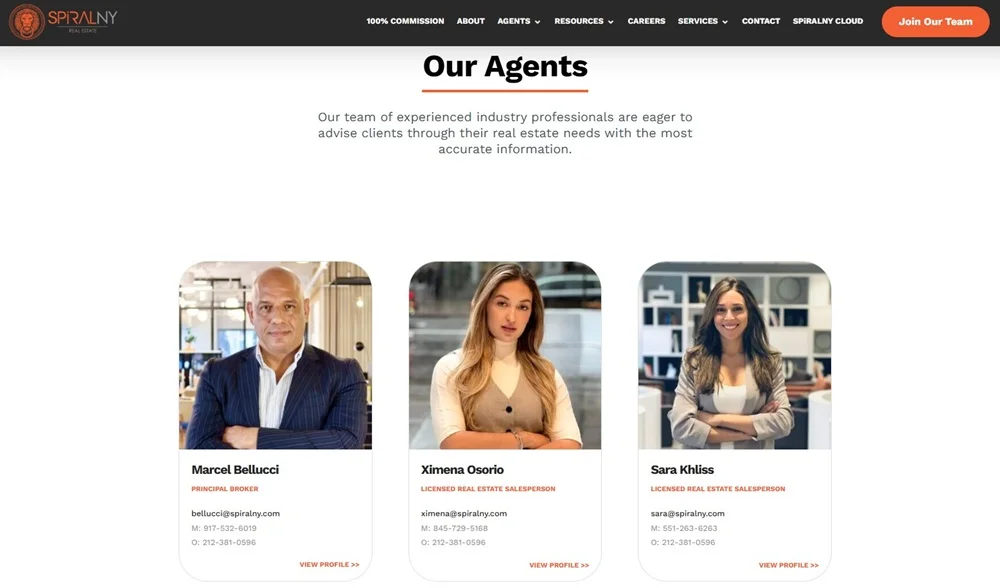
Compelling agent bios and clean, polished headshots instantly create a positive first impression and show clients you take your work seriously. Presenting your team of real estate specialists this way adds personality, boosts credibility, and makes it easy for clients to reach out.
Even if you don’t have a professional photographer on hand, real estate AI tools like Aragon AI or HeadshotPro can help you create consistent agent photos. You can retouch images, change backgrounds, and apply a uniform style to present your team professionally across your entire site.
17. Utah Life Real Estate
Client testimonials are one of the most persuasive tools on your website. Social proof plays a big role in how people make decisions. After all, we’re talking about a life event as personal and high-stakes as buying or selling a home.
Utah Life Real Estate showcases praise-filled testimonials prominently on their homepage.

The section is well-designed: large, readable text, clear attribution plus a scrollable layout. It’s easy to browse multiple reviews without overwhelming the page.
When visitors read real stories from past clients and customers, they’re more likely to see the brand as capable and relatable.
Utah Life also reinforces trust with impressive stats (over 2,000 homes sold, 98% of asking price) and third-party reviews from platforms like Zillow and Google, both showing great ratings.
If your past clients love working with you, ask for a quick review. You can send a short follow-up email or create a simple feedback form they can fill out in minutes.
18. Cynthia Lopez
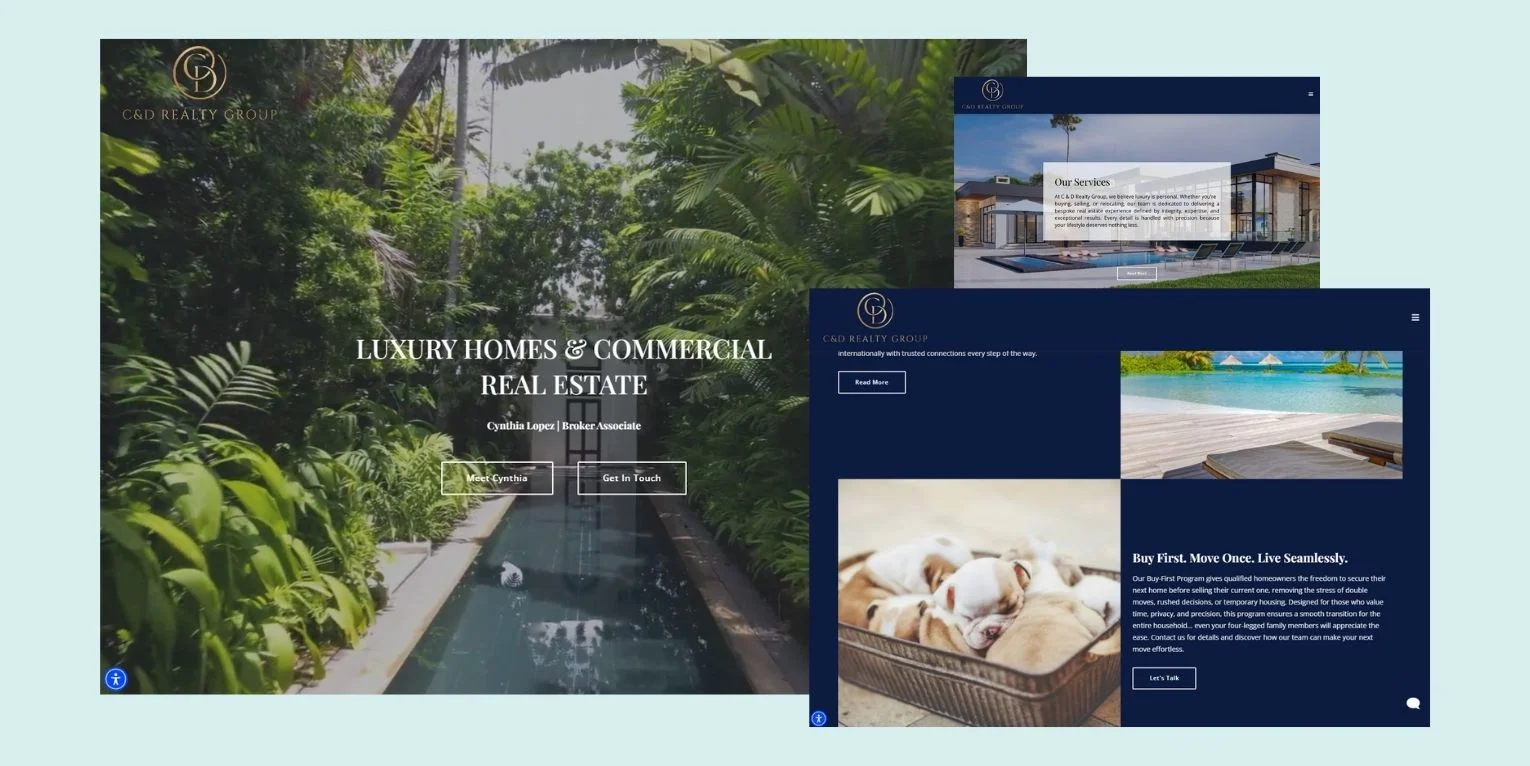
Cynthia Lopez’s site, designed by Placester, communicates luxury from the first glance. And it does it very well! Large, high-resolution images, video sections, and a refined color palette set a premium tone without feeling busy or overdone.
The layout keeps the focus on exclusive properties, luxurious lifestyle and Cynthia’s expertise. Subtle animations and smooth transitions add polish but never get in the way. Every element feels intentional, reinforcing prestige and confidence.
And then there are the puppies!
2.5×
more
Content featuring animals tends to drive higher engagement online, with social posts showing pets generating up to 2.5× more engagement than those without.
Source: Mightily, 2024 publication
That’s likely because people form an instant emotional connection with animal imagery.
Anyways, if you’re in the luxury homes business, your whole site needs to scream it. Your website’s design sets expectations from the start.
19. LanCarte Commercial
If you work with investors, you know numbers matter. LanCarte Commercial makes them front and center. The homepage opens with clear, bold stats:
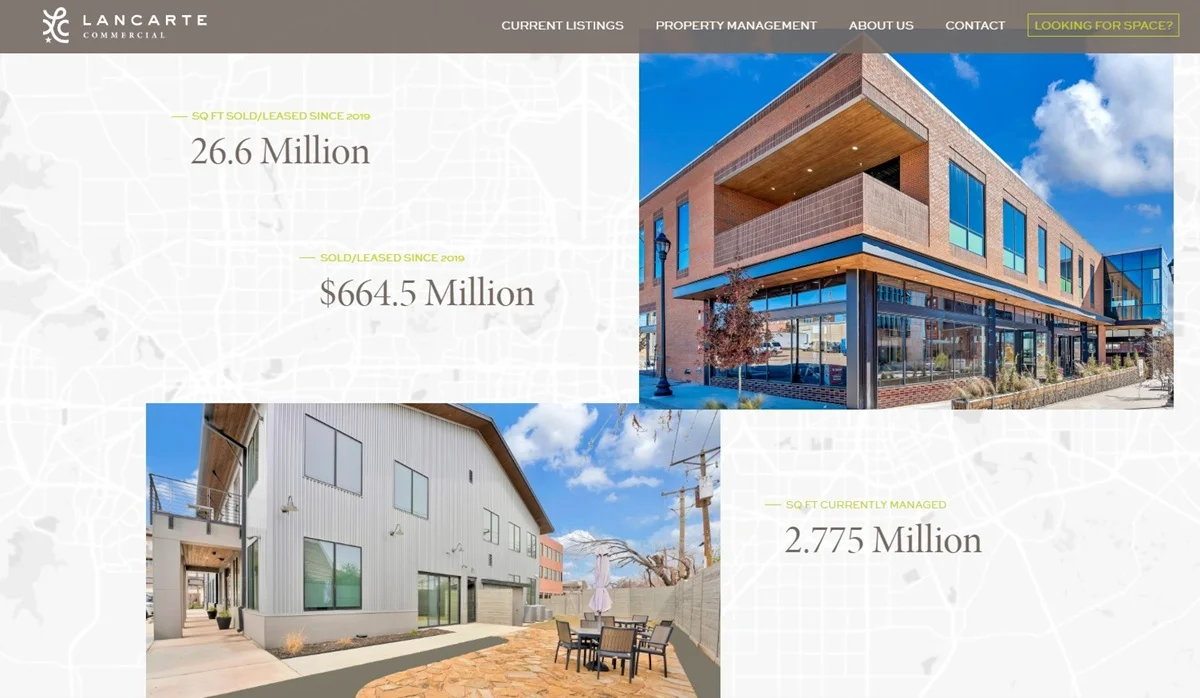
Numbers grab attention fast. If you tuck stats like sold homes into a paragraph, people might miss them!
Put the proof of your experience, scale, and performance in the front and center to make an immediate impact on investor-minded visitors.
20. Scotland Wright
In addition to highlighting impressive numbers and customer testimonials on their homepage, Scotland Wright Associates dedicates an entire page to their projects. Here, investors see recognizable client logos and well-documented success stories that speak for themselves.

Transparent deal history shows website visitors you’ve done the work before and often for companies they know and trust. It also helps potential clients picture what working with you might look like, making your value more concrete.
If you’ve closed deals worth highlighting, show them. Ask past clients for permission to use their company names and photos, and write case studies that tell the story.
21. John Lubinski
John Lubinski is a commercial real estate agent and a successful business entrepreneur from Ohio. His website offers several ways for visitors to reach out, including call, text, and a simple contact form.

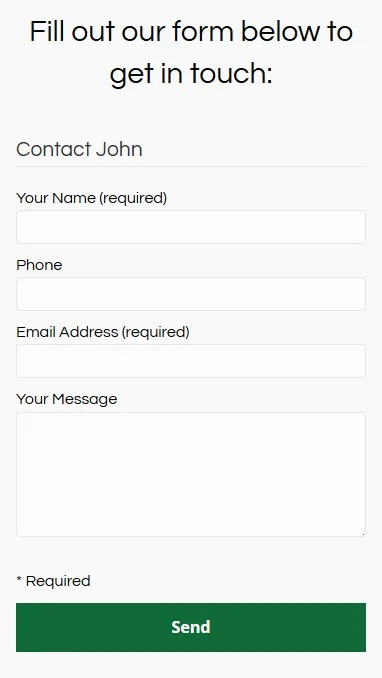
In addition to these standard options, there’s also a call scheduling feature embedded directly on the page.
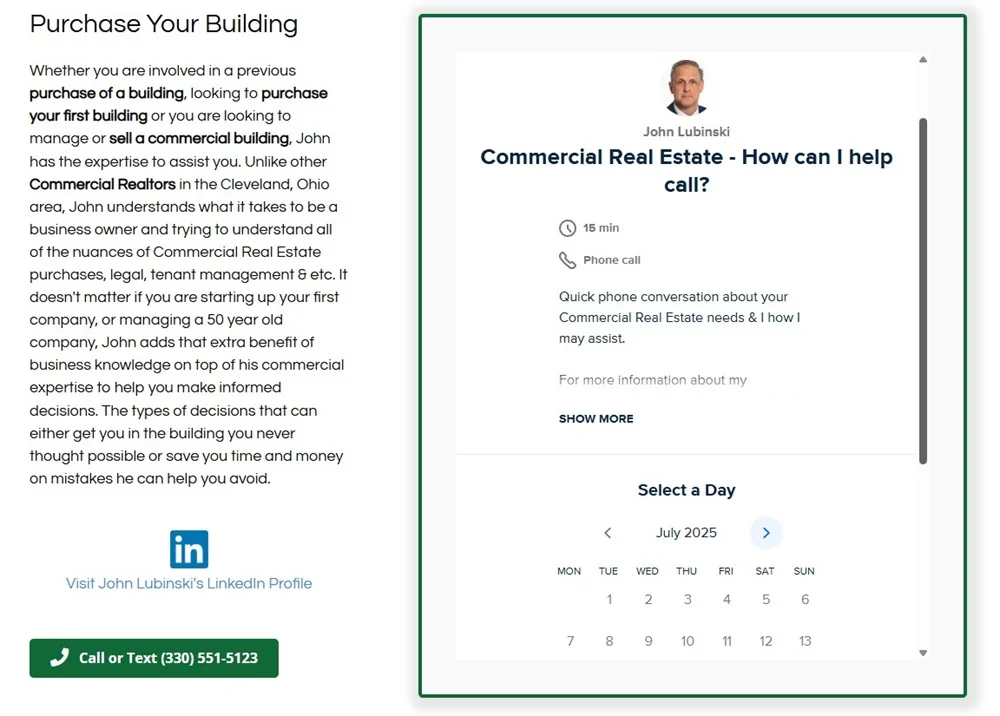
Powered by Calendly, it allows users to choose a time for a 15-minute call without needing to send a separate email or wait for a reply.
Booking calls or meets online makes it easy for busy prospects to set up a quick conversation. It’s a practical addition that helps capture leads who prefer a more direct and scheduled interaction.
With a website building platform like Placester, agents can also enable a live chat featurewith customizable autoresponders. Messages from chat go straight to a connected CRM, helping agents respond quickly and keep all lead activity in one place.
22. Bennett Williams Commercial
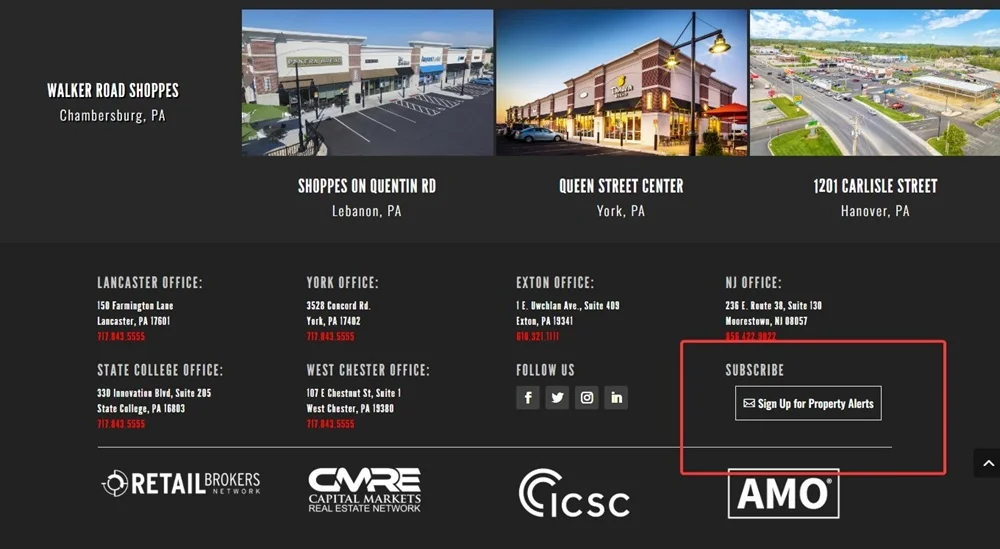
Another example of an effective commercial agent’s website is Bennett Williams. Their marketing team has placed a sign-up form in the website footer, allowing visitors to get automated property updates sent straight to their inbox.
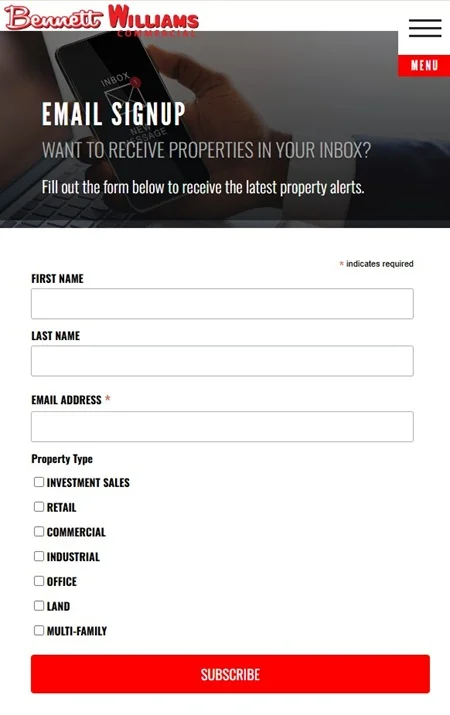
The form only asks for your first and last name (optional) and email address. It also lets users choose the types of properties they want to hear about, helping you generate more qualified leads.
If you have new listings coming in regularly, you can significantly benefit from offering alerts. It keeps prospects engaged without extra effort on your part. Over time, it helps grow a list of people already interested in property investment.
On your site, you could add it as a popup or place it alongside your listings to catch people at the right moment.
23. Crunkleton Commercial Real Estate Group
Local knowledge is a key selling point in commercial real estate, especially for out-of-town investors or businesses looking to expand.
The Crunkleton Commercial team highlights its deep roots in the Huntsville market with a dedicated section and acompelling video on the homepage.
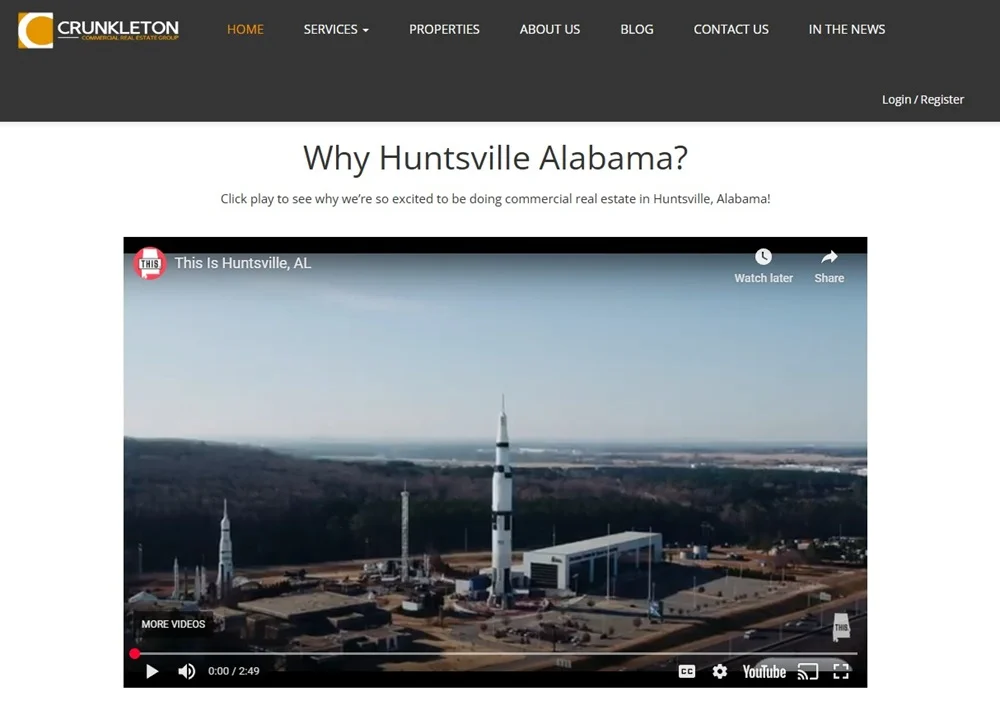
The video, produced by This Is Alabama, is absolutely worth watching. It’s been viewed nearly 49k times, proudly showcasing why Huntsville is such a smart place to do business.
A simple blog post or a short video about why you work in a particular region can also help build authority and trust.
Or take a cue from Crunkleton and feature a well-made third-party video that aligns with your message and speaks to your market expertise.
24. Damac Properties
Browsing static floor plans is quickly becoming outdated. Damac Properties is raising the bar with interactive digital twin technology that turns complex developments into immersive, explorable experiences.
Damac Properties, a luxury properties developer based in Dubai, specializes in high-end residential and commercial properties.
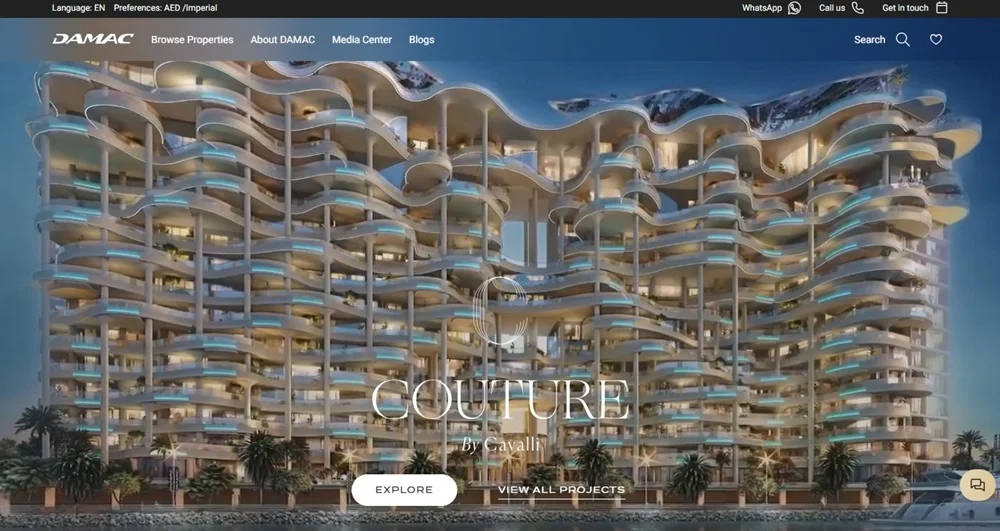
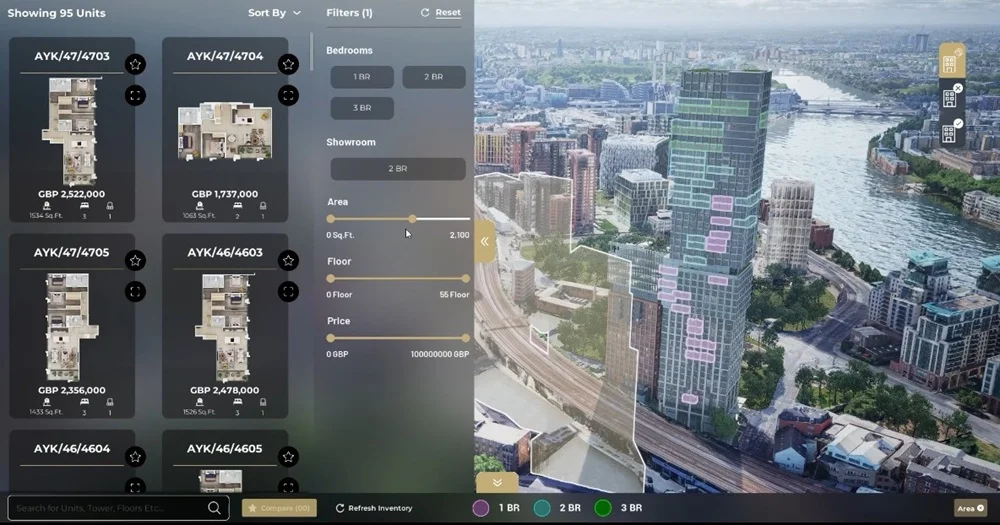
On their website, clients can filter units by floor, size, or price and instantly see those options mapped onto a 3D model of the building.
You can also take virtual walkthroughs of specific apartments directly in your browser.
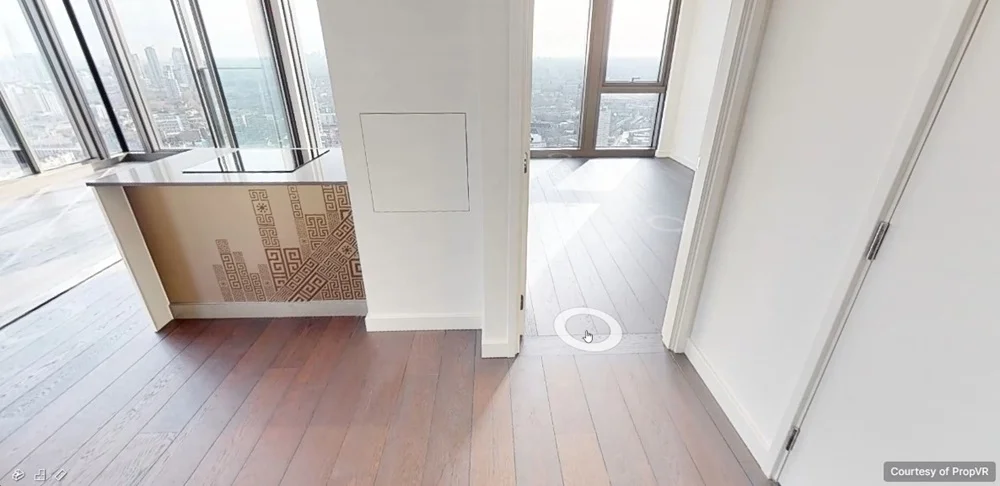
Built with Unreal Engine by PropVR, this feature looks more than impressive. It gives buyers clarity, saves time and builds trust. According to PropVR, using digital twins helped Damac boost revenue by 10x.
If you’re selling off-plan, reaching international buyers, or simply want your website to stand out, investing in this kind of tech can give you a serious edge.
♫ Bonus: The Beverly Hills Estates
The group’s website makes a strong first impression. Everything points to one goal: presenting luxury listings in a way that feels aspirational and refined. From the moment you land on the page, the experience sets the tone for selling and renting high-end properties. A subtle touch, like the soft “California Dreamin’” playing in the background, immediately builds that laid-back, elevated vibe.
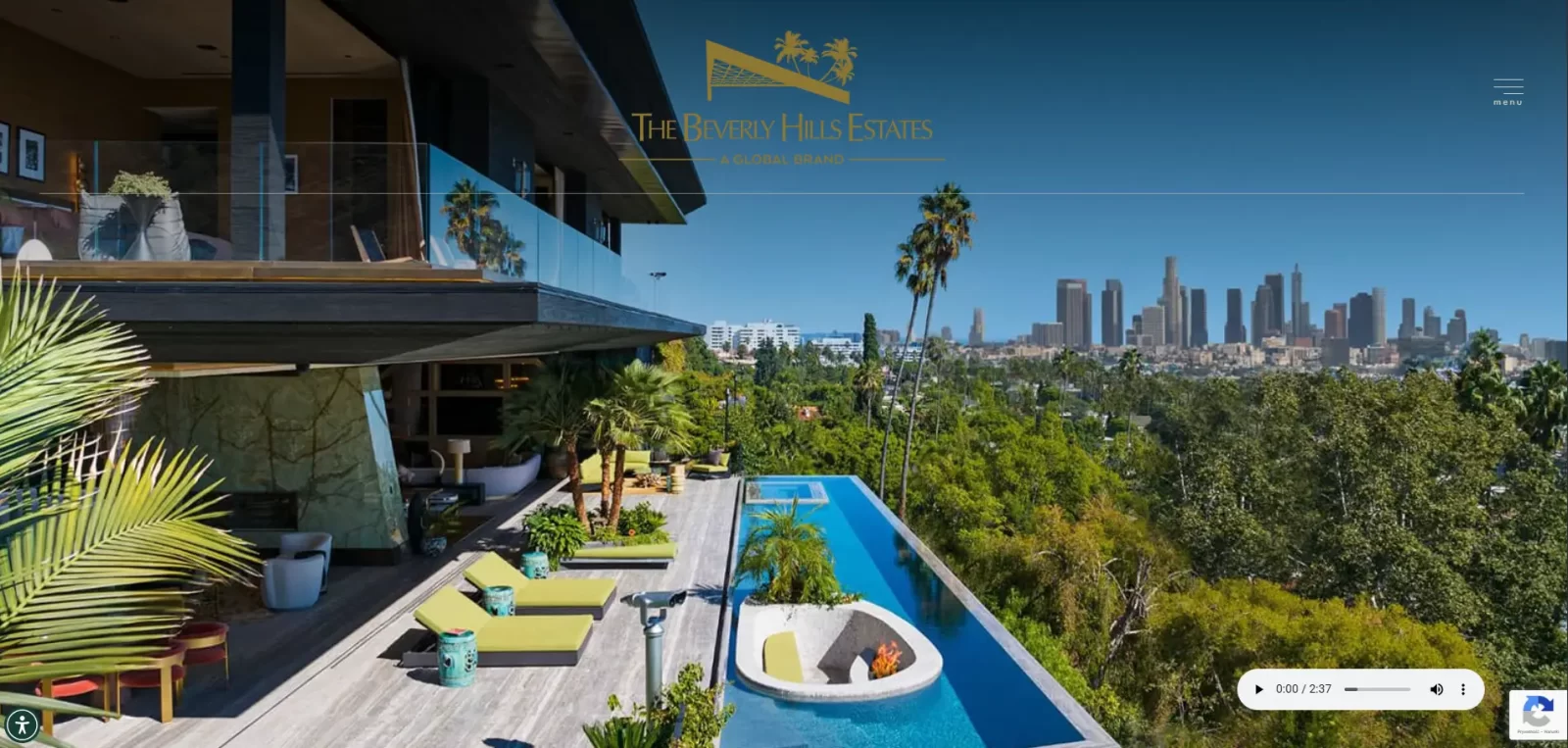
A full-screen mansion shot immediately draws you in, supported by a clear visual structure that guides you through the content. As you scroll, sections unfold smoothly, showcasing press mentions, curated properties, and key details without overwhelming the user.
The design leans on clean lines and modern fonts, which keeps everything easy to scan while still feeling premium. Navigation sits neatly in the top-right corner, making it simple to browse listings, whether someone wants to buy, lease, or explore past sales. The entire flow helps visitors move naturally through the site and find their dream property without friction.
Top real estate website examples: Conclusions
A strategically designed site can do much more than just showcase listings. It helps build trust, guide visitors through their buying or selling journey, and generate leads. These examples show how different real estate companies use various features and modern design choices to boost their online presence.
With Placester, you can create a comprehensive real estate website just like these. Built-in features like mobile-friendly templates, IDX property search, lead capture tools, and the ability to embed online video tours or forms make it easy to launch and manage your site–no coding needed.
Need a user-friendly website built in 5 minutes? Check out our AI website builder for free.
FAQ
How to build a real estate website?
You can build a real estate website using a no-code website builder like Placester. Codeless real website builders are fast to launch and easy to customize anytime. Alternatively, you can hire a freelance web developer or an agency to build the site for you.
How to build a real estate website for free?
Most real estate website builders offer free plans with basic features or limited-time trials. That’s a great option for testing or starting small. These platforms allow you to pick a ready-made template and customize it using a simple drag-and-drop editor, with no coding skills needed.
What are the best real estate website platforms?
Top real estate website platforms include Placester, Squarespace, Wix and WordPress with real estate themes. Placester stands out for real estate specialists thanks to built-in IDX and industry-specific templates.
What should a real estate website design for luxury homes include?
A luxury real estate website needs to combine high-quality visuals, a clear structure, and a refined user experience that reflects the value of the properties. The design should rely on clean lines and modern fonts, with full-screen imagery that immediately showcases luxury listings. Keep navigation simple and intuitive, so users can explore properties without friction.
Published on


Take your real estate website to the next level with Placester!
Discover new opportunities and save thousands of dollars every year.