(800) 728 8391



Quick summary:
- 📈 You gain control over lead generation. Real estate digital marketing helps you attract clients more predictably.
- 🤖 AI reduces the workload. Modern tools make real estate digital marketing much easier to manage independently.
- 🎯 One strategy works better than random activities. The strongest marketing systems connect different channels around clear business goals.
At this point, it’s no surprise that nearly every homebuyer uses the internet during the home search process.
90%
On top of that, around 90% of buyers rely on some form of social media for housing-related content.
Source: REALTOR
What’s the takeaway? As an agent, you need to invest in real estate digital marketing. Today, it’s one of the main ways to attract new clients and stay connected with the people already in your pipeline. Offline channels still matter in real estate, especially at the local level, but most of the business now happens online.
The real challenge is figuring out what works for your business. Should you focus on SEO, paid ads, email campaigns, local content, or video marketing? Which strategies bring qualified leads instead of empty traffic? What tools are worth your time?
Building effective real estate marketing strategies can feel overwhelming at first. The good news is that it’s becoming much easier to handle on your own. AI already helps agents automate repetitive work and spend less money on outside support.
Keep reading to see how you can run digital marketing in your real estate business more independently and efficiently.
What is digital marketing in real estate?
Digital marketing in real estate involves the strategic use of online channels to build visibility and promote properties. These efforts help you reach the specific audiences that matter most to your business. Instead of relying mainly on imprecise cold calls, print ads, or referrals, you attract clients where they now search for listings and market information most often: online.
For many buyers, the first interaction with an agent no longer happens through a phone call or recommendation. It happens during a late-night Google search, while comparing listings, or after reading a few online reviews. That change has made digital marketing a core part of how real estate businesses attract attention and stay competitive.
New technology is changing the real estate industry faster and faster. AI already plays a major role in that shift. Many agents use it to speed up everyday marketing work and spend less time on repetitive tasks. Buyers are adapting just as quickly:
82%
82% of Americans already use AI for real estate insights while navigating the housing market.
Source: REALTOR
The main areas of online real estate marketing include:
- SEO and AI search optimization
- Real estate websites and landing pages
- PPC advertising
- Email marketing
- Content marketing
- Video marketing
- Social media marketing
- Personal branding
- CRM and marketing automation
- Online reputation management
- AI-powered marketing tools and analytics
You do not need to master every channel at once. The goal is to build a system that consistently brings attention to your business and helps you generate leads on a daily basis.
👉 Turn your ideas into a clear real estate marketing plan.
9 benefits of real estate digital marketing
Traditional marketing still has its place, but digital efforts give you far more control over who sees your real estate business and when they see it. A billboard appears in front of everyone driving past it. A digital campaign can reach people actively searching for homes in a specific ZIP code at that exact moment.
The barrier to entry also looks completely different from what it did a few years ago. Running marketing campaigns no longer requires a large team or agency-level budget. AI tools now help agents handle all the work much faster and with far less manual effort than before. Many tasks that once required outside specialists can now be managed in-house with the right workflow.
Digital marketing does not work like traditional TV, radio, or print advertising, where visibility often depends on how much money you can spend upfront. You can start small, test different ideas, and invest more heavily only in the channels that already bring results.
Some of the biggest advantages of digital marketing in real estate include:
🎯 Precise audience targeting
Digital marketing helps you reach the right people. Instead of paying for broad exposure, you can shape campaigns around real demographics and behavioral data. That gives you far more control over where your budget goes and who sees your message.
71%
71% of consumers now expect personalized interactions from brands, while 76% get frustrated when the experience feels generic.
Source: McKinsey & Company
In real estate, relevance has an even bigger meaning because people usually ignore marketing that feels disconnected from their situation or search intent.
🟢 Low entry costs
Digital channels are much more accessible for solo agents and small teams than traditional media. You do not need a massive upfront budget to start building visibility or generating leads online. Even smaller campaigns can produce useful data and bring attention from local buyers or sellers.
10%
Real estate coach Tom Ferry recommends allocating around 10% of your gross commission income to marketing, with roughly 75% of that budget focused on digital channels.
Source: Tom Ferry
⚡ Fast testing and optimization
Digital marketing immediately shows you what works. You can spot weak campaigns early and improve performance based on real audience behavior instead of assumptions.
58%
58% of companies use A/B testing to optimize conversion rates, and 35% plan to do so.
Source: Invesp
🕒 Long-term lead generation
Some marketing assets continue bringing traffic long after publication. A strong neighborhood guide or well-positioned SEO page can still generate leads months later without additional ad spend.
53.3%
Organic search drives 53.3% of all trackable website traffic.
Source: BrightEdge
That makes search visibility especially valuable in real estate, where buyers often spend weeks or months researching online before making a decision.
📊 Measurable results
Digital marketing makes it easier to understand where leads come from. You can track user behavior, monitor conversion paths, and evaluate campaign performance with much more precision than traditional advertising.

Half the money I spend on advertising is wasted. The trouble is, I don’t know which half.
~John Wanamaker
Modern digital analytics exists largely to solve that exact problem.
🤖 Easy automation
Many marketing tasks that once consumed hours of manual work can now run much more efficiently in the background. AI tools help agents save time and maintain more consistent communication without constantly expanding their team.
66%
66% of Realtors say they adopt new technology primarily to save time.
Source: National Association of Realtors
🔄 Flexibility
Real estate markets rarely stay stable for long. Digital marketing gives you room to react faster when buyer demand changes or the economy suddenly shifts.
The most effective marketers regularly adjust their channel mix instead of sticking to one fixed strategy.
75%
75% of them review and optimize their marketing channels at least once per quarter.
Source: HubSpot
🌍 Global reach
Your marketing no longer stops at your local market boundaries. Buyers regularly search for homes in another city, another state, or even another country.
$56B
International buyers purchased $56 billion worth of U.S. residential real estate between April 2024 and March 2025.
Source: National Association of Realtors
That creates major opportunities in relocation markets and luxury real estate.
💰 Cost efficiency
Digital marketing gives you tighter control over spending because you can scale campaigns gradually instead of committing large budgets upfront. That makes it easier to improve return on investment (ROI) over time and shift money toward campaigns producing the best results.
1,389%
Real estate has the highest SEO ROI among all analyzed industries, reaching 1,389% over a three-year period.
Source: First Page Sage
How to use digital marketing in real estate? 10 powerful strategies
When using digital marketing in real estate, always adapt your strategy to your business goals and current stage of growth. The needs of a new agent look completely different from the priorities of an established team trying to scale lead flow or strengthen local market authority.
Strong digital marketing usually comes from consistency and clear positioning, not from chasing every new platform or trend. The channels you choose should support the way your business operates and help you attract clients who fit your niche and objectives.
Below, you’ll find 10 powerful digital marketing strategies for real estate that can help you boost your online visibility, build trust, and generate more qualified leads over time:
1. Build a professional real estate website
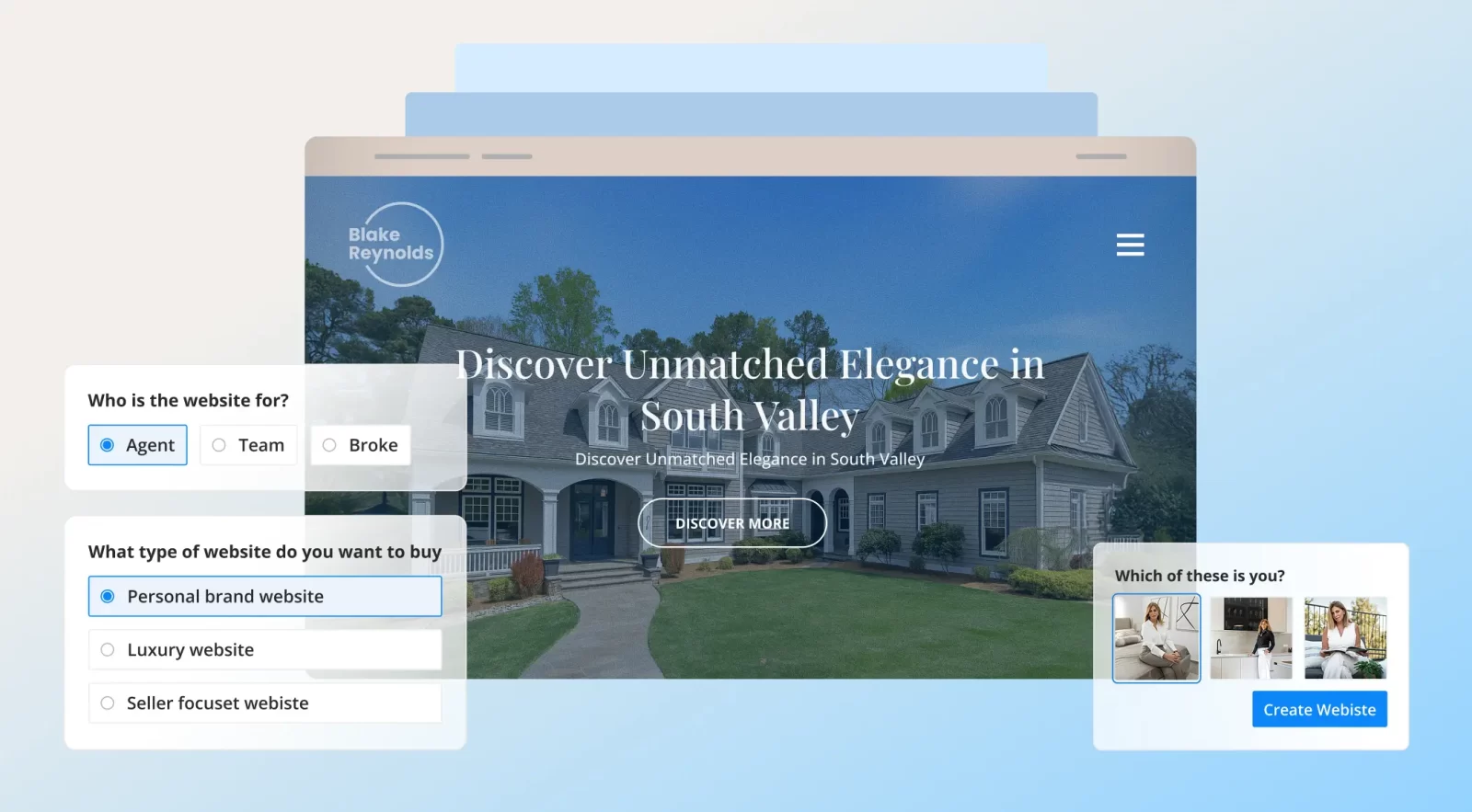
Creating a real estate website has become much easier than it was only a few years ago. Platforms like Placester now use AI to help agents launch websites without hiring developers or building everything manually from scratch.
After you sign up for Placester, the AI assistant analyzes your business and automatically creates a website structure tailored to your brand and market. You can later refine individual sections with simple prompts and tailor them to your needs. Instead of rebuilding pages manually, you can type instructions like “change the background to blue”. AI also helps generate website copy and even blog articles, which removes one of the biggest barriers for agents trying to maintain a strong online presence consistently.
Your website should become the center of your real estate digital marketing plan because most other channels eventually send traffic back to it. A well-built platform helps you:
- Generate and capture leads through contact forms and landing pages
- Publish local content that improves visibility in search engines
- Build trust before the first conversation with a client
- Showcase properties and market knowledge in one place
- Support long-term SEO growth through educational content
- Improve conversion rates with better user experience and navigation
- Stay independent from constantly changing social media algorithms
👉 Compare the best website builders for real estate agents.
2. Create content for your target audience
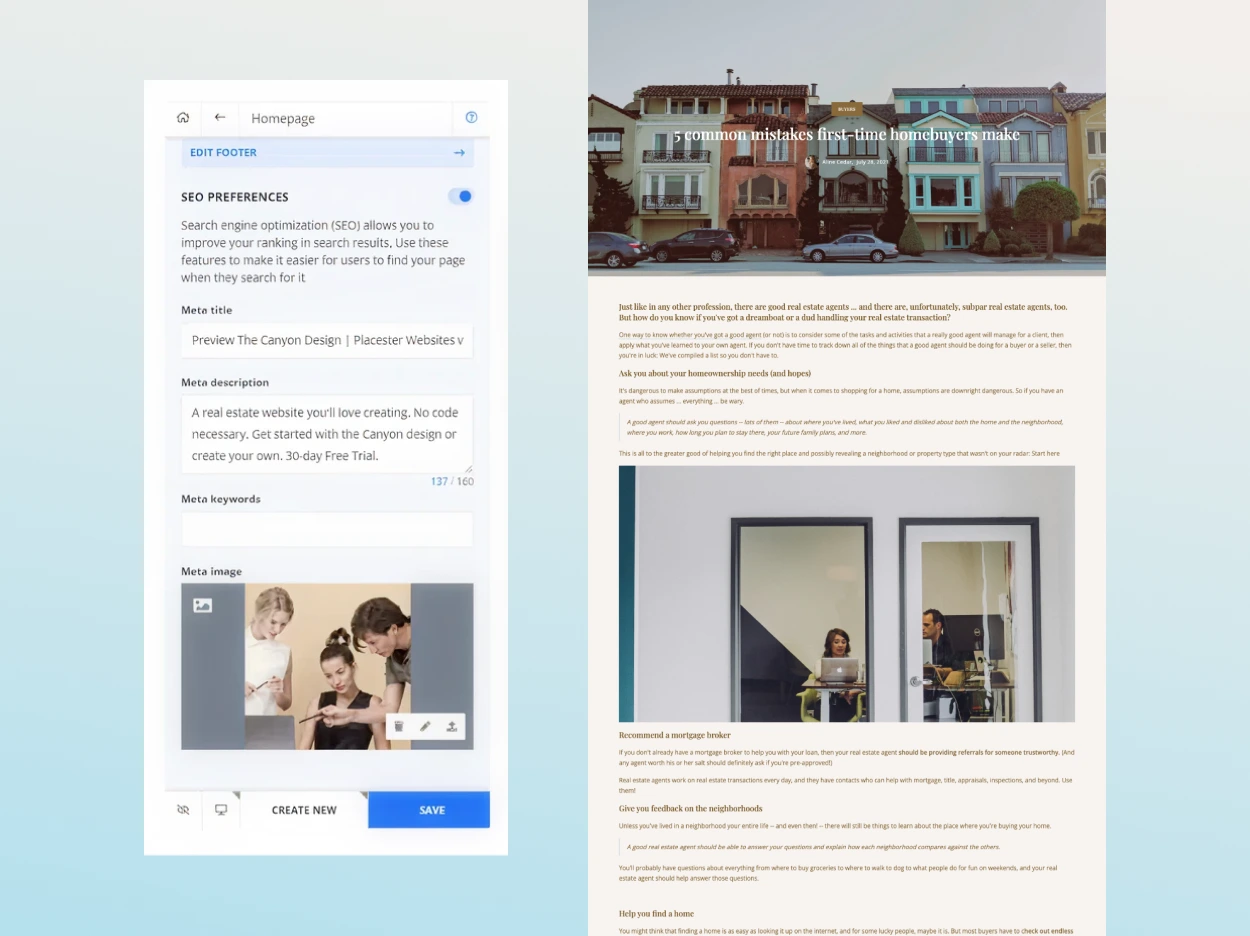
Content works best when it answers questions tied to a specific type of client. Google rewards pages that closely match search intent. That means the right article or local guide can put your business in front of buyers and sellers already researching the market.
At the same time, useful content quietly builds authority. Someone who spends ten minutes reading your market analysis or relocation guide usually trusts your expertise more than someone who only saw a generic social media post.
The biggest mistake is creating broad content that tries to speak to everyone at once. It should reflect the problems, motivations, and search behavior tied to your actual audience:
| Target audience | Content examples |
|---|---|
| First-time buyers | Mortgage basics, affordability guides, neighborhood comparisons, closing cost explainers |
| Luxury buyers and sellers | Market trend analysis, lifestyle-focused content, relocation insights, private listing strategies |
| Investors | Rental market reports, cap rate breakdowns, cash flow analysis, emerging neighborhood opportunities |
| Home sellers | Pricing strategy guides, staging advice, local market updates, timelines for selling |
| Relocation clients | Cost-of-living comparisons, school district guides, moving checklists, local area overviews |
| New agents (if you are a recruiting broker) | Commission models, brokerage culture, technology stack explanations, onboarding support content |
Tool tip: Useful tools for real estate content creation include ChatGPT for ideation and drafting, Placester for AI-assisted real estate website content, and Jasper AI for scalable marketing copy workflows.
👉 Explore high-converting real estate blog topics.
3. Run PPC marketing campaigns
PPC campaigns help you appear in front of potential clients much faster than organic marketing channels. You can use Google Ads and Meta Ads to target very specific audiences instead of paying for broad exposure with uncertain results. That makes PPC useful across the entire marketing funnel.
At the same time, these platforms became especially popular in real estate because they help you reach people who are already close to making a decision. You can shape campaigns around demographics, online behavior, or local market activity, so your ads always appear in front of audiences with strong purchase intent.
PPC advertising also gives you unusually strong control over performance and costs. You decide how much to spend and what action counts as success. These campaigns operate on a pay-per-click model, which means you pay only when someone interacts with the ad. That level of measurability makes optimization much easier than in traditional advertising.
Common PPC formats and placements include:
- Google Search ads appearing above organic search results
- Google Display ads shown across websites in the Google Display Network
- YouTube video ads targeting specific audiences and search behavior
- Facebook feed ads promoting listings, guides, or lead magnets
- Instagram Stories and Reels ads focused on visual engagement
- Retargeting ads shown to users who have already visited your website or listing pages
👉 Understand the basics of real estate PPC advertising.
4. Launch email nurture sequences for new leads
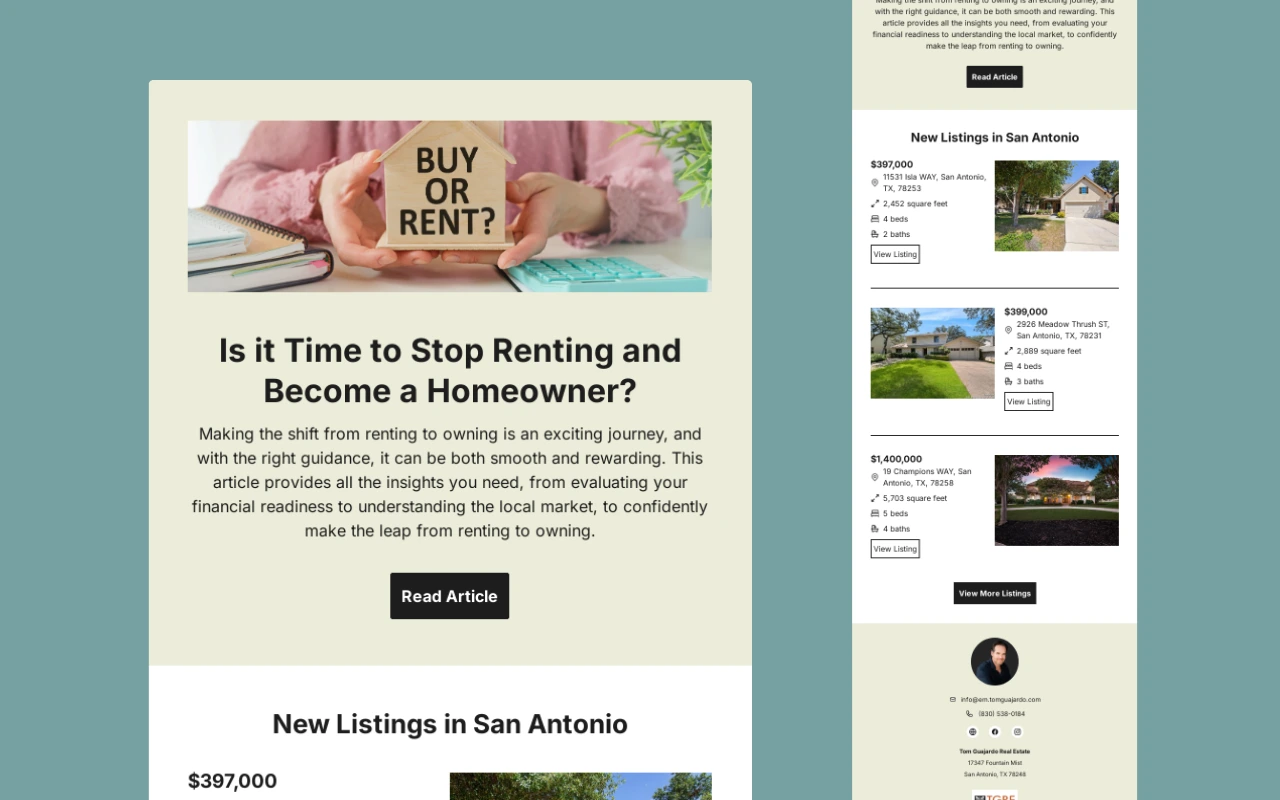
Most real estate leads do not convert immediately after the first interaction. Many people spend weeks or even months comparing available options. Lead nurturing helps you stay visible during that process through automated email sequences that continue the conversation long after someone discovers your business online.
Email marketing works especially well here because it gives you direct access to the lead without depending on social media algorithms or unpredictable ad costs. A strong nurture sequence should feel useful rather than aggressive. Focus on answering real questions, explaining local market changes, and helping the lead move closer to a decision at their own pace.
Tool tip: Want to simplify lead segmentation and automated follow-ups? Use tools like Mailchimp, HubSpot CRM, or Follow Up Boss.
👉 Read our ultimate guide to real estate email marketing.
5. Create short-form property video content
Short-form video became one of the strongest attention drivers in real estate because it communicates much faster than static photos or text-heavy posts. It works well not only in listings, but also much earlier in the marketing funnel through social media content.
Educational videos deserve special attention here because platforms like YouTube and TikTok make it easier to explain market trends or financing questions in a format clients want to consume. Over time, that type of content helps you build familiarity and trust.
82%
82% of marketers say video delivers a positive ROI.
Source: Wyzowl
Creating real estate video content has also become much more accessible than it used to be. You no longer need an expensive production crew to publish useful listing videos or local market content consistently. Modern smartphones already record in very high quality, while affordable drones make aerial footage available even for smaller agents and teams.
If you are not sure what to record for your real estate business, start with these formats:
| Video format | Best channels | Main goal |
|---|---|---|
| Property walkthrough clips | Instagram Reels, TikTok, YouTube Shorts | Increase listing engagement and attention |
| Virtual tours | YouTube, listing pages, websites | Improve remote viewing experience |
| Neighborhood tours | YouTube Shorts, TikTok, Facebook | Showcase location and surroundings |
| Market update videos | Instagram, LinkedIn, YouTube | Educate the audience and strengthen expertise |
| Before-and-after staging videos | Instagram Reels, TikTok | Improve visual impact and seller interest |
| Client Q&A videos | Instagram Stories, YouTube Shorts | Build trust and answer common objections |
| Behind-the-scenes content | Instagram Stories, TikTok | Humanize your brand and stay visible regularly |
| Educational explainer videos | YouTube, Facebook, blog pages | Support SEO and attract long-term traffic |
Tool tip: CapCut makes short-form real estate video editing much faster, especially for TikTok, Instagram Reels, and YouTube Shorts.
👉 Find the right drone for your real estate videos.
6. Improve lead generation with local market magnets
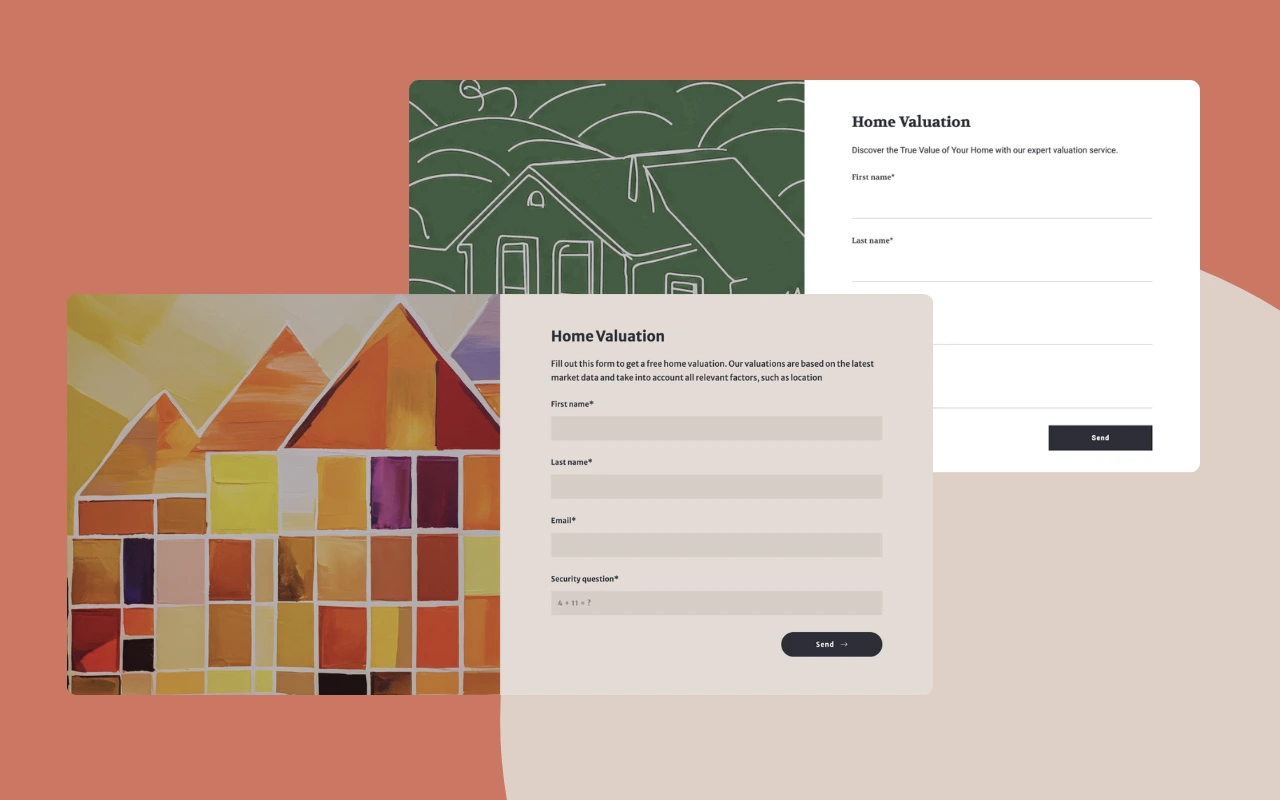
Lead magnets help you turn anonymous traffic into leads by offering something valuable in exchange for contact information. In real estate, the strongest lead magnets usually rely on local market knowledge because buyers and sellers actively search for information tied to:
- Pricing
- Neighborhoods
- Taxes
- Inventory levels
- Relocation decisions.
You also do not need weeks of work to create these materials anymore. AI tools can help you organize market data and generate first drafts much faster than before.
A simple landing page connected to a CRM or email platform is usually enough to start collecting leads. These lead magnets perform especially well when promoted through Google Ads, local SEO pages, social media campaigns, or email newsletters tied to specific audiences and neighborhoods.
Popular real estate lead magnet formats include:
- PDF guides and ebooks
- Downloadable market reports
- Checklists
- Calculators
- Interactive tools
- Automated email courses and sequences
- Webinars and video trainings
- Home valuation forms
- Templates
- Maps and neighborhood guides
- Spreadsheets
- Quizzes
- Gated articles and reports
- Buyer and seller toolkits
👉 Explore proven real estate lead generation ideas.
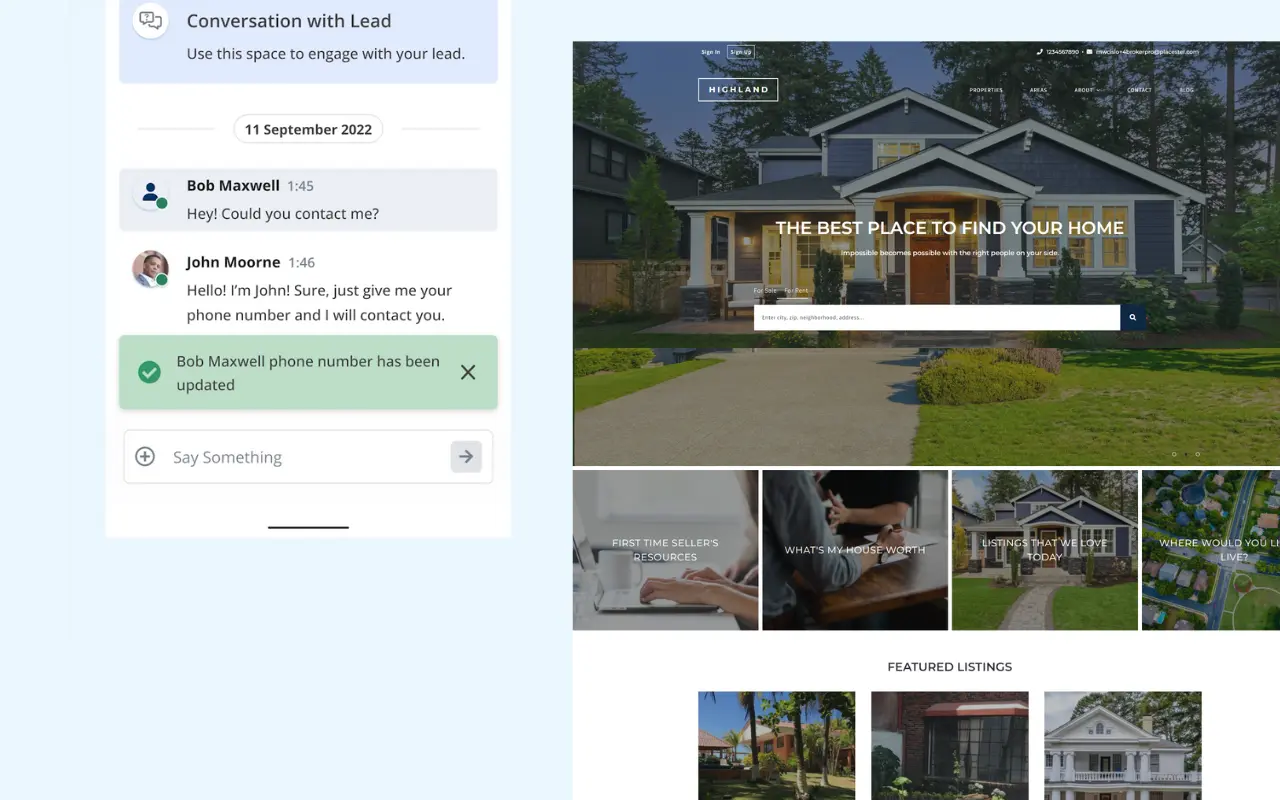
7. Implement AI chat tools to improve response speed
8x
Responding to a lead within five minutes can increase conversion rates up to 8 times compared to waiting even half an hour.
Source: InsideSales
That potential revenue may disappear surprisingly fast once your business starts generating leads from multiple channels at the same time. Website traffic, social media messages, and listing inquiries can quickly create more conversations than one person is able to handle manually throughout the day.
AI chat tools help solve that problem by responding instantly when someone visits your website or sends a question through a connected channel. Modern chatbots can:
- Answer basic questions
- Collect lead information
- Qualify inquiries
- Recommend listings
- And schedule appointments.
Most platforms now work through simple integrations and require very little technical setup. In many cases, you only need to connect the chatbot to your website, define a few workflows, and customize the tone of communication to match your brand identity.
Tool tip: Structurely, Roof AI, and Ylopo were designed specifically for real estate lead qualification and follow-up automation.
👉 Compare the best AI tools for real estate success.
8. Use social media to expand your reach
Social media platforms are especially valuable in the early stages of the funnel, when clients are still gathering ideas and casually monitoring the market. Modern real estate agents clearly recognize that shift in buyer behavior.
75%
Social media is now the second most commonly used technology among Realtors, with 75% actively leveraging it in their business.
Source: 2025 NAR Technology Survey
One of the biggest advantages of social media today is how easily you can repurpose content across multiple formats and platforms. A longer YouTube market update can become several short TikTok clips, Instagram Reels, LinkedIn posts, or email newsletter insights without creating everything from scratch.
That approach saves time while helping you expand your reach across audiences that consume content differently:
| Platform | Popular formats | Main marketing use |
|---|---|---|
| Reels, Stories, carousel posts | Brand visibility, listing promotion, audience engagement | |
| TikTok | Short-form educational videos | Reach expansion and local discovery |
| YouTube | Market updates, neighborhood tours, explainers | Trust building and long-term search visibility |
| Local community content, listing posts, groups | Lead generation and relationship building | |
| Market commentary, business-focused content | Networking and professional positioning | |
| Visual property inspiration boards | Lifestyle-driven traffic and brand discovery |
Tool tip: Metricool combines scheduling, analytics, and cross-platform content management in one place.
Repurposing works best when it doesn’t depend on your free time. With Placester’s Social Automation, every new listing and every article published on your site is automatically turned into a branded video with an AI-written caption and shared on Facebook and Instagram. Your website becomes the source, and your social feed stays active even in your busiest weeks.
👉 Discover smarter social media tactics for real estate.
9. Optimize your local SEO presence
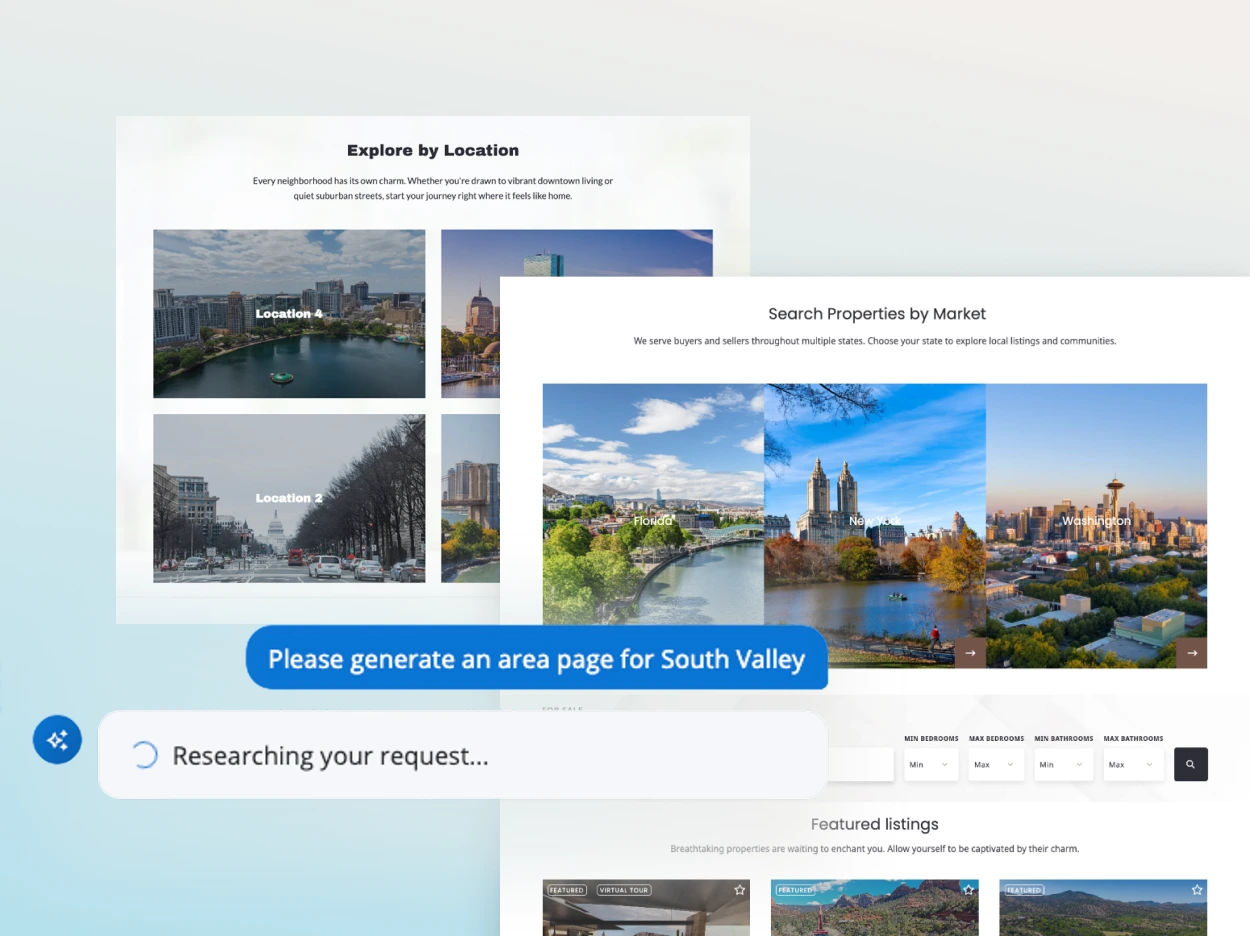
Local SEO plays an unusually important role in real estate because prospects almost always search within a specific geographic area. People rarely type broad phrases like “real estate agent” into Google without adding a city, neighborhood, or region. That means your visibility depends on how well your website reflects the local market that you serve.
Building local SEO starts with location-focused website content tied to real search intent. One part of that strategy involves core website pages describing your services. Placester can generate much of this foundational content automatically. The second part relies on a blog supported by your real market knowledge. AI tools and experienced copywriters can help you turn local expertise into articles that directly answer users’ questions and generate high-quality organic traffic.
Even in local real estate SEO, keywords still play a central role because they determine how Google connects your content with actual searches. The strongest phrases usually combine real estate intent with a specific location. Common examples include:
- “real estate agent in Miami”
- “homes for sale in Austin”
- “best neighborhoods in Dallas”
- “moving to Tampa”
- “Seattle housing market forecast”
- “condos for sale in Scottsdale”
- “top school districts in Nashville”
These keywords should shape both your website structure and your blog strategy because Google evaluates topical relevance across your entire online presence. Your Google Business Profile also deserves optimization around local search intent. A fully completed profile with strong reviews, accurate service descriptions, and updated photos can significantly improve your visibility in map results.
Tool tip: BrightLocal can help you monitor local rankings and optimize your Google Business Profile.
👉 Build a stronger local SEO presence for your real estate business.
10. Analyze and optimize your digital marketing performance
Digital marketing only becomes valuable once you can clearly connect your efforts with real business results. Many agents invest time and money into online promotion without knowing which activities actually influence lead flow. High-performing real estate marketing depends on regular optimization because audience behavior changes constantly, and even strong campaigns can gradually lose momentum.
Your reporting should connect directly to the business goals defined in your strategy:
- If the goal is lead generation, track which campaigns consistently produce qualified inquiries instead of focusing only on clicks or impressions.
- If the goal is local visibility, monitor how your pages perform in search results and whether the content resonates with the audience you want to attract.
- If the goal is brand positioning, pay attention to which topics and formats keep people engaged longer and generate repeat interactions with your content.
The most valuable information often comes from identifying weak points early enough to improve them before they become expensive habits. That process also helps you differentiate your brand because optimization gradually reveals which messaging, content style, and channels perform best in your specific market.
Tool tip: Google Analytics 4 remains one of the most important tools for monitoring traffic quality, user behavior, and lead conversion paths across your marketing mix.
What real estate marketing tools should you use?
Modern AI tools have significantly lowered the entry barrier for real estate digital marketing. Tasks that once required separate specialists can now be handled internally with the right software and a well-organized workflow. That does not replace strategic thinking or market expertise, but it gives you much more control over costs, speed, and daily execution.
To help you organize the most useful tools more quickly, the table below summarizes practical solutions for the main areas covered in this guide:
| Area | Tool | Use case |
|---|---|---|
| Real estate websites | Placester | AI-powered website creation, IDX pages, blog content generation |
| AI content support | ChatGPT | Article drafting, lead magnet ideas, email writing, content repurposing |
| Marketing copywriting | Jasper AI | Scalable marketing content and campaign copy |
| PPC advertising | Google Ads | Search campaigns targeting high-intent traffic |
| Social media advertising | Meta Ads Manager | Facebook and Instagram ad campaign management |
| Email nurturing | Mailchimp | Automated email sequences and newsletters |
| Lead management | HubSpot CRM | Lead tracking, CRM workflows, reporting |
| Real estate follow-ups | Follow Up Boss | Lead nurturing and agent communication workflows |
| AI chatbot automation | Structurely | Automated lead qualification and instant responses |
| Social media management | Metricool | Scheduling, analytics, and content planning |
| Local SEO | BrightLocal | Local ranking monitoring and Google Business Profile optimization |
| SEO research | Semrush | Keyword research and organic visibility analysis |
| Analytics and optimization | Google Analytics 4 | Traffic analysis and conversion tracking |
| Short-form video editing | CapCut | Editing TikTok, Reels, and YouTube Shorts content |
| Graphic design | Canva | Lead magnets, social graphics, presentations, marketing visuals |
9 common real estate online marketing mistakes
Real estate online marketing works best when every channel supports a clear business goal. Too many agents jump between market trends and popular platforms, losing chances to build long-term visibility and consistent lead flow. The most effective marketing systems usually grow around a defined target audience and a realistic budget.
Real estate professionals often make mistakes, such as:
1️⃣ Trying to market on every platform at once
Spreading your attention across too many channels usually weakens the entire strategy. Focus first on the platforms that realistically match your audience and market.
2️⃣ Chasing views instead of qualified leads
High reach means very little if the traffic never turns into conversations or appointments. Pay more attention to inquiries, response quality, and conversion rates than vanity metrics.
3️⃣ Using generic messaging
Buyers quickly forget broad claims that sound identical across dozens of agent websites. Strong positioning usually comes from local expertise and recognizable market knowledge.
4️⃣ Ignoring response time
Many buyers contact several agents during the research process and often continue the conversation with whoever responds first. Fast follow-up matters because online leads lose value quickly when communication feels slow or inconsistent.
5️⃣ Treating SEO like a one-time task
Search visibility rarely appears overnight. Most real estate websites lose momentum because agents publish a few pages, stop updating them, and expect Google rankings to hold on their own. SEO rewards businesses that stay active and continue building useful local content over time.
6️⃣ Copying strategies from completely different markets
A campaign that performs well in a luxury market may fail in a smaller suburban area with different buyer behavior. Build your strategy around your own audience instead of copying trends blindly.
7️⃣ Publishing low-quality AI content
AI-generated articles often become repetitive when nobody edits them properly. Use AI to speed up production, but keep your own expertise in the final content.
8️⃣ Launching campaigns without tracking performance
Marketing gets expensive surprisingly fast when you have no idea what really brings clients to your business. Start tracking performance early so you can spot which campaigns deserve more budget and which ones quietly waste it.
9️⃣ Giving up too early
Many agents quit too early because digital marketing rarely produces momentum after only a few weeks. Strong online visibility usually comes from steady activity sustained over a longer period of time.
Pros and cons of hiring a real estate digital marketing agency
A digital marketing agency helps you grow your visibility online and attract more qualified leads. Some companies focus on one narrow area, usually SEO or paid advertising. Others position themselves as full-service partners and manage most of the marketing process under one agreement. Many agents still end up working with several specialists because website development, branding, video production, and lead generation often require different skill sets.
The pricing structure depends on the type of work involved. SEO agencies usually work on monthly retainers because search visibility takes time to build. PPC management often includes both a service fee and a percentage of ad spend. Website projects are commonly priced separately.
42%
42% of real estate companies spend anywhere from $1,000 to $10,000 per month on digital marketing services.
Source: WebFX
Outsourcing becomes attractive once marketing starts taking too much time away from revenue-generating work. Many agents reach that point after trying to manage SEO and ads, while still handling listings and client communication. An agency can remove part of that operational pressure, although the relationship still requires oversight and realistic expectations.
Before investing in real estate digital marketing services, it helps to understand the main advantages and potential downsides of working with an agency:
| ✅️ Pros | ❌ Cons |
|---|---|
| Specialized expertise without hiring a full internal team | Monthly costs can grow quickly in competitive markets |
| More time available for clients and sales activities | Results rarely appear immediately, especially in SEO |
| Faster execution compared to building systems alone | Some agencies rely on generic strategies reused across clients |
| Access to advanced tools and marketing platforms | Poor reporting can make performance difficult to evaluate |
| Easier scaling once lead volume increases | Lead quality may not always match lead quantity |
| Outside perspective on positioning and branding | You still need to stay involved in approvals and communication |
Digital marketing for real estate agents: final thoughts
Your real estate digital marketing strategy should work like one connected system instead of random online activities. You’ll find most of its key features in Placester. Start with a professional website powered by AI, then gradually expand your business with more advanced real estate marketing activities presented in this guide.
FAQ
How to promote real estate business through digital marketing?
Start with a professional website because it becomes the center of your entire marketing system. From there, focus on local SEO, educational content, social media visibility, PPC campaigns, and lead nurturing that support your business goals.
What is the 70-20-10 rule in digital marketing?
The 70-20-10 rule suggests allocating most of your marketing efforts to proven strategies that already generate results, while still leaving room for experimentation and innovation. Many marketers spend roughly 70% of resources on reliable channels, 20% on optimization and scaling, and 10% on testing new ideas or emerging platforms. That balance helps real estate businesses grow steadily without becoming overly dependent on a single tactic.
What are the 7 pillars of real estate digital marketing?
The core pillars may include SEO, content marketing, social media, paid advertising, email marketing, design, and analytics. Each area supports different stages of the customer journey, from early visibility to conversion and long-term relationship building. You may also come across alternative frameworks such as the 7C model (Content, Context, Community, Connection, Commerce, Customer, and Consistency) or the 7A framework (Assessment, Alignment, Allocation, Activation, Attraction, Analysis, Amplification).
What are the best real estate digital marketing companies?
Well-known names in the industry include Placester, Luxury Presence, and Real Geeks. These platforms combine real estate-specific marketing tools with lead generation and website solutions. The best company for you is the one that covers the areas your marketing strategy depends on.
What are the best commercial real estate digital marketing strategies?
The best commercial real estate digital marketing ideas combine a data-driven approach and personalized lead nurturing. Every real estate developer and broker should invest in AI-powered advertising and impactful online marketing materials. Together, these elements create a system that helps professionals close deals faster and more effectively.
Published on
(Last updated on
)