 (800) 728 8391


Updated on
How to Get MLS Listings on Your Website in 7 Steps? + Tips

Quick summary:
- 🏡 MLS listings bring your website to life: Real-time property data keeps content fresh, builds trust, and encourages visitors to explore more.
- 📈 Integrate smart, optimize smarter. SEO, structured data, and local content help buyers find your pages.
- 💻 Paid IDX gives you full control: Live updates, advanced search filters, and lead capture tools make your website a true business driver.
MLS listings are live property offers flowing straight from the market onto your website. Think of them as a real-time window into what’s actually for sale right now. You’ll also see them called IDX listings or MLS properties, depending on the setup.
Adding MLS data to your real estate website turns it into something buyers want to use, not just visit once. It keeps content fresh, builds trust, and helps you capture leads.
44%
43% of homebuyers start their search by browsing online listings. Nearly all look at property websites at some point during the buying process.
Source: NAR
Below, you’ll find a clear, step-by-step guide on how to add MLS listings to your website!
What does MLS stand for in real estate?
MLS stands for Multiple Listing Service. It’s a shared database that real estate professionals use to publish and access property listings. Agents and brokers add homes to the system, update prices, mark status changes, and remove listings when a deal closes.
Think of MLS as a private workspace for the real estate market. Each local MLS covers a specific area. There is no single, nationwide MLS. Instead, hundreds of regional systems operate under their own rules, while following common industry standards.
Only licensed real estate professionals can add or edit listings. Access is usually limited to:
- Real estate agents
- Real estate brokers
- MLS members approved by the local association.
Buyers and sellers do not log into MLS directly. They see MLS data through other channels, such as brokerage websites and real estate portals.
This is where IDX (Internet Data Exchange) comes in. IDX is a set of rules and technical standards that allow MLS data to appear on public platforms. When an agent uses IDX, their website can display listings pulled directly from the MLS. The data stays synced with the source, so price changes and status updates show up automatically.
In simple terms: MLS is where listings live and get managed. IDX is how those listings are legally and technically shown to the public online.
How can you benefit from integrating MLS listings into your website?
Adding MLS listings to your website means fresh content, longer visits, and better lead capture. Below, you’ll find the key benefits of IDX integration for your real estate business:
🔄 Keep your website always updated
Listings refresh automatically. New homes appear, sold ones disappear, and price changes show in real time. You don’t have to edit pages manually or worry about outdated offers confusing buyers.
📢 Increase visitor engagement
Buyers explore properties the same way they explore major portals. More page views mean visitors stay longer, notice more listings, and are more likely to reach out.
📩 Capture leads while they search
Live listings give you the perfect moment to collect contacts. Offer saved searches, property alerts, or easy-to-fill inquiry forms when buyers are actively browsing.
🔎 Show local expertise
Fresh, market-specific content improves your SEO. Detailed neighborhood and listing pages help you rank for local searches and attract clients in your area.
👉 Discover how local SEO helps real estate websites attract nearby buyers and sellers.
🧲 Keep traffic on your site
Instead of sending visitors to large real estate portals, give them everything they need in one place. You control the experience, branding, and lead capture.
⭐ Build credibility and trust
A website with live listings signals that you’re plugged into the market. Clients see that you have access to real inventory and know the local scene.
🌐 Serve both buyers and sellers
Buyers get a real view of the market. Sellers can see how their property compares. Your website becomes a practical tool for everyone involved in the transaction.
IDX, RETS, RESO Web API: what do key MLS-related terms mean?
Working with MLS data involves a few key terms you’ll see often: IDX, RETS, and RESO. Each plays a different role in how listings reach your website.
As you already know, IDX is the technology that allows MLS listings to appear on public websites. Without IDX, MLS data stays private for licensed agents. Using IDX, you can display live property listings, enable search filters, and even let users save favorites. Essentially, IDX is the legal and technical bridge between MLS and your website.
RETS stands for Real Estate Transaction Standard. It’s the older technology that many MLS systems still use to deliver data. It works as a protocol that allows your website to pull listings directly from the MLS database. Think of it as the plumbing behind the IDX display. It moves the data efficiently but requires a setup that can handle regular updates.
The RESO Web API is the modern replacement for RETS. Real Estate Standards Organization is faster, more secure, and works with current web standards. RESO sets the rules for how MLS data is structured and shared. It helps developers create tools that show listings correctly and update them in real time. Most new MLS integrations use RESO Web API instead of RETS.
In short:
- IDX governs how MLS data is shown.
- RETS handles how the data is retrieved.
- RESO Web API provides a modern, standardized method for smooth, real-time updates.
MLS Integration: free vs. paid—main differences
Free MLS integration usually means free software, not free MLS data. In most markets, direct MLS access requires approval, membership, and fees. Truly free, fully functional MLS integrations are extremely rare.
Is free MLS integration possible at all?
What people call “free MLS integration” typically looks like this:
- Manually adding listings to your WordPress website
- Using free plugins that still require a paid MLS feed
- Accessing rare MLS-provided free feeds with strict limits
These setups may reduce upfront costs, but they create other problems. Manual updates don’t scale. Limited feeds restrict what you can show. Many free widgets use iFrames, which weaken SEO and limit customization. As your inventory grows, maintenance becomes time-consuming and risky.
In practice, there’s no such thing as truly free MLS integration. Once you factor in data access rules, scalability limits, and SEO constraints, paid integration becomes the only practical long-term option for a professional website.
Why paid MLS integration is the only reliable solution
Paid IDX providers give you full control over your listings and website. You get real-time updates, advanced search filters, and professional layouts that match your brand. Many paid solutions include built-in lead capture tools and dedicated support. That makes them more reliable for agents who want a website that works as a real business tool rather than just a brochure.
| Free MLS integration | Paid MLS integration | |
|---|---|---|
| Setup cost | $0 | $100–$500+ per year, depending on provider |
| Customization | Very limited, often fixed widgets | Full control over layout, design, and features |
| Update frequency | Often delayed or manual | Real-time updates directly from MLS |
| Search filters | Basic filters only | Advanced filters: price, beds, baths, neighborhoods, etc. |
| Lead capture tools | Minimal or none | Integrated contact forms, saved searches, alerts |
| SEO (indexability) | Limited | Full indexable listings |
| Technical support | Community forums or minimal help | Dedicated support and troubleshooting |
| Professional look | Basic, may feel generic | Seamless, branded, matches your website design |
| Best for | Testing, very small websites | Professional real estate agents, brokers, and Realtors |
👉 Discover standout real estate website examples.
How to get MLS listings on your website? Step-by-step guide
Adding MLS listings to your website involves choosing the right integration method, customizing pages, and optimizing them for SEO. Below, you’ll find a clear, step-by-step guide that walks you through the entire process.
1. Confirm MLS rules & get authorization
Before touching any digital tools, you need approval from your real estate board. Every MLS is different, and policies vary by location:
- Check requirements. You usually need to be a licensed agent or broker to access MLS and the IDX.
- Gather broker info. Prepare your office ID, brokerage name, and license details.
- Sign agreements. Most MLS providers require an IDX agreement. This ensures you display listings correctly and comply with policy rules.
Skipping this step can risk data violations and may prevent your listings from showing. Getting authorization first is beneficial for a smooth integration.
2. Choose your integration method
Once you’re authorized, you have two main ways to get MLS listings online:
🅰️ Plugin with IDX provider: Quick and easy, no coding needed. Plugins like Estatik or Easy Property Listings let you display properties directly in WordPress. You’ll need credentials from your MLS provider, though.
🅱️ RESO Web API: For developers. Gives full control and live updates from the MLS feed.
Choose the method that fits your skills and how much you want to customize your pages.
3a. Use a plugin to display listings (option 🅰️)
If you go with a plugin, start by installing it in WordPress. Activate it and enter your IDX credentials. Map MLS fields to the plugin so all details show correctly.
Then create your listing pages. Use plugin blocks or shortcodes to display properties and search results. This keeps your feed live and accurate without any coding.
3b. Use RESO Web API (option 🅱️)
If you’re a developer, request access from your MLS. Authenticate with OAuth or a token. Fetch listings and map fields like price, bedrooms, and bathrooms. Store data locally to make your website faster.
At the end, download property images into your media library so everything displays correctly. This method takes more work but gives complete control over listings.
4. Customize your pages
Make your listing pages easy to browse:
- Create a main listings page and individual property pages.
- Use filters for price, neighborhood, and property type.
- Highlight key details and images so properties are attractive at a glance.
Good design keeps visitors engaged and encourages them to explore more listings.
5. Optimize for search engines
SEO plays a key role in getting your listings in front of buyers. That’s why you should:
- Add structured data (property schema) for search engines.
- Write clear, detailed descriptions for each property.
- Make an XML sitemap for listing pages so search engines can index them.
You can find more top MLS SEO best practices later in this guide.
6. Prepare your hosting
MLS listings can be resource-heavy due to images and frequent updates. Hosting should be able to handle this load without slowing down your website. Use WordPress hosting with a built-in CDN (Content Delivery Network) and scalable containers. This ensures listings load quickly and reliably, even under heavy traffic.
Fast-loading pages make your website more appealing to visitors and improve the overall browsing experience.
7. Test everything and go live
Testing ensures your website is ready for buyers. Before launching:
- Check photos and listings for accuracy.
- Verify if statuses like Active, Pending, or Sold update correctly.
- Test filters and search functions.
- Make sure the website works well on mobile devices.
How to get MLS listings with Placester?
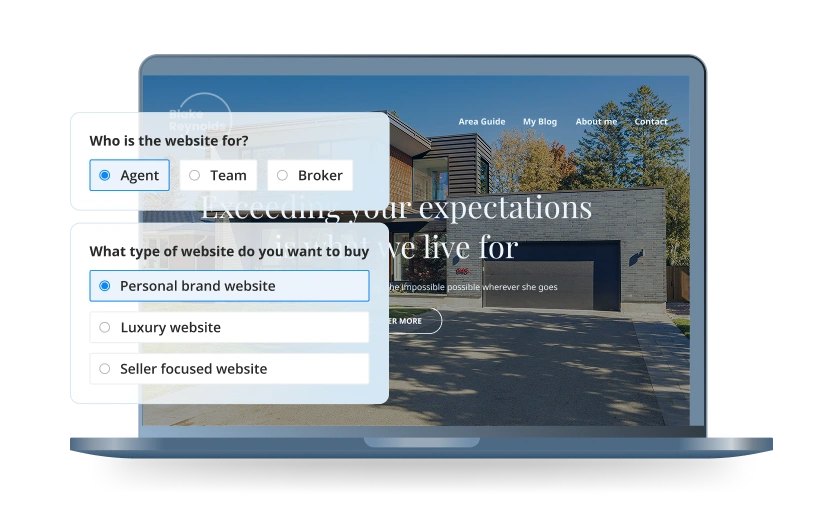
If you don’t want to rely on the limited features of free integrations, Placester has you covered. Our platform lets you create a fully functional IDX website without any coding. This way, you can start showcasing up-to-date listings to potential buyers right away.
AI Websites for Real Estate
Get a custom, ready-to-edit website
in less than 4 minutes.
Just follow these simple steps:
1. Start in your dashboard
Once you log in to Placester, head to the IDX Manager. Here, you’ll see:
- Your current MLS contracts
- How many websites are linked to each contract
- The status of each listing feed.
This is your central hub for managing MLS connections.
2. Request IDX access
Click the “Request IDX” button. Then:
- Select your state
- Choose your MLS from the list
- Fill in the detailed information.
Only the broker’s email is used to send IDX documents.
Expert tip: Let your broker know so they can watch for documents that need signatures. Quick signatures mean faster listing approvals.
3. Understand the IDX support fee
After submitting the request, you’ll see the IDX support fee at the bottom of the form:
- Starter & Advanced plans: $5/month per active MLS
- Office Builder plan: $9/month per active MLS.
The difference? Office Builder users let all agents under the account inherit MLS access.
The fee is charged only once the IDX contract is approved.
4. Wait for IDX approval
Approval usually takes 5–10 business days. Delays can happen if the paperwork isn’t complete or if MLS responses are slow.
While waiting:
- Check the “Pending Requests” tab in the IDX Manager.
- Look for an email to sign your MLS agreement.
- Start building your website using Placester’s customizer guides.
Once your IDX request is approved, you’ll be notified, and your listings will go live.
5. Launch your real estate website
After approval, launch your website and start showcasing listings. Most MLS processes are straightforward, but some may require you to contact MLS directly or log in to an online portal. Placester provides step-by-step instructions for these cases under the question mark icon in IDX Manager.
If something isn’t working, you can always contact Placester support. We’ll guide you through the whole process.
👉 You can also explore other effective website builders for real estate agents.
7 MLS SEO best practices to maximize impact
MLS integration is just the first step. On its own, it won’t give you visibility in Google or steady organic traffic. To make listings show up, you need to optimize how they load, look, and connect with the rest of your website.
Good MLS SEO turns raw listing data into a growth channel. It helps your pages rank for local searches and brings in leads without relying on paid ads. That’s why the tips below focus on actions that move the needle for your business, not just your tech setup:
1️⃣ Make MLS listings indexable with clean structure
Ensure your MLS listings aren’t stuck behind iFrames or hidden scripts. When listings are indexable HTML with clean links, search engines can crawl and rank them. Avoid messy URLs with random parameters and favor descriptive paths like “/listings/3-bedroom-home-san-diego.” Clean URLs help local search visibility.
Expert tip: Test indexing with Google Search Console to confirm your listings show up in search results.
2️⃣ Add unique content around listings
MLS data is often generic, short, and identical across many websites. That’s thin content—search engines see little value in it. Add your own property descriptions, highlight features buyers care about, or include local insights only you can provide.
Expert tip: For every listing, write 150–300 extra words explaining what makes this property different.
👉 Learn how to write clear, high-converting real estate listing descriptions.
3️⃣ Implement structured data (schema markup)
Structured data tells search engines exactly what your page represents. Listings with schema like “Offer,” “Place,” and “BreadcrumbList” are more likely to get rich results in Google.
Expert tip: Use JSON‑LD markup for listings and test with Google’s Rich Results tool.
4️⃣ Improve website speed and Core Web Vitals
Slow websites lose rankings and visitors. Google considers user experience signals, including speed and responsiveness. Compress images, minify scripts, and use caching.
32%
If a page loads in 3 seconds instead of 1, users are about 32% more likely to leave.
Source: Google
5️⃣ Use internal linking
Link from blog posts, neighborhood pages, and category pages to individual MLS listings. This helps search engines discover deeper content and spreads SEO value across your website.
6️⃣ Leverage XML sitemaps and crawl control
Submit an XML sitemap including your MLS and category pages to Google Search Console. This way, search engines crawl and index your core content faster.
Expert tip: Use canonical tags when duplicate listing content is unavoidable to indicate your preferred version.
7️⃣ Track performance and iterate
What gets measured gets improved. Use Google Analytics and Search Console to track impressions, clicks, and ranking trends. If a page isn’t gaining traction, tweak your content. Regular audits keep your SEO sharp and aligned with goals.
👉 You can also check out our comprehensive real estate SEO handbook.
Common issues with MLS listings integration (and how to fix)
Even a solid MLS IDX setup can run into problems. The good news is that most issues are easy to spot and fix once you know where to look:
⚠️ Listings don’t show up at all
This usually means the integration is not complete. An MLS may still be reviewing your paperwork or waiting for a broker’s signature. Check your status first. If approval is done, confirm that your data feed is active and connected to the correct website.
⚠️ Listings look outdated or incomplete
When prices, photos, or statuses don’t update, the data feed may not sync often enough. Review your feed settings and update the schedule. Make sure your system pulls information directly from the MLS, not from a cached or manual source.
⚠️ Wrong listings appear on the website
This often happens when filters are misconfigured. Double-check how you set property status, location, and agent rules. If you work with many MLSs, confirm each feed points to the correct market and account.
⚠️ Authentication errors break the connection
This problem shows up often with RESO Web API and IDX providers. Access tokens expire and stop the data feed. Set up automatic token refresh or re-enter credentials to restore the connection. If you use OAuth, make sure the redirect URLs exactly match the ones approved by your MLS provider.
⚠️ Updates stop after initial setup
This usually points to expired credentials or a broken connection. Recheck your login details and reauthorize the data feed if needed. Regular checks prevent silent failures.
Conclusions
Getting MLS listings on your website works best when you follow a clear process and use the right tools. With Placester, you don’t need to choose between speed and control. The platform helps you launch an IDX website without coding and display comprehensive property details that buyers actually want to see.
If you want to check how it works in practice, book a live demo with Placester. You’ll see how easy it is to manage MLS listings and turn your website into a real lead engine.
AI Websites for Real Estate
Get a custom, ready-to-edit website
in less than 4 minutes.
FAQ
What does MLS stand for in real estate?
MLS stands for Multiple Listing Service, a shared database that licensed agents and brokers use to publish, update, and remove property listings. There’s no single national MLS; hundreds of regional systems operate independently under shared industry standards.
What is IDX, and how is it different from MLS?
MLS is where listings are managed by agents and brokers. IDX (Internet Data Exchange) is the set of rules and technology that lets those MLS listings appear legally on public websites, staying synced with the source so price and status changes update automatically.
Do I need to be a licensed agent or broker to get IDX access?
Yes. IDX access requires MLS authorization, which typically means being a licensed agent or broker (or an approved MLS member), submitting broker and license details, and signing an IDX agreement before any listings can display on your site.
Can you integrate MLS listings into your website for free?
Yes, but free MLS listings integration is very limited. Some tools let you display basic listings, but most MLS boards require paid IDX access and formal approval. Free options often lack live updates, full data, or compliance features. If you want reliable, up-to-date listings, a paid solution is usually necessary.
How to integrate MLS into your WordPress website?
The easiest way is to use an MLS listing WordPress plugin connected to an approved IDX provider. After getting MLS authorization, install the plugin, enter your IDX credentials, and configure how listings display on your site. This approach lets you show live listings without custom coding.
Published on

Take your real estate website to the next level with Placester!
Discover new opportunities and save thousands of dollars every year.