(800) 728 8391



Quick summary:
- Free real estate leads cost time instead of money. Pick two or three sources you can work every week rather than trying all 15.
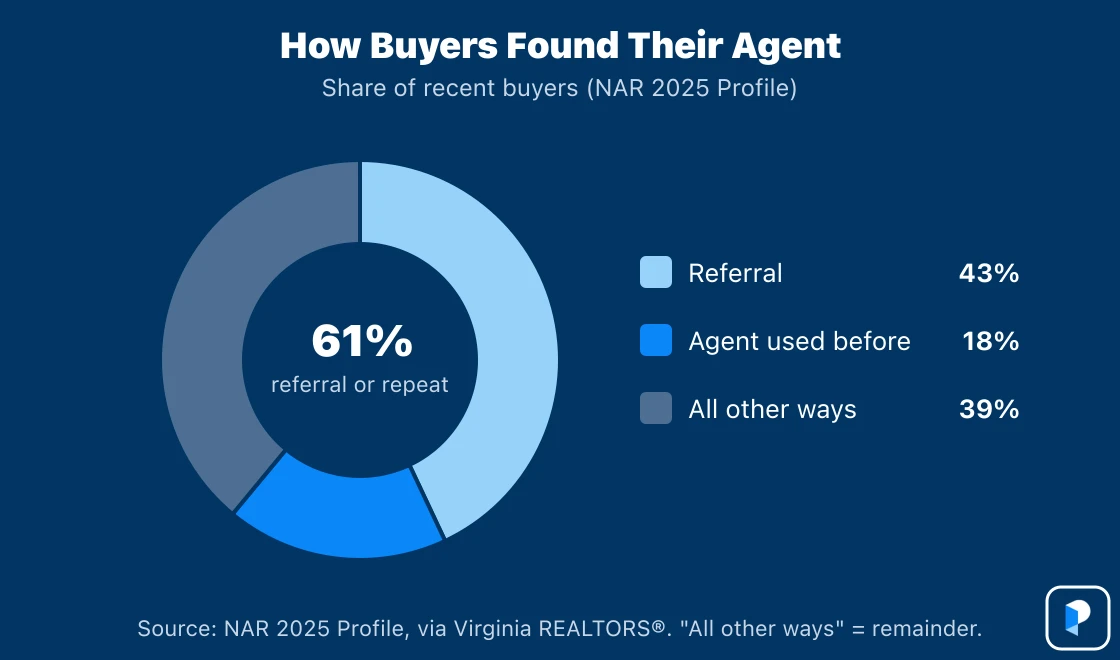
- Your network pays off fastest: 43% of buyers found their agent through a referral and another 18% went back to an agent they’d used before (NAR 2025 Profile).
- Google Business Profile, reviews, and local content build over a few months, and more consumers now ask AI tools for local recommendations.
- “Pay at closing” programs like Zillow’s Preferred (formerly Flex) aren’t free. They take a referral fee from your commission after the deal closes.
- A free lead is only worth something if you follow up fast and nurture it in a CRM.
Buying leads from portals and lead generation companies can drain you before the first closing. That’s why many agents look for ways to get real estate leads without paying. Meanwhile, demand for agents is near a record high.
In NAR’s 2026 Profile of Home Buyers and Sellers, 90% of buyers used a real estate agent or broker, the highest share in four decades, and 92% of sellers did the same, an all-time high (NAR, Nov 2026).
So there’s no need to buy clients. Many real estate professionals build their business on free sources, paying with time and consistency instead of cash. This guide covers 15 free ways to generate real estate leads, grouped by how fast each one tends to pay off, plus how to keep those leads from going cold once you have them.
What counts as a free real estate lead?
A free lead is a potential client you reach without paying for the contact, either upfront or at closing. Instead, you pay for it with your time. For example, you might host an open house, write a market update, or answer neighborhood questions on Facebook.
That separates free lead gen from two other models:
- Paid leads: You pay upfront per lead, per month or per click. Facebook ads, Google paid ads, and most lead generation services work this way, as does hiring a lead generation company, sometimes after a free trial.
- Pay-at-closing leads: There’s no upfront cost, but the platform takes a referral fee from your commission when the deal closes.
Free lead generation strategies suit agents who have more time than budget, which describes most new agents.
These strategies also tend to produce warmer leads, because the person found you through someone they trust or through something useful you shared.
Free lead sources for 2027
Start with people who already know you or can meet you face to face. Trust is already there, so these five sources usually convert fastest.
1. Your sphere of influence
Your sphere is everyone you already know: friends, family, former coworkers, your dentist, the parents from your kid’s soccer team. For a new agent, it’s the strongest free source, because a referral is the most common way buyers find an agent.
In NAR’s 2025 Profile, 43% of buyers found their agent through a referral, and 66% of sellers found their agent through a referral or used one they’d worked with before (Virginia REALTORS® summary of the NAR 2025 Profile, Dec 2025).
Start by putting every contact into your CRM, then make sure they all know you’re a real estate agent. Tell each one personally rather than sending a mass text: “I just got my license and I’m helping people buy or sell a home around Maple Heights. If anyone you know is thinking about moving, I’d love an intro.”
After that, stay top of mind with a monthly touch, such as a market note or a local event invite.
Even sellers who skip agents lean on their networks. FSBO sellers remained at a historic low of 5% in 2026, and 62% of them knew their buyer (NAR, Nov 2026). Personal connections close deals, with or without an agent in the middle.
2. Past clients
Your previous clients already trust you, which makes them the easiest leads to win back. More than nine in 10 buyers say they’d use their agent again or recommend them to others (NAR 2026 Generational Trends, Apr 2026). Without regular contact, though, that goodwill fades.
Simple ways to stay in touch:
- Send a home anniversary card or message each year.
- Share a yearly home value update for their address.
- Invite them to a client appreciation event.
- Ask for a review and a referral right after closing, when they’re happiest.
For wording that makes it easy to say yes, see how to ask past clients for reviews.
3. Open houses
An open house brings buyers and curious neighbors straight to you. Many visitors don’t have an agent yet, and neighbors who drop by are often wondering what their own home is worth, which makes them future seller leads.
Don’t have any listings of your own? Offer to host open houses for busy agents in your office. They get coverage, you get the leads. To make each one count:
- Use a digital sign-in form on a tablet so contacts go straight into your CRM.
- Bring a one-page neighborhood report people can take home.
- Hand out a business card with a QR code that links to your website.
- Follow up within 24 hours with something useful, like similar listings.
4. Circle prospecting
Circle prospecting means contacting the homes around a new listing or recent sale. It gives you a natural reason to call or knock: “The house at 14 Oak just sold for over asking. Have you thought about what yours might be worth?”
Homeowners near a recent sale are already curious about prices, so finding seller leads this way costs nothing but your time on the phone or at the door. Keep calls short, lead with the local news, and offer a free home value estimate rather than pushing a listing appointment.
5. FSBO and expired listings
Home sellers who try to go it alone, along with owners whose listings expired, have already shown they want to move. Many FSBO sellers eventually realize they need help with pricing, marketing, and paperwork. Expired listings often belong to sellers who are frustrated with their last agent.
This pool is small and competitive, so lead with value. Offer a free pricing analysis or a list of what buyers in their area are paying for, rather than asking for the listing on the first call.
Need a starting point for those calls? Borrow from these cold calling scripts.
Lead generation strategies that build over a few months
Expect a few weeks of setup before these next five channels start producing results. But once they’re running, they keep sending potential clients your way with less effort each month, and they make the rest of your real estate marketing work harder.
6. Google Business Profile
A Google Business Profile (GBP) puts you on Google Maps and in local search results when someone types “real estate agent near me.” It’s a free marketing tool you can set up quickly, and a complete profile stands out next to the sparse ones that crowd the real estate industry’s local results.
Fill out every field, including service areas, categories, hours, photos, and a description that names the neighborhoods you serve. Then post weekly updates, such as new listings, open houses, and market notes.
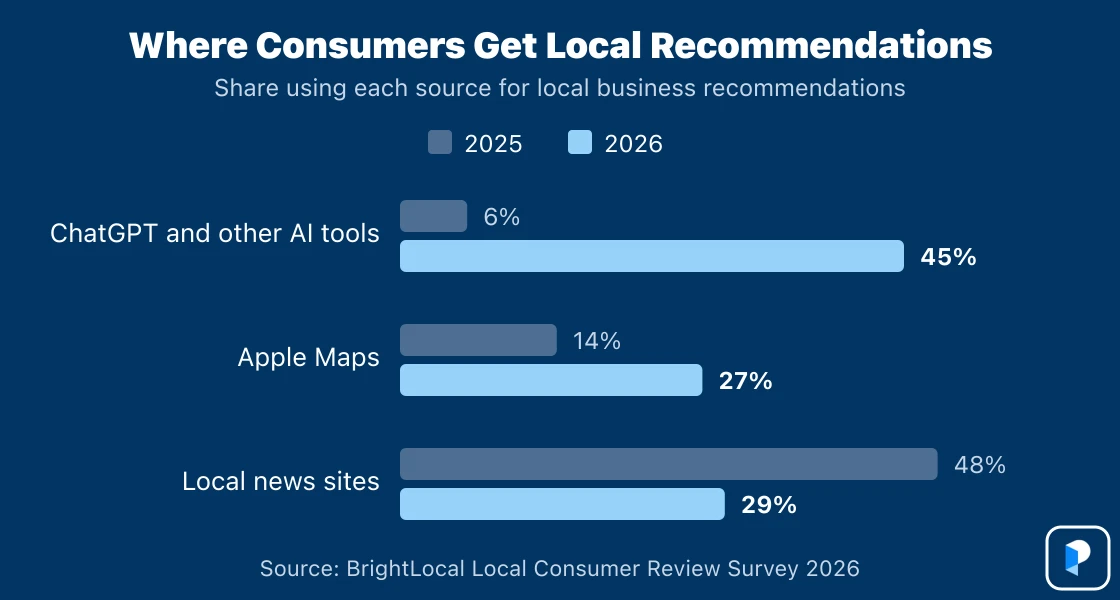
A complete profile matters more now that AI tools shape local choices. In BrightLocal’s 2026 survey, use of ChatGPT and other generative AI tools for local recommendations rose from 6% to 45% in a single year. A complete profile and steady reviews give both Google and AI tools more public information to work with.
The same survey found Apple Maps nearly doubled as a recommendation source, from 14% to 27%, while local news sites fell from 48% to 29%.
7. Online reviews
Reviews help you build trust before a prospect ever calls. BrightLocal found that 97% of consumers read online reviews for local businesses.
If you have profiles on Google, Zillow, or Realtor.com, ask your clients to leave a review on one of these platforms. Make it easy by sending a direct link. Reply to every review, including the critical ones, because future clients read your responses too.
8. Nextdoor and local Facebook groups
Neighborhood platforms are full of people asking who to call for help. Nextdoor says 1 in 3 U.S. households rely on it, and most towns have at least one active Facebook group where locals trade recommendations.
The rule is to focus on helping instead of selling. Answer questions about schools, property taxes, and new developments. Share a quarterly market recap. When someone asks for an agent recommendation, the neighbors who’ve seen your answers will tag you.
9. Social media and short-form video
Agents rank social media among their best lead tools. NAR’s 2025 technology survey found that the tech tools producing the highest number of quality leads were social media, CRM, and the local MLS.
You don’t need to be everywhere. Focus your marketing efforts on the one platform where your buyers or sellers spend time, and post consistently. Here are some examples:
- Instagram and TikTok: Short neighborhood tours, “what $500K buys here” videos, and quick buyer tips.
- Facebook: Listings, local events, and client wins for an older, local audience.
- YouTube: Longer area guides that people find through search for years.
- LinkedIn: Relocation content for professionals moving to your area.
Our guide to real estate social media marketing goes into more detail on what to post on each platform.
10. Email market updates
Email marketing keeps you in front of people who aren’t ready to buy or sell yet. A short monthly email with local sales, price trends, and one helpful tip is enough. Your sphere, past clients, and open house visitors should all get it.
The content of your emails should be local and specific. “Three homes sold on your street this quarter” earns more replies than a generic national housing article.
Sources that compound over a year
These final five sources are the slowest to start, but once your online presence is built, they keep producing leads without daily effort.
11. A lead generation website
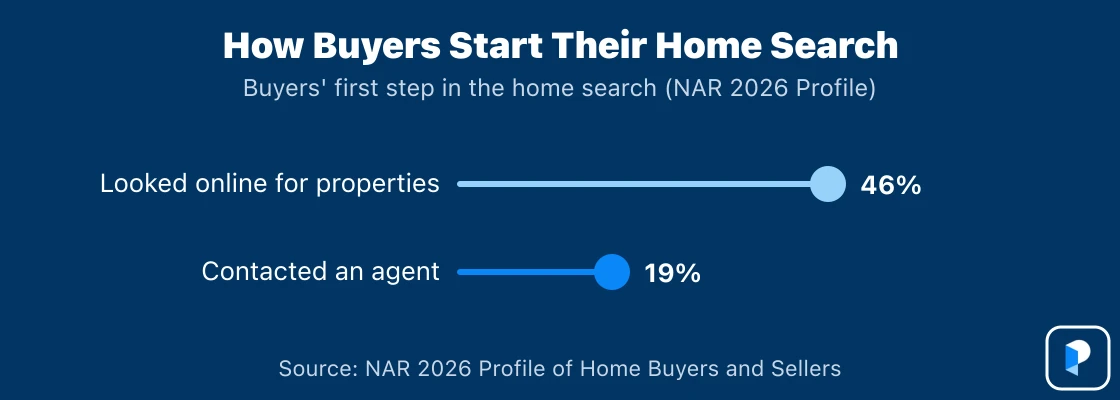
Most buyers start online. In NAR’s 2026 Profile, 46% of buyers said their first step was looking online for properties for sale, while 19% contacted an agent first.
Your own website catches those buyers early, before they’ve picked an agent. To turn visitors into buyer leads and seller leads, include:
- IDX search, so visitors browse listings on your site instead of a portal.
- Lead capture forms for saved searches, showing requests, and listing alerts.
- A home valuation form for seller leads.
- Neighborhood pages that answer the questions buyers search for.
If you’re comparing options, start with what makes a good IDX website.
12. Hyperlocal blogging and local SEO
Blog posts about your market can rank for local questions that portals rarely answer in depth, like “best neighborhoods for families in Westfield” or “Westfield property taxes explained.” Each post is a page that can bring in qualified leads for years.
Write about what local buyers and sellers actually ask you. Link each post to your listings and contact form, and use the neighborhood name in titles and headings.
For on-page basics, see our tips on local SEO for real estate agents.
13. Lead magnets
A lead magnet is a resource that requires providing an email address to download it. There are plenty of examples of lead magnets in real estate:
- a first-time buyer guide,
- a relocation guide,
- a monthly market report,
- a “what’s my home worth” estimate.
It turns anonymous website visitors into contacts you can nurture. The best lead magnets solve one specific problem for one type of client. “The 2026 Westfield Relocation Guide” will usually draw more sign-ups than “Free Real Estate eBook.”
14. A professional referral network
Mortgage lenders, estate attorneys, divorce attorneys, financial planners, contractors, and relocation managers all meet people who are about to buy or sell a home. Build relationships with a few of them and send referrals both ways.
A simple approach is to take one professional to coffee each week. Real estate agents build relationships like these over months, but one active lender partner can become a steady referral source.
15. Community events and local expertise
Being the local expert gets you leads that no ad can. Host a free homebuyer seminar at the library, sponsor a youth sports team, speak at a chamber of commerce lunch, or offer market commentary to a local news site or podcast.
Each appearance builds name recognition. When those attendees decide to buy or sell, you’re the real estate agent they remember.
Free lead sources for real estate agents compared
The best real estate lead sources for you depend on your hours and whether you want buyer or seller leads. The time ranges below are rough planning estimates, not survey data. Your results will vary by market and by how consistent you are.
| Source | Weekly time (estimate) | Typical time to first lead (estimate) | Best for |
|---|---|---|---|
| Sphere of influence | 2 to 3 hours | Days to weeks | Buyers and sellers |
| Past clients | 1 hour | Weeks | Buyers and sellers |
| Open houses | 3 to 4 hours per event | Same day | Buyers, some sellers |
| Circle prospecting | 2 to 3 hours | Weeks | Sellers |
| FSBO and expired listings | 2 to 3 hours | Weeks | Sellers |
| Google Business Profile | 1 hour | 1 to 3 months | Buyers and sellers |
| Online reviews | 30 minutes | Supports other sources | Buyers and sellers |
| Nextdoor and Facebook groups | 1 to 2 hours | 1 to 3 months | Buyers and sellers |
| Social media and video | 3 to 5 hours | 2 to 6 months | Buyers |
| Email market updates | 1 to 2 hours | 1 to 3 months | Buyers and sellers |
| Lead generation website | 1 to 2 hours after setup | 3 to 6 months | Buyers and sellers |
| Blogging and local SEO | 2 to 4 hours | 6 to 12 months | Buyers |
| Lead magnets | 1 hour after setup | 2 to 6 months | Buyers and sellers |
| Referral network | 1 to 2 hours | 1 to 6 months | Buyers and sellers |
| Community events | 2 to 4 hours per event | 1 to 6 months | Buyers and sellers |
A few extra deals a year make a real difference. The typical agent reported nine transaction sides in 2025 (NAR, June 2026), so two closings from free sources would be more than a 20% bump in business.
If you’re trying to get leads as a new agent, start with your sphere, open houses, and a Google Business Profile. They pay off soonest, bring in warm leads, and support everything else you build later.
Why pay-at-closing leads aren’t free
Programs that charge nothing upfront often get labeled as free real estate leads. They aren’t. Pay-at-closing programs send you leads in exchange for a referral fee, which comes out of your commission after the transaction closes.
Zillow is the best-known example. Its Preferred agent program, formerly called Flex, works this way: agents pay Zillow a referral fee after the deal closes (Real Estate News, Nov 2026). Zillow’s terms change often, so check the current fee before you sign up, and expect similar referral-fee deals on other portals.
These programs can still be worth it, especially for a new agent who needs deals while free sources ramp up. Just count the referral fee as a real cost when you compare them against the lead generation methods above.
How to keep free leads from going cold
Free leads only pay off if you follow up quickly and keep following up. A lead from your open house or website is worth little if it sits in a spreadsheet for a week.
Build a simple system:
- Respond within minutes. Set up an autoresponder for website forms, and call or text new leads the same day. Some agents now use AI voice assistants to answer after-hours calls and book appointments.
- Log every new lead in a CRM. Tag each one by source so you know which free channels actually produce closings.
- Sort by timeline. Someone moving this month needs a call. Someone moving next year needs a monthly email.
- Nurture with useful content. Send market updates, new listings, and local news on a regular schedule.
- Review your numbers each quarter. Drop the sources that don’t convert leads and double down on the ones that do.
Good lead management and lead nurturing turn a pile of contacts into a pipeline. To set up a full process, see our real estate lead follow-up guide and our guide to nurture leads that aren’t ready yet.
The bottom line
Free leads for real estate agents cost time instead of money, and that time pays off when you stay consistent. The clients are out there: nine in 10 buyers and sellers used an agent in NAR’s 2026 Profile.
- Start with your sphere, past clients, and open houses for leads this month.
- Build your Google Business Profile, reviews, and social presence for leads in a few months.
- Invest in a lead generation website and local content for leads that compound over the year.
- Treat pay-at-closing programs as a cost, not a freebie.
- Follow up fast and track every lead by source in your CRM.
Pick two or three sources, work them every week, and give them time. Consistency matters more than the number of channels you try. When you’re ready for more real estate lead generation ideas, including paid channels, our guide to real estate lead generation strategies covers the full mix.
Turn free traffic into leads with Placester
Most of the free sources in this guide point people to the same place: your website. Your Google Business Profile, social posts, Nextdoor answers, and email updates all work better when they lead to a site that captures contact info and follows up for you.
But most real estate agents see websites as a long, costly, and technical process. But it doesn’t have to be this way. Placester’s AI website builder creates a site designed to help you generate more leads from that traffic:
- Lead capture built in: IDX search, forms and pop-ups, listing alerts and home valuation pages collect buyer and seller leads at any hour.
- Area and market guides: The builder automatically creates neighborhood and market pages for the areas you serve, which support your local SEO and give your social posts somewhere useful to link.
- Automatic follow-up: A real estate CRM with autoresponders and drip campaigns nurtures new leads automatically, and live chat lets you answer website visitors from the Placester mobile app.
- Social posts without extra work: Social automation turns your listings and blog articles into branded videos, shared automatically on Facebook and Instagram.
Start a free trial to see your site before you commit, or book a demo to walk through it with the Placester team.
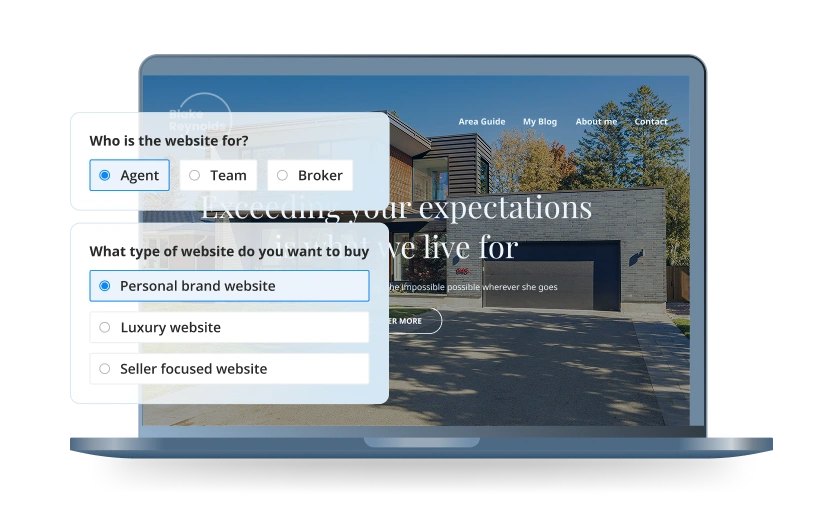
AI Websites for Real Estate
Get a custom, ready-to-edit website
in less than 4 minutes.
Frequently asked questions
How can a real estate agent get leads for free?
The fastest ways to get leads in real estate for free are your sphere of influence, past clients, and open houses. After all, those people already know you or can meet you. Over a few months, a Google Business Profile, online reviews, and local social media can add steady leads. Over a year, a lead generation website and local blog compound into your best long-term source.
Does Zillow give agents free leads?
No. Zillow’s Preferred program, formerly Flex, has no upfront cost, but agents pay Zillow a referral fee after the transaction closes. Portal leads, including Zillow Premier Agent, almost always cost something, either upfront or at closing.
What is the best free lead source for new agents?
For most new real estate agents, the best free source is their sphere of influence, followed by hosting open houses for other agents’ listings. In NAR’s 2025 Profile, 43% of buyers found their agent through a referral, so telling everyone you know that you’re in the real estate business is the quickest place to start.
Are pay-at-closing leads actually free?
No. Pay-at-closing leads cost nothing upfront, but the platform takes a referral fee from your commission when the deal closes. They can still be useful while free sources ramp up, as long as you count the fee as a cost.
How long do free lead sources take to work?
It depends on the source. Network-based sources like your sphere and open houses can produce leads within days or weeks. A Google Business Profile, reviews, and social media usually take a few months. Blogging and local SEO often take six to 12 months, though they can keep producing leads for years once they rank.
Published on