(800) 728 8391


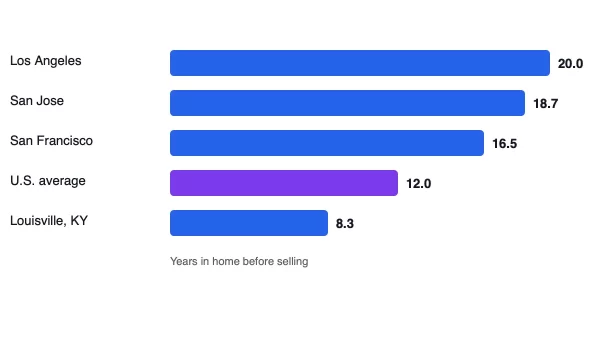
In 2025, 43% of home buyers found their agent through a referral, and 66% of sellers either got a referral or rehired an agent they’d already worked with.
Cold, anonymous leads are getting harder to convert. Circle prospecting works because it skips the anonymous part entirely: you’re calling, mailing, or knocking on doors for people who already live near a property you know something about. Done consistently within a defined geographic area, it becomes one of the steadiest ways to grow a real estate business.
This guide breaks down what circle prospecting actually is, why it still outperforms a generic lead generation strategy in a market full of portals and chatbots, and how to run it well.
You’ll get 15 tested tips and strategies, five ready-to-use scripts and templates, a legal compliance rundown, and a framework for tracking whether any of it is worth your time.
Quick summary:
- Circle prospecting targets homeowners near a recent listing or sale, not random cold leads.
- The typical U.S. homeowner now stays put for 12 years, up from 6.5 years in 2005, so your circle holds more potential sellers than it did a decade ago.
- Pair phone and door-knock scripts with mailers and retargeting ads for the strongest response, and always check your list against the Do-Not-Call Registry first.
- Nearly one in five surveyed homeowners already plan to sell within three years, and most haven’t listed yet, so your circle likely contains sellers before they ever hit the MLS.
- A single call rarely converts; a consistent 3- to 6-month follow-up cadence across phone, mail, and door-knocking is what turns a “not now” into a “let’s talk.”
- Compliance isn’t optional: TCPA and Do-Not-Call violations carry real financial penalties, so scrubbing your list and honoring opt-outs has to be built into the routine, not treated as an afterthought.
What is circle prospecting in real estate?
Circle prospecting means contacting homeowners in a defined geographic radius, usually 20 to 50 homes, around an anchor property: a home you just listed, just sold, or a farm area you’ve committed to long-term. Some agents call the phone-only version circle dialing, but the underlying logic is the same. The anchor gives you something real to talk about instead of a generic sales pitch.

“My initial thoughts were that if you can close 300 buyers through internet leads, circle prospecting will feel like a gift.
You are making a contact that doesn’t feel like they’ve been harassed by 50 agents. You will always be the first contact. The short-term ratios suck if that’s what you care about. For me, it’s 161 contacts to listing for door knocking circle prospects. However, there are unlimited doors and 10 contacts per hour is doable.”
Source: Reddit, u/Real-Estate-Feller, 2025.
Isn’t that just cold calling with extra steps? Not quite. The distinction matters for how you script the call and how homeowners receive it.
Circle prospecting vs. cold calling
Cold calling dials random numbers from a purchased list with no shared context. Circle prospecting dials a tight target area around a property event the homeowner probably already noticed: a sold sign, a sale price, an open house sign on their block.
That shared context changes the opening line from “would you consider selling?” to “you may have seen the sale on your street, here’s what it means for your home’s value.”
Cold calling scripts can still help you handle objections once someone picks up, but the targeting logic is different from a purchased-list cold call campaign.
Why does circle prospecting still work in a digital-first market?
As of 2026, most buyers start their search online, but the agent relationship still forms through people, not portals. Circle prospecting allows you to be the person they already recognize once that relationship starts. Here’s what the data says about why a tight geographic circle still converts.
Sellers are already in your backyard
As of December 2025, nearly one in five homeowners surveyed by Zillow said they’d already listed or would consider selling within the next three years, and 85% of that group hadn’t listed yet. Your circle almost certainly contains a few of them right now, real estate activity that hasn’t hit the MLS yet.
Referrals still beat cold digital leads
Referral-driven sellers outnumber every other source combined. According to NAR, in 2025, 66% of sellers found their agent through a referral or rehired someone they’d used before, and 35% named agent reputation as the deciding factor. Circle prospecting builds that same local reputation, just faster than waiting for word of mouth.
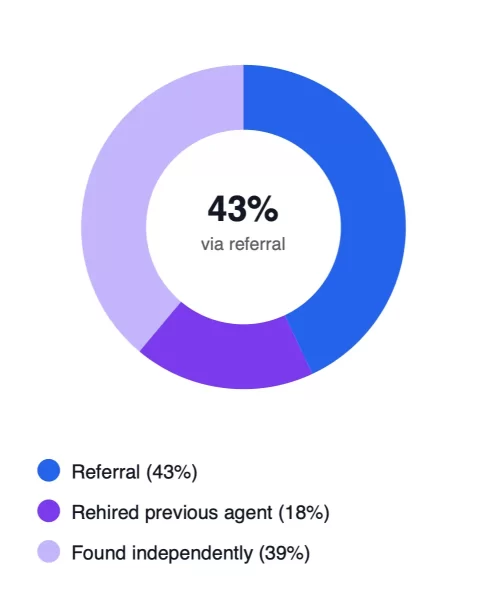
As of March 2026, the typical U.S. homeowner holds onto their house for 12 years, up from 11.8 years in 2024 and more than double the 6.5-year average in 2005. In hot metros like Los Angeles, tenure stretches past 20 years.
Longer tenure means more equity, more life changes stacking up, and more reasons a homeowner quietly starts thinking about selling. Pair that with local market trends, and you have a real case to build relationships now rather than waiting for a sign to go up.
Longer average tenure actually strengthens the case for a tighter circle rather than a wider one. If a metro’s typical homeowner stays 18 to 20 years, a 50-home radius around your anchor property likely holds several households approaching a natural selling window, aging into a life stage change, downsizing, or relocating for retirement, at the same time. A wider radius in a high-tenure metro dilutes your list with homes nowhere near that window.
It layers naturally onto digital channels
As an outreach method, circle prospecting works best paired with, not instead of, your digital channels. The same radius you call and mail can become a retargeting audience for social ads, extending your circle prospecting efforts online so a homeowner sees your name three or four times before you ever knock on their door.
15 proven tips for circle prospecting in real estate (+ 5 ready-to-use scripts)
These circle prospecting tips mix supporting stats with full scripts and templates you can adapt today. Mix and match based on which channel- phone, mail, or door- fits your farm area best.
1. Define your circle strategically
Center it on your anchor property and keep it to 20 to 50 homes rather than sprawling across an entire zip code. A tighter circle means every homeowner genuinely recognizes the anchor event you’re calling about. It’s still a numbers game, just a smarter one than dialing at random.
2. Lead with hyperlocal data, not a pitch
Open with the sale price, days on market, or offer count on the anchor property, real numbers that show you know the local real estate market, before you mention your services at all. Homeowners tune out a pitch in the first five seconds; they lean in for numbers about their own street.
3. Anchor your opener on a “just listed” or “just sold” event
A new listing two streets over is often the easiest permission slip you’ll get to start a conversation, and it’s where most circle prospecting scripts begin.
Ready-to-use script for a “just sold” call
“Hi, this is [your name] with [your brokerage]. I just closed a sale two doors down at [address] for [price], and I’m calling neighbors to share what that means for home values on your street. Have you had a chance to see what homes near you are selling for lately?”
4. Host a neighbors-only open house
Hosting an open house doesn’t have to mean opening the doors to strangers. Instead of a public open house, invite just the homes in your circle. It gives non-sellers a reason to stop by and turns them into potential clients instead of just neighbors, which is exactly how you build trust before you ever need a listing from someone.
Ready-to-use template for a neighbor open-house invite
“You’re invited: an exclusive look at [address] before it hits the open market. As a neighbor on [street name], I wanted to give you first access. Join us [date] from [time] for a private walkthrough, refreshments included, no obligation to buy or sell.”
5. Pair calls with door hangers or mailers
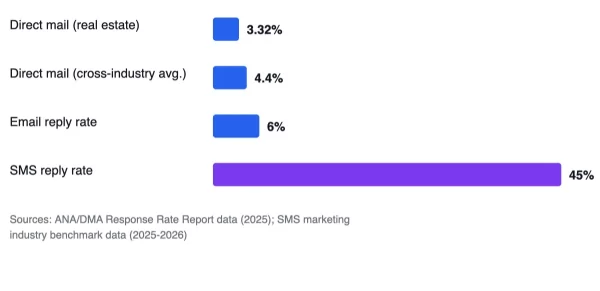
In 2025, real estate direct mail ran a response rate around 3.32%, slightly below the 4.4% cross-industry average, though a monthly farming cadence often builds to 1 to 3% response within the first year. Stacking mail on top of calls reinforces the message a homeowner already half-remembers.
6. Send quarterly market-update postcards
Think of it as a mini market report homeowners didn’t ask for but usually still read. Even homeowners with zero intent to sell will glance at a postcard designed to provide value whether they ever sell or not. Industry estimates commonly cite direct mail ROI as high as $42 per $1 spent, though that figure spans all industries, not real estate specifically, so treat it as a directional benchmark rather than a guarantee.
7. Personalize every touch with the homeowner’s name and street
Generic “Dear Homeowner” scripts get skipped. Industry benchmark data suggests personalized outreach measurably improves response compared to generic scripts, so pull the property address and owner name before you dial or print.
8. Use SMS as a warm follow-up channel, never a cold opener
As of 2025-2026, SMS marketing benchmarks report reply rates as high as 45% compared to roughly 6% for cold email, with most texts read within three minutes of delivery. Reserve texting for contacts who’ve already answered a call or requested more information, and always honor opt-outs immediately.
9. Script your voicemail drop so it doesn’t sound like a robocall
Ready-to-use script for a voicemail drop
“Hi, this is [your name] with [your brokerage]. I’m reaching out to neighbors near [address] after a recent sale on your street. No pressure at all, I just wanted to share a quick market update. Feel free to call or text me back at [number] if you’d like the details.”
10. Time your calls for higher answer rates
Weekday early evenings and Saturday mornings tend to outperform weekday work hours for circle prospecting calls, since most homeowners are unavailable during standard business hours anyway.
11. Handle the “we’re not selling” objection with a pivot, not a hang-up
Ready-to-use script for the “not selling right now” objection
“Totally understandable, most people I call aren’t ready to sell today. Would it be helpful if I sent you a quarterly update on what’s happening with home values on your street, just so you’re not caught off guard if your plans ever change?”
12. Follow up on a consistent 3- to 6-month cadence
A single call rarely converts. Layering a follow-up call or email roughly every quarter is a common pattern among agents who report the strongest circle-prospecting results, since most homeowners need multiple touches before a “not now” becomes a “let’s talk.”
13. Door-knock with a specific reason, never just a knock
Door knocking still works when you’re not just wandering the block, and it works best on the same circle you’re already calling.
Ready-to-use script for a door-knock visit
“Hi, sorry to interrupt, I’m [your name], the agent who [listed/sold] the home at [address]. I’m walking the street to let neighbors know what it sold for, in case you’re curious what that means for your own home’s value. Here’s my card if you’d ever like an update.”
14. Layer in digital retargeting ads to the same circle
Upload your circle’s addresses or a matching zip-code radius to a social ad platform so the same households see your name online between calls. It costs little and reinforces every phone and mail touch you’re already making.
15. Log every contact in a CRM circle list
Track who you’ve called, mailed, or knocked on, along with their response, so you never duplicate effort or miss a follow-up with a potential client. The best real estate CRM software can automate this tagging instead of relying on a spreadsheet.
How to create a successful circle prospecting strategy?
Incorporating circle prospecting into your weekly routine doesn’t require a long planning cycle. Here’s the sequence that turns the tips above into a repeatable system:
- Pick your farm area or anchor property. Choose a neighborhood you can commit to for at least a year, or start from a fresh listing or sale.
- Pull accurate homeowner and property records. Reaching out to homeowners only works if your data is right, so confirm names, mailing addresses, and phone numbers before you spend a single dial.
- Build your outreach cadence. Decide how often you’ll call, mail, and door-knock the same circle; monthly contact tends to outperform sporadic bursts.
- Write or adapt your scripts. Use the five templates above as a starting point, then tighten them to match your voice.
- Track results and refine. Log contact rates and appointments, so you know which script, channel, or time of day is actually working.
Consistency, not luck, is what turns this sequence into real prospecting success.
Building a longer-term real estate marketing strategy covers the longer-term version of step one if you’re planning a multi-year farm area instead of a single anchor listing.
What are the best tools for circle prospecting in real estate?
Circle prospecting is just one of many real estate marketing ideas worth testing, but it’s one of the few built specifically to generate leads from people you can already reach in person. Purpose-built circle prospecting software isn’t required to make it work. Does any of this require an expensive tech stack? Not really. Most agents combine a handful of tool types:
- A CRM with geographic list-building, so you can pull every homeowner inside a radius and tag their contact history in one place.
- A power dialer, to move through call lists faster without manual dialing between each number.
- A mailer or postcard service, for recurring market-update campaigns without designing each piece from scratch.
- A property data provider, to confirm ownership and contact details before you call or mail, especially for homes recently sold nearby.
This case study on creating a real estate mailer that gets kept, not tossed, walks through what makes a postcard worth keeping if you’re setting up quarterly mailers for the first time.
Legal dos and don’ts in circle prospecting
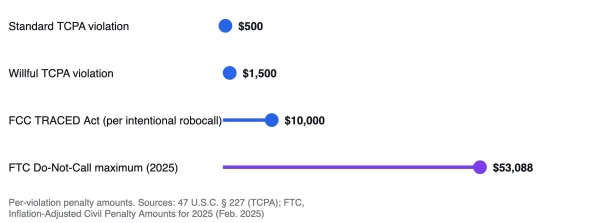
Effective circle prospecting is still telemarketing under federal law, so compliance isn’t optional. As of 2025, standard TCPA penalties run $500 per violation, rising to $1,500 for willful violations, and the FCC can add penalties up to $10,000 per call under the TRACED Act for intentional robocalling (47 U .S.C. § 227, as summarized by legal compliance publishers).
Separately, the FTC’s 2025 inflation-adjusted maximum for Telemarketing Sales Rule and Do-Not-Call violations runs into the tens of thousands of dollars per violation (FTC, February 2025).
Do:
- Scrub every list against the National Do-Not-Call Registry before calling.
- Keep your own internal do-not-call list and honor opt-out requests immediately, across every channel.
- Get written consent before sending marketing texts to a cell phone.
- Check your state real estate commission’s rules on solicitation; some states add stricter disclosure or timing requirements.
Don’t:
- Don’t call numbers on the DNC Registry just because you found them through public property records.
- Don’t use auto-dialers or pre-recorded messages without the specific consent TCPA requires.
- Don’t knock on doors posted with active “no soliciting” signage.
- Don’t skip your brokerage’s compliance training; most violations trace back to a rep who didn’t know the rule existed rather than one who ignored it.
This guide to texting and email compliance rules for agents goes deeper on the TCPA and CAN-SPAM distinction if you’re layering SMS or email onto your circle.
How do you track circle prospecting ROI?
Success with circle prospecting comes down to tracking the right numbers, not just staying busy. If you can’t measure it, you can’t tell whether your circle is working or just keeping you busy. Track these five metrics per campaign:
- Contact rate: the percentage of dials that reach a live person, not voicemail.
- Appointment rate: how many contacts convert into a scheduled listing consultation.
- Cost per lead: total spend on calls, mail, and ads divided by leads generated.
- Cost per listing: the same spend divided by actual signed listings, the number that matters most.
- Response rate by channel: comparing phone, mail, door-knock, and digital retargeting so you know where to invest next quarter.
For a sense of what those numbers can look like in practice, on Brandon Mulrenin’s The Reverse Selling Podcast, Hawaii-based agent Marlene Sedeno described her own contact-to-lead ratio from roughly 30 daily contacts:
“For leads, I would probably say four to six leads a week.”
Source: Marlene Sedeno, The Reverse Selling Podcast
That works out to somewhere around 3 to 4 leads for every 100 contacts. It’s one agent’s real numbers, not a universal benchmark, but a useful anchor if you have no idea yet what “normal” looks like for your own circle.
Most agents track contact rate and appointment rate but skip cost per listing entirely, which is the one number that tells you whether circle prospecting is actually cheaper than paid lead generation.
Without it, a strategy that “feels productive” can quietly cost more per closed deal than the digital ads you’re trying to replace.
These are the sales metrics real estate agents should track if you’re setting up cost-per-lead and cost-per-listing tracking for the first time.
Give every homeowner in your circle somewhere real to find you
Circle prospecting works because you’re a known quantity, not a stranger with a script. But once a homeowner hangs up and searches your name, what they find matters just as much as the call did.
How do you make sure you have a great-looking website where prospective clients can find out more about you?
That’s where Placester’s AI website builder comes in. It reviews your existing online presence, your listings, reviews, headshot, and reputation, and turns that into a complete site in minutes: a real bio in your voice, area pages for the neighborhoods you farm, your actual reviews embedded automatically. No developer, no template to wrestle with, no months-long build.
You’re not paying agency prices to look credible, and you’re not stuck waiting weeks every time something needs to change. The site is simply there, doing its job quietly in the background, so the only thing you have to focus on is making the next call.
And if you want to make changes to your website, just tell our AI editor what to do via chat and watch it happen.
See for yourself how easy it is to create your own website with Placester. Check it out for free during a 14-day free trial.
AI Websites for Real Estate
Get a custom, ready-to-edit website
in less than 4 minutes.
Published on