 (800) 728 8391



Updated on
Real Estate Drip Campaigns: 11 Templates + Setup Guide (2026)

Quick summary:
- 🤖 Automation works while you don’t: Drip campaigns send the right message at the right time, based on behavior or timing. You stay consistent, relevant, and efficient without manual follow-ups.
- 📩 Email outperforms every other channel: 35% of companies earn $10 to $36 for every dollar spent on email, and another 30% earn more. Automated emails also get higher click rates than standard campaigns. In real estate, that means more replies, showings, and qualified conversations.
- 🤝 Your system turns leads into clients: Smart real estate drip campaigns build trust over long sales cycles. They also keep leads engaged and position you as the obvious choice when they’re ready to act.
Real estate drip campaigns are automated email sequences sent over time, not all at once. Each message lands when it makes sense, based on timing or user action.
You may also hear them called email sequences, automated follow-ups, or nurture campaigns. Different names, same idea. You deliver the right message at the right moment.
This works because email still outperforms every other channel.
$10-$36
35% of companies earn $10 to $36 for every $1 spent on email, and another 30% earn $36 to $50.
Source: litmus.com
When your drip campaign is done right, every email builds trust, answers questions, and moves the lead one step closer to action.
In this guide, you’ll learn how real estate drip campaigns actually work. You’ll see real examples you can adapt fast. If you want more replies, more showings, and better clients, keep reading.
What is a real estate drip campaign?
A drip campaign in real estate is a planned stream of emails sent step by step. The name comes from “dripping” information slowly, like water from a tap. You don’t flood leads with offers. You guide them with steady, useful messages.
These campaigns run on clear rules: time triggers, user actions, or both. Imagine a lead downloads a home valuation. The next email explains pricing factors. A few days later, they receive local market insights. Every message has a purpose and a place in the sequence.
119%
Automated emails receive 119% higher click rates than standard marketing emails. That means more engagement without extra effort.
Source: myemma.com
What sets drip campaigns apart is control. You decide the order, timing, and focus of each email. Nothing goes out by accident. Each message builds on the last one and moves the relationship forward.
In the world of real estate, the main goal is trust. Buyers and sellers take time to decide. Drip campaigns keep you relevant during that window. You stay helpful without constant follow-ups or sales pressure.
Another key goal is lead qualification. Engaged readers raise their hand by clicking, replying, or booking a call. Cold leads fade out on their own. You spend time on people who are ready to move.
Real estate drip emails also support long sales cycles. They educate first-time buyers, calm hesitant sellers, and position you as the local expert. When the moment comes, your name feels familiar. That’s when emails turn into conversations and conversations into deals.
👉 See which lead gen companies can boost your client acquisition.

Why run real estate email drip campaigns? 7 values you can win
Email drip campaigns lift engagement and revenue in ways simple email blasts rarely do. Each message nudges a lead closer to a showing, a call, or a signed contract. This way, you turn random prospects into a guided journey.
The key benefits of drip campaigns include:
1️⃣ Crazy ROI that beats other channels
Real estate email marketing consistently delivers strong returns on investment, often beating paid ads and social platforms. It’s one of the most profitable digital channels. Most companies see at least $10 back for every dollar they spend on email.
2️⃣ Highest open rates
21.7%
Real estate emails open 21.7% of the time, slightly above the 21.5% average across industries.
Source: campaignmonitor.com
When you run drip campaigns with segmentation and personalization, you’re looking at even better numbers. That means people really see your message.
3️⃣ Leads staying warm without lifting a finger
You don’t have to manually follow up. The system does it. Leads who aren’t ready to buy today stay engaged. So, when they finally are ready, they think of you first—not your competitors.
👉 Don’t miss our practical guide to real estate lead nurturing.
4️⃣ More qualified leads in your pipeline
Leads nurtured through drip campaigns tend to become sales‑ready more often. Companies using structured nurturing get more qualified prospects while spending less on other tactics.
5️⃣ Low unsubscribe rates
0.22%
The median unsubscribe rate across all real estate email campaigns is 0.22%—basically, nobody’s leaving.
Source: campaignmonitor.com
That’s because your drip campaigns deliver value. You’re sending market insights, new listings, and helpful tips. People stick around because the content matters to them.
6️⃣ Improved consistency and trust
Sharing timely, relevant content builds credibility. Consistent communication also strengthens the relationship over time, because leads learn what to expect from you. Consistent contact helps you stay top-of-mind, and clients start seeing you as a trusted expert in your market.
7️⃣ Better lead engagement
17.2%
Real estate emails enjoy a 17.2 % click-to-open rate. That’s much higher than the 10.5 % industry average.
Source: campaignmonitor.com
Higher engagement means more leads explore your listings, open your guides, or click appointment links. Each click moves a lead closer to a showing or a conversation, turning passive interest into real opportunities.
Common types of drip campaigns in the real estate industry
Drip email campaigns in real estate include nurture, seasonal, and referral sequences, among others. Each type serves a clear purpose and connects with leads in a unique way. Knowing the differences helps you pick the right approach for your audience.
The best real estate drip campaigns match the type of sequence to where each lead is, whether they are buyers or sellers, new contacts, or past clients you want to stay in touch with.
Here is a quick overview of the main campaign types:
| Campaign type | Starts when | How long it runs | Main goal |
|---|---|---|---|
| Introductory | A new lead enters your list | 3–5 emails over 7–10 days | Introduce yourself and set expectations |
| Nurture | The welcome series ends | Several months, up to a full year | Stay useful until the lead is ready to act |
| Seasonal | A date on the calendar | Throughout the year | Match your message to the season |
| Promotional | A new listing, open house, or offer | A few emails around the event | Get a quick response |
| Referral | A deal closes | Ongoing after closing | Earn reviews and referrals |
Below, you’ll find a list of common drip marketing campaign types along with practical tips:
Introductory series of emails
Your first emails are a chance to make a strong impression. When a new lead signs up, the messages they receive at the beginning set the tone for your relationship. Done right, this sequence builds trust and keeps prospects engaged from the start. It is the first step to nurture new leads while their interest is still fresh.
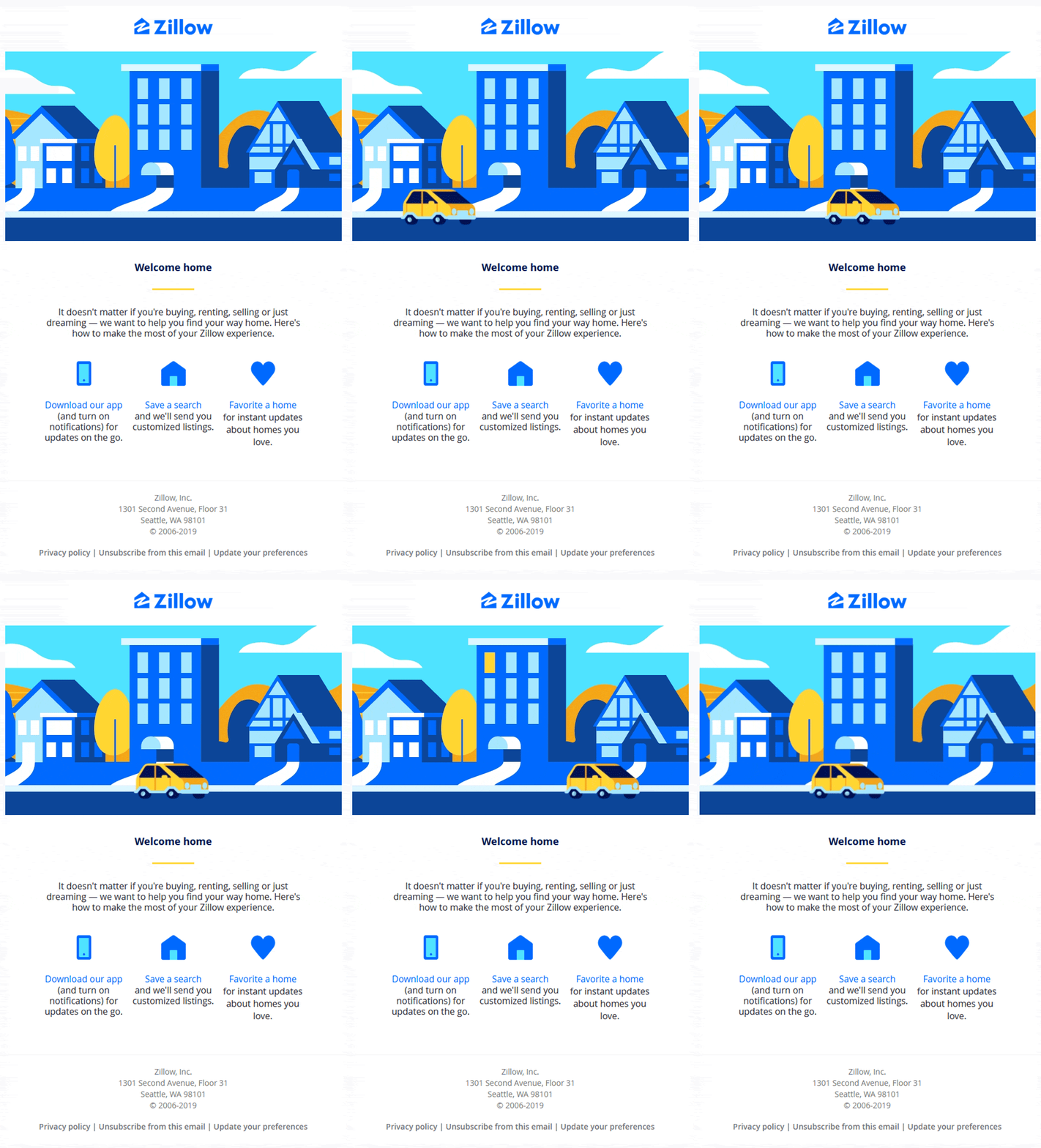
Start by introducing yourself and showing why you’re a reliable local expert. Share useful tips, guides, or resources that solve immediate problems.
Expert tip: Make your emails predictable: let leads know how often they’ll hear from you and what kind of content to expect.
Always include a clear next step. Invite leads to explore your website, view listings, or schedule a call. Every message should deliver value while gently guiding them toward engaging with your services.
Drip campaigns to nurture leads
Nurture campaigns keep the conversation going long after the first sign-up. They guide leads step by step through the buying or selling process. Each email answers a real question your prospect has at that moment, matched to the buyer’s or seller’s stage. The goal is simple: stay useful until they are ready to act.
Some of these campaigns last months. Others cover a full year. That long timeline works in real estate, where decisions are not easy to make. A buyer drip, for example, can follow a lead from pre-approval to closing, with check-ins at each stage.
Your drip campaign content changes based on lead intent. Active buyers see listings, area insights, and practical tips. Quiet or inactive leads receive gentle reminders that you’re still there and still helpful when they start thinking about making a move.
Modern tools make this easier to manage. You can mix emails with text messages to keep momentum. Short updates, timely alerts, and helpful nudges move leads forward without pressure.
Expert tip: You don’t need to write everything from scratch. Start with proven email templates. Then adjust the tone, examples, and calls to action to match how you speak.
A good nurture campaign sounds human, not automated. That’s what keeps leads engaged until the timing is right.
Seasonal campaigns
Seasonal campaigns follow the natural rhythm of the real estate business. Buyer behavior changes throughout the year, and so should your messaging. These sequences align your communication with what people care about in a given season.
They are a series of emails designed to match specific moments. Think “new year, new home” inspiration, tax season reminders, or regular updates on average home prices and market trends in your area.
👉 Check out our tips on real estate agent tax deductions.
In this context, drip campaigns help you showcase your personality and engage your email recipients. Seasonal campaigns also sharpen your marketing messages because you can get really creative with the emails you send throughout the year.
Promotional sequences
Promotional campaigns focus on action. They spotlight a specific moment, offer, or event and push it in front of the right audience. These emails don’t nurture long-term interest. They create urgency and a clear reason to respond now.
In the real estate market, timing is the key. A new listing goes live. An open house is scheduled. A limited perk becomes available. Promotional drip campaigns deliver short, focused messages that get straight to the point and tell the reader exactly what to do next.
Targeting matters here. Buyers see properties that match their needs, including alerts about a specific property they viewed. Sellers get offers that solve real problems. Past clients receive invites that make them feel included, not marketed to. Relevance drives clicks and replies.
Expert tip: Strong promotional emails always include a clear call to action. RSVP. Book a showing. Claim a benefit. When the next step feels obvious, people act faster.
Referral campaigns
Referral campaigns turn happy clients into your best sales channel. In a successful real estate business, trust spreads faster than ads. People believe people. These emails tap into that dynamic and help your network grow naturally.
Start by knowing who to ask. Segment your audience and focus on past clients with positive experiences. A simple, well-timed email asking for referrals feels natural when the relationship is strong. As a real estate agent, you don’t need to push.
“You did not lose that past client to a better agent. You lost them to silence, and to whoever filled it.”
Kyle Crawford, VP of Strategy, Century 21 New Millennium (Inman, July 2026)
Ask for short testimonials to build credibility fast. Share real stories and real outcomes.
Expert tip: Video testimonials work even better because faces and voices feel authentic. They lower hesitation and speed up decisions.
Top real estate drip campaign examples to follow
Below, you’ll find real estate email templates you can copy and adapt. Each one fits a different stage of the real estate sales funnel. Use them to level up your marketing plan.
Welcome campaign example 👇
| Subject: Welcome—here’s what you can expect from me |
| Hi [NAME], Thanks for joining my list. I’m glad you’re here. I help buyers and sellers make smart decisions in this market, without pressure or guesswork. From now on, you’ll get short emails with local insights, real data, and practical tips you can actually use. I won’t spam you. I’ll show up when it matters. If you want to start now, take a look at the latest listings and market updates on my site. It’s a good snapshot of what’s happening right now. Talk soon, [SIGNATURE] |
Nurture campaign example 👇
| Subject: Thinking about buying? Start with this one step |
| Hi [NAME], Most buyers don’t get stuck on price. They get stuck on timing. The first smart move isn’t touring homes. It’s knowing what you can comfortably afford and how today’s rates affect your options. I put together a short guide that breaks this down in plain language. No fluff. No sales pitch. Take a look when you have five minutes. It will save you weeks of uncertainty later. >>LINK<< If questions pop up, just reply to this email. [SIGNATURE] |
Seasonal campaign example 👇
| Subject: New year, new home? Here’s what to watch now |
| Hi [NAME], January is the perfect time for fresh starts and new goals. If a move is on your mind this year, now is the time to understand where the market is heading and how early decisions can give you leverage later. I’m seeing a few early signals worth paying attention to. I shared them here, along with homes that could fit a fresh start. >>LINK<< Take a look and see what stands out. [SIGNATURE] |
Promotional campaign example 👇
| Subject: Just listed—this one won’t last long |
| Hi [NAME], A new property just hit the market, and it checks boxes I rarely see together. Great location. Clean layout. Strong long-term value. I’m giving subscribers early access before the weekend traffic starts. If you want details or a private showing, click below, and I’ll take care of the rest. >>LINK<< Opportunities like this move fast. [SIGNATURE] |
Referral campaign example 👇
| Subject: Quick favor—could you share your experience? |
| Hi [NAME], I hope you’re settling in and enjoying your new place. I have a small favor to ask. If you’re happy with how everything went, I’d really appreciate a short review or a few words about your experience working with me. Honest feedback helps others feel confident when choosing an agent. If someone in your circle is also thinking about buying or selling, feel free to pass my name along. I take care of referrals the same way I took care of you. You can reply directly to this email or use the link below. It won’t take more than a minute. >>LINK<< Thanks again for the trust, [SIGNATURE] |
Buyer and seller drip sequence examples
Single emails work for one-off moments. Buyers and sellers usually need a short series of emails that builds step by step. Here are two three-email sequences you can add to your CRM and adjust based on your market.
Buyer drip sequence example 👇
Email 1 – right after sign-up
| Subject: Let’s narrow down your home search |
| Hi [NAME], Thanks for signing up. I want to help you find the right home without spending weekends on places that don’t fit. Could you reply with three things? – Your ideal neighborhoods – Your price range – Your must-haves, like a yard or a home office I’ll use your answers to set up listing alerts, so you see matching homes as soon as they’re listed. [SIGNATURE] |
Email 2 – a few days later
| Subject: New homes in [NEIGHBORHOOD] this week |
| Hi [NAME], Here are the newest listings in [NEIGHBORHOOD] within your price range. >>LINK<< As you look through them, note what stands out and what doesn’t. Photos show a lot, but layout, light, and street noise are easier to judge in person. If one of the listings catches your eye, reply and I’ll check availability. [SIGNATURE] |
Email 3 – about a week in
| Subject: Ready to see a few homes in person? |
| Hi [NAME], By now you’ve seen what’s available in your price range. The next step is a short tour of two or three homes. One tip before we go: ask your lender for a pre-approval letter. Sellers often ask for one with an offer and it shows that you’re a serious buyer. Pick a time that works for you here: >>LINK<< [SIGNATURE] |
Seller drip sequence example 👇
Email 1 – right after a valuation request
| Subject: Your home value estimate is ready |
| Hi [NAME], Thanks for requesting a home value estimate for [ADDRESS]. Online estimates are a good starting point, but they can’t see your renovations, your view, or how recent sales on your street compare. I’ll prepare a more accurate price range based on homes that sold nearby. >>LINK<< [SIGNATURE] |
Email 2 – a few days later
| Subject: Small fixes that help a home sell |
| Hi [NAME], A strong first impression rarely needs a big renovation. Buyers notice the small things. A few of them that are worth doing include: – Fresh paint in neutral colors – Clear counters and closets – Bright lighting in every room – Quick repairs, like dripping taps or loose handles I put together a short checklist you can work through at your own pace. >>LINK<< [SIGNATURE] |
Email 3 – about a week in
| Subject: When is the right time to list? |
| Hi [NAME], Timing depends on your local market, your next move, and how much prep your home needs. I’d be happy to walk you through what I’m seeing in [NEIGHBORHOOD] right now and how I would market your home, from photos to open houses. It’s a short call and there’s no obligation. Book a time here: >>LINK<< [SIGNATURE] |
How to create a real estate email drip campaign? 7 steps for success
Ready to take your email marketing to the next level? In this section, we’ll cover a step-by-step process to create a real estate drip campaign that guides leads through every stage of the funnel.
STEP 1: Define your goal
Without defining your goal, your sequence of emails becomes a shot in the dark. It’s nice to send, but hard to measure or improve.
Start by asking yourself: “What action do I want my leads to take?” Is it to book an appointment, view listings, request a market report, or refer a friend? Pick one primary outcome.
Next, translate that outcome into specific performance metrics you can track. Don’t just set vague goals like “engage subscribers.” Tie them to numbers like a target open rate, click‑through rate, or conversion rate.
2.6%
In real estate, email gets an average conversion rate of 2.6%. Campaigns that go higher count as a strong success.
Source: ruleranalytics.com
Pick realistic timeframes, too. Decide what success looks like after the first week, first month, and after a full campaign run. These checkpoints help you adjust quickly if something isn’t working.
STEP 2: Segment your audience
Segmentation means breaking your list into smaller groups so you send the right email to the right people at the right time.
You need to separate new leads from engaged buyers, past clients, and inactive contacts. Within those, you can create smaller groups like first-time buyers, downsizers, or investors. These groups have very different needs. Someone actively looking at homes should get different content than someone who hasn’t opened an email in months.
Demographic and behavior data will help. Use geography, price range interest, past interactions, and engagement levels to create a sequence that truly matters to each segment.
Here are a few practical ways to segment in real estate:
| Segmentation type | Examples |
|---|---|
| Lead stage | New, nurtured, active buyer, seller, past client |
| Engagement level | Opens often, rarely opens, never clicked |
| Interest type | Neighborhoods, property types, price ranges |
| Behavior triggers | Clicked listings, downloaded reports, attended an event |
| Lead source | Website form, open house, Zillow, referral |
Watch your segments closely and refine them over time. People change, and their email interactions tell you a lot about where they are in the funnel.
👉 Dive into our complete guide to real estate lead generation.
STEP 3: Map out the email flow
This step is all about planning the sequence and timing of each message before you launch. It gives your drip campaign a logical roadmap so leads never feel lost, confused, or spammed. Planning ahead also helps you measure what works and improve over time.
List every email you want in the sequence and why it matters. Think of your lead’s journey like a story: what do they need to know first, second, third, and so on? That way, you avoid awkward jumps or missing key steps that leave your reader hanging.

A good rule of thumb is to keep your emails purpose‑focused and spaced appropriately. Many drip campaigns include 4–7 emails spaced out over a period that suits the campaign goal. For example, a welcome series might send 3–5 emails over 7–10 days. Too many too fast can lead to fatigue and unsubscribes. Too few too slow can lose momentum.
Apply triggers and timing rules where it makes sense. Instead of only using a calendar delay, set actions that move subscribers to the next email. It can include clicking a link, downloading a resource, or visiting a listing page. Trigger‑based flows feel more relevant because they respond to what the lead actually does.
Expert tip: Always map the calls to action in each email so the sequence naturally progresses toward your goal. Each message should have one clear ask.
STEP 4: Craft compelling content
Great email copy pulls people in and delivers value. When creating your drip, write with the recipients in mind. This way, your marketing efforts turn into measurable results.
Kick things off with your subject line and preview text. These two elements decide whether someone even opens the email.
26%
Personalized subject lines that feel relevant to the reader can boost open rates by 26%.
Source: campaignmonitor.com
While crafting your subject line and preview text, remember that personalization goes beyond names. Refer to interests, past interactions, or local market specifics.
Next, focus on clarity and value. Keep paragraphs short and easy to scan. Unlike long blog posts, drip emails should be quick reads. Most subscribers decide in seconds whether to stay or delete. Place your main idea and call to action early in the message.
Use a single, strong CTA. Too many links or choices dilute attention. In real estate, direct actions like “View this listing,” “Book a tour,” or “Reply with your questions” work best.
STEP 5: Automate
Marketing automation frees you from sending every email manually. You set the rules once, and the system runs your campaign while you focus on clients and listings.
For a start, choose an email marketing tool that fits your workflow. A basic email tool can send a fixed sequence, but CRM automation goes further because it reacts to what each contact does. Look for platforms that trigger messages based on actions: signing up, clicking a link, or downloading a guide. When a lead acts, the next email fires automatically. When a new lead enters your CRM, it can go straight into the right sequence. That way, every lead gets a timely reply, and you follow up with every inquiry without tracking it by hand. Integrations with the CRM keep contacts and tags organized without extra work.
👉 Learn more about real estate marketing automation.
Pick a marketing platform with good reporting. Analytics show who opened, clicked, or ignored each email. Use that data to tweak timing, messaging, and offers. Even small changes can significantly increase conversions.
Expert tip: Efficient email marketing tools include ActiveCampaign, HubSpot, and Mailchimp. You can also consider Follow Up Boss for a real estate‑focused CRM with built‑in email automation.
Update Your Website Effortlessly with AI
Add content, images and videos, redesign pages
and create new ones just by chatting with AI.

STEP 6: Measure and optimize
You shouldn’t set up a drip campaign and hope it works. You need to measure how it performs and refine it based on what the data tells you. That’s how good campaigns get great.
Start by tracking core metrics that show real engagement:
- Open rate – tells you if your subject line and timing engage.
- Click‑through rate (CTR)– shows whether your content and call to action resonate.
- Click‑to‑open rate (CTOR) – measures how compelling your message is once someone opens the email.
- Conversion rate – your bottom‑line action (appointment booked, form filled, call scheduled).
👉 Explore more key metrics for real estate agents.
Use your email marketing tool’s analytics dashboard to monitor these metrics regularly – weekly or at least monthly. A/B testing is one of the most practical optimization techniques. Test one variable at a time: change your subject line, a call to action, or an image in a message. A/B tests show what works empirically rather than by guesswork. Best‑in‑class real estate professionals refine campaigns based on results.
STEP 7: Integrate with other channels
Email should never work in isolation. When you link your drip campaigns with your other marketing channels, you create a seamless journey for the leads. Integration makes your communication feel consistent, personal, and persistent.
You can, for example, combine email with SMS for time‑sensitive alerts.
98%
SMS messages get opened 98 % of the time, compared with 26.8% for email.
Source: Forbes
That makes texts ideal for urgent reminders like open houses or appointment confirmations.
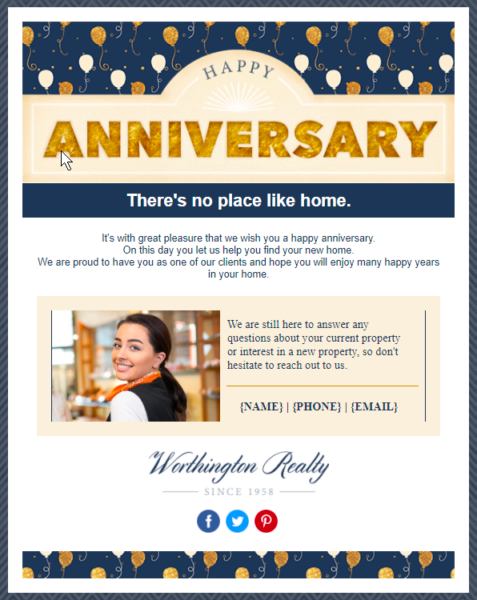
Direct mail still has a place too. A printed market update or a home anniversary card can follow an email to past clients and reinforce the same message.
Link real estate drip content to your social media efforts. Publish it on platforms like Instagram or Facebook to extend reach and reinforce your message. You can also retarget people who clicked email links with paid social ads that show similar listings or market updates. That gives leads multiple touchpoints with the same theme.
You should also align email with content marketing and blogs. Send messages promoting your latest neighborhood guides or market trend posts. On the other hand, you can repurpose your articles in email content to give your audience valuable insights in a fresh format.
👉 Discover engaging real estate blog topics for your next article.
Real estate drip campaign best practices
The steps above cover how to build a drip campaign. These best practices help it stay effective, legal, and welcome in the inbox.
Only add people who agreed to hear from you
Website sign-ups, open house guests who opted in, and past clients are fair to add. Bought lists and every business card you collected are not, and they can lead to spam complaints that hurt delivery for the rest of your list. If you add text messages to your drip, marketing texts fall under separate rules (the TCPA), so make sure your forms collect text consent.
Follow email marketing law
In the US, marketing emails fall under the CAN-SPAM Act. Each email needs your physical mailing address, an honest subject line, and a clear way to unsubscribe. Opt-out requests must be honored within 10 business days and penalties can reach $53,088 per email. Many CRMs add the address and unsubscribe link automatically, but check your templates before you launch.
Protect your deliverability
Gmail and Yahoo now expect bulk senders to authenticate their domain with SPF, DKIM, and DMARC, include a one-click unsubscribe, and keep spam complaints low. If you send from your own domain, ask your CRM provider or IT support to confirm these records are set up.
Set exit rules for every sequence
Decide in advance what takes a lead out of a sequence. A reply, a booked showing, or a signed contract should stop the automated emails, so a client under contract doesn’t receive a “Still looking?” message. Many CRMs let you set these exit conditions once and apply them to every campaign.
Plan steps after the last email
When a sequence ends, move the contact into a long-term list with regular market updates or a newsletter. The relationship continues after the last email in the series.
Review your content every few months
Mortgage rates, listing links, and seasonal references go out of date. One outdated email can undercut the trust the rest of the sequence builds, so put a recurring review on your calendar.
Write to one person
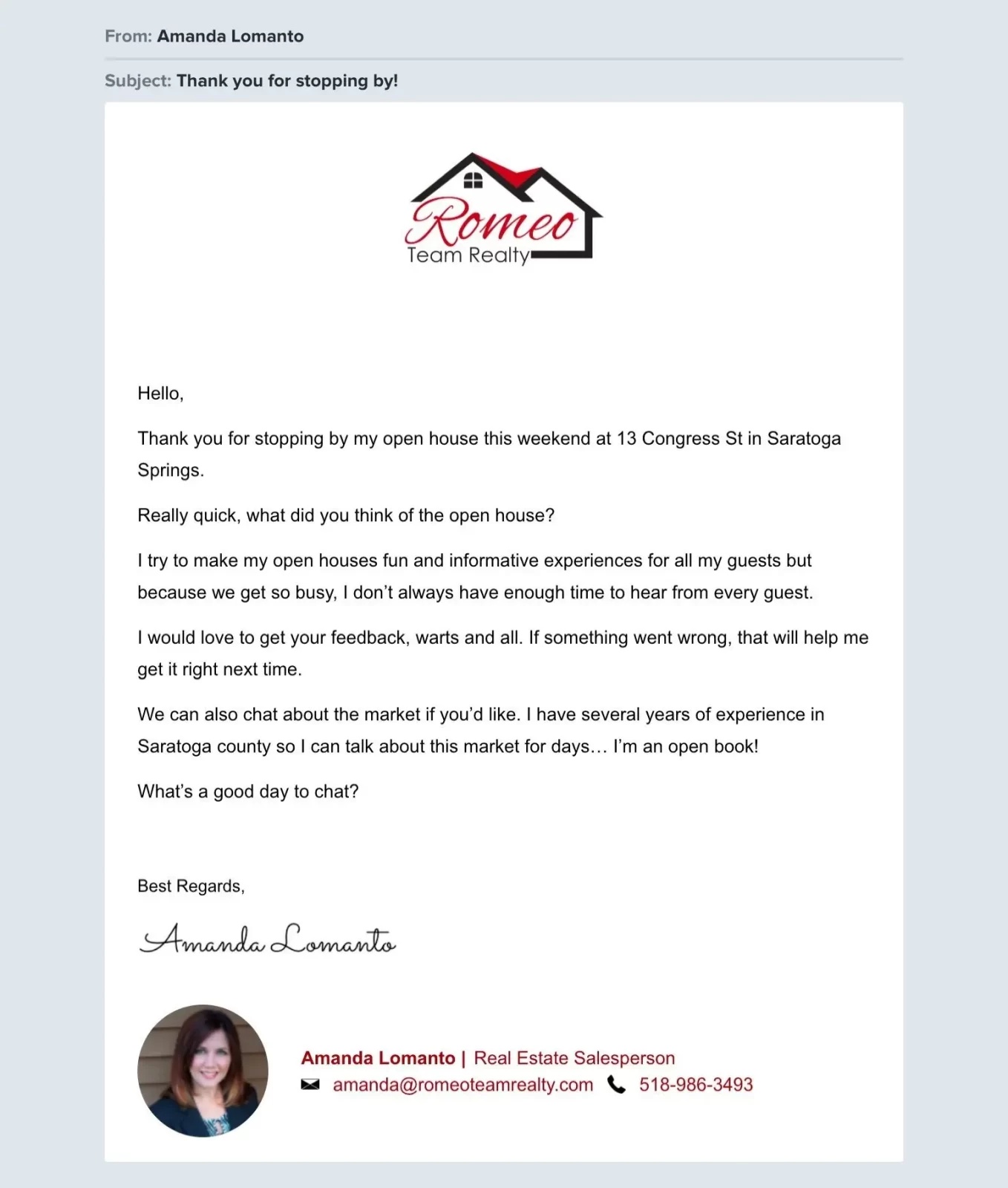
Use a simple, letter-style layout with your name, photo, and signature. Lead with useful content, and keep requests for calls or showings to the emails where they fit naturally.
How AI supports real estate drip campaigns
AI is changing how agents build and run drip campaigns. Instead of writing every email from scratch and guessing when to send it, you can let AI handle the repetitive parts while you focus on conversations.
Here is where AI helps most:
- Testing subject lines. AI can suggest several subject line options for A/B tests, so you learn faster what gets opened.
- Writing first drafts. AI tools can draft a welcome email, a market update, or a full series of emails in minutes. You then edit the tone so it sounds like you.
- Personalizing at scale. AI can adjust each message to the lead’s saved searches, price range, or neighborhood, so emails feel more personal even when you manage hundreds of leads.
- Choosing when to send. Some platforms analyze when each contact usually opens emails and schedule messages for that moment.
- Reacting to behavior. AI can spot when a quiet lead starts viewing listings again and move them into a more active sequence.
70%
In its State of Email Report 2025, Litmus found that 70% of email marketers expect up to half of their email operations to be AI-driven by the end of 2026.
Source: litmus.com
Still, AI works best as support for your own voice. Real estate coach Darryl Davis makes the same point.
“Build the system. Automate what you can, but don’t let the machinery drown out the thing that actually earns you business.”
Darryl Davis, CEO, Darryl Davis Seminars (Inman, May 2026)
Use AI to automate follow-ups and keep your automated marketing running on time, then add your own local knowledge to every message. That combination helps agents grow their businesses while keeping the personal touch clients expect.
👉 See practical examples for how to use AI in real estate.
Key Takeaways
Email marketing is one of the most effective digital channels. With various types of real estate drip campaigns, you can turn your leads into clients. Once you set the automation, the system works in the background. Emails go out on time, and you build a competitive advantage without daily effort.
If you’re a realtor who needs a real estate website and a smarter way to manage an email list, Placester makes the process easy. You can build a professional site in just a few clicks and connect it directly to automated follow-up email workflows. Placester calls them Plans, a ready-to-use set of automated emails designed to support every real estate marketing campaign.
Plans offer built-in real estate drip email templates. You can also create your own custom follow-up email flows based on how your leads behave. That’s especially helpful for new real estate agents who need structure without extra complexity, and for teams that manage leads and clients in one place.
If you’re ready to take control of your email marketing, Placester gives you the tools to do it efficiently. Using real estate drip campaigns, you easily nurture leads over time and stay top of mind in your niche.
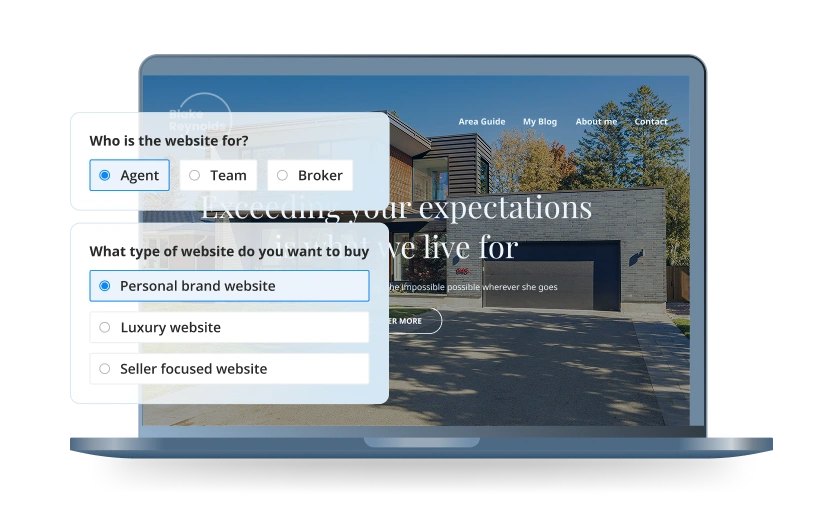
AI Websites for Real Estate
Get a custom, ready-to-edit website
in less than 4 minutes.
FAQ
How long should you keep a drip campaign active?
Run drip campaigns for 8–16 weeks for active real estate leads. High-intent prospects usually need about 90 days of focused follow-up. Colder leads work better with long-term nurturing that lasts 6 months or longer, with reduced frequency to build trust without pressure.
What’s the best time to send emails in drip campaigns?
Late mornings on weekdays work best, especially Tuesday to Thursday between 9 a.m. and 11 a.m. That’s when inbox engagement stays highest in real estate email marketing.
What is the best real estate drip campaign software?
Tools like ActiveCampaign, HubSpot, and Mailchimp stand out for automation, segmentation, and analytics. They scale well as your database and campaign complexity grow.
What is the best real estate CRM with drip campaign feature?
Customer relationship management (CRM) platforms such as Follow Up Boss, Placester, and BoldTrail (formerly kvCORE) offer strong drip campaign features built for agents. They connect email activity directly to lead status and follow-ups.
Where do I find real estate email drip campaign templates?
You can find real estate drip campaign scripts inside tools like Placester, ActiveCampaign, and Canva. Customer relationship management (CRM) platforms such as Follow Up Boss, Placester, and BoldTrail (formerly kvCORE) offer strong drip campaign features built for agents. The best results come from customizing these templates to match your voice and local market.
Published on

Take your real estate website to the next level with Placester!
Discover new opportunities and save thousands of dollars every year.