(800) 728 8391



Quick summary:
- 🥇 Be the first agent they remember. Many clients choose the first seller’s or buyer’s agent they contact.
- 📍 Show up where decisions start. Today’s clients search online, ask for recommendations, and rely on trust signals.
- 🤝 Turn every interaction into the next deal. Strong marketing keeps you top of mind for referrals and repeat business.
Real estate marketing is what puts you in front of the right people and helps you earn their trust. The more effective your efforts in this area are, the better your chances—because in many cases, you only get one shot to win the client.
54%–67%
54% of buyers who reached out to a real estate professional and 67% of sellers who worked with one contacted only one agent before hiring.
What does that mean for you? If you’re not visible early, you’re often out of the game before it even starts. There’s no second chance. Real estate marketing is about being the first name that comes to mind at the right moment.
Today, marketing for real estate agents can take many forms. Most of your efforts will be online, but offline still matters—especially in a business where referrals and word of mouth often drive the final decision.
So where do you start? Below, you’ll find a list of 25 successful real estate marketing ideas. Go through them and pick what fits your model, your market, and your goals.
Why are marketing campaigns in real estate important? 7 key benefits
You need a well-planned real estate marketing strategy to reach the right audience and efficiently turn leads into closed deals. Clients rely heavily on agents, but they don’t spend much time choosing between them. That means your visibility, positioning, and follow-up directly impact your results. Here’s what strong marketing gives you:
🎯 You get in front of clients before they choose an agent
Many buyers and sellers don’t compare multiple agents. If they find you first and trust what they see, they often stop looking.
🌐 You stay visible where clients already search
37%
37% of buyers find their real estate agent online.
Source: Zillow 2026
If you don’t show up there, you miss the earliest—and most important—touchpoints.
🤝 You build trust before the first conversation
Clients expect guidance in a complex process. That’s one of the main reasons they hire agents in the first place.
🔁 You generate referrals and repeat business
Marketing doesn’t end after the deal. It feeds your next one.
40%
40% of buyers find their agent through referrals, and 21% return to someone they’ve worked with before.
Source: Virginia Realtors
⏱️ You shorten the path from interest to contact
Good marketing removes friction. It makes it easy for someone to move from browsing to reaching out without hesitation.
🏆 You justify higher fees and stronger positioning
When clients clearly see how you market properties and present yourself, price becomes less of a deciding factor.
21%
Buyers tend to prioritize an agent’s experience (21%), honesty and trustworthiness (19%), and overall reputation (15%) over price when making their choice.
Source: National Association of Realtors
💰 You increase your chances of closing more deals
If you attract more qualified leads, you convert more of them into clients, which directly boosts your income.
How to build a successful real estate marketing strategy
You should build your real estate marketing plan around a defined target audience and clear goals. Instead of jumping straight into trends and tools, start by shaping a solid strategy.
Why does it matter? Because random ideas rarely turn into consistent results. A focused real estate marketing strategy gives direction. It shows you who you want to reach, where to find them, and what to say. That’s what turns scattered actions into a steady flow of leads.
So how do you build that kind of plan? Start here:
1️⃣ Set a clear goal
Decide what you want to grow. More listings? More buyer clients? Faster closings? Your goal shapes every decision that follows.
2️⃣ Define your ideal client
Stop thinking in broad terms. Picture a specific type of client and their situation. That clarity will shape everything you say and where you show up.
3️⃣ Choose where to reach them
Your clients already have habits. They search, scroll, ask around. Your job is to appear exactly in those places, not everywhere at once.
4️⃣ Make your positioning obvious
When someone finds you, they should immediately get what you’re about. If they have to guess, you lose them.
5️⃣ Map the path from first contact to closing
Don’t leave this to chance. Think through what happens after someone lands on your real estate website or social media profile, and make the next step obvious.
6️⃣ Build simple habits you can maintain
You don’t need complex campaigns. You need actions you can repeat without burning out. That’s what creates momentum.
7️⃣ Track what brings results
Pay attention to what brings real conversations and signed clients. Ignore the noise that looks good but doesn’t convert.
25 unique real estate marketing ideas for agents in 2027
Below, you’ll find a mix of marketing ideas for Realtors, agents, and brokers. Some focus on online visibility. Others rely on local presence and relationships. Go through them with your own strategy in mind. Pick what fits your real estate business, and turn it into more deals:
1. Turn your professional website into a lead machine

Your website should turn visitors into conversations. Show how you work right away and guide visitors step by step toward taking action. Add key elements like:
- Unique value proposition in the hero section
- Built-in property search (IDX)
- Dedicated pages for buyers and sellers
- Simple, visible lead capture forms
- Local area or neighborhood pages
- Client testimonials (ideally with real stories)
- Featured listings section
- Easy contact options (call, form, booking)
Tool tip: With Placester, you can do all this without coding. You launch pages fast, adjust content with AI, and keep your message consistent with your brand.
A professional website gives you more control over your leads. Instead of relying only on third-party platforms, you build your own traffic and capture interest directly.
Feature high-priority listings on your homepage
Often, leads will enter your real estate website on the home page and quickly glance at the offerings there. Capitalize on this by showcasing priority listings. Link each featured listing to a dedicated landing page.
A listing landing page should captivate your audience with:
- Great photography or video
- Details on the unique value of the property (this should be different or more in-depth than what appears on the listing page)
- An effective call to action to incite users to connect with you
- A simple lead capture form
Make sure you receive a notification each time a person completes the form so you can follow up in minutes.
Offer downloadable PDFs
In addition to contact forms, you can add a form to request a free comparative market analysis (CMA) or give buyers a mortgage calculator to estimate their monthly payments. Downloadable PDFs are another way to generate leads from your website.
Home buyers and sellers appreciate all kinds of informative materials that will provide them with tips on purchasing a property or preparing their house for sale.
You can create gated content for your website in the form of e-books or short PDFs where you will answer the most frequent questions you are asked by your clients, for example:
- An extensive “to-do” list for house sellers
- A step-by-step guide for aspiring homeowners
- A beautiful area guide with a comprehensive description of the neighborhood including schools, coffee shops, entertainment, services, history, and so on
Displaying property listings in a neat ebook is also a great real estate marketing idea, especially for those agents who know exactly what types of properties their clients will look for. Apart from the typical features that are found in every MLS, you can focus on telling a story about the property, its characteristics and its neighborhood.
Remember to make your e-books pleasant for the eye and easy to read. You can use free platforms to create them (such as Canva) and use royalty free images that are available there to avoid the effect of an overwhelming textbook.
Post excerpts of your PDFs on your social media platforms and start an email marketing campaign to promote your content and invite your followers to download the complete file from your website.
👉 Check out these 24 real estate agent website examples to see what works.
2. Own your market with hyperlocal SEO content
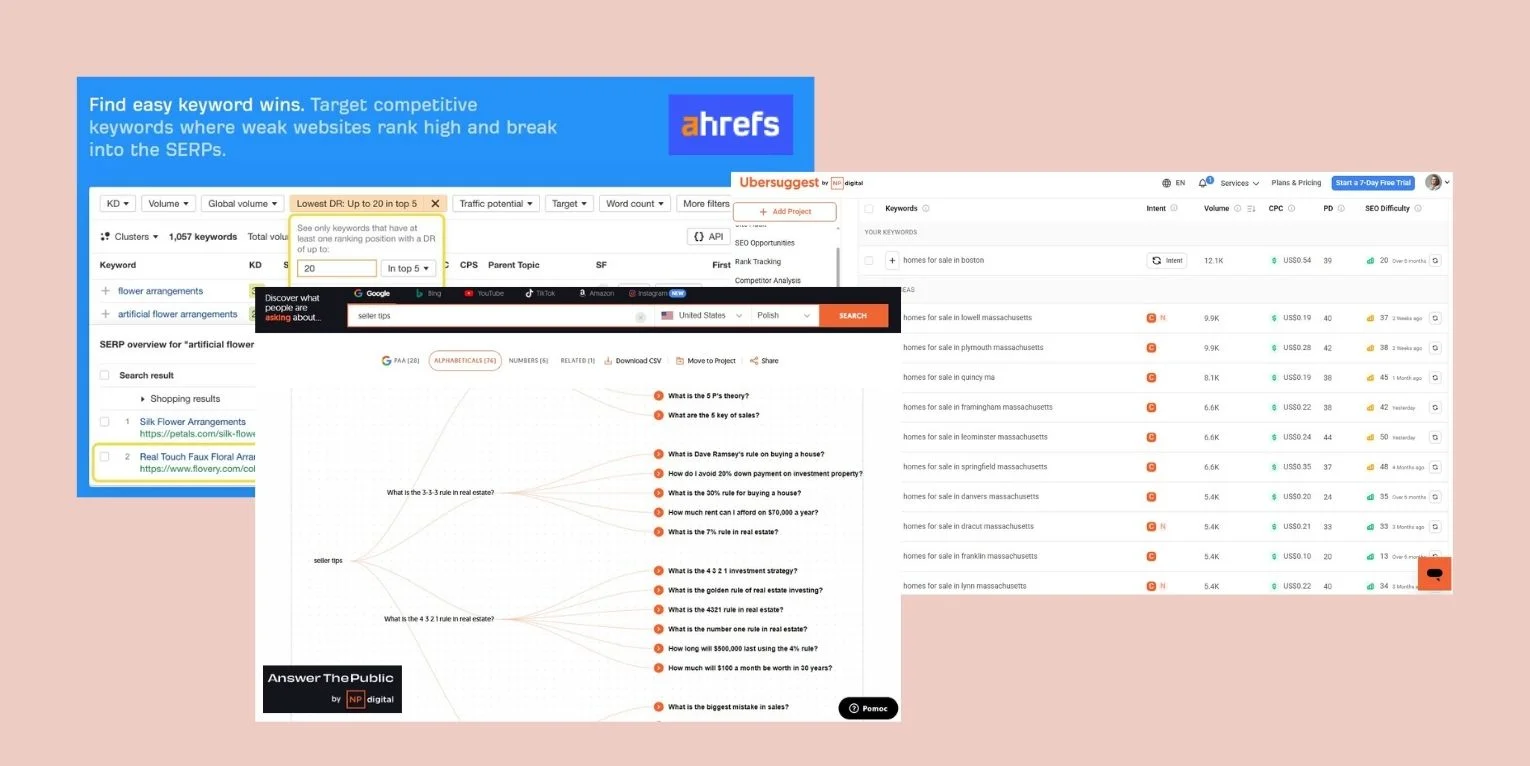
To bring steady traffic to your website, you need to invest in SEO. It means optimizing your content so it shows up in search engines when people look for properties. It’s a core part of digital marketing for real estate agents.
One of its most important pieces is local content built around real queries. Someone looks for “homes in [area]” or “best neighborhoods for families.” You should have pages that answer those queries directly.
Tool tip: Use tools like Google Search Console to see what people search for, and Ahrefs or Semrush to find keyword ideas. Once you’ve identified key phrases, include them in your marketing copy and landing pages.
Write blog posts
You can write short posts covering real estate news and tips for home buyers or home sellers.
An MLS listing can only hold so much information, and doesn’t leave tons of room for creativity and out-of-the-box marketing. For greater freedom, create a blog post to expand on your listing’s information and create a fuller experience for leads.
Focus on using related local, long-tail keywords throughout your post, including the title, URL slug, page content, and meta description that will appear in search engines.
Blog posts provide ample space for listing photos. You can enhance your real estate photos by providing a description or caption for each. Include your contact details in the post and create a call to action that invites leads to reach out for more information or a showing.
Create area guides
Area guides are a great way to position yourself as a hyper local real estate agent who knows the ins and outs of the area they operate in. You can collect all the important information about the area such as demographics, schools, entertainment, insights of the locals, history and events and write a lengthy content piece for your website.
Ideally this content will link to other content you’ve created on your site, but feel free to link to great external resources as well.
Local SEO plays a key role in real estate online marketing because most clients start with a search and look for location-specific results. If your content matches what they type, you show up early. That visibility brings steady traffic without paying for every click.
👉 Learn how to rank locally with our real estate SEO guide.
3. Become the go-to source with local market reports
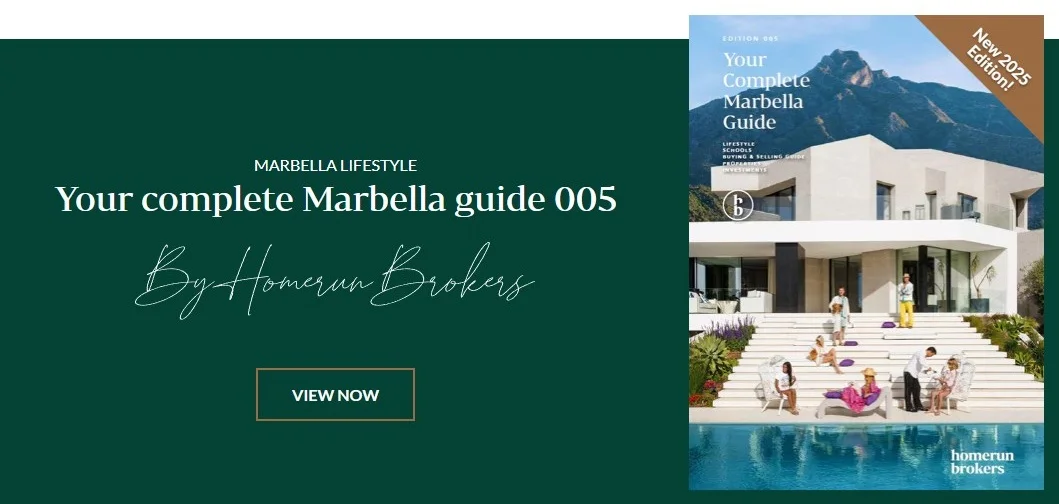
If you want people to trust you, show them you understand the market better than anyone else. Share regular updates based on real data. Focus on:
- Prices
- Inventory
- Days on market
- Trends in specific neighborhoods
Use data from your local MLS, along with platforms like Altos Research or Zillow. Turn it into short reports and publish them on your blog or social media. Keep it simple and explain what it means in practice.
Content marketing does more than support SEO. With regular market reports, you build credibility over time and give potential clients a reason to trust your judgment.
4. Use video walkthroughs for listings
Video changes how people experience a property. Instead of scrolling through photos, they move through the space with you. That has a direct impact on results.
32-39%
39% of home buyers would ideally use an agent-led video tour, and 32% had used one.
Source: NAR
How do you turn your real estate video marketing ideas into action?
1. Plan the route before you shoot so the video follows the home’s actual flow.
2. Clean and stage the property first, open blinds, turn on lights, and remove small distractions that make rooms look busy.
3. Record in horizontal format for your website and portals, then cut shorter vertical clips for social.
4. Use a phone or camera on a gimbal so motion stays smooth.
5. Add short captions that point out features a buyer could miss in photos.
6. If you want a more immersive format, pair the video with a 3D tour built in Matterport.
7. Use drone footage to show the lot size and the overall look of the surrounding area. For U.S. listing shoots, follow the FAA’s Part 107 rules if you fly the drone yourself, or hire an FAA-certified drone pilot.
Expert tip: Keep your edits tight and purposeful. Cut anything that slows the viewer down and aim for a clean 60–90 second version. Buyers should understand the property before they lose interest.
Once your videos are ready for posting, make sure to optimize them for local search.
👉 See how to use drone photography in real estate marketing.
5. Shoot short-form videos for your social media posts
Short-form video is now one of the fastest ways to get attention in real estate. Platforms like Instagram Reels and TikTok push video to people who don’t follow you yet, so you reach new buyers and sellers without paid ads.
You don’t need a studio. You need a clear idea and a repeatable format. Start with real situations your clients care about:
- Walk through a new listing and explain what matters.
- Show how a street looks at different times of day.
- Break down one pricing decision using real numbers.
Keep it tight. Aim for 20–40 seconds. Open with a hook in the first 2 seconds. Say why this matters. Then show, don’t just tell. End with a simple next step: “DM me for the full list” or “I’ll send you the report.”
When recording videos for social media marketing, keep this in mind:
- Record vertical in 4K if your phone allows it.
- Clip a lav mic if you speak.
- Film near windows or shoot outside in soft daylight.
- Keep cuts quick and remove pauses so the pace feels natural.
- Add captions because many people watch with sound off.
- Batch 3–5 videos in one session to stay consistent.
- Rotate formats so you don’t blend into the feed.
Tool tip: Use simple tools like CapCut or InShot for editing, and native apps for trends and sounds.
Publish your listing videos on Instagram and Facebook:
➡️ Instagram: Tag your listing’s location. Use descriptive language in your post. Build anticipation and encourage users to click on the link in your bio to get to your landing page.
➡️ Facebook: Give your video a strong description that includes a link to the listing. Have an open house? Create a Facebook event to share invites with your followers.
👉 Get more real estate social media tips.
6. Split one property into targeted PPC listing ads
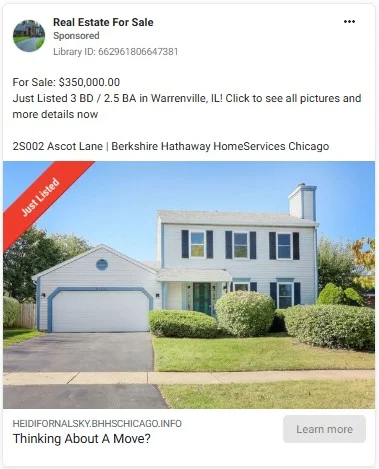
Short-form videos on social media are great for reach. They help people notice you and remember your name. With paid ads, you can set a budget and test which features of a listing generate inquiries.
Instead of pushing one broad ad, take a single property and turn it into a few focused ads:
- Show the kitchen to buyers who care about finishes.
- Show the yard to people looking for space.
- Highlight commute or walkability for those who think about daily routines.
Each version highlights a different selling point.
You can build this in Meta Ads Manager. Select Housing as the Special Ad Category for your listing campaign. Start with a modest daily budget and watch cost per lead, not just clicks. When one angle consistently brings in inquiries at a lower cost, shift more of your budget there.
Expert tip: Use the Meta Pixel to measure actions on your website, such as listing views and completed inquiry forms.
Use local keywords in search ads
With PPC ads on search engines, agents can target their listing’s ad for keywords that are difficult to rank for organically.
Choose long-tail, local keywords. Because you’re focused on listings, you want to be as specific as possible, focusing on neighborhoods, property styles, street names, and other prominent geographic features in your area to describe the home.
While ad length is typically limited, stand out with amazing advertising copy, including a strong headline that uses targeted keywords, a descriptive line that highlights the best features, and a call to action that gets the user excited. You can also add assets to your Google Ads, such as sitelinks, a phone number, or your business location.
⚠️ Note: For housing ads in the U.S. and Canada, Google Ads prohibits targeting by age, gender, marital status, parental status, or ZIP code.
👉 Check 13 real estate Facebook ad examples that work.
7. Host free webinars for buyers and sellers
You can run a series of webinars or host free seminars on your social media dedicated to the subjects your prospective clients are interested in. For example, host a 30-minute session called “Buying a condo in Chicago? What to review before you make an offer.” Walk through a sample HOA document and leave the last 10 minutes for questions.
Use Google Forms to collect registrations and Zoom to host the session. Add one optional question to the form: “What would you like me to cover?” Use the answers to decide which parts of the document need the most explanation.
You can invite people to watch your webinars by announcing the release on your social media and through email campaigns. After the session, send attendees the replay and a copy of the resource you discussed. If you ran out of time for someone’s question, answer it in a separate reply.
8. Use email marketing to send decision-stage newsletters
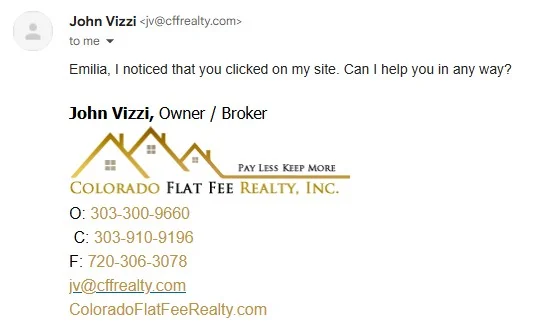
Email marketing is one of the best ways of nurturing your leads and keeping in touch with your customers and former clients. Use decision-stage emails to help readers answer one concrete question about their next move.
A personalized email reflects where the reader really is. A new subscriber doesn’t need the same message as someone who checked the same listing twice. After you have segmented your lead base into groups, you will be able to provide your subscribers with the information they want, showcase your new listings, inform about open house events and provide your former clients with their homes’ current market value in case they want to sell.
Use real signals:
- What did they click?
- Which area did they look at?
In Mailchimp or ActiveCampaign, you can use a click on a listing link to trigger a follow-up email tied to that action.
Expert tip: Keep the setup simple at the start. Use one trigger and one follow-up with a clear purpose. When you see replies or repeat clicks, expand from there.
Use email to get your listing in leads’ inboxes
Develop an email format that provides leads with a beautiful preview of your listing, including details about location, important features, and a call to action that asks them to connect with you, either by replying, filling out a form, or visiting a landing page to view more.
You don’t want to overload your email, so include only one or two striking photos. It’s also important to write a clear subject line so folks know this isn’t a general newsletter. Think “Newly Listed: Pristine Colonial in Newton,” or for a hyper-local impact, include the street address.
👉 Get the complete guide to real estate email marketing.
9. Turn client testimonials into proof you can solve real problems
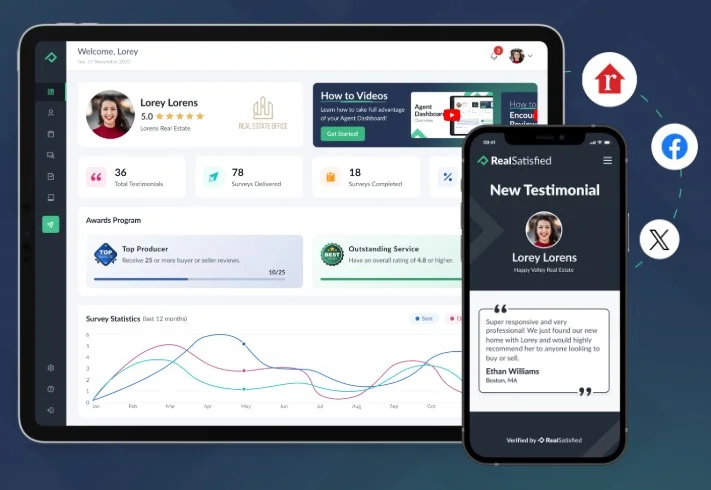
Research from NAR shows that referrals and reputation strongly influence agent selection. Use that to your advantage. Don’t present testimonials as general praise. Show them as proof that you can solve specific problems:
- A seller unsure about pricing should see a short quote about how you handled negotiation.
- A buyer worried about competition should see a story about winning in a multiple-offer situation.
- An investor worried about returns should see how you helped turn a property into a profitable flip.
Place these exactly where doubts appear, next to listings, forms, and follow-ups.
Ask for feedback right after closing, when details are clear. Focus the question on a specific challenge you helped solve. If possible, record a short video testimonial during the final meeting. Then break that response into smaller pieces and use it across your marketing channels. A single answer can support a listing page, an email, and a retargeting ad. A single answer can support a listing page, an email, or a social media post.
Tool tip: Tools like Google Reviews, Zillow profiles, or Typeform help you collect responses, while Canva or CapCut make them easy to present.
10. Optimize your Google Business Profile
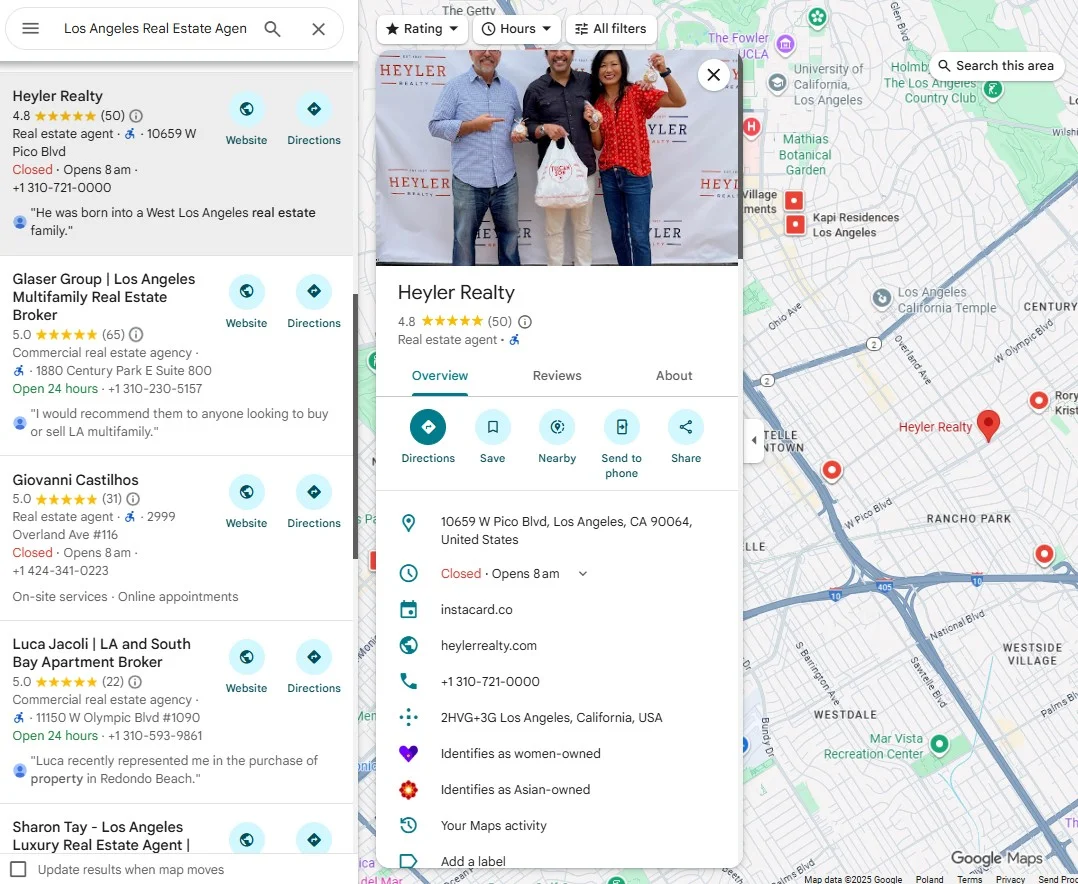
When someone searches “real estate agent near me,” they’re close to making a decision. Google shows them a map, a few profiles, and just enough information to choose a professional without even clicking a website. That’s why your Google Business Profile is your first conversion point.
2.7x
Businesses with complete Google Business Profiles are 2.7x more likely to be considered reputable.
Source: Google
How to optimize your Google Business Profile:
1. Complete every field
Add services, areas, and detailed descriptions. Google uses this to match you with searches. Incomplete profiles simply don’t show up as often.
2. Choose the right category and keywords
Your main category tells Google what you do. Secondary categories expand your reach. This directly affects when you appear in local results.
3. Add real photos, not stock images
Profiles with photos attract more engagement and trust. Show properties, neighborhoods, and real situations.
4. Collect and respond to reviews consistently
Reviews influence both ranking and decisions. Even a one-star improvement can significantly increase calls and clicks.
5. Post updates directly on your profile
Treat it like a mini social feed. Share listings and market insights to keep your profile active.
👉 Explore local SEO strategies for real estate.
11. Turn open houses into lead campaigns
In today’s market, open houses still play an important role, even if they rarely get credit for the final sale. They remain one of the few forms of offline marketing that create direct, in-person interaction with potential buyers. Note that the event itself is not the strategy, however. The exposure and follow-up around it are.
If you see an open house as just a two-hour event, you waste it. But when you treat it as a campaign that builds interest before and captures intent after, it starts working like a real marketing tool.
Start promotion early and make the event feel like a limited opportunity. Announce it 5–7 days in advance through your listing, email, and social. Make sure your open house is adequately marketed both online and offline (e.g. local mailers and newspaper announcements) well in advance. Then, add a clear angle so people know why this one is worth showing up for.
Make sure the home is staged. Clear the space of unnecessary or cluttered items, and create an inviting atmosphere throughout the house. You should consider printing guides with information about the listing and the local market that include your full contact information.
Collect names via a lead capture form on a landing page before the event, and with an open house sign-in sheet during the event. Use the open house to gather signals. Who asks about price? Who lingers in certain rooms? Use those details to guide your follow-up.
What you do next determines whether that interest turns into a real conversation. Send a short message based on what each person showed interest in. Add one piece of information they didn’t get during the visit.

No matter how much our industry changes, seeing a home in person will always be indispensable.
J. Philip Faranda, Howard Hanna | Rand Realty manager and associate broker
👉 Find out how virtual open houses work.
12. Use QR codes on flyers and signage
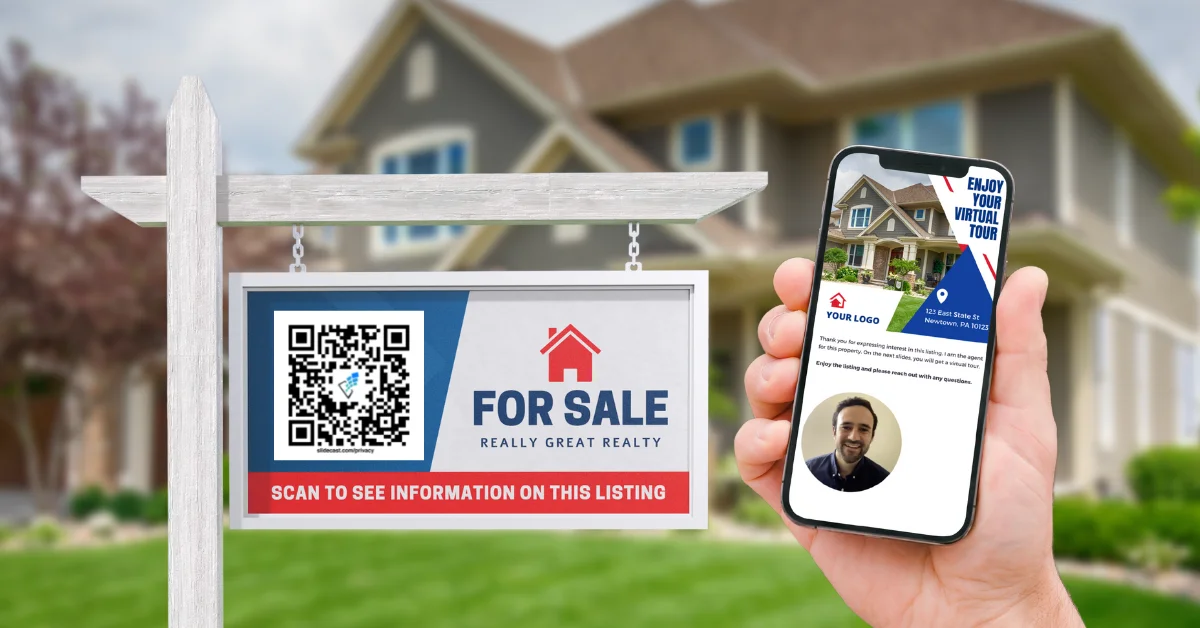
QR codes fix one of the biggest problems in real estate marketing: lost intent. Someone sees your sign or flyer, gets interested, and then forgets to look it up later. A QR code removes that gap. One scan takes them straight to the listing, video tour, or booking page.
~37%
QR-driven campaigns can reach ~37% click-through rates, far higher than typical display ads.
Source: Forbes
In real estate, this helps you measure interest in a listing and give visitors a way to get in touch.
How to use QR codes and not waste them:
➡️ Link to one clear next step, not your homepage
Send people to a specific action: a listing page, video walkthrough, or showing scheduler. QR codes work because they remove friction, so don’t add it back with generic pages.
➡️ Place them where intent already exists
Use them on yard signs, flyers, open house materials, and direct mail. These are moments when someone is already curious, so the scan feels natural.
➡️ Use dynamic QR codes, not static ones
A dynamic QR code lets you change where it sends people after you’ve printed your flyers or signs. For example, once a property sells, you can redirect the code to a page with similar listings.
➡️ Use a clear CTA next to the QR code
Tell people exactly what they’ll get after scanning. On a flyer, it can lead to full property details. On a sign, use prompts like “Scan for price” or “Book a showing.” The clearer the message, the more likely people are to scan.
➡️ Use the data for follow-up
QR codes give you insight into which listings get attention, when people scan, and from where. That tells you who is interested and how to follow up with relevant information.
👉 Discover must-have materials for real estate agents.
13. Build word-of-mouth marketing through local partnerships
88%
88% of consumers trust recommendations from people they know more than any other form of marketing.
Source: Nielsen
That’s why your marketing efforts should include local partnerships. When a mortgage broker, contractor, or local business owner recommends you, you borrow their trust instantly.
To make this work, you need to turn relationships into a system. Start with 3–5 partners who already talk to your potential buyers and sellers. Think:
- Mortgage brokers
- Home inspectors
- Attorneys
- Or even gym owners in the right area
Provide them with clear materials they can share, such as a short message, a co-branded guide, or access to a private listing. Keep in regular contact and support their business when possible. Focus on making it easy for them to mention you naturally in conversations with clients.
14. Use local events to generate offline referrals

Industry research shows that events directly contribute to lead generation and revenue. What most agents miss is the goal. You’re not there just to be seen, but to identify who can refer you and give them a reason to do it.
Treat every event as a starting point for referrals. When you meet people, ask what kind of clients they work with and where they struggle. That tells you how you can help and where referrals can happen.
After the event, follow up within a day while the context is fresh. Reference something specific from the conversation and give them a reason to continue it. That’s where most of the value sits. The event opens the door. The follow-up turns it into business.
Events that work well for referrals:
- Local business meetups and chamber of commerce events
- Real estate conferences and industry networking events
- Community events, fundraisers, and neighborhood gatherings
- Investor meetups and property-focused workshops
👉 Find must-attend real estate conferences.
15. Turn your LinkedIn presence into inbound deals
LinkedIn generates a large share of B2B leads compared to other channels. People there are changing jobs, relocating, investing, or expanding their business. That creates real estate demand.
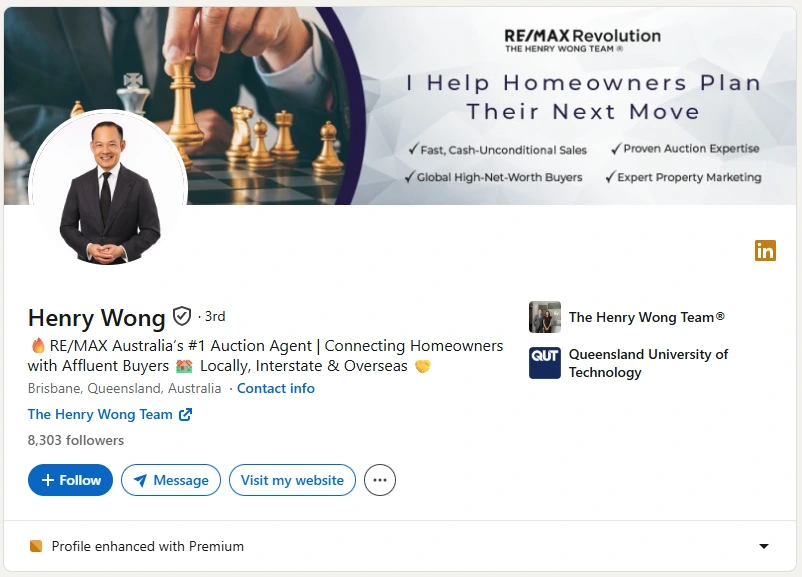
Your job is to show up in those moments with context they can use. A strong profile does most of the work. It needs to explain who you help, where you work, and what outcome you deliver. Profiles that convert read like a case study of the clients you work with and the results you get.
What works on LinkedIn in real estate:
- Write your headline like a search query. Include your niche, location, and outcome. That’s how people find you when they actively look.
- Turn your “About” section into proof. Describe real client situations and results instead of general statements.
- Post from real transactions and conversations. Break down pricing decisions, failed deals, or unexpected outcomes.
- Focus on one type of client or deal. Clear positioning makes your content easier to remember and refer to.
- Engage in comments and messages daily. Conversations drive most of the opportunities, not the posts themselves.
- Use simple formats you can repeat. Consistency builds familiarity, and familiarity builds trust.
That’s the power of this platform—I’m visible to the right people, all the time. With every new connection, the circle widens and brings with it more opportunities for referrals, introductions, and ultimately sales.
Henry Wong, RE/MAX real estate expert
👉 Choose the best social platforms to grow your real estate presence.
16. Show up in local Facebook groups
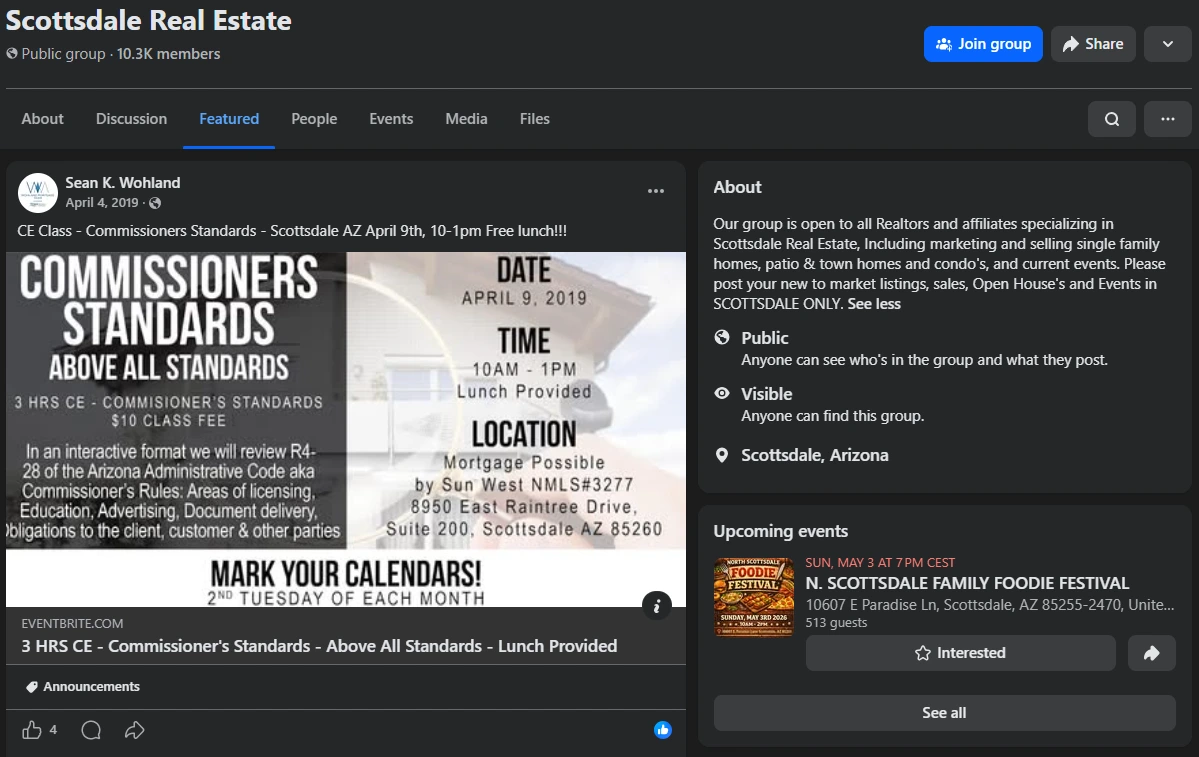
Scroll through any local Facebook group for five minutes. Someone is asking about a neighborhood. Someone else is trying to figure out if now is a good time to buy. Another person is looking for an agent recommendation.
This is where today’s buyers and sellers talk before they ever fill out a form. If you’re not part of those conversations, you show up too late. Join groups tied to specific neighborhoods, relocations, or local communities. Watch what people ask and how they phrase it. Then respond like you would in a real conversation.
If someone asks about prices, don’t say “it depends.” Point to what’s happening right now in that area. If someone asks about a neighborhood, talk about what you’ve seen in recent deals.
Over time, people remember who helped them understand something.
17. Build your content marketing around real client questions
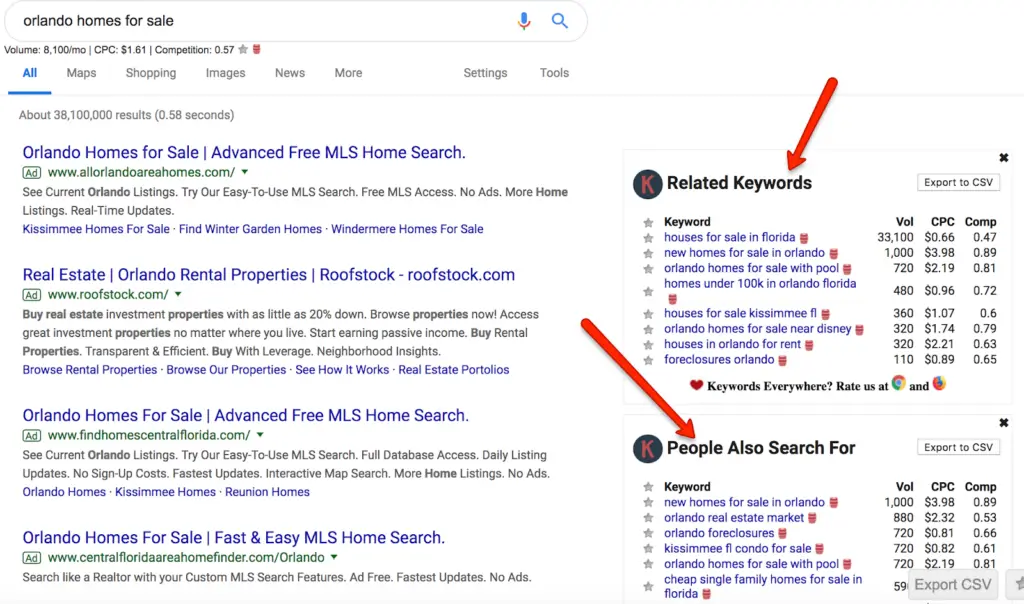
Think about your last few conversations with clients. The same questions keep coming back:
- Is now a good time to buy?
- Why did this home sell so fast?
- Why is that one still sitting?
Strong content marketing in real estate starts with those exact questions and turns them into clear answers. That’s what your new clients will be looking for. Not more listings, but context they can trust.
When creating content, keep it focused:
- Turn one question into one piece of content.
- Use real situations instead of general advice.
- Keep the answer specific to your market.
- Write like you explain things to a client, not like a Wikipedia page.
Preferred formats depend on where your target group already spends time. You can write a short post, create a longer article, or record a video. There are also newsletters, podcasts, infographics, and so on. You can share your expertise in any format. What matters is how well it fits your audience and the way they consume content.
Tool tip: Don’t limit yourself to Facebook and LinkedIn. Publish on your own blog, contribute to industry platforms, use YouTube or TikTok for video, and join discussions on forums like Reddit or Quora.
👉 Explore the search terms that drive real estate traffic.
18. Use templates to create a consistent marketing experience
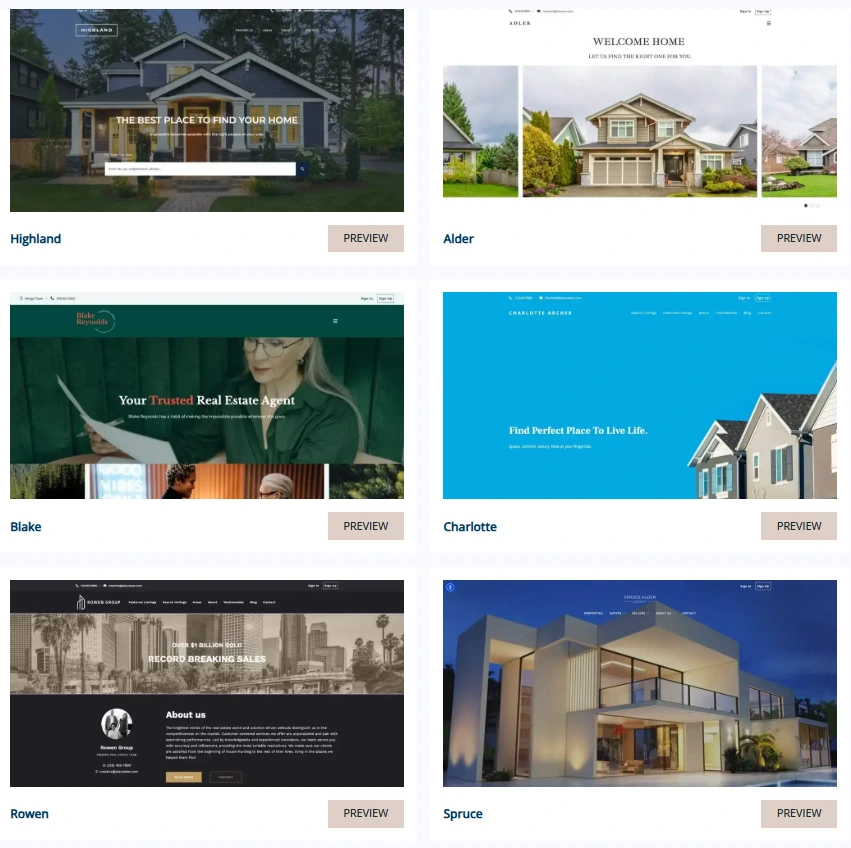
If every listing, post, or email starts from a blank page, you end up making decisions on the fly. One campaign works, the next one falls flat, and you don’t always know why. Templates fix that by giving you a structure you can repeat. Instead of starting over each time, you build on what already worked and refine it with each use. That’s what makes your marketing feel consistent and easier to scale.
Use templates where consistency and repeatability matter most:
- Listing descriptions, so each property follows a clear, proven structure
- Social media posts, when you want a consistent format that people recognize
- Email campaigns and follow-ups, to keep communication clear and repeatable
- Landing pages for listings or services, where structure affects conversion
- Open house promotion and post-event follow-ups
- Lead responses, especially when answering common inquiries
- Market updates and reports, so insights are easy to scan and compare
19. Turn your marketing plan into a simple content calendar
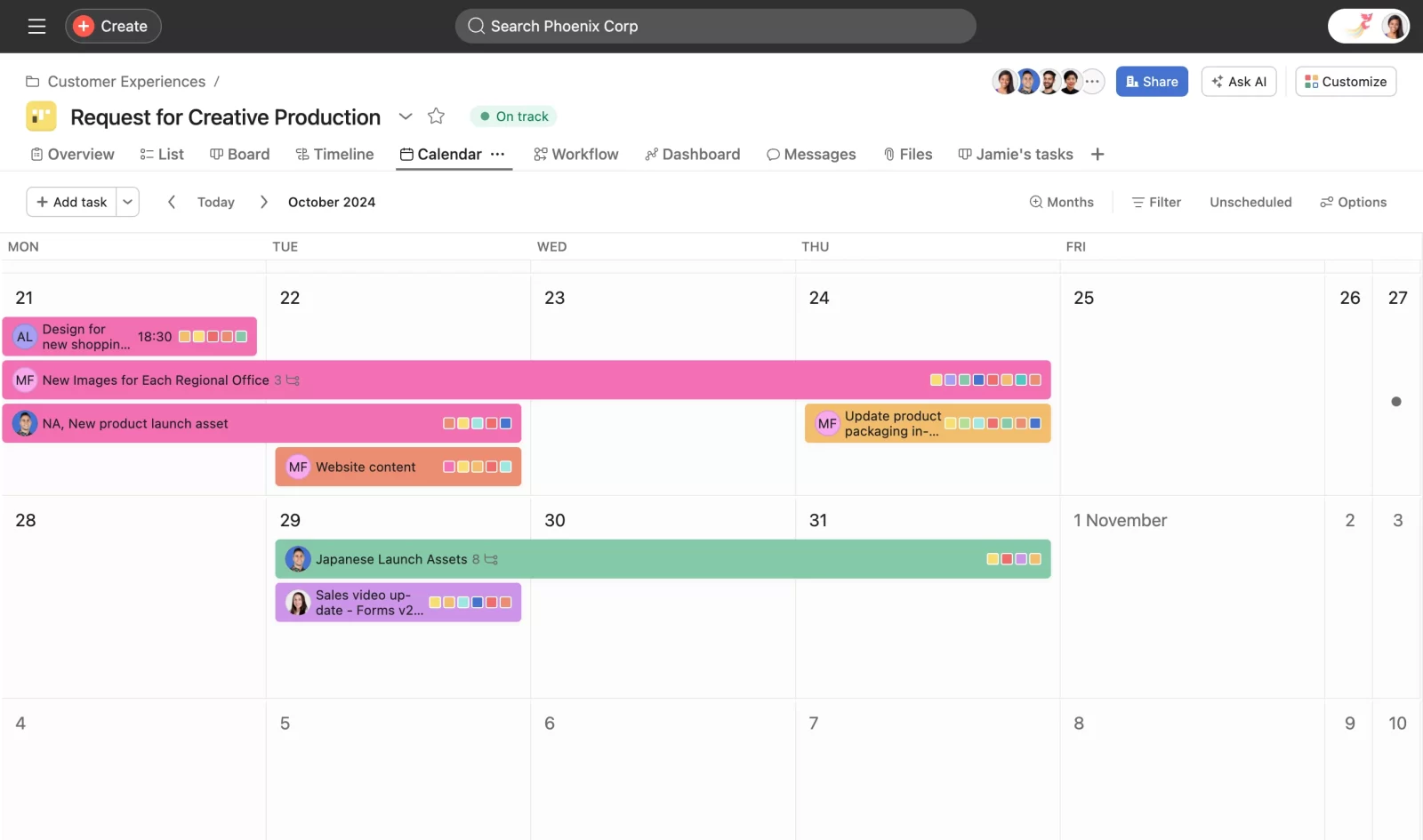
To market your business effectively, you need consistency. That depends not only on willpower, but above all on organization. To avoid leaving anything to chance, start using a content calendar. This way, you can be sure that each day you follow a clear plan instead of jumping from one idea to another. Obviously, this approach leads to faster and more visible results.
Your content calendar should be based on the key strategies defined in your real estate marketing plan. That’s how you decide which actions will help you achieve your goals. Plan them a week or a month ahead. You can do this in a simple spreadsheet or use dedicated tools such as Notion, Asana, Buffer, Hootsuite, or Later.
Scheduling tools still need you to create every post. But Placester’s Social Automation fills part of your calendar for you: listing and blog videos are generated and published automatically, and they show up in one Social Calendar next to the posts you add manually.
Tool tip: Tools with AI features, such as Notion, Jasper, or Copy.ai, can help you generate drafts, headlines, or content ideas based on your input, which speeds up the process and reduces the time needed to prepare content.
👉 Create a structured marketing plan for your real estate business.
20. Refresh your online presence regularly
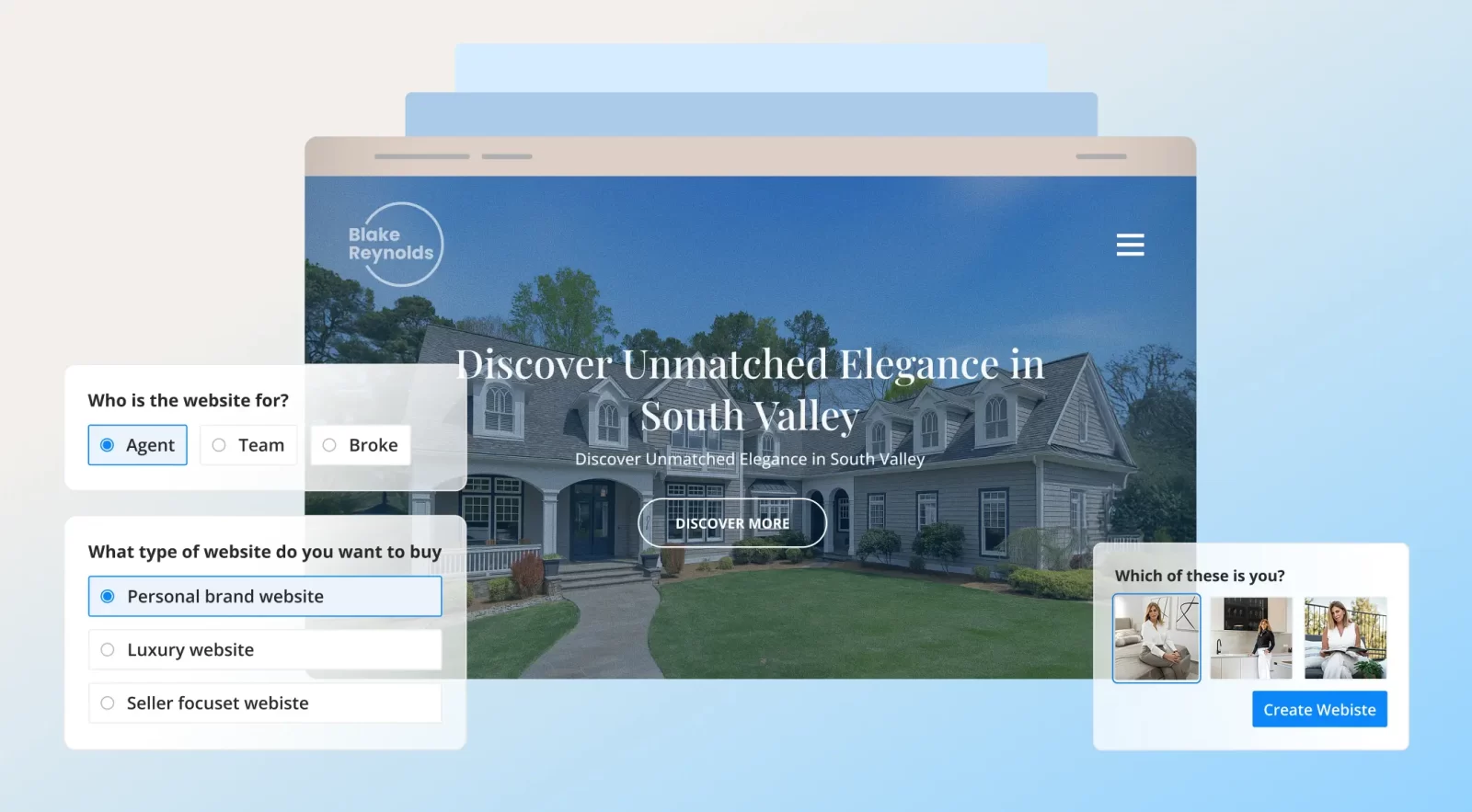
Real estate moves fast. Prices shift, inventory changes, neighborhoods evolve. If your content stays the same for months, it stops reflecting reality. That’s a problem for both Google and your clients. Search engines favor sites that stay active and up to date, because fresh content signals relevance and accuracy.
The same applies to people. When someone lands on your website and sees outdated listings or old market insights, they assume you’re not active. Regular updates fix that. You stay visible in search, and you show that you’re working in the market right now.
Treat updates as part of your workflow:
- Go back to existing articles and refresh them with new data, recent deals, and current pricing.
- Replace outdated sections instead of writing everything from scratch.
- Update listing pages, market reports, and neighborhood guides as things change.
- Make sure your website loads correctly, works on mobile devices, and is easy to navigate.
- Update your bio as your professional experience changes.
The main friction comes from the tool you use. If updating your website means digging through WordPress menus, you’re less likely to do it regularly. To avoid that, use platforms built for real estate. With tools like Placester, you can edit pages, update listings, and generate content without dealing with the backend. AI features help you keep everything current, even if you have no coding experience. That changes how you work. Updates stop being something you put off and become part of your routine.
👉 Compare top website builders for real estate.
21. Build a YouTube channel around local real estate questions
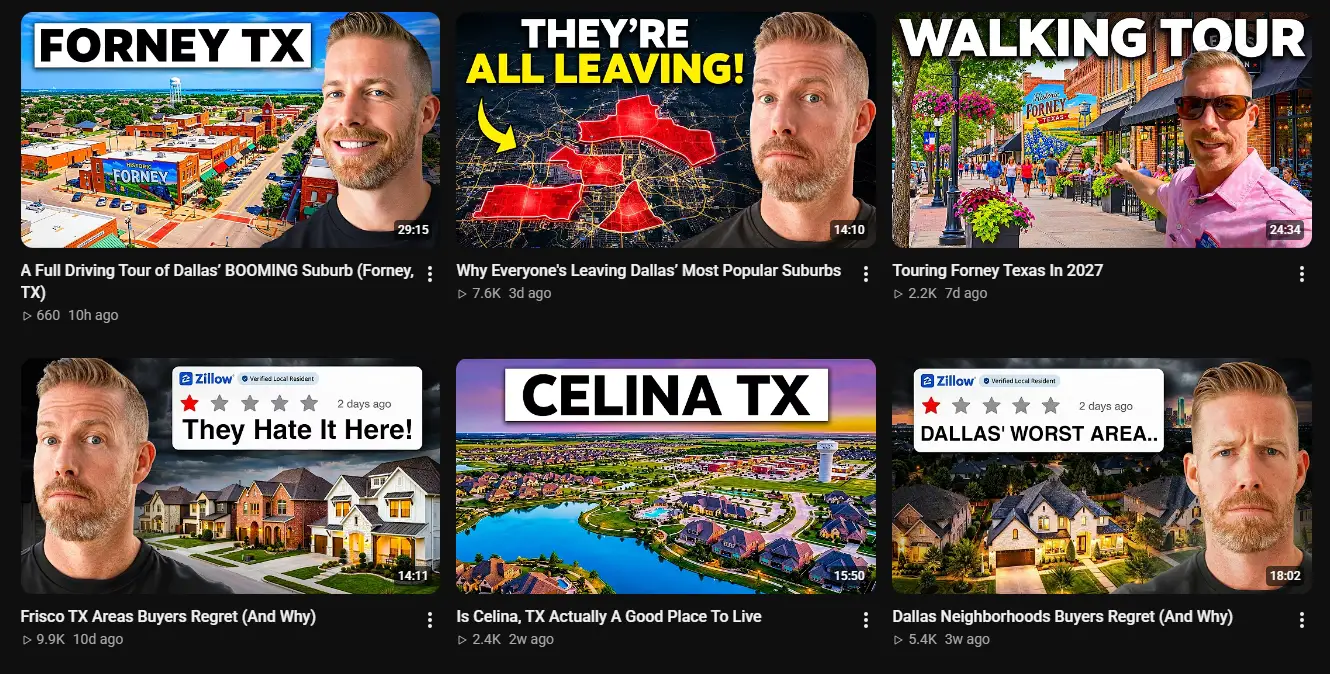
You can create interesting videos on various subjects connected to your profession, share news from the real estate industry and talk business from the perspective of a real estate agent. To give viewers a reason to watch another video, build a series around one market and one audience. For example, follow “What $500,000 buys in Raleigh” with “What to budget beyond the purchase price in Raleigh.”
Use the Trends tab in YouTube Studio to look for search topics and content gaps. Put related videos in a playlist and use the end screen to send viewers to the next video in the series.
You can promote your videos on your other social media such as Facebook or Instagram and invite your viewers to visit your website or contact you directly. Give viewers a reason to click. If a video compares two neighborhoods, link to the relevant neighborhood guides in the description.
👉 Build your real estate YouTube strategy in 10 steps.
22. Apply for local real estate and business awards
Business awards can be a great marketing opportunity for real estate agents, even if all you get is a nomination. Awards give you recognition, and organizers like to mention nominees on their social media channels.
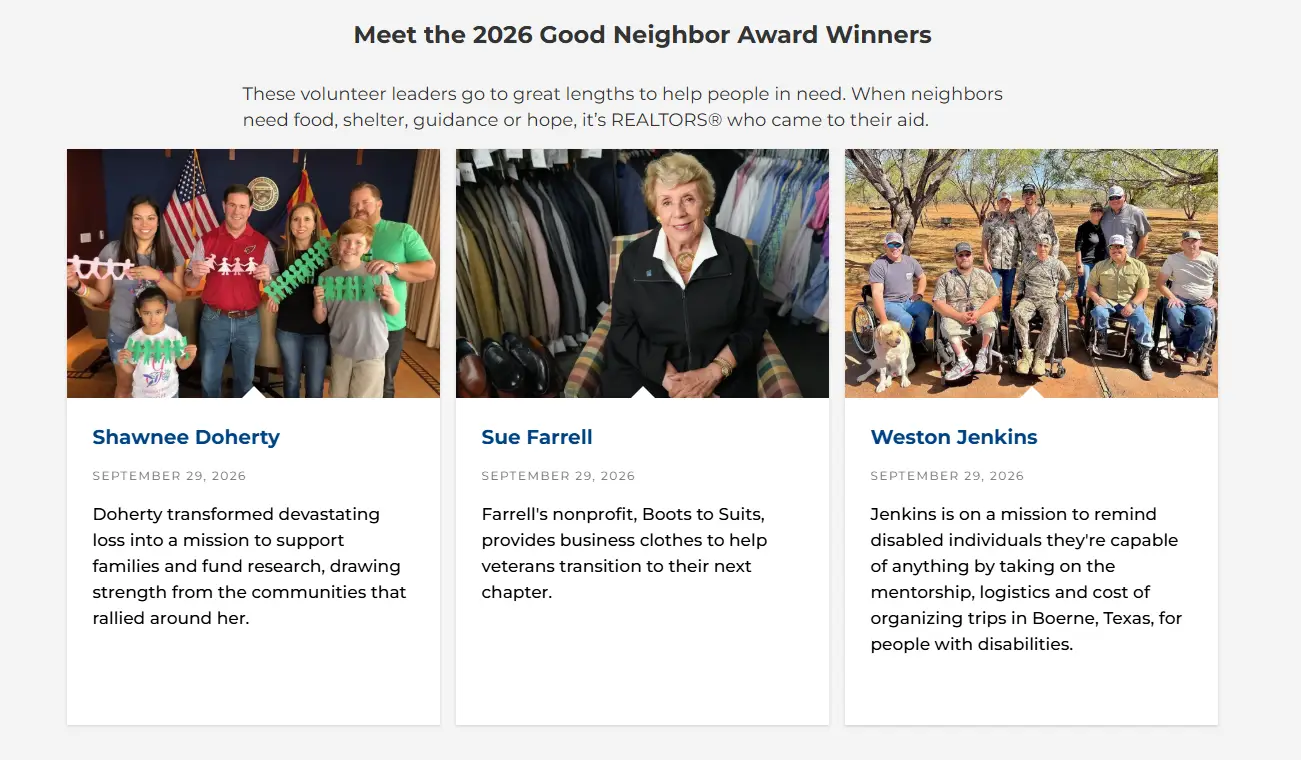
Check what your local Realtor association and chamber of commerce reward. Look for a category that fits work you can document. NAR’s Good Neighbor Awards, for example, recognize community volunteer work by Realtors. If you’ve organized a recurring food drive, record how long you’ve been involved and ask the nonprofit what results it can verify.
And if you do win the award—that’s a great story to mention in your bio. Include the award name and year, and link to the organizer’s announcement so readers can see what you were recognized for.
23. Create a photo set that tells the story of the property

If you’re on a budget, you can shoot your own listings. Learn shooting techniques that work, like focusing on the elements that matter most and maintaining consistency across your shots.
Plan your indoor and outdoor shots around what buyers need to understand about the property. If the kitchen opens onto a patio, take one wide shot that shows the connection. Then photograph the patio from outside so buyers can see how much usable space it offers.
Review the photos as a set before uploading them. Lead with the image that best shows the property’s strongest feature. Then arrange the remaining shots so buyers can follow the layout. If two photos show almost the same view, keep the one that tells buyers more about the room.
You’ll likely have many listings, and therefore many photos to manage. Come up with a file system that allows you to access them easily for all your marketing needs. Create a folder for each address and keep the originals separate from the files approved for publication. That way, you can reuse the right images in an email or brochure without sorting through the whole shoot again.
👉 Compare 10 photo editing tools for your listing photos.
24. Claim listings on major portals
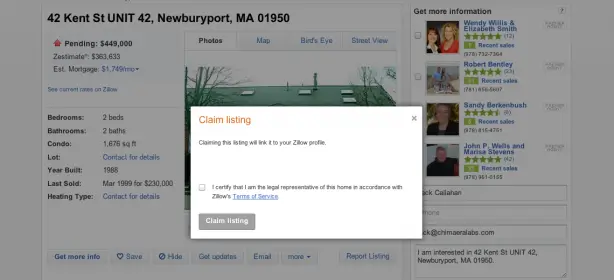
Say a home you entered in the MLS is already visible on a portal, but it’s missing from your agent dashboard. If the portal offers a claim option, use it to confirm that you’re the listing agent and connect the existing property page to your account.
To do this, open your listing on Zillow, Realtor.com, or Redfin and compare the price, status, and main photo with the MLS record. If the portal lets you claim the listing, follow its instructions. Then check that your name and brokerage appear correctly.
If the portal pulls an incorrect detail from the MLS, fix it in the MLS and allow time for the update to reach the portal. If the MLS is already correct or the error persists, contact the portal’s support team with the listing URL, MLS number, and the detail that needs correcting. For example, if the MLS shows a price reduction and the portal still displays the previous asking amount, include both prices and the date of the MLS update.
25. Send just-listed postcards to nearby homeowners
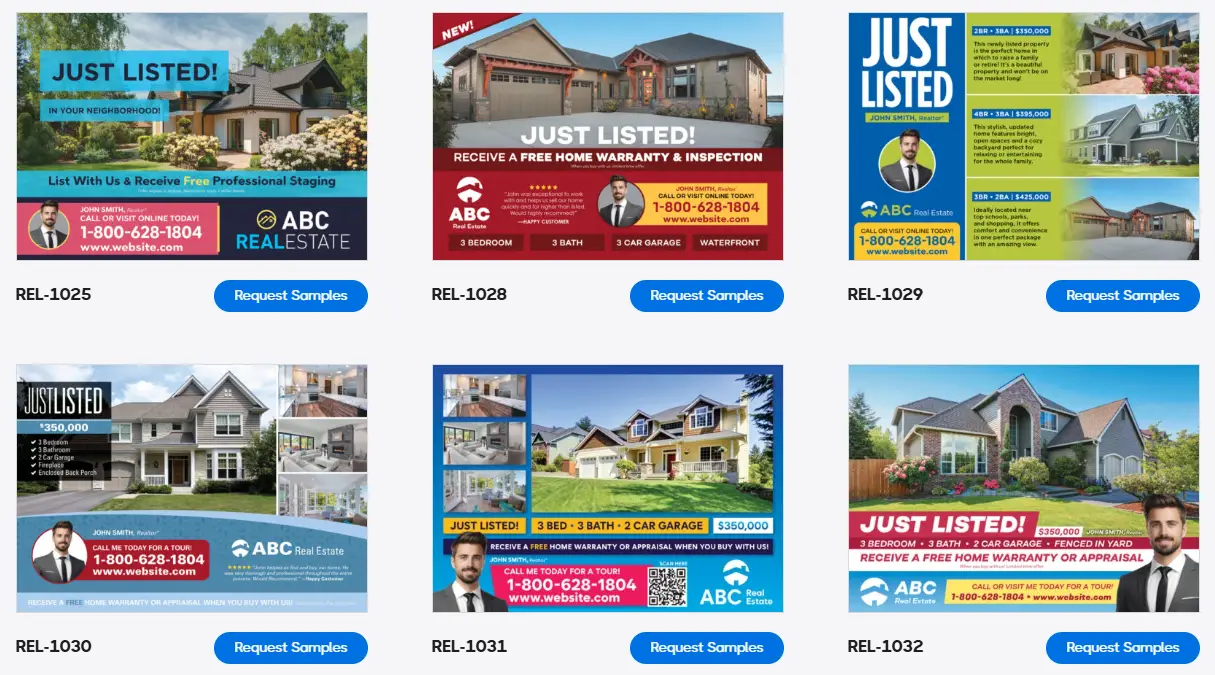
While many buyer leads will come from out-of-market, it’s good practice to announce your listings to the local area. Current residents may know someone who wants to move into the neighborhood. Make the postcard easy to pass along. Put the property address next to the main photo and invite neighbors to share the listing with someone looking nearby.
Choose quality paper, ink colors, and graphics to leave a strong impression. Before you print the full run, check a proof at actual size. Make sure the address and your contact details are easy to read.
👉 Explore 15 branding ideas to make your real estate marketing more recognizable.
Use the USPS Every Door Direct Mail tool to compare carrier routes around the property. Start with a route that covers the streets closest to the listing and check how many addresses it includes before paying for a wider drop. Give the postcard its own short URL and add UTM tags to the destination so you can identify traffic from that mailing in Google Analytics.
Common mistakes to avoid in real estate agent marketing
You can stay active with your marketing and still see no results. That usually means your actions aren’t helping people make a decision. When that happens, you stay busy but don’t see better leads or more conversations.
What are the most common mistakes and how to avoid them?
| Mistake | What to do instead |
|---|---|
| Listings with no explanation | Add one clear insight: pricing logic, buyer fit, or how your listings stand out vs similar homes. |
| Generic content about the market | Use one real example and explain what happened in that case. |
| Same follow-up for every lead | Refer to the exact property or question that brought them in. |
| Social posts with no interaction | Respond to questions and join ongoing threads where people already ask for advice. |
| Outdated pages on your website | Update key sections with current numbers and recent deals. |
| Creating new content every time | Reuse a structure that already worked and update the details. |
| Jumping between channels | Focus on the places where your clients are active and stay consistent there. |
The best marketing ideas for Realtors and agents: Final thoughts
If you want to grow your business, focus on showing up early. Explain what’s happening in your market, and make it easy for a buyer or seller to take the next step. Use our real estate digital marketing ideas to help them move forward.
To run marketing without getting stuck on tools, use a platform built for real estate companies. Placester lets you manage your website, update content, and keep everything aligned with your plan in one place. You don’t need to spend time figuring out how to build pages or fix layouts. You can focus on how you allocate your marketing dollars and where they bring the best return.
FAQ
How to generate fresh real estate marketing ideas?
Fresh ideas come from staying close to trends and seeing what others are doing right now. Watch how top real estate brokerages like SERHANT. or The Agency present listings, build content, and promote themselves. Spend time on Instagram, TikTok, and YouTube, and notice which formats keep showing up and getting attention. Then take those ideas and adjust them to your market so they feel relevant instead of copied.
What are the best luxury real estate marketing ideas?
High-end buyers expect strong visuals, so invest in cinematic video, drone shots, and editorial-style photography that feels closer to a magazine than a listing. Control where and how the property appears. Use word-of-mouth marketing, targeted ads, and curated events instead of mass exposure.
What are the best commercial real estate marketing ideas?
Commercial buyers and tenants care about cash flow, so your marketing should include clear numbers, market comps, and use-case scenarios. Run targeted outreach on platforms like LinkedIn and through direct email campaigns to engage decision-makers instead of relying on broad exposure. Strong positioning around ROI and business outcomes will always outperform generic property promotion.
What type of marketing is the best in the real estate industry?
The best marketing approach depends on how well it aligns with your audience and business model. What consistently works is a mix of high-intent channels like search and local SEO, combined with trust-building content such as listings, testimonials, and market insights. Most clients don’t act after one touchpoint, so your marketing needs to support the full decision process, from first search to final contact.
What are the 4 Ps of marketing in real estate?
The four Ps of real estate marketing are product, price, place, and promotion. For a home listing, product is the property and its selling points, while price is what you ask for the property based on comparable sales and competing listings. Place refers to where buyers can find the listing, such as real estate portals or your Placester website. Promotion is how you draw attention to it through email, social media, or open houses.
What are the 7 Ps of property marketing?
The 7 Ps of property marketing come from the broader marketing mix: Product, Price, Place, Promotion, People, Process, and Physical Evidence. Used together, these elements help you present a home as a complete offer.
What are the 5 processes in real estate marketing?
In the context of the real estate marketing funnel, the five stages include awareness, interest, consideration, decision, and action. Together, they represent the path a client moves through from first contact to making a move.
Published on
(Last updated on
)