(800) 728 8391



Quick summary:
- In 2026, real estate website design trends are more about immersive and user-centered experiences, with a strong focus on clean, minimalistic design and cinematic POV.
- It’s about presenting a lifestyle—combining storytelling with strategic SEO for both search optimization and appealing to emotions.
- Advanced features such as AI chatbots, immersive 3D tours, and interactive maps improve a website’s navigation while keeping the users engaged.
An average website user takes only 0.05 seconds (!) to form their opinion about a business—based purely on what they see on the front page.
Short attention spans combined with high expectations and an abundance of competition equal no mercy for a poorly designed interface or unreadable fonts. It rings particularly true for the real estate industry, where aesthetics are, well, everything.
At the end of the day, who’ll entrust you with choosing their dream property when your website doesn’t exactly scream great taste?
75%
of users judge a website’s credibility based on its designSource: Stanford Web Credibility Research
That’s why it’s crucial to keep elements such as graphics, text, SEO, typography, and videos not only in line with good UX practice but also up to date with the current trends.
What are they in 2026?
Keep reading to discover the top 10 modern real estate web design trends.
How does real estate website design impact your business?
Web design affects the real estate business by shaping first impressions, showcasing the functionality of the page, and even depicting the attractiveness of listings. This influences how much time users spend on your website and, ultimately, whether they’ll contact you about a potential property purchase.
In 2026, it’s hardly a surprise, as UX can make or break any business, but the real estate market is a particularly interesting case.
A study published in “The Journal of Real Estate Research” looked into the phenomenon of how homebuyers look for houses online by analyzing… Their eye movement.
Taking into consideration factors such as total dwell time or sharpened focus measured when people were looking at houses on the internet, the researchers were able to assess if real estate websites shaped the perception of a property’s value and appeal.
They found that:
🔎Design elements like image prominence and layout hierarchy strongly influenced decision-making.
🔎Buyers consistently focused first on property photos and key facts, while largely ignoring agent descriptions.
Meaning—even with something as important (and expensive) as buying a property, most people are still drawn to the aesthetics first.
The results of this research were later mirrored by many subsequent studies interested in the psychology of visuals and their impact on potential clients’ decision-making.
Let’s take colors, for example.
Did you know that using gold, black, and white raises the perceived value of luxury real estate listings by almost 30%?
It happens largely because these colors are strongly associated with elegance and exclusivity in visual psychology. Gold signals wealth and prestige, while black and white create a clean, high-contrast aesthetic that feels both modern and refined. Together, they help frame a property as more curated and premium, even long before a buyer steps inside.
A similar thing could be said about layout, as most people scan websites in F- and Z-shaped patterns, which align with natural eye movements and improve comprehension. Designing a website in line with this shape can therefore make it easier for visitors to quickly identify key property details such as price, location, or images when browsing.
Conclusion?
Web design is not just presentation—it actively guides attention and influences how properties are judged and chosen.
Your 10 best real estate website design trends in 2026
Between minimalism and immersion—the key real estate website design trends point to a balance of luxury, such as the right aesthetics or cinematic shots, and advanced tech features, such as AI chatbots or interactive maps, that will make your page both easy to navigate and pleasant to look at. Find out what else is trending right now in the full list of design trends for 2026!
1. Quiet luxury aesthetic → for a clean look and easy navigation
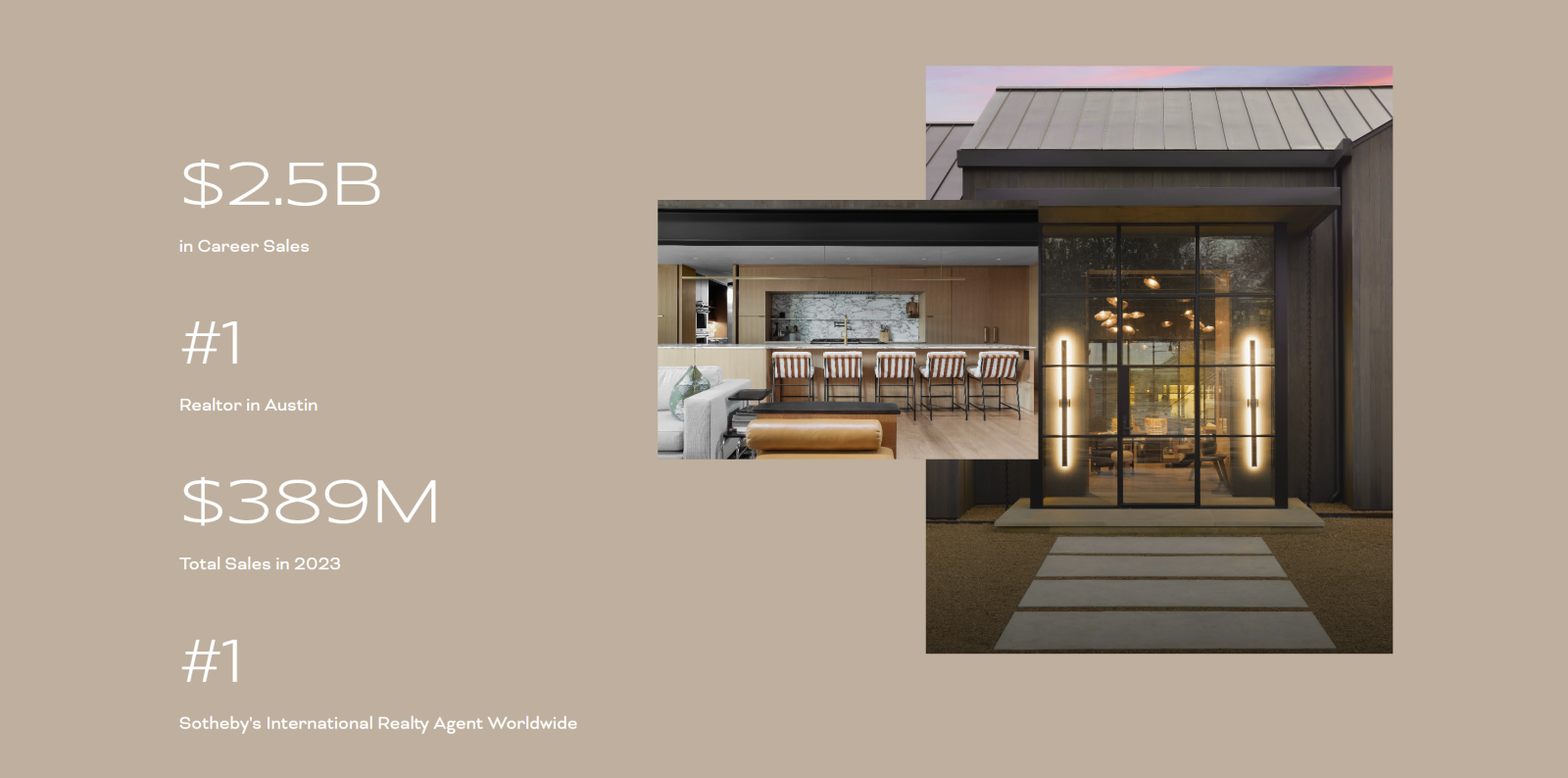
Modern buyers like minimalism. Simplicity. An aesthetic that seems effortless, but it’s actually very well thought out.
They want quiet luxury.
A trend that took the internet by storm a couple of years back (it was mentioned online over 100,000 times in 2023 alone) is still alive and well in 2026.
In fact, its main principles are more relevant than ever, and they are definitely very applicable in the real estate game.
Subtle logos, focus on craftsmanship, sophisticated design, clarity, simple navigation—all these elements allude to value over visibility, while also building up your website’s readability.
This mindset is especially powerful in luxury real estate, where exclusivity is communicated through restraint rather than excess.
Visually impressive won’t cut it.
It’s about creating an experience that mirrors the same refinement, discretion, and attention to detail that properties represent themselves— something that agents specializing in luxury homes have figured out a long time ago, but doesn’t have to be reserved for luxury real estate alone.
2. Verified property listings → for building trust
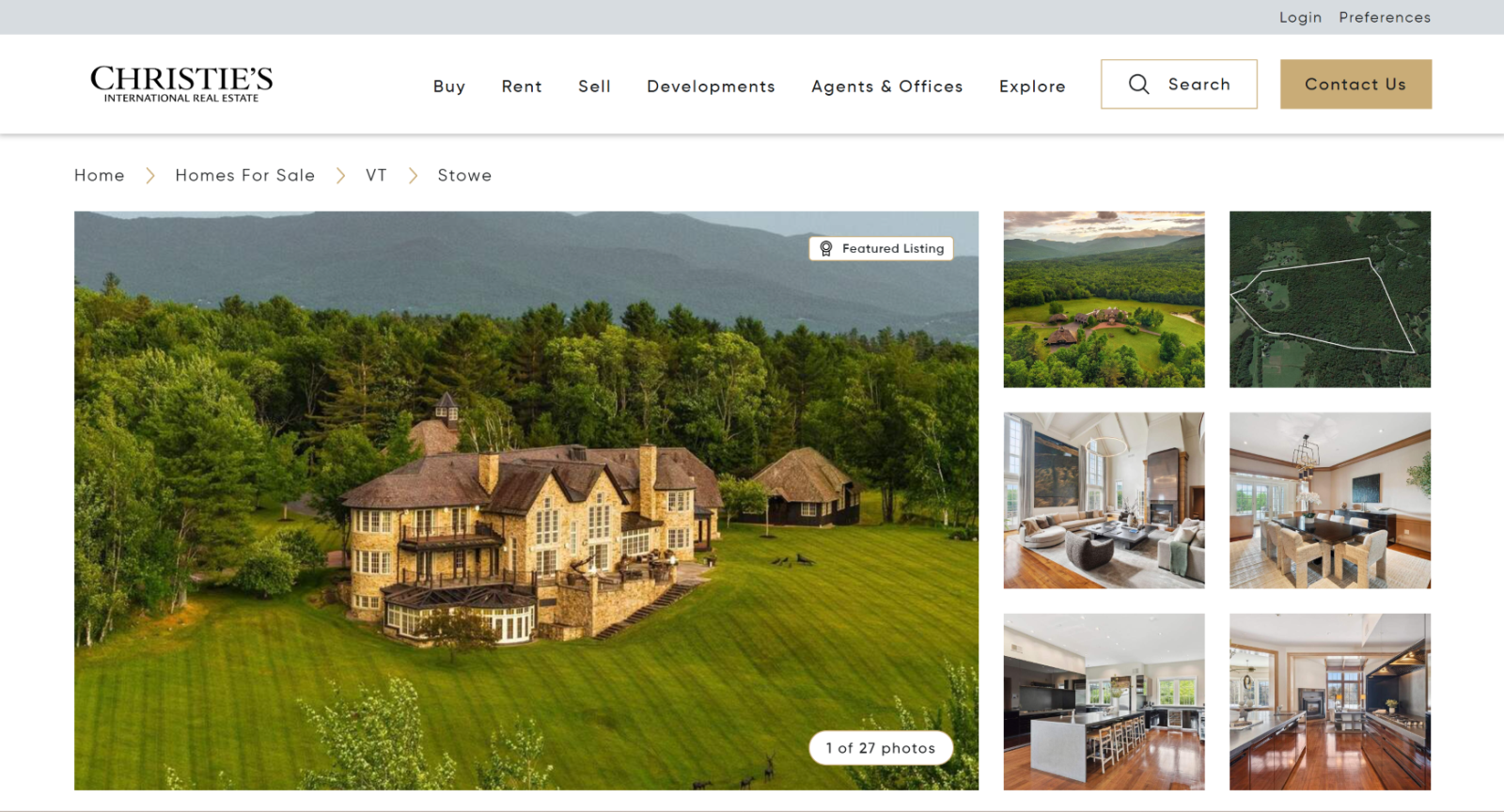
Though not quite new, the emphasis on verified offers will remain crucial as a tool that builds trust and credibility.
In the AI times, buyers are becoming increasingly cautious, with studies showing that 67% of users abandon a purchase when something feels suspicious online—and that’s not even considering something as pricey as a potential property.
How can you include that in your website? Here are a couple of simple ideas:
1. Only publish properties you’ve personally vetted
Stick to houses you’ve seen yourself or sourced through trusted partners.
2. Add a clear “Verified listing” badge AND define it
Make sure the badge relates to something specific. This can relate to documents checked, availability confirmed, or validated pricing, as long as it’s not just a visual gimmick.
3. Include proof directly in the listing
A good way to do that is to upload your own walkthrough video or a time-stamped photo. Alternatively, even something as simple as a note saying, “Last visited: March 2025,” will help.
4. Use micro-trust signals
Small details such as “Price confirmed with owner this week” are subtle yet reinforce credibility.
5. Focus on a no-spammy UX approach
Fake urgency and misleading CTAs may work when the stakes are low, but with properties, you may wanna focus on transparency instead. Clean and honest design will build long-term trust way better than annoying pop-ups.
6. Show your verification process
Add a short section explaining how you validate offers. It’s all about highlighting that you follow clear and enforceable privacy policies.
7. Use AI or manual checks for duplicates and inconsistencies
This way, you can catch reused photos, suspicious pricing, or outdated listings early, all of which will keep your website super credible. And help with a clear design, too.
3. AI chatbots → for increased engagement and quicker communication
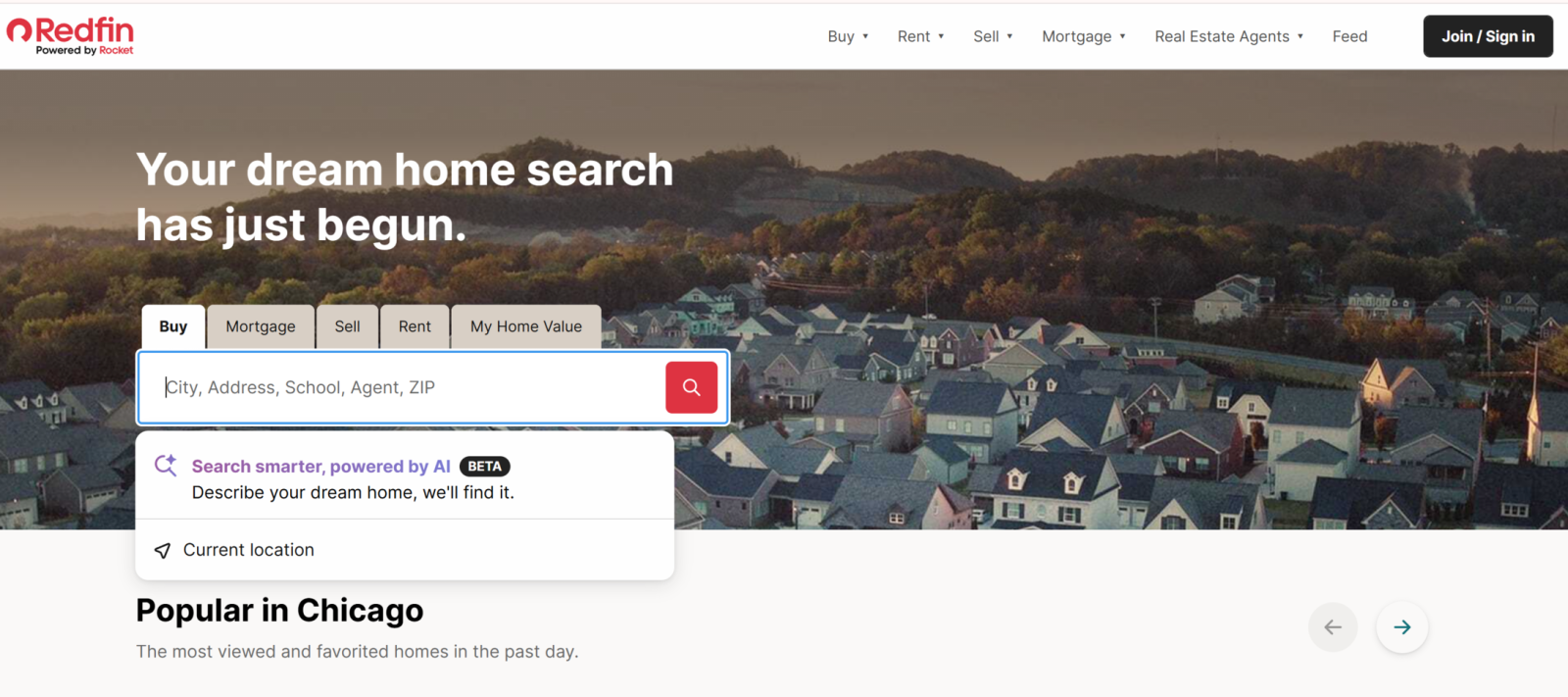
If there’s one thing that you can expect to find on a list of web trends, it’s AI integration.
And it’s not without cause. AI is not just a magic word or a gimmick that will make your website seem more up-to-date simply because it’s there. It’s not something to incorporate because everyone else is doing it.
It’s something worth using because it actually works.
Real estate professionals who use AI chatbots report up to +40% higher lead capture rates on their pages compared to those who don’t.
Why?
AI chatbots solve one of the industry’s biggest challenges—speed and lead qualification.
By engaging visitors instantly, 24/7, they capture high-intent inquiries that would otherwise be lost outside business hours or to the real estate agents who simply answered faster. They can address property questions, schedule viewings, and pre-qualify buyers based on budget and preferences before passing them to you.
As a result, the engagement is higher and the chances of selling a property stronger.
4. Cost calculators → for transparency and a faster buyer qualification
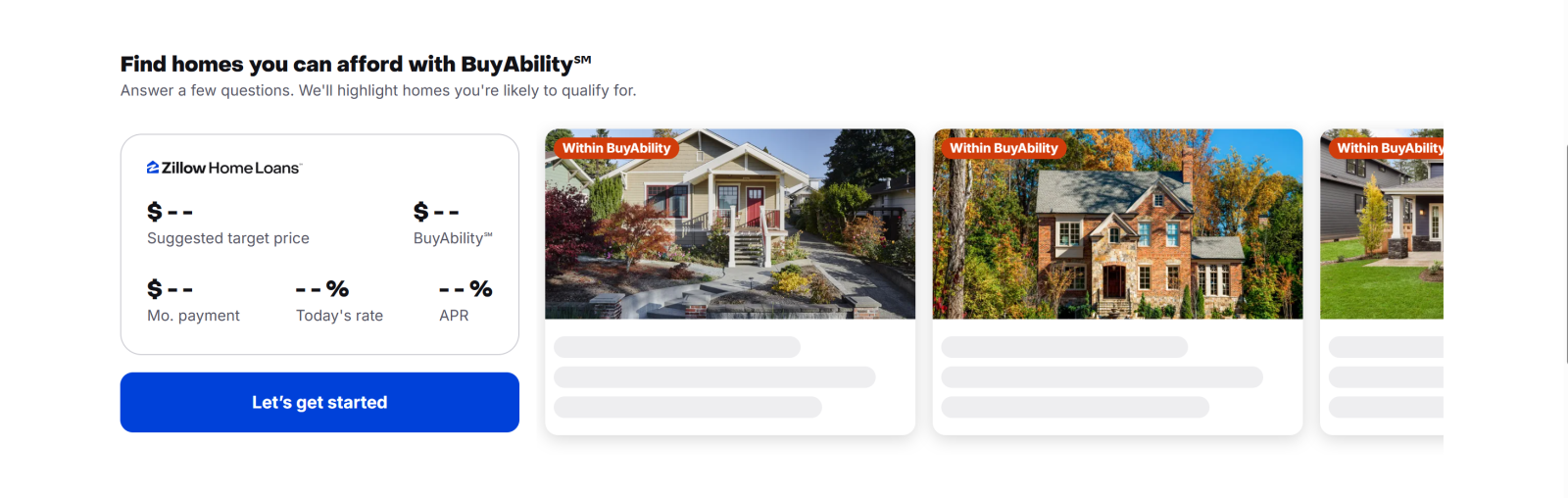
In times where financial insecurity is real, cost transparency is not to be underestimated.
By allowing web users to estimate mortgage payments, taxes, total affordability, and other sometimes-not-so-obvious expenses in real time, a cost calculator can be an incredibly valuable tool to help your clients understand whether they can realistically afford the property.
Will this cut out a portion of potential buyers?
Yes.
But it will bring you closer to those who are closer to becoming actual buyers, which will lead to more qualified leads and a stronger credibility of the platform.
Instead of browsing blindly, users can filter properties based on real financial scenarios, which makes their decision process faster, more transparent, and more conversion-driven.
Bonus tip: Cost calculators can become the feature that people will access your website to use even before they’re on the lookout for a house. So once they’re financially ready to make the leap, this very website may be the first one they turn to.
5. Interactive neighbourhood maps → for building the local authority
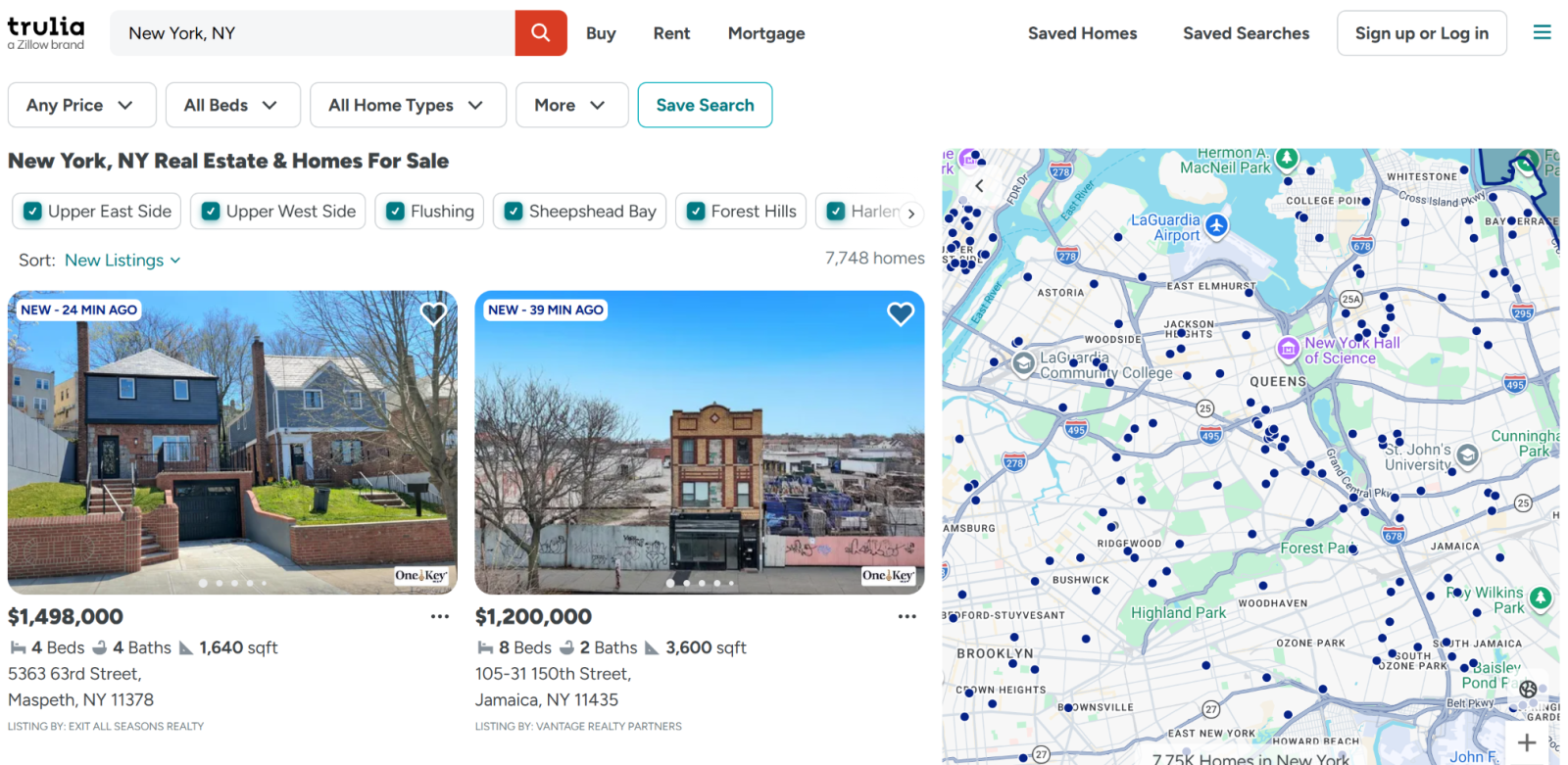
What makes a home is not just a building. It’s the community surrounding it.
That’s why the best real estate agents increasingly focus on making their website visitors feel like they’re getting a sneak peek not only into their potential house, but also the area they’re about to live in.
And interactive neighbourhood maps are a great way to do that. Research shows that real estate websites that incorporate them can count on a much higher average session duration and engagement rate (+144% and +65%, respectively).
An interactive map allows users to visualize key decision factors such as:
- schools,
- commute times,
- amenities,
- safety patterns.
This reduces uncertainty and increases trust in the property, not to mention improves local SEO performance. Since property decisions are highly location-driven, community-focused content attracts more qualified traffic and boosts conversion rates by aligning directly with what buyers care about most: the lifestyle beyond the home itself.
6. Focus on mobile devices → for accommodating modern buyers
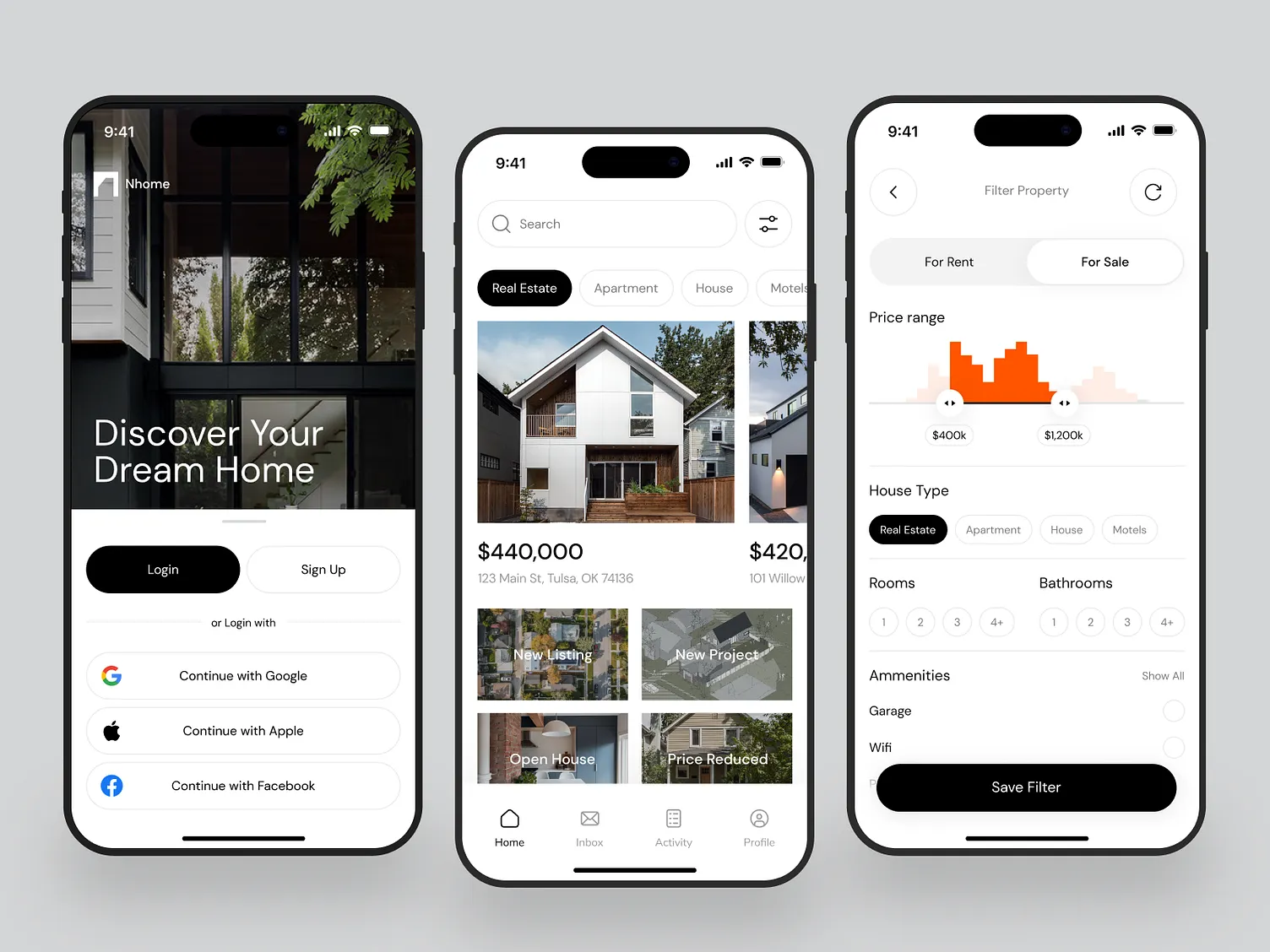
Did you know that over 80% home buyers start their property search on a mobile device?
It’s hardly a surprise, since these days we all do, well, almost everything on our phones.
That’s why a well-designed real estate website is mobile-focused.
What does that mean in practice?
Here are a couple of elements/features that a good real-estate website should have to prioritize for mobile-first visitors:
🌐 high loading speed,
⌨️ accessibility & thumb-friendly UX
💬 instant inquiry options,
📱 app availability,
🔎 click-to-call functionality,
🎦 screen size optimized visuals,
📌 location-aware features (GPS tracking),
🔔 push notifications.
Having these functionalities can and should translate to reduced bounce rates and increased likelihood of contact.
7. Immersive 3D & virtual tours → for higher buyer confidence
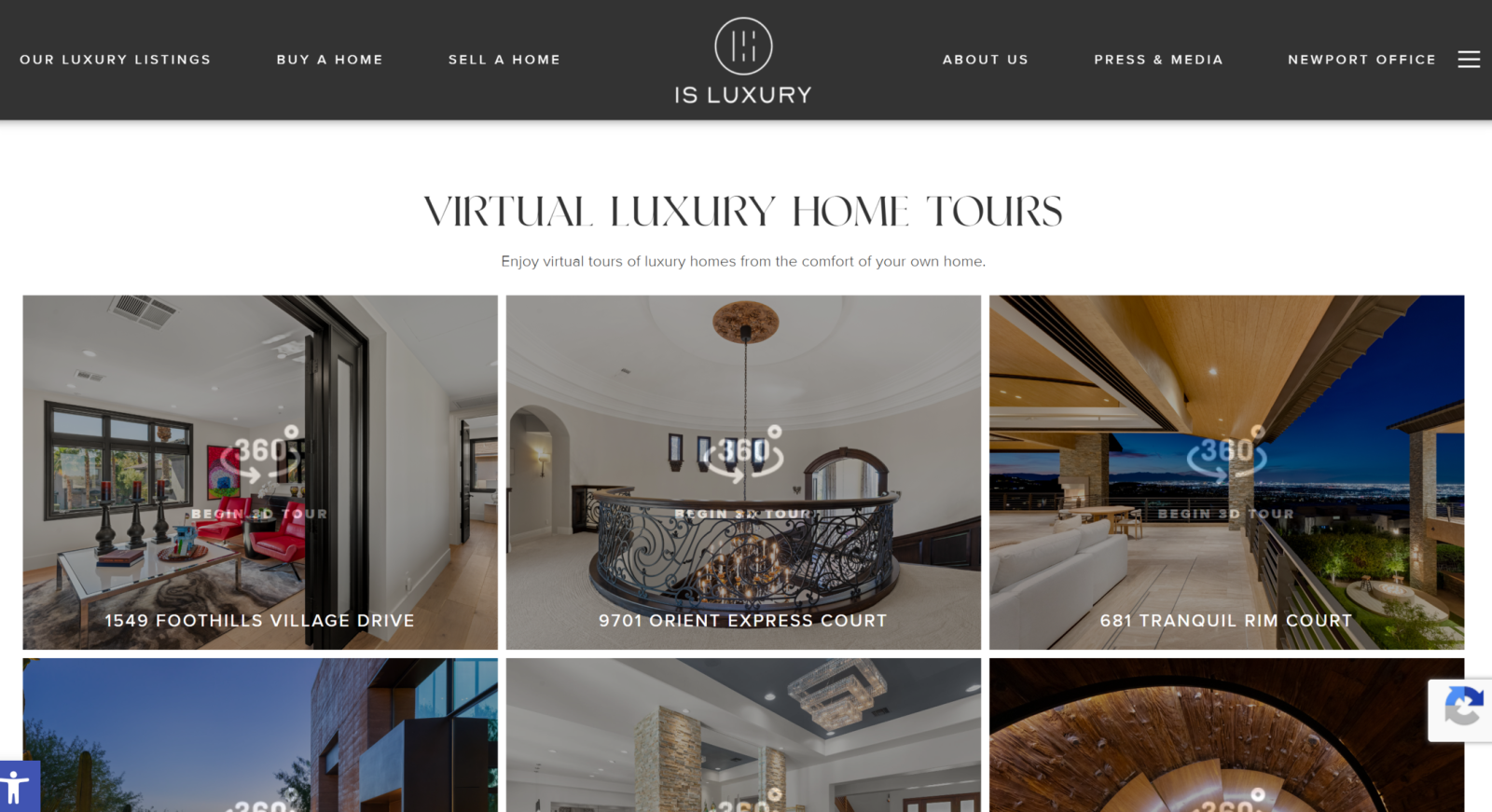
Immersive tours are one of those trends in real estate websites that started out as a fancy techy feature but have grown into an essential element of any listing.
And it’s easy to see why.
3D and virtual open house tours allow visitors to explore the insights of their new potential homes on a much more accurate and closer scale, which gives them a realistic sense of layout and reduces in-person viewing friction.
Listings with virtual tours consistently attract more views, and they tend to sell faster—often up to 20–30% quicker than those without them.
8. Cinematic POV → for immersion
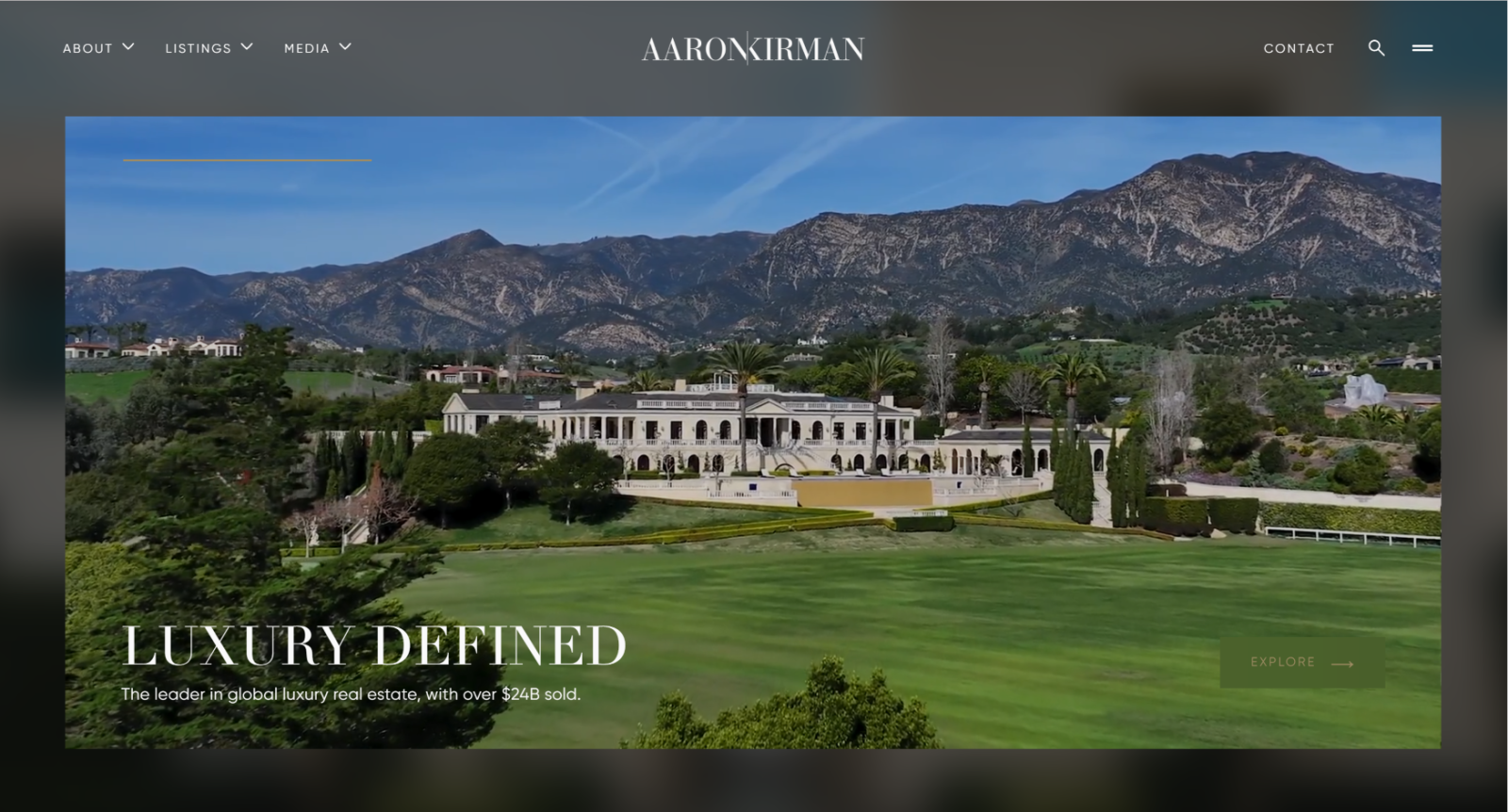
From TikTok videos to YouTube shorts—there’s no denying that the internet today is all about film.
The video format has taken the web captive, and it doesn’t seem to be letting go. Its impact goes far beyond just social media, too.
84%
of marketers claim that incorporating a video into a homepage increased their dwell time.
Source: https://wyzowl.com/video-marketing-statistics/
No wonder the trend was also welcomed by the real estate industry.
Instead of static images or traditional galleries, websites now simulate a first-person journey through a property, or a land, placing the user “inside” the space as if they are walking through it themselves.
Think cinematic shots, high-quality film, dramatic cuts.
This approach builds on the broader shift toward immersive visuals, which are becoming very useful (or maybe even necessary) for capturing that precious and fleeting user attention.
Bonus tip: Read more about the best video ideas for real estate.
9. Property as a story → for an emotional touch
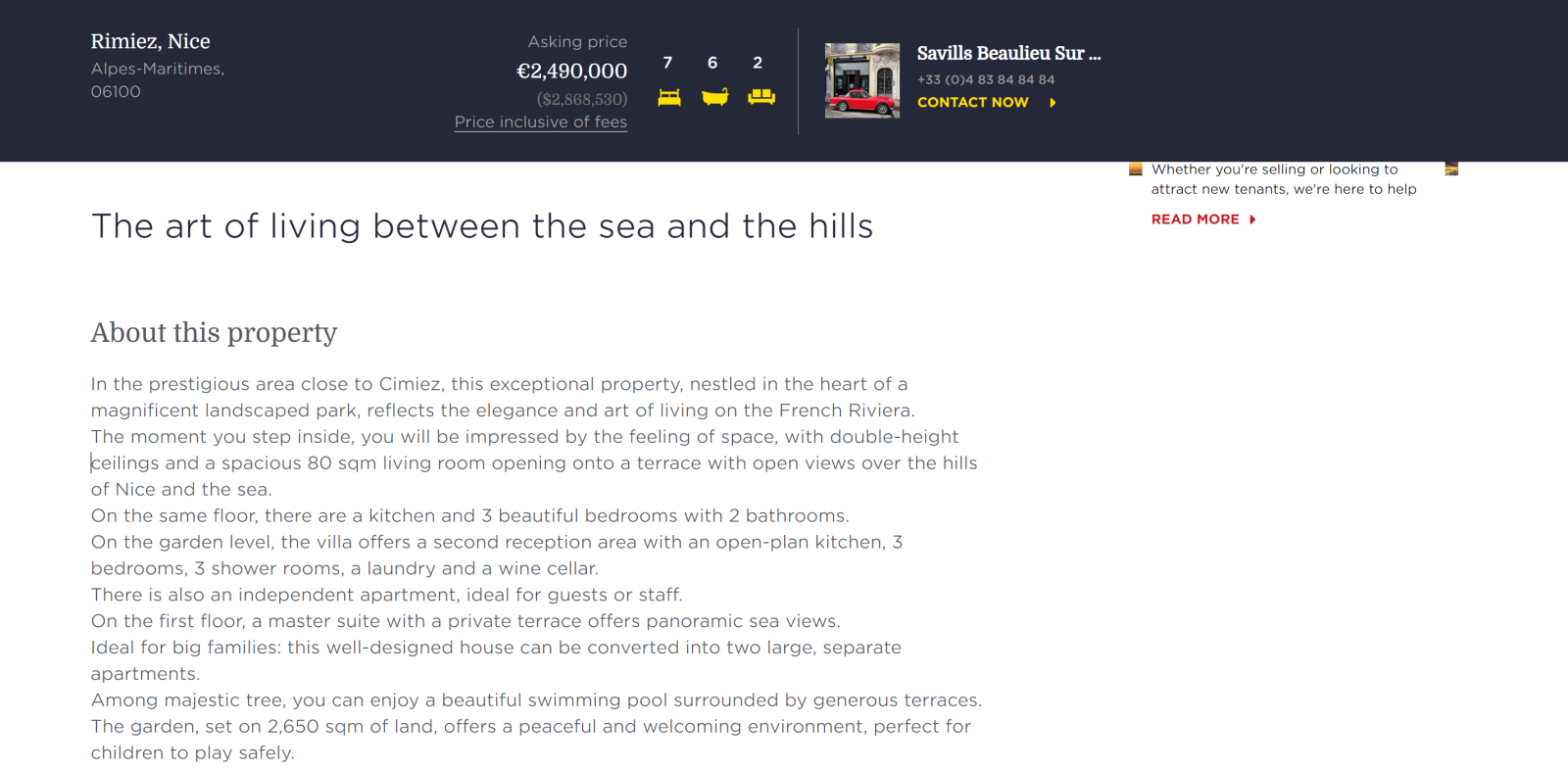
Every home is a story.
That first apartment for a newlywed couple.
That dream home for empty-nesters.
That beach house that your clients will visit every summer with the kids.
Storytelling can be a massive force in real estate, as it helps visitors visualize their future and make the investment seem worth every penny.
For example, describing a two-bedroom flat in the city center as the perfect setup for a remote worker building their online business or a suburban house as the place where kids will learn to ride bikes in the driveway affects the imagination and appeals to the emotional side much more strongly than dry details of a possession.
And emotions always speak louder than facts.
Bonus tip: Turning a property into a story based on testimonials is an additional tool to build trust with potential buyers. After all, this proves you’re someone capable of helping them find their dream home.
10. Strong SEO → for better search visibility
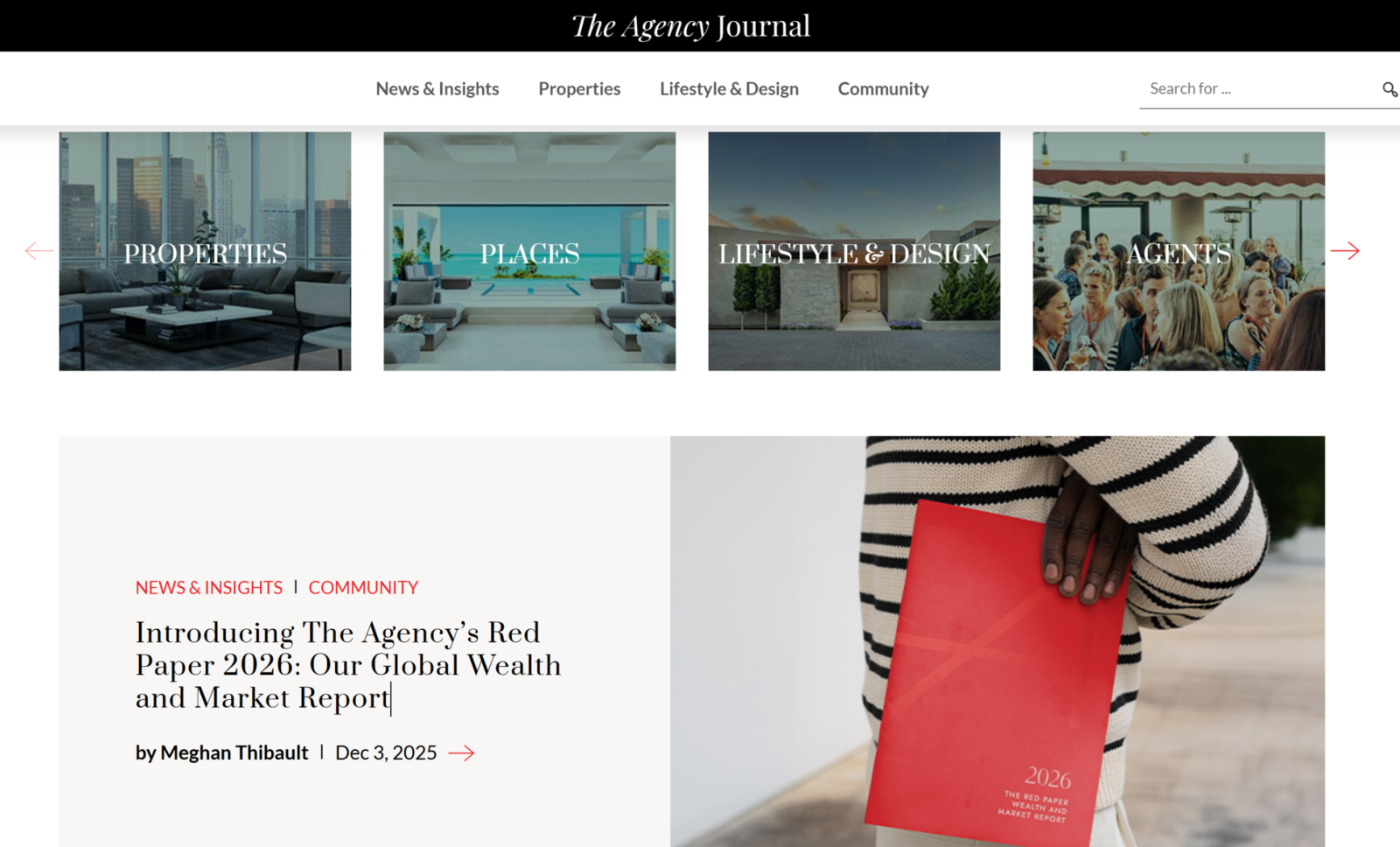
One of the best practices to follow when designing any website is to focus on SEO, as it directly impacts how easily buyers can find your offers online.
With most property searches starting on Google, websites must be optimized not just technically, but also through high-quality, intent-driven content.
Effective SEO for a real estate website should include:
- fast loading speeds,
- clean site structure,
- proper indexing,
- strategic copywriting that targets location-based keywords (e.g., “apartments in [city]” or “homes near [neighborhood]”)
- well-written property descriptions,
- local area guides,
- blog content.
These are some key elements, thanks to which your website will become aligned with how real users search and explore content on the internet.
5 tips for keeping up with the real estate website trends
1️⃣ Follow a small set of high-quality design sources consistently
Instead of randomly browsing social media, subscribe to a few curated newsletters, blogs, or YouTube channels focused on web design tips and digital marketing. Consistency matters more than volume, and it helps you notice patterns early.
2️⃣ Regularly review competitor and top-performing agent websites
Set a monthly habit to look at what successful agents and agencies are doing online. Pay attention to what feels easy to use and what makes estates feel more engaging.
3️⃣ Work with a designer (or a website builder)
If you have access to a professional designer, they can help you create a highly customized and polished site. However, using a modern website builder can also be a strong option—it allows you to quickly implement new design features, test updates without long development cycles, and stay flexible as trends change.
4️⃣ Track user behavior on your own website
Use analytics tools to see how visitors interact with your site—where they click, where they drop off, and what pages they spend time on. Real data will naturally point you toward what needs modernizing (and what works).
5️⃣ Refresh your website in small, regular updates instead of big redesigns
Set a schedule (for example, quarterly) to update sections like listings pages, homepage, or mobile experience. This keeps your site evolving alongside design standards without needing a full rebuild every time.
How to upgrade your website with minimal effort?
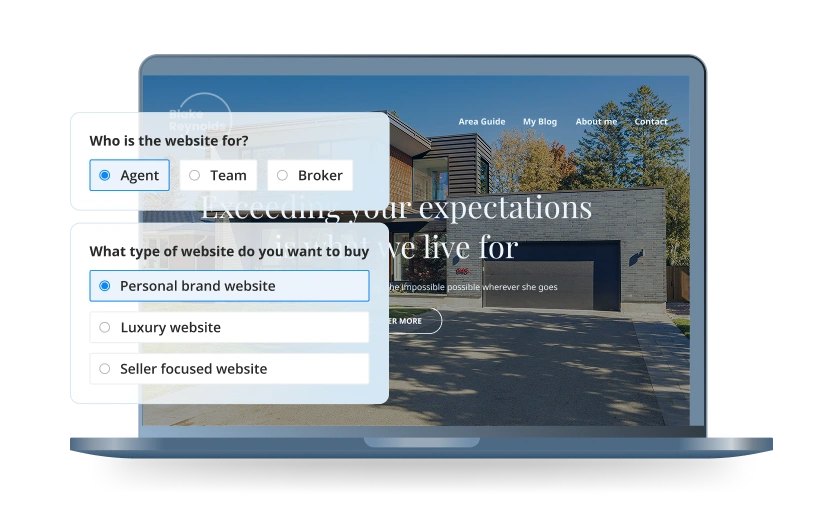
One of the easiest ways to make sure you’re keeping up with all the real estate website trends without a full redesign is to switch to a drag-and-drop template system.
This is where AI-powered platforms for real estate agents, like Placester, come in handy.
The key advantage of a real estate website builder like this is its all-in-one structure. Instead of managing separate hosting, those builder tools integrate IDX property feeds, lead capture forms, and CRM systems into a single dashboard.
This, in turn, reduces technical workload and improves functionality.
Beyond the basics, AI website builders also help keep websites visually and technically up to date without constant manual adjustments. You don’t need to hire a whole design team to keep your page fresh, because tweaking the layout here and there can be done easily from the template level.
In addition, many platforms now use automated design suggestions that adapt formats, fonts, and imagery based on current UX trends, which helps you avoid outdated or cluttered designs.
AI Websites for Real Estate
Get a custom, ready-to-edit website
in less than 4 minutes.
Top real estate website trends | Summary & conclusions
This list of modern real estate website trends reflects a clear shift toward more immersive and user-centered digital experiences.
It’s not just about listing portals.
A good page is like a highly optimized ecosystem that invites viewers into so much more than a potential house—it paints a promise of lifestyle that hides behind the property.
To be able to do that, it needs to include:
💻 The right aesthetics: clean and minimalist interfaces, the right typography, strong visual hierarchy
✒️ Storytelling: neighbourhood maps, testimonials, focus on the community
🌐 SEO-driven content structures: localized landing pages, schema markup, good copywriting
👩 User experience optimization: personalization, interactivity, AI-powered chatbots, fast loading speeds
🔎 Additional features: immersive 3D tours, virtual walkthroughs, cost calculators
When put to use and combined together, these trends help build a real estate website that’s visually appealing and search engine optimized, while also feeling interactive and personal to each viewer.
FAQ
Why is having a modern real estate website important for agents?
Having a modern real estate website is crucial because it shows you’re up to date with all the trends and keeps your page visible in searches. A good design is essential for aligning with the needs of modern internet users and making sure they will not only find but also engage with your website.
How can a real estate website stand out from competitors in 2026?
To stand out in 2026, a website needs to blend high-quality visuals, good SEO, AI-driven features, and strong storytelling.
How often should you update your website design?
A design should be updated every 2-3 years to ensure your website is not falling behind on the current aesthetics. Internet users are quick to catch everything that looks dated—and it only takes a split second for them to decide that.
Published on
(Last updated on
)