(800) 728 8391


Quick summary:
- Zillow Premier Agent leads run $139–$300+ each on average, and in most markets that lead is shared with up to three other agents.
- The best Zillow alternatives fall into three tiers: portals (Realtor.com, Homes.com, Redfin), lead-gen platforms with built-in IDX and CRM (Real Geeks, Ylopo, CINC, Market Leader), and an owned website you control outright.
- An owned IDX website with built-in lead capture and CRM is the only option on this list where your cost per lead trends toward zero over time instead of scaling with every closing.
- Most agents don’t fully replace Zillow. They diversify away from depending on it as a single point of failure.
Why Real Estate Agents Are Looking Beyond Zillow in 2026
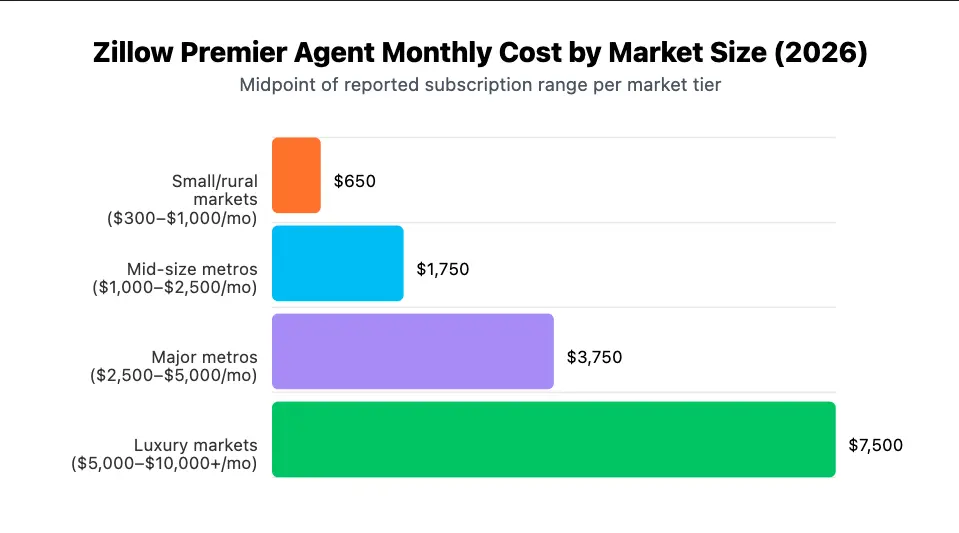
The math on Zillow Premier Agent has gotten harder to justify for a lot of individual agents and small teams. Reported monthly spend runs anywhere from $300–$1,000 in small and rural markets, $1,000–$2,500 in mid-size metros, $2,500–$5,000 in major metros, and $5,000–$10,000+ in luxury home markets, with contracts that typically run a six-month minimum and can carry an early-termination penalty of up to 50% of the remaining balance. Zillow doesn’t publish this pricing itself, so treat these figures as directional and confirm current terms directly with Zillow before signing.
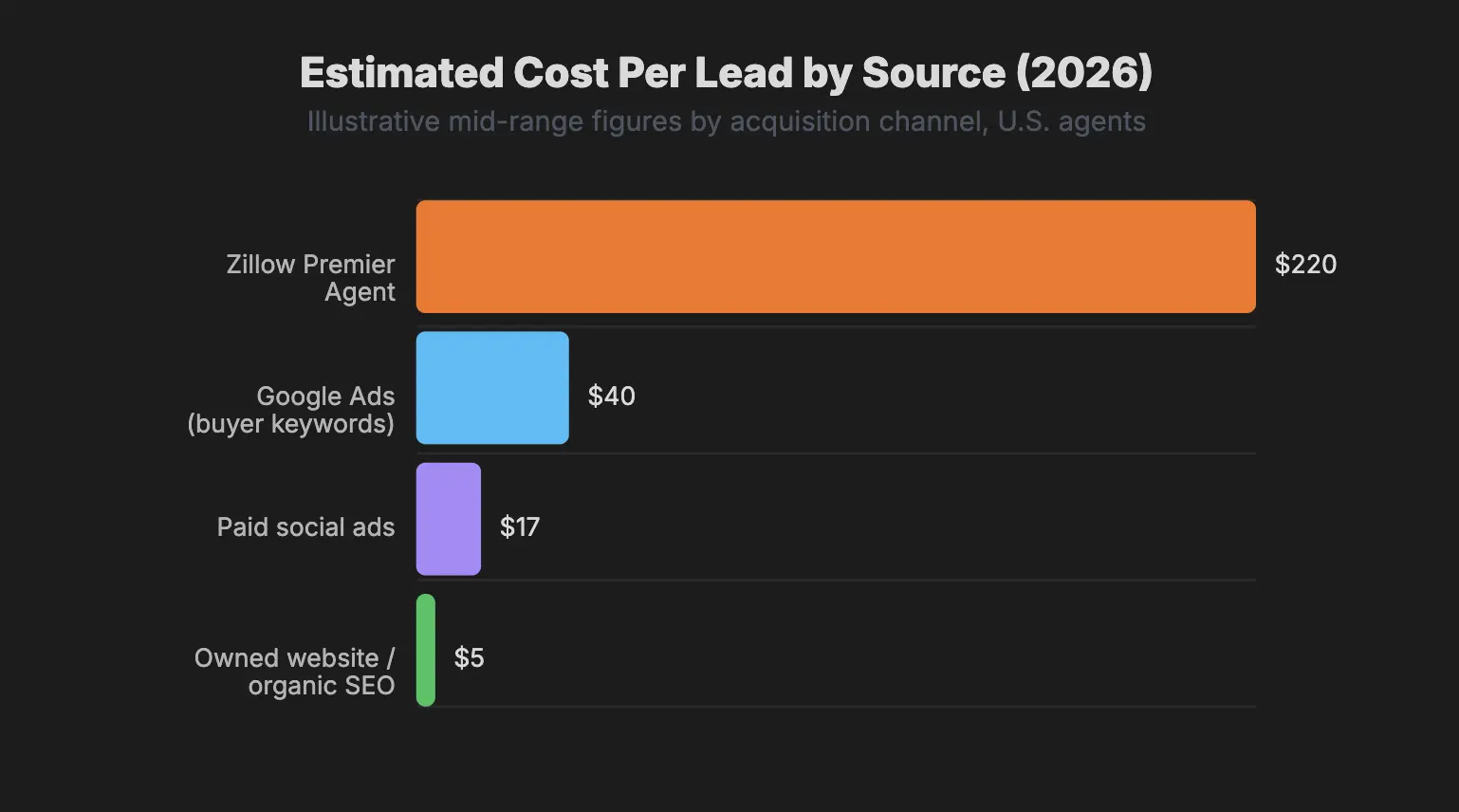
Zillow’s nominal per-lead price is $20–$60, but the blended average agents actually pay works out closer to $139–$300+ once market competitiveness is factored in.
None of those leads are exclusive, either. Zillow shares each one with up to two or three other agents, so the nominal per-lead price is really a per-appointment price once you factor in the buyers who never respond or are already booked with a competitor who got the same lead. Since only a small share of any shared lead pool ever converts to a booked appointment, the effective cost of a Zillow-sourced appointment routinely runs several multiples of the nominal per-lead price (The Close, 2026).
Zillow’s invitation-only Preferred program (recently rebranded from Zillow Flex) works differently: instead of an upfront subscription, Zillow takes a success fee out of your commission when a referral actually closes. That fee is tiered, not flat: it climbs from 15% up to 40% depending on how competitive your market is and how large the commission on that specific deal is, so a modest sale in a lower-competition market lands at the low end while a high-value transaction in a top-tier metro can hit 40%. Either way, an agent’s commission is getting split with the platform before it ever touches the brokerage.
There’s also a control problem. Zillow Group, which also owns Trulia and a rental-listings arm, sets the pricing, the lead-routing rules, and the Zestimate that a lot of sellers walk in trusting more than they should. Agents receive whatever lead volume the algorithm decides to hand out that month, with no say in the formula. When any of these third-party platforms can change their algorithm, pricing, or exclusivity terms with a notice email, agents who built their entire pipeline around one are exposed.
That’s the real reason “alternatives to Zillow” has become a real estate agent’s search term and not just a home buyer’s: it’s less about disliking one platform and more about not wanting your business to live entirely on rented land.
Zillow Alternatives at a Glance
Whether you’re comparing platforms like Zillow head-to-head or hunting for real estate sites like Zillow that are actually built for agents instead of home shoppers, the options land in one of three categories. Before going deep on any single option, here’s how they compare on the things that actually matter to an individual agent or team:
- what you pay,
- whether the lead is yours alone,
- who owns the relationship data,
- and what happens to your pipeline the day you stop paying.
| Option | Cost Model | Lead Exclusivity | Who Owns the Data | Long-Term Control |
|---|---|---|---|---|
| Zillow Premier Agent | Subscription, $300–$10,000+/mo by market | Shared with up to 3 agents | Zillow | None: pipeline stops when you stop paying |
| Zillow Flex / Preferred | Success fee, 15–40% of commission (invitation-only) | Often exclusive per referral | Zillow | Low: invitation can be revoked |
| Realtor.com Connections Plus | Pay-per-lead or subscription | Usually shared | Realtor.com / Move, Inc. | None |
| Homes.com Membership | Annual membership or Boost | Exclusive: “Your Listing, Your Lead” | Homes.com (CoStar Group) | None |
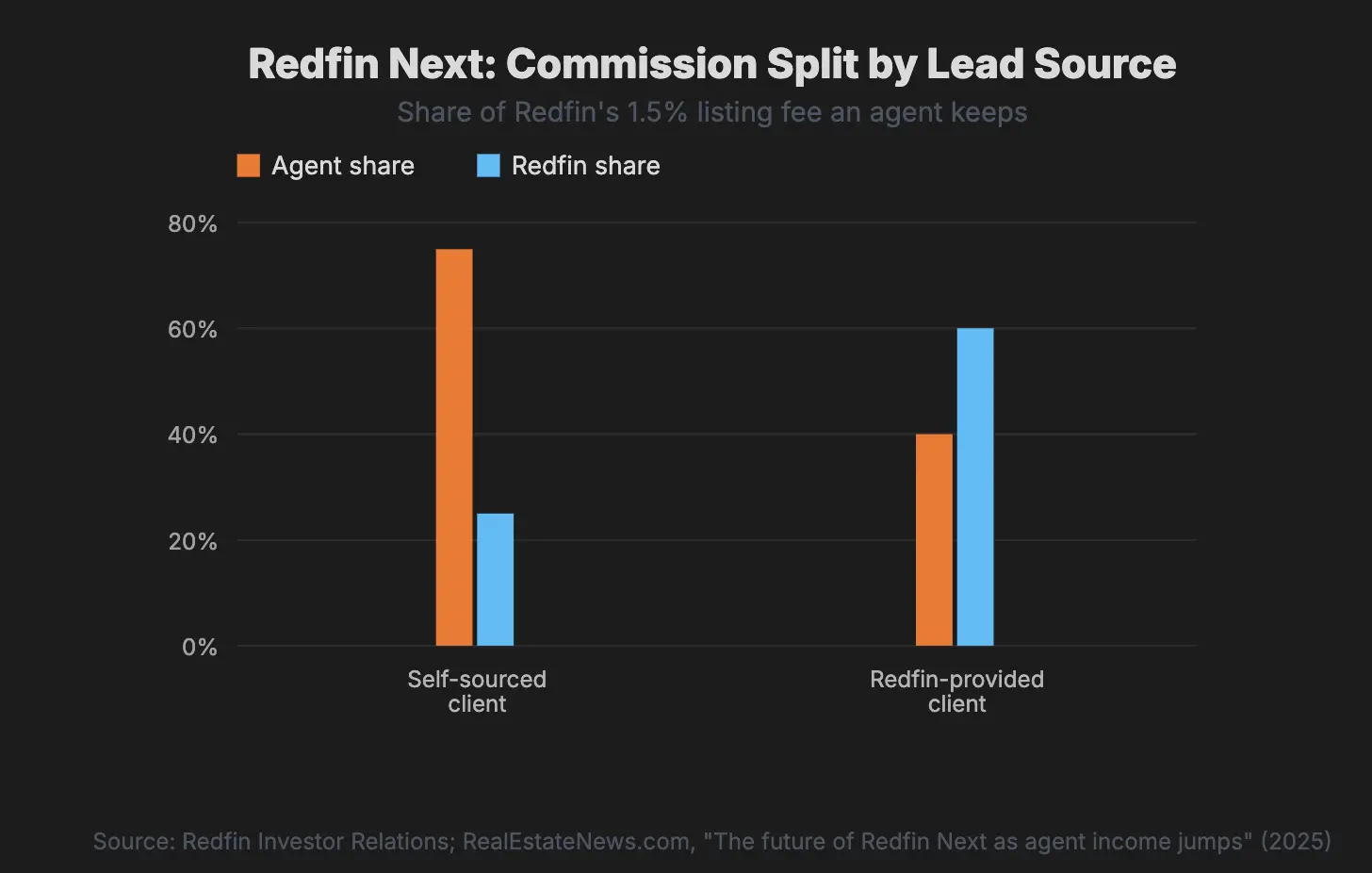
| Redfin Partner Agent / Redfin Next | W-2 employment, 40–75% commission split | Exclusive per referral | Redfin | Moderate: you’re an employee, not a tenant |
| IDX/CRM platforms (Real Geeks, Ylopo, CINC, Market Leader) | Flat monthly subscription | Fully exclusive | You (agent-owned CRM) | High: leads and history stay yours |
| Owned website + IDX + CRM | One subscription, cost per lead falls over time | Fully exclusive | You | Highest: the asset keeps working after any single lead source dries up |
The pattern across the table is consistent: the further right a platform sits toward “portal you pay to be listed on,” the less control you keep. The further it sits toward “infrastructure you own,” the more the leads, the relationship history, and the long-term equity belong to you instead of the platform.
Portal-Based Alternatives
These are the closest like-for-like substitutes: other listing portals where buyers and sellers are already looking, competing for the same attention Zillow captures. They’re the easiest switch to make, but they carry the same fundamental tradeoff: you’re renting visibility on someone else’s platform. This section covers the major portals; niche sites like FSBO.com (built for owners who want to sell without an agent) and Foreclosure.com (distressed and investor properties) serve smaller slices of the market and aren’t covered in depth here.
Realtor.com Connections Plus
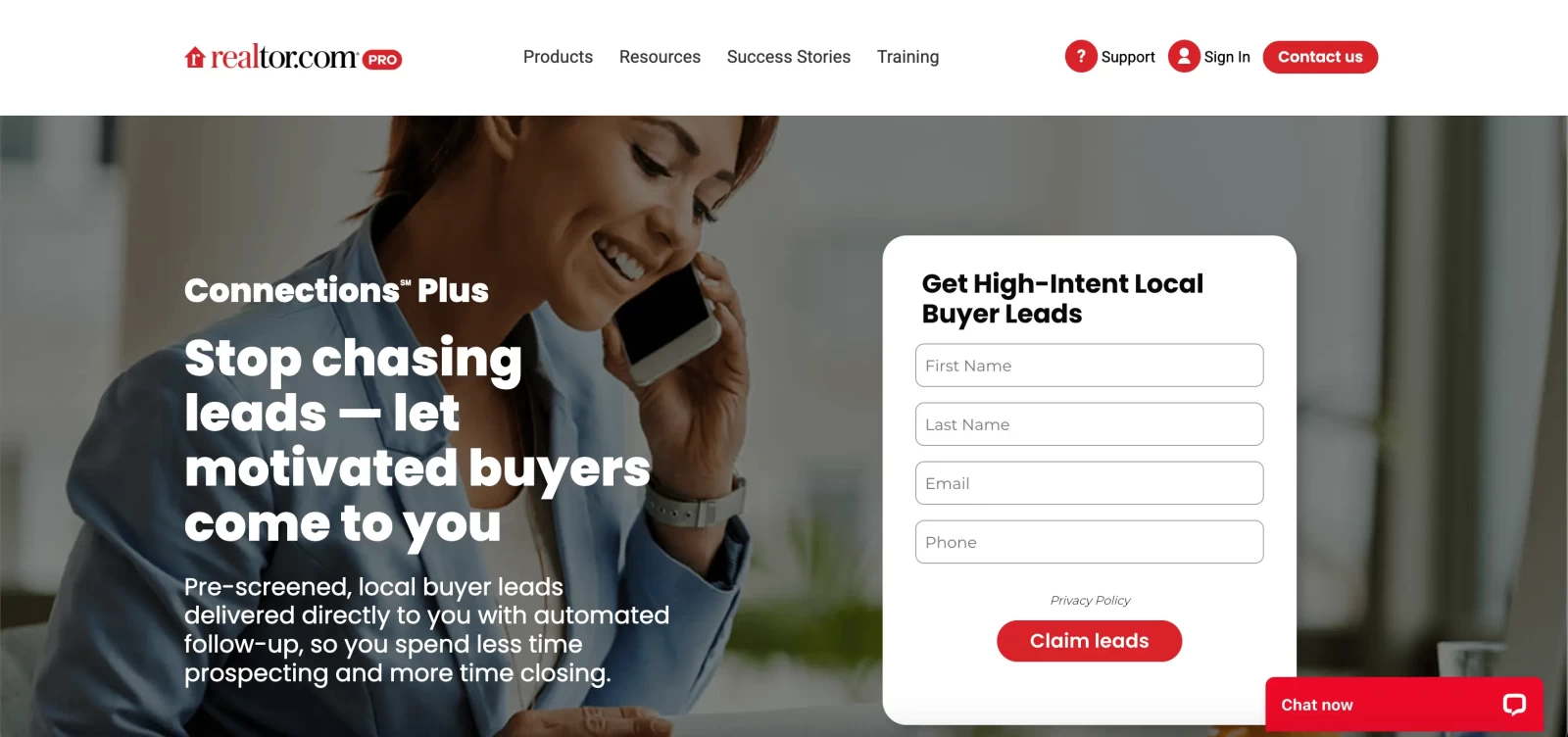
Realtor.com is backed by the National Association of Realtors and Move, Inc., which gives it a real estate data edge, listing information many agents trust more than Zillow’s crowdsourced data. Connections Plus sells buyer and seller leads generated from the site’s search traffic, and pricing runs on either a pay-per-lead or subscription basis depending on your ZIP code’s competitiveness. Leads here are usually shared rather than exclusive, so the same lead-quality tradeoffs that apply to Zillow apply here too: you’re one of several agents a buyer might hear from.
Homes.com
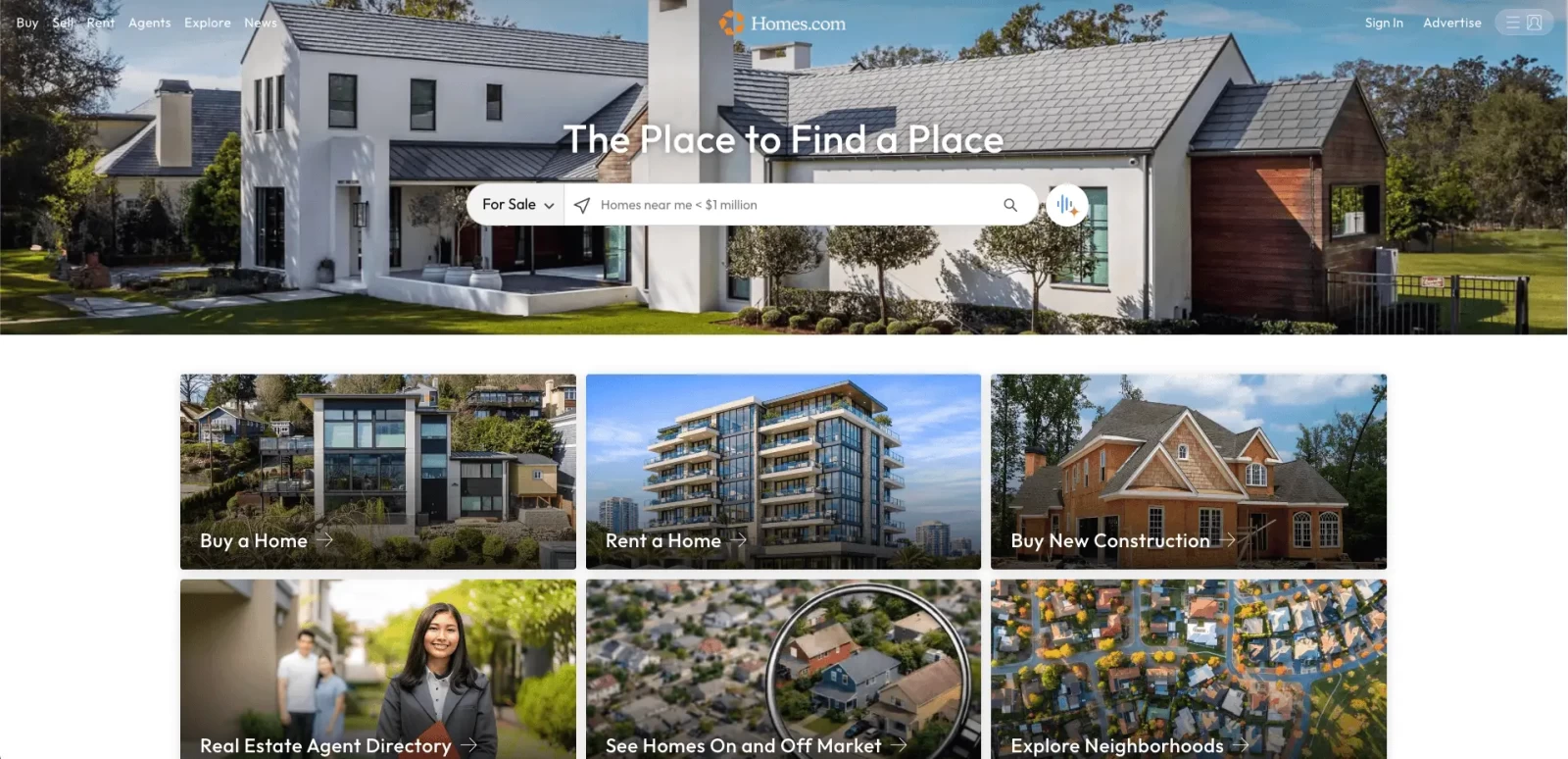
Homes.com, owned by CoStar Group, built its entire pitch around the opposite of Zillow’s model: Your Listing, Your Lead. If you’re the listing agent, inquiries on that listing route straight to you through a direct link, not to a rotating pool of buyer’s agents who paid for the zip code.
Homes.com states it never resells leads to competing agents and doesn’t take a commission on closed deals, and membership tiers get your profile and photo prioritized on your own listing detail pages, with retargeting to keep your name in front of engaged home buyers. For listing agents specifically, it’s one of the more agent-friendly platforms among the larger portals.
Redfin Partner Agent / Redfin Next
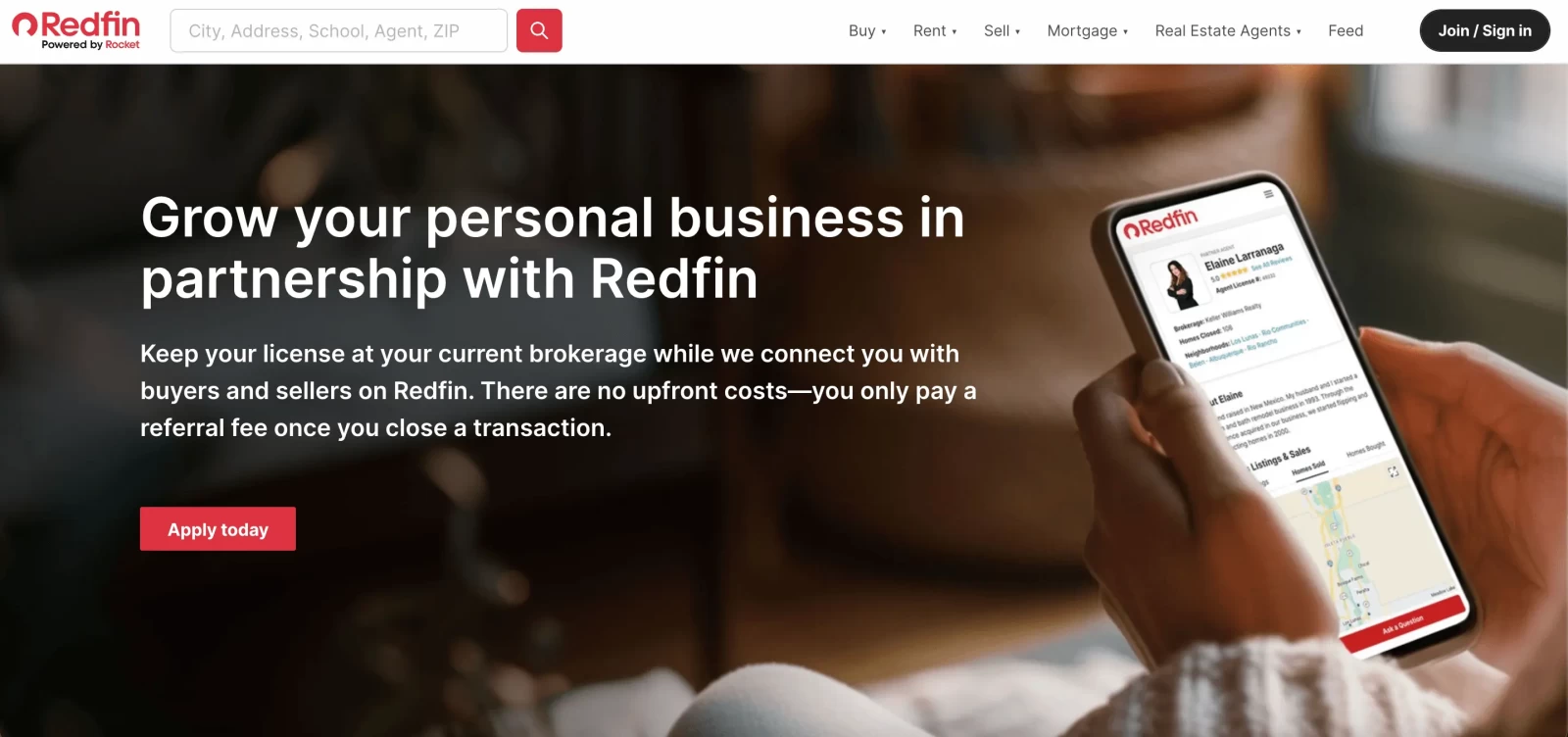
Redfin operates differently from every other name on this list: it employs its own agents as W-2 staff rather than running a pay-to-play referral network for independent agents. Under the current pay plan, called Redfin Next, lead agents keep up to 75% of Redfin’s 1.5% listing fee on clients they bring in themselves, and up to 40% on clients Redfin hands them.
That split applies to a smaller total commission pool than the 2.5–3% many independent brokerages charge. The exact commission structure may vary further by market and production level. Still, Redfin covers an estimated $32,000 per agent per year in employee benefits and business expenses (MLS dues, license fees, mileage, payroll taxes, continuing education, and listing costs).
Redfin reports that agent earnings rose 14% on average in the year after the plan rolled out nationally. Becoming a Redfin agent is less a “Zillow alternative” you bolt onto your existing brokerage and more a full career move: worth knowing about, but not necessarily worth switching to on its own.
Lead-Gen and IDX/CRM Platforms
A step up from pure portals, tools like Real Geeks, Ylopo, CINC, and Market Leader sell you a piece of the infrastructure: an IDX-powered site, a built-in CRM, sometimes ad management, bundled with lead generation. You’re still paying a subscription, but the leads and the follow-up history are yours, not the platform’s.
Real Geeks
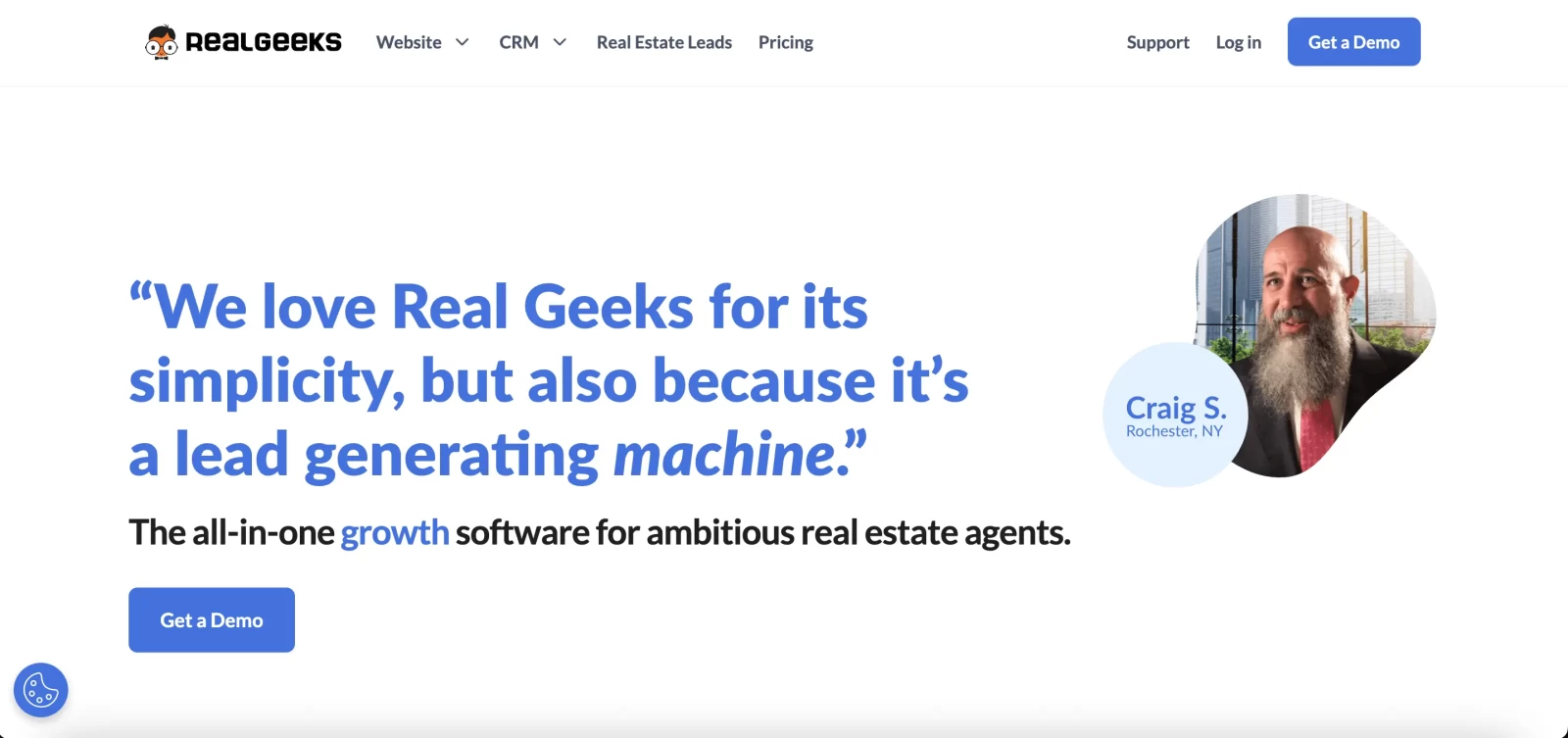
Real Geeks pairs an IDX website with a built-in CRM and its own PPC lead-gen engine, aimed at individual agents and small teams who want one system instead of stitching together a website, a CRM, and an ad account separately. The base platform is a flat $399/month for two users plus a one-time $500 setup fee, with paid add-on lead packages (social, search, seller) and per-MLS IDX feed costs layered on top depending on how much volume an agent wants.
The CRM includes email drip funnels, built-in texting, and unique features like Estate IQ, a home-valuation tool for generating motivated-seller leads, and every visitor’s on-site search activity feeds directly into their contact profile, so follow-up is based on the listings they actually viewed rather than a cold form submission.
Leads generated through the platform are exclusive to the agent or team that paid for them, and because PPC lead generation is a paid add-on rather than bundled by default, Real Geeks tends to fit agents who want more direct control over how their ad budget gets spent.
Ylopo
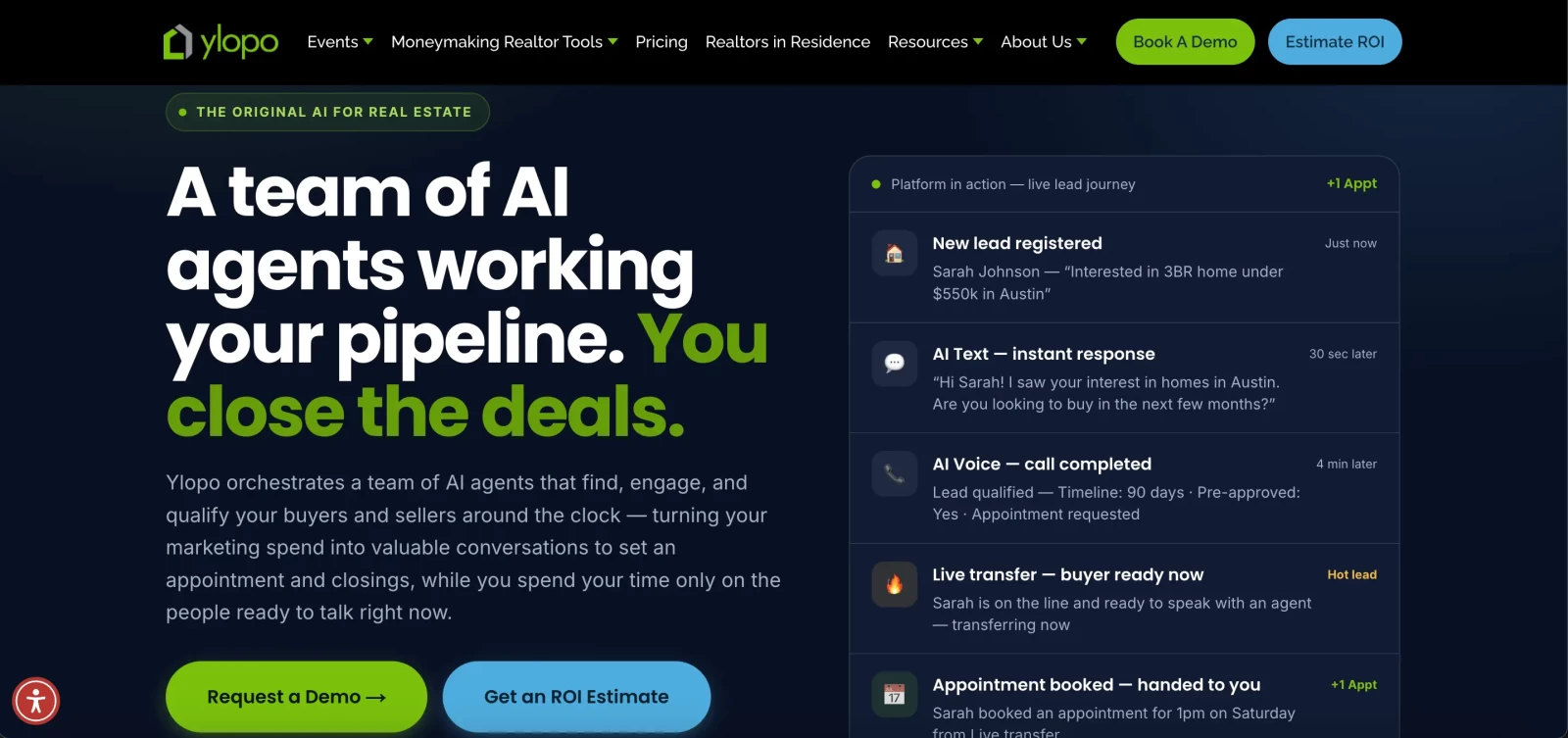
Ylopo leans hardest into AI-driven follow-up and paid-ad automation rather than a flat lead-gen fee. Its signature feature, Dynamic Ads for Real Estate (DARE), automatically builds property-specific Facebook ads from live MLS data and retargets anyone who viewed a listing on your site, keeping your brand in front of them as they keep scrolling.
Ylopo AI, formerly branded Raiya, adds a 24/7 text assistant plus a voice assistant that calls within set daily hours, so new leads get an instant response before an agent ever picks up the phone.
Pricing is typically quote-based rather than flat: the actual pricing depends on three main factors:
- lead types,
- team size,
- area of service.
The only way to get an actual pricing quote is to contact the company directly.
CINC
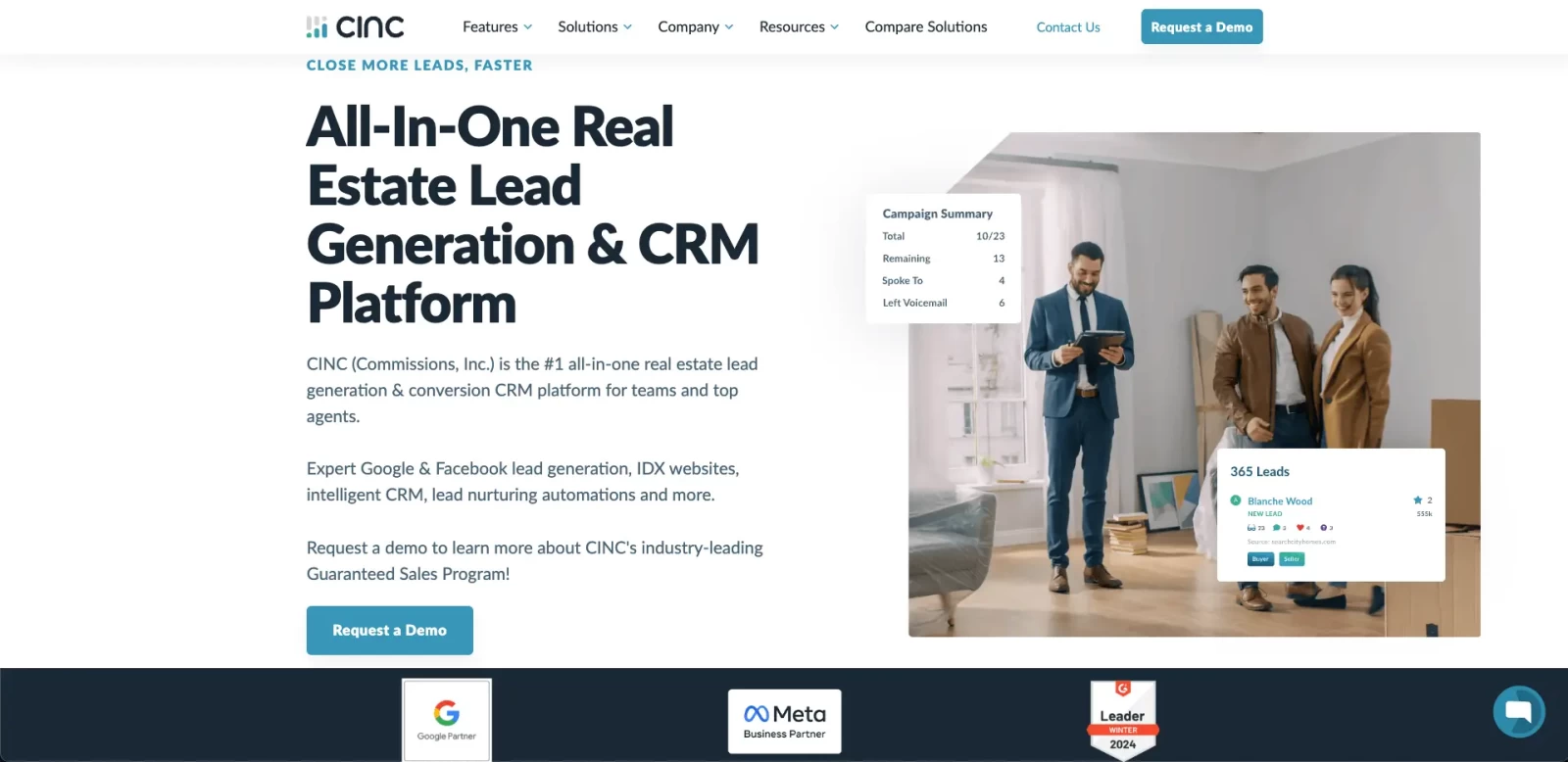
CINC (Commissions Inc.) is built for teams and brokerages scaling paid lead generation across multiple agents, not for a single agent working solo. The platform bundles IDX websites, paid Google and Facebook lead capture, a CRM with automated follow-up, integrated calling and AI bots, and dashboards built specifically for team accountability, tracking lead quality and conversion by individual agent rather than just at the team level.
Pricing isn’t published; third-party estimates put solo plans around $899–$1,000/month and team plans in the $1,299–$1,500/month range for up to four users, with required ad spend billed separately starting around $500/month minimum, and CINC offers custom enterprise pricing for brokerages running 50 or more agents. It’s a heavier platform, priced and positioned accordingly: less a starter tool, more infrastructure for a team that’s already generating meaningful transaction volume and needs to manage lead distribution across multiple producers.
Market Leader
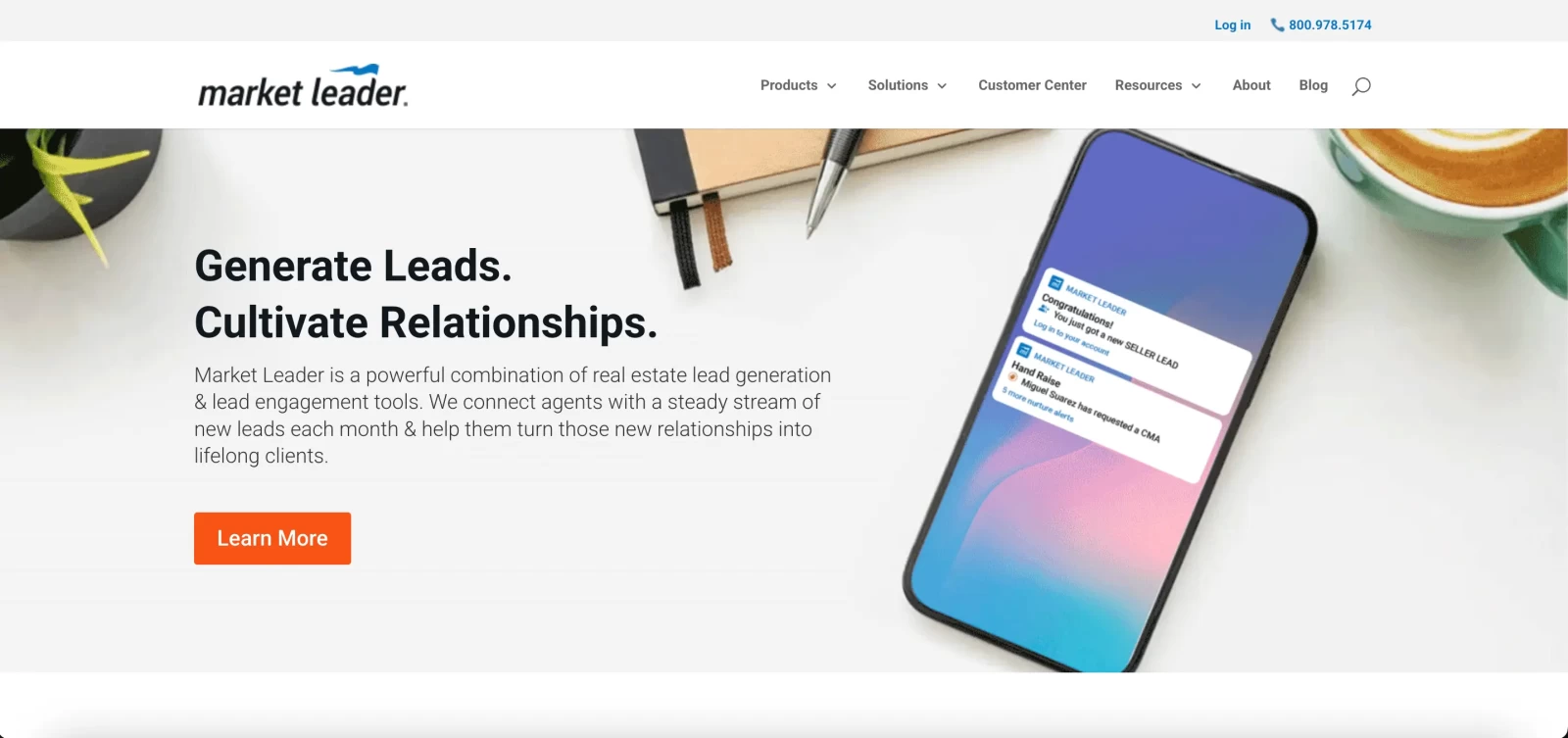
Market Leader sells exclusive buyer and seller leads generated through its own pay-per-click campaigns, using ZIP-code exclusivity to cap how many agents compete for leads in a given area, and routes them directly into a built-in CRM for follow-up. Team plans run $329/month for up to 10 users, covering the shared CRM, agent and team websites, lead routing, and marketing automation; pricing for individual agents isn’t published and requires a consultative quote. Its paid-lead products (Leads Direct, HouseValues) also don’t list public pricing, but the Network Boost social-ad add-on starts around $300/month for roughly 50 or more exclusive leads.
Like Zillow Premier Agent, Market Leader requires a minimum six-month contract, and per customer complaints filed with the BBB, a cancellation or plan-change request has to be submitted 35 days ahead of the cancellation date, so the exclusive-lead pitch comes with a similar kind of lock-in to the one it’s positioned against. Still, the exclusivity itself, one lead sold to one agent instead of shared across three, is the core selling point against Zillow’s shared-lead model.
Every platform in this section includes some version of an IDX-powered website as part of the package, which is the natural bridge to the option most agents underrate.
The Strongest Long-Term Alternative: Owning Your Website, IDX, and Lead Capture
Every platform above, whether it’s a portal like Homes.com or a platform like Real Geeks, is still, functionally, a subscription you’re renting. The strongest long-term alternative to Zillow isn’t a different portal. It’s owning the infrastructure that a portal, a lead-gen platform, and a CRM subscription each solve one piece of. Here’s what that actually looks like, piece by piece, because “build your own site” is where most comparisons stop and where the real value actually starts.
MLS/IDX listing display
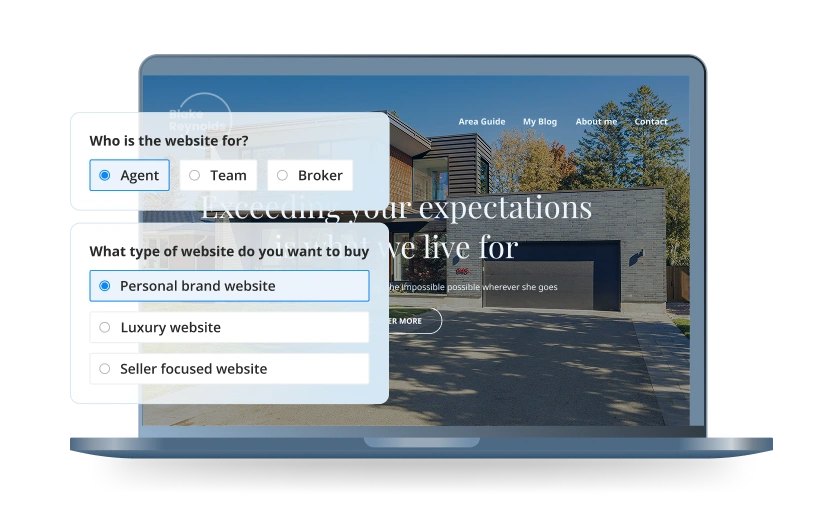
An agent website with real IDX integration pulls live listing data directly from your MLS, not a scraped or delayed feed, so buyers get the same home-searching experience they’d get on Zillow: robust search tools, saved searches, filters by price, beds, and neighborhood, and detailed property pages with photos and history. A user-friendly interface matters just as much on a phone as on a desktop, since most buyers looking to buy start home searching on a mobile app or mobile browser rather than sitting down at a laptop.
Placester’s platform connects to 600+ MLSs across the U.S., which matters because gaps in coverage are one of the most common reasons agents fall back on portals in the first place. If your site can’t show the homes for sale a buyer is trying to find, whether they’re just starting to shop for homes or ready to find the perfect home in one specific neighborhood, it can’t do the one job a portal does well.
AI Websites for Real Estate
Get a custom, ready-to-edit website
in less than 4 minutes.
Lead capture
A portal captures a lead and sells it to you. Your own website captures the same visitor and keeps the lead instead, through landing pages, contact forms, pop-ups, live chat, an easy way to book a tour, and one-click sign-in that turn anonymous visitors into named contacts before they ever leave your site.
This is the piece that most “just build a website” advice skips: a site with no lead-capture layer is a digital business card, not a lead-generation asset. Every one of those tools exists to catch a visitor at the exact moment they’re trying to find a home, not after they’ve already called three other agents. Pairing capture tools with genuinely useful real estate marketing materials, like a home-valuation offer or a downloadable neighborhood guide, is what actually gets a visitor to fill out the form.
Follow-up and nurture
A lead you own is only worth as much as your follow-up. Built-in CRM automation means every contact who fills out a form, saves a search, or requests a home valuation lands in a system that keeps nurturing them automatically, instead of falling through the cracks between individual agents receiving a notification and remembering to call back.
Quality of leads matters less than what happens in the hours and weeks after the first click, and that’s a system problem, not a lead-source problem. The same CRM can also route a buyer lead to a trusted lender for pre-approval, which keeps more of the transaction inside your own pipeline instead of scattering across third-party referrals.
Ongoing visibility
The last piece is staying findable without paying for it every month. A website built with SEO and AI-search foundations in place, structured data, schema markup, AI-readable signals, combined with regular real estate marketing ideas like market updates, neighborhood guides, and buyer and seller advice, compounds over time the way a portal subscription never does.
Pulling in third-party data tools like NeighborhoodScout for neighborhood guides adds real texture that a generic “about this area” page can’t match, and positions your site as a genuine online real estate resource rather than just a mirror of the listings already on Zillow. Content automation that keeps a site publishing fresh, locally relevant posts is what turns “I built a website once” into “my website is still generating leads three years later.”
None of this happens on day one the way a Zillow subscription starts sending leads on day one. That tradeoff, a slower ramp in exchange for a falling cost curve instead of a flat or rising one, is the entire case for treating an owned website as infrastructure rather than a marketing line item.
Zillow vs. an Owned Website: Cost and ROI Over 12 Months
Take the major-metro tier from the pricing above as a representative case: $2,500–$5,000 a month for Zillow Premier Agent works out to roughly $30,000–$60,000 a year, for leads that are shared with two or three other agents and convert at a rate that reflects it. An owned website with IDX, CRM, and lead capture built in runs a small fraction of that as a flat annual subscription, with the heaviest cost concentrated in setup rather than ongoing spend.
| Zillow Premier Agent | Owned Website + IDX + CRM | |
|---|---|---|
| Typical annual cost (major-metro market) | ~$30,000–$60,000 (subscription only) | Flat annual platform subscription, no per-lead cost |
| Lead exclusivity | Shared with up to 3 agents | 100% yours |
| Cost trend over time | Flat or rising with market competitiveness | Falls as organic search and referral traffic grow |
| What you keep if you cancel | Nothing: pipeline stops immediately | The website, the SEO equity, and every contact in your CRM |
The worked example: an agent spending $30,000 a year on Zillow leads who instead redirects that budget toward an owned website in year one, covering setup, IDX, CRM, and content, typically ends up with a similar or lower total spend once the site is live, and a lower cost per lead every year after, because a flat subscription doesn’t scale per lead the way a portal does. The website doesn’t replace every Zillow lead overnight. It changes the trajectory of your cost per lead from flat to declining.
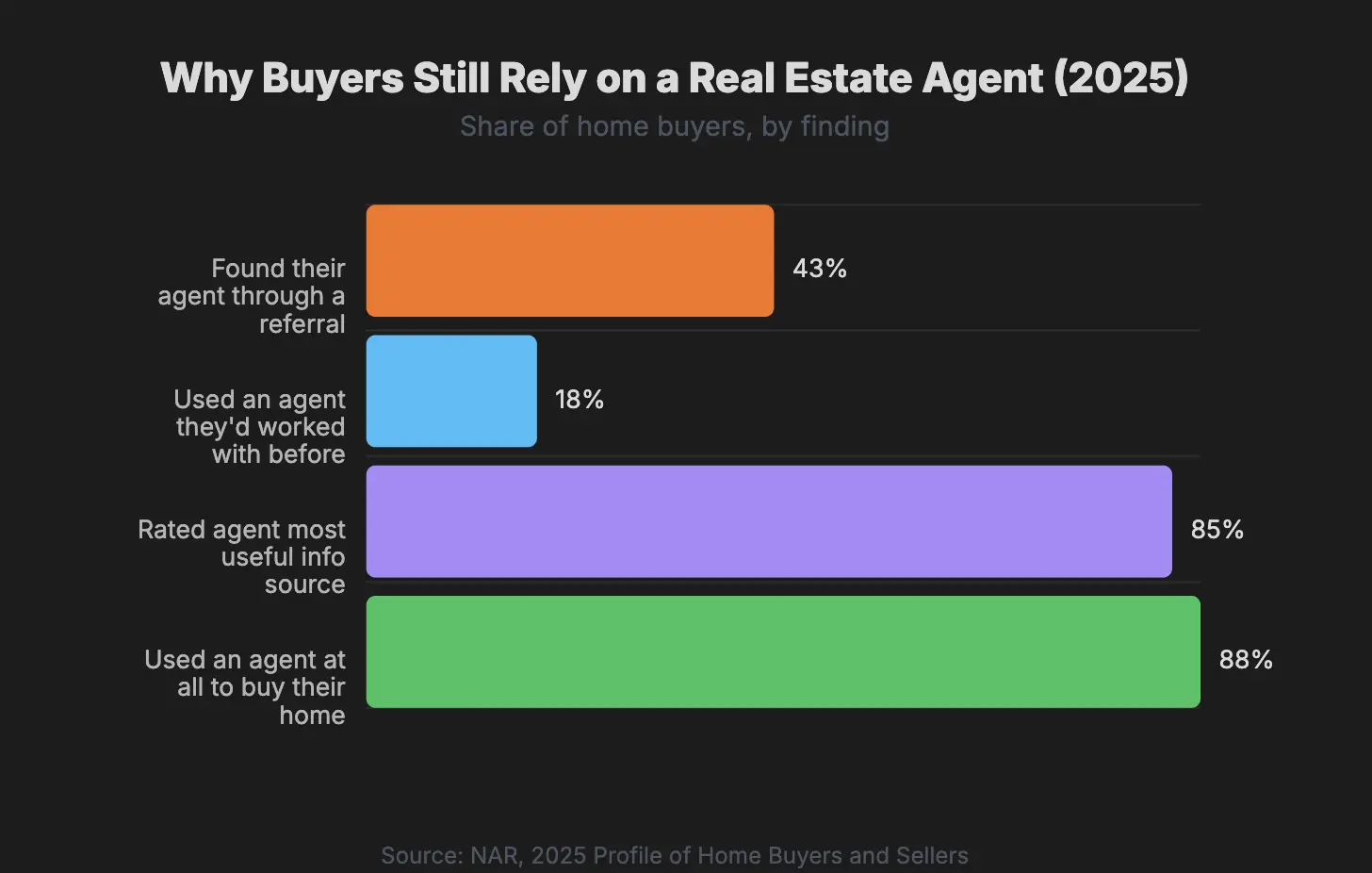
It’s also worth remembering why buyers hire a real estate agent in the first place, and where most business still comes from. According to NAR’s 2025 Profile of Home Buyers and Sellers, in 2025, 43% of home buyers found their agent through a referral and another 18% used an agent they’d worked with before, so only a minority came through a cold portal lead at all. Agents also remain central to the process itself: 88% of buyers still use one, and 85% of recent buyers rated their agent as the most useful source of information during their search.
A referral or repeat client still needs somewhere professional to look you up, and that’s the job an owned website does regardless of what happens to any single portal’s pricing. Skipping that step is exactly how agents end up losing commissions by not marketing online in the first place.
How to Reduce Zillow Dependence in 90 Days
You don’t need to cancel Zillow to start this: most agents run both in parallel while the owned-website pipeline ramps up.
- Week 1: Audit your current lead sources. Pull your actual cost per lead and cost per closed transaction from Zillow, Realtor.com, or any platform you’re on, and compare it against what you expect to pay based on your original contract terms. You can’t fix a number you haven’t measured.
- Weeks 2–4: Stand up your owned website and IDX. Get MLS/IDX search live first: this is the foundation everything else builds on, and it’s the piece most agents underestimate the timeline for.
- Weeks 4–8: Launch lead capture and CRM follow-up. Add landing pages, forms, and a home-valuation tool, and connect them to a CRM with automated email follow-up so nothing sits unanswered.
- Weeks 8–12: Layer in content and reassess portal spend. Publish neighborhood guides and market updates to start building organic search visibility, then look at your Zillow or portal spend again with real numbers from your own site in hand, not to cancel automatically, but to decide with data instead of frustration. For a deeper breakdown of this kind of nurture sequence, see our guide to real estate marketing automation.
This timeline aligns with broader digital marketing strategies beyond portal leads. The owned-website piece is the foundation, but it works best alongside the wider marketing mix, not in isolation.
Bottom Line
There’s no single platform that replaces Zillow the way Zillow replaced the yard sign. The real shift is from renting one platform’s leads to owning a mix of channels, with an IDX website, built-in CRM, and lead capture at the center of it. Portals like Homes.com and Realtor.com, and platforms like Real Geeks or CINC, are worth using where they fit, but the one piece of infrastructure that keeps generating leads at a falling cost long after any single subscription ends is the website you own. This is what can unlock the front door to the referral and repeat business most transactions actually start from. See what an owned agent website looks like in Placester’s design portfolio.
AI Websites for Real Estate
Get a custom, ready-to-edit website
in less than 4 minutes.
Frequently Asked Questions
Should I cancel Zillow Premier Agent entirely?
Not necessarily, and most agents don’t. The stronger move is to diversify: keep Zillow if it’s still producing a positive return in your market, but stop treating it, or any single one of the larger platforms, as your only lead source. An owned website reduces how much any single portal’s pricing or algorithm change can hurt your business.
What’s the cheapest Zillow alternative for a new agent?
Homes.com’s Boost option and a basic owned website with IDX are typically the lowest-cost entry points, since neither requires the large monthly ad spend that Zillow Premier Agent or paid lead-gen platforms need to produce volume. A new agent with a limited marketing budget generally gets more long-term value from an owned site than from bidding into a competitive Zillow zip code, where you’d need to pay premium rates just to get noticed.
Can I use Zillow and an owned website at the same time?
Yes. This is how most agents actually run their business. An owned website isn’t a replacement you flip a switch on; it’s infrastructure that runs alongside whatever portals you’re already paying for, and it’s the one piece of your marketing stack that keeps working if you ever stop paying for the others.
How long does it take to see leads from an owned website?
Lead capture forms and CRM follow-up can start converting the traffic you already send to the site (from your yard signs, business cards, and referrals) within the first month. Organic search traffic from SEO content typically takes three to six months to build meaningful volume, which is why most agents run portals and an owned site in parallel during the ramp-up.
Is Homes.com or Realtor.com a better Zillow alternative?
It depends on whether you’re the listing agent or working buyer leads. Homes.com’s “Your Listing, Your Lead” model favors listing agents specifically, since inquiries route directly to you rather than to a shared pool. Realtor.com’s larger buyer-side traffic, mobile app reach, and NAR-backed data credibility make it more comparable to Zillow for agents primarily working buyer leads.
How much does it cost to build an owned real estate website with IDX and a CRM?
Pricing varies by provider, but an owned website with IDX, a built-in CRM, and lead capture typically runs as a single flat monthly or annual subscription rather than a per-lead fee, similar in structure to the lead-gen platforms covered above. The bigger cost driver is usually setup and content, not the software itself. Compared to $30,000 or more a year in major-metro Zillow Premier Agent spend, most owned-website platforms cost a small fraction of that annually, and the cost per lead falls over time instead of scaling with every closing.
Published on