(800) 728 8391



Quick summary:
- 🏠 Website and CRM in one platform: Sierra Interactive connects an IDX website with lead management and optional advertising services.
- ⚖️ Mixed user feedback: Users praise Sierra’s SEO tools and automations but report glitches and inconsistent support.
- 💸 $299.95 is only the starting price: Depending on the plan and selected features, monthly costs can exceed $900 before ad spend.
Sierra Interactive is an all-in-one real estate platform that combines an IDX website, customer relationship management, and digital advertising services. It is primarily designed for real estate teams that want to generate and manage leads within one ecosystem.
The platform’s biggest selling point is its website performance.
13–14%
Eric Richards of SpringsHousesOnline.com reported that his website’s conversion rate increased to 13–14% after switching to Sierra Interactive.
Source: Sierra Interactive
He also saw double-digit click-through rates, a lower bounce rate, and time on site increase to several minutes. However, these figures come from a customer testimonial published on Sierra Interactive’s own website, rather than an independent study.
Are these results enough to justify Sierra’s relatively high price and all-in-one model? Read our full Sierra Interactive review to explore its features and alternative solutions.
Show Up Where Your Next Clients Are Looking
Explore how cutting-edge AI website builders help agents stay ahead of the competition.

What is Sierra Interactive?
Sierra Interactive is a real estate tech company that develops its own website and CRM ecosystem for agents, teams, and brokerages. In contrast to standalone CRMs like Follow Up Boss, it combines the tools used to attract real estate leads with those needed to manage them after the first inquiry.
The idea started with a much simpler problem. In 2003, a real estate agent in Mammoth Lakes asked founder Ben Peskoe to build a website that displayed all local listings and updated them daily. Sierra Interactive officially launched in 2007, initially focusing on IDX technology and real estate websites.
The product gradually moved beyond its roots as a website provider. Sierra adopted the SaaS model in 2017, when it also released its backend CRM and scalable Pro website template. Its partnership with Alpine Software Group followed in 2022, giving the company more resources to develop the platform.

So, what is Sierra Interactive today? It is a comprehensive solution for real estate professionals who want their websites and CRM to operate within the same system. The current Sierra Interactive platform connects an IDX real estate website with:
- Lead capture
- Behavioral tracking
- And marketing automation
Sierra is more than a real estate website builder, but it does not automatically make it the best CRM for every real estate agent. Its all-in-one structure is primarily designed for teams that want lead generation and lead management under one roof. If you already have a preferred website platform or CRM, paying for the complete ecosystem may be harder to justify.
👉 Learn what a real estate CRM does and why agents use one.
Sierra Interactive review: What do real estate professionals say?
Sierra Interactive receives positive feedback from users, but there are not enough independent reviews to treat its ratings as representative of the entire customer base. As of August 2026, its dedicated G2 profile has a rating of 4.7 out of 5 based on only three reviews.
The limited sample tells us more about individual experiences with Sierra Interactive than overall customer satisfaction. Users praise the speed and SEO capabilities of Sierra’s websites. They also find its CRM automations useful for staying in contact with leads and appreciate being able to see which listings their prospects view.
Several recognizable real estate businesses appear among Sierra Interactive’s customers, including RubyHome, The Real Estate Group, Homestead & Co., Build Idaho, and Denovo Realty. Their comments are available through Sierra’s website, so they should be read as vendor-published testimonials rather than independent reviews.
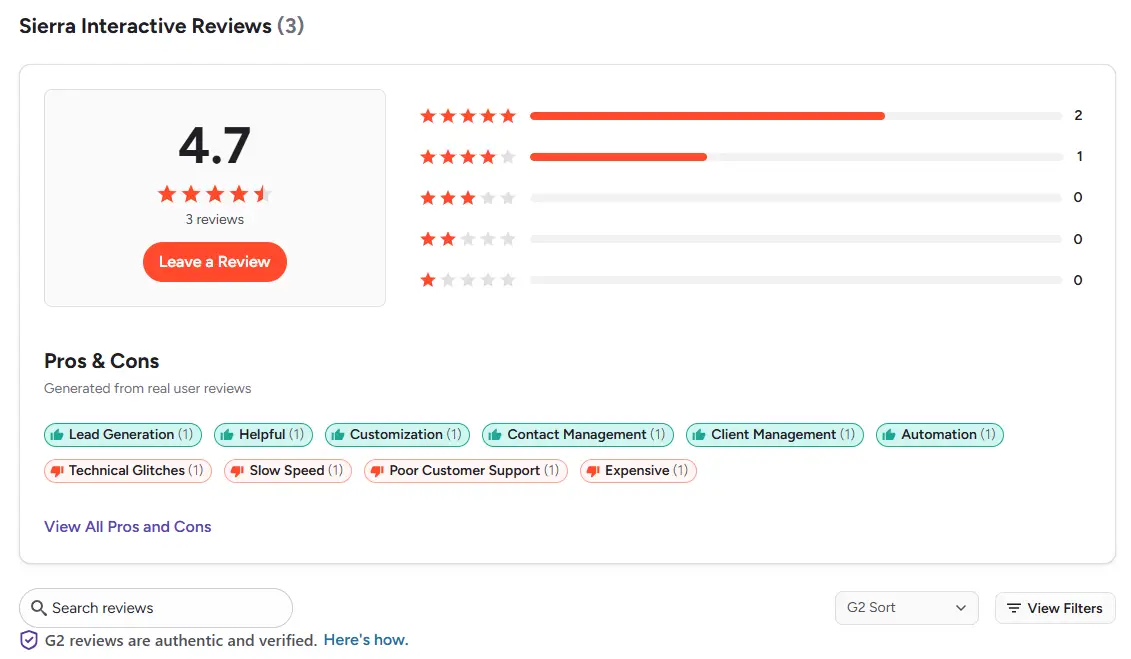
✅ Pros of using Sierra Interactive
- SEO-ready websites: A G2 reviewer praised Sierra Interactive’s websites for their speed, Google optimization, and greater SEO control than several competing platforms.
- Visible lead behavior: The integrated CRM shows what properties prospective buyers are viewing, giving real estate agents and brokers more context for follow-up.
- Accessible automations: Users describe the automations as straightforward and useful for keeping leads engaged through action plans.
- Centralized client management: Reviewers say the platform helps them organize contacts and manage their daily lead management process.
❌ Cons of using Sierra Interactive
- High cost: One verified reviewer points out that Sierra is not among the cheapest CRM solutions, which may put it beyond the budget of some solo agents and small teams.
- Technical glitches: Users have reported occasional problems with automations and other parts of the platform.
- Inconsistent customer support: One reviewer says the support team did not resolve an automation issue, forcing them to find a workaround independently.
- Potentially overwhelming setup: The website customization options provide considerable control, but one user notes that this flexibility can be too much for a real estate agent seeking a simple, ready-made solution.
Sierra Interactive features: Pros and cons
Sierra Interactive is designed to turn website traffic into leads and carry those contacts through the follow-up process. Its IDX website feeds visitor activity into the CRM, where agents can respond manually or use automations to keep prospects engaged. Let’s take a closer look at how its main features work in practice, including their advantages and drawbacks.
IDX website: Can it really deliver organic traffic?
Sierra gives you a solid technical base for generating organic traffic. Its IDX integration keeps property pages on your domain, while saved searches let you build targeted pages with automatically updated listings. IntelliSearch goes beyond standard filters by matching keywords against MLS fields and public remarks, which helps you cover niche searches such as “homes with pools in Charlotte.”
The sitemap process is not fully automatic. Sierra generates a main sitemap for your content, but property listing sitemaps must be created from saved searches and submitted to Google or Bing. You can edit metadata and page HTML, although page-specific schema still has to be added and tested manually.
The platform can therefore support organic growth, but it will not create demand on its own. A Sierra-published case study reports that Karl Freund’s Kenneth James Realty website generated more than 51,000 organic clicks in three months. The same site contains over 2,800 community and search pages, so you should treat that result as an example of sustained hyperlocal work rather than a typical outcome.

If you care about organic SEO, Sierra gives you more control than competitors like BoomTown or Chime because it’s so customizable.
~Enrique H.
Source: G2
✅ Pros
- Searchable IDX inventory: Live property pages can attract visitors through search without sending them to an external portal.
- Keyword-based property search: IntelliSearch can surface features that traditional MLS filters may overlook.
- Flexible local pages: Saved searches let you target specific communities or buyer needs with current listings.
- Page-level SEO access: You can adjust individual page settings and edit its HTML.
❌ Cons
- Manual sitemap work: Property listing sitemaps need to be created and monitored by you.
- DIY structured data: Page-specific schema is not generated automatically.
- Thin-page risk: Scaling saved searches without original local content can produce repetitive pages with little SEO value.
👉 Need IDX on your website? See how Placester simplifies the process.
Sierra Interactive CRM: Is it enough to manage your pipeline?
Sierra Interactive offers efficient CRM functionality to manage lead relationships and record the resulting transaction. Its strongest advantage is the connection with the IDX website. You can see what a prospect views and when they return, giving you a clearer reason to follow up.
Routing rules send each new inquiry to the right agent, while Smart Filters bring the contacts that need attention back into view. Action plans can then keep the relationship active until the prospect is ready for a direct conversation. This works best when your team treats Sierra as a daily workspace rather than a passive database.
Sierra Interactive helped me keep my clients up to date and I was able to manage them.
~ Ingrid L.
Source: G2
The limitation appears once a deal moves beyond lead nurture. Sierra records closed transactions for reporting, but its current documentation does not describe a complete contract-to-close workspace for documents or compliance. Some useful tools also raise the effective price:
- Starter users need the $100 Dialer upgrade to access Buyer Lead Workflow
- Lead Engage costs $199 per month and is unavailable on the Starter plan
- The Agent Leaderboard is reserved for Growth
Leads generated through external sources can also enter Sierra, though they may arrive without the behavioral context collected on a Sierra-powered website. You should expect to spend time maintaining routing logic and automations. Without a clear owner, that flexibility can turn into clutter.
✅ Pros
- Behavior-based follow-up: Website activity helps agents contact prospects when their interest becomes visible.
- Adaptable lead distribution: Routing rules can reflect your market coverage and agent availability.
- Long-term nurture: Action plans keep quieter contacts from disappearing from the pipeline.
- Practical prioritization: Smart Filters make the daily database easier to work.
❌ Cons
- No full transaction workspace: Deal tracking does not replace dedicated contract-to-close software.
- Feature-related costs: Key workflow tools may require a higher plan or paid add-on.
- Ongoing administration: Routing and automation need regular maintenance to remain useful.
- Uneven lead context: Imported contacts may provide less behavioral data than website registrations.
Dialer and texting: How easy is it to stay in touch?
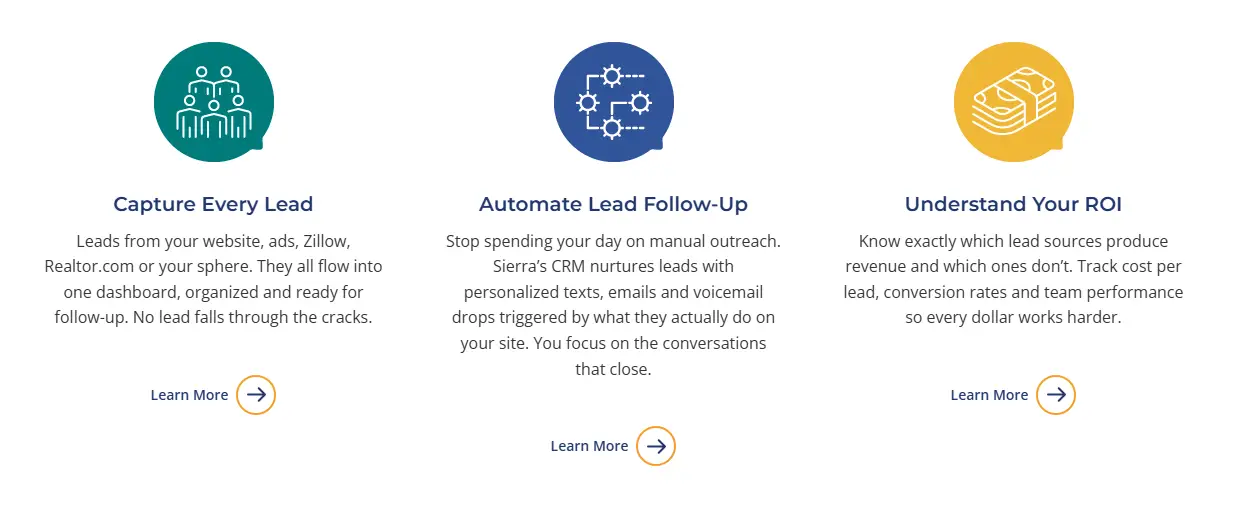
Sierra’s Dialer lets you contact a lead without leaving the CRM platform. You can place an individual call from the contact record or work through a Call List in sequence. When you use a Call List, a 10-second timer gives you time to review the next lead before Sierra dials.
Calls may run through your browser or a connected phone, while the recipient sees your Sierra number instead of your private one. After the conversation, you can log the outcome and add notes to the lead history. Sierra Interactive also supports call recording, with the default behavior and retention period controlled by the administrator.
Text replies return to the matching conversation in Sierra, and templates make recurring messages quicker to prepare. The platform adds consent language to its registration forms and opt-out instructions to automated or mass texts. These controls reduce compliance work, but they do not replace documented consent for imported leads.
Activation adds some friction. Outbound texting remains restricted until Twilio verifies your business. The Dialer is included with Essential and Growth, while Starter charges another $100 per month. Group Text is Growth-only, and usage above the plan allowance is billed automatically.
✅ Pros
- Sequential calling: Call Lists help agents work through prioritized contacts with fewer interruptions.
- Connected lead history: Call outcomes and text messages can stay with the CRM record.
- Protected personal numbers: Outbound communication displays an assigned Sierra number.
- Compliance controls: Sierra adds consent and opt-out mechanisms to supported messaging workflows.
❌ Cons
- Starter upgrade cost: The Dialer adds $100 to the monthly subscription.
- Variable usage charges: Heavy communication can produce automatic overage fees.
- Restricted Group Text: Shared conversations require Growth and personal Dialer numbers.
- Carrier approval required: Business verification can delay access to outbound texting.
👉 Turn more prospects into clients with effective lead nurturing.
Ad management: Can Sierra generate better real estate leads?
Sierra manages Google Search campaigns designed to reach people already looking for real estate services. Leads flow into the CRM with their source attached, so you can follow what happens after the form submission. This makes it easier to separate campaigns that generate contact details from those that eventually contribute to transactions.
On Facebook and Instagram, Sierra can reconnect with previous website visitors through dynamic property ads. Its team also runs campaigns aimed at new prospects. You give up some hands-on control because requested changes must go through Sierra, and the audience requirements may rule out certain campaigns for smaller databases or low-traffic websites.
Google PPC management requires at least $500 in monthly ad spend and adds a 10% management fee. Facebook Lite costs $75 per month, with a $125 setup fee and $250 ad budget. Sierra reports an 11–12% conversion rate across its Google campaigns, but that vendor-reported figure does not guarantee qualified leads or closed deals in your market.
✅ Pros
- Clear source attribution: Paid inquiries enter the CRM with campaign information attached.
- Intent-focused search campaigns: Google Ads can reach prospects who are actively researching a move.
- Current property advertising: Dynamic campaigns pull listings from a live feed.
- Managed optimization: Sierra handles the ongoing PPC work for teams without in-house expertise.
❌ Cons
- Stacked marketing costs: Ad spend and management fees sit on top of the platform subscription.
- Reduced editing control: Clients cannot make changes to managed Facebook campaigns directly.
- Audience thresholds: Dynamic retargeting works best with roughly 150–300 daily visitors, while sphere remarketing requires at least 2,000 CRM contacts.
👉 Make every ad dollar work harder with these real estate PPC practices.
Reporting: What does the data tell you?
Sierra’s Lead Source Reporting connects closed transactions with the channel that generated the original contact. This helps you identify which marketing efforts produce enough value to justify further investment. The calculation depends on transaction details being entered into the CRM, so the report reflects your recordkeeping as much as platform performance.
Agent Reporting shows managers how quickly assigned leads receive attention and highlights contacts with no recorded outreach. Growth accounts also receive the Agent Leaderboard, which makes individual activity easier to compare. These dashboards are useful for coaching, but they measure recorded behavior rather than the quality of every conversation.
The timing of the data requires care. Agent Reporting refreshes daily, while Agent Leaderboard can take 24–48 hours to update. Lead Source Reporting also applies its date filter to the lead’s registration date, not the closing date. That can make older opportunities appear in an unexpected reporting period.
✅ Pros
- Source-level conversion data: You can see which channels generate contacts that eventually close.
- Visible response gaps: Managers can find assigned leads with no recorded activity.
- Performance context: Activity data gives coaching conversations a factual starting point.
- Downloadable results: Selected reports can be exported for outside analysis or internal review.
❌ Cons
- Manual transaction input: Missing deal details can distort conversion values.
- Off-platform blind spots: Outreach completed elsewhere may not appear in Sierra.
- Delayed agent metrics: The main performance dashboards do not update in real time.
- Registration-based dates: Source reports may group a closing under the period when the lead first entered the CRM.
Integrations: Will Sierra work with your existing tools?
Sierra can bring leads from various sources into the CRM and lets you then route those contacts through an appropriate workflow without copying their details manually. The practical value depends on the connection type because not every integration transfers the same information.
Direct integrations are available for widely used lead sources and marketing tools. They send new contacts or engagement signals into Sierra, depending on the platform. Once received, that data can trigger tags or routing rules, helping your team respond without rebuilding its workflow around manual imports.
Zapier fills some remaining gaps, but it is designed for basic data and cannot maintain a complete database sync. Legacy Email-to-Lead integrations have been deprecated, while custom API connections may require a developer or paid third-party service. Before adopting Sierra, confirm the exact fields and actions supported by every tool you depend on.
✅ Pros
- Automatic lead transfer: Supported sources can create CRM records without manual entry.
- Lead-source integrations: Sierra connects directly with several widely used real estate platforms.
- Source-based routing: New contacts can enter a workflow based on where they originated.
- Extension options: Zapier and the Sierra API can cover workflows without a native integration.
❌ Cons
- Uneven synchronization: Some connections transfer basic lead data but not later updates.
- Deprecated email parsers: Legacy Email-to-Lead setups remain available but are no longer actively supported.
- Basic Zapier workflows: Zaps cannot update every field or handle complex database logic.
- Additional implementation work: Custom connections may require technical help or another subscription.
Customer support: Can you count on help when you need it?
Sierra handles ordinary customer support through tickets and phone assistance from 9 a.m. to 6 p.m. ET, Monday through Friday. An after-hours line covers critical incidents that cannot wait until the next business day. This includes a complete website outage or a failure that stops new inquiries from reaching the CRM.
The onboarding period depends on your plan:
- Starter includes 30 days
- Essential provides 60 days
- Growth extends the process to 90 days
Once onboarding ends, you can use Sierra Academy and the searchable Help Center. Live training sessions provide another way to learn the platform without opening a ticket.
The main uncertainty is response time for everyday requests. Sierra says qualifying emergency calls are typically returned within 45 minutes, but it does not publish a service-level guarantee for standard tickets. Its support policy also excludes custom-coded solutions and troubleshooting for third-party platforms, so some integration problems may have to be handled elsewhere.
There are some glitches with the autmations that support has not been great in helping with so I have had to find my own work arounds.
~ Tabitha S.
Source: G2
✅ Pros
- Core-product coverage: The team assists with Sierra’s CRM and websites as well as MLS data issues.
- Emergency escalation: Critical operational failures can be reported after business hours.
- Current documentation: The Help Center covers specific features and common configuration problems.
- Guided learning: Onboarding and live sessions help users understand more complex workflows.
❌ Cons
- Restricted standard hours: Ordinary phone assistance is unavailable during evenings and weekends.
- No standard-ticket SLA: Sierra does not promise a specific response time for routine requests.
- Shorter entry-level onboarding: Starter customers receive less implementation time than higher-tier clients.
- Third-party limitations: Custom code and external platform troubleshooting fall outside Sierra’s stated scope.
Sierra Interactive pricing: Plans, add-ons, and fees
Sierra Interactive offers three plans with lower rates for annual subscriptions. Each package includes an IDX website, CRM, one MLS feed, and a set number of users. The lowest advertised price is $299.95 per month, but choosing monthly billing raises that figure to $359.95 and adds a $500 setup fee.
Your final cost may be higher once you add users or optional features. Premium website designs cost up to $150 extra each month on lower plans, while Lead Engage adds $199 to Essential or Growth. Paid ad management and advertising budgets are billed separately.
| Cost | Annual subscription | Monthly subscription |
| Starter, 1 user | $299.95/month | $359.95/month |
| Essential, 3 users | $399.95/month | $474.95/month |
| Growth, 5 users | $599.95/month | $724.95/month |
| Setup fee | $0 | $500 |
| Additional MLS feed | $25/month | |
| Lead Engage | $199/month | |
| Premium website design | Up to $150/month | |
| Starter Dialer upgrade | $100/month | |
| Google Ads management | 10% of ad spend; $500 minimum spend | |
| Facebook Ads management | From $75/month; $250 ad spend | |
The advertised subscription price therefore tells only part of the story. Before signing up, calculate the total cost.
Sierra Interactive alternatives
Sierra Interactive can work well for real estate professionals prepared to build detailed lead workflows around website behavior. Its IDX technology remains a major strength, but the platform starts at $299.95 per month with annual billing. Add-ons and extra users can push the actual cost higher.
Do you need that much platform from day one? For many agents, a less expensive website or a modular tech stack offers more control over costs. These Sierra Interactive alternatives approach the same problem from different angles:
1. Placester + Follow Up Boss
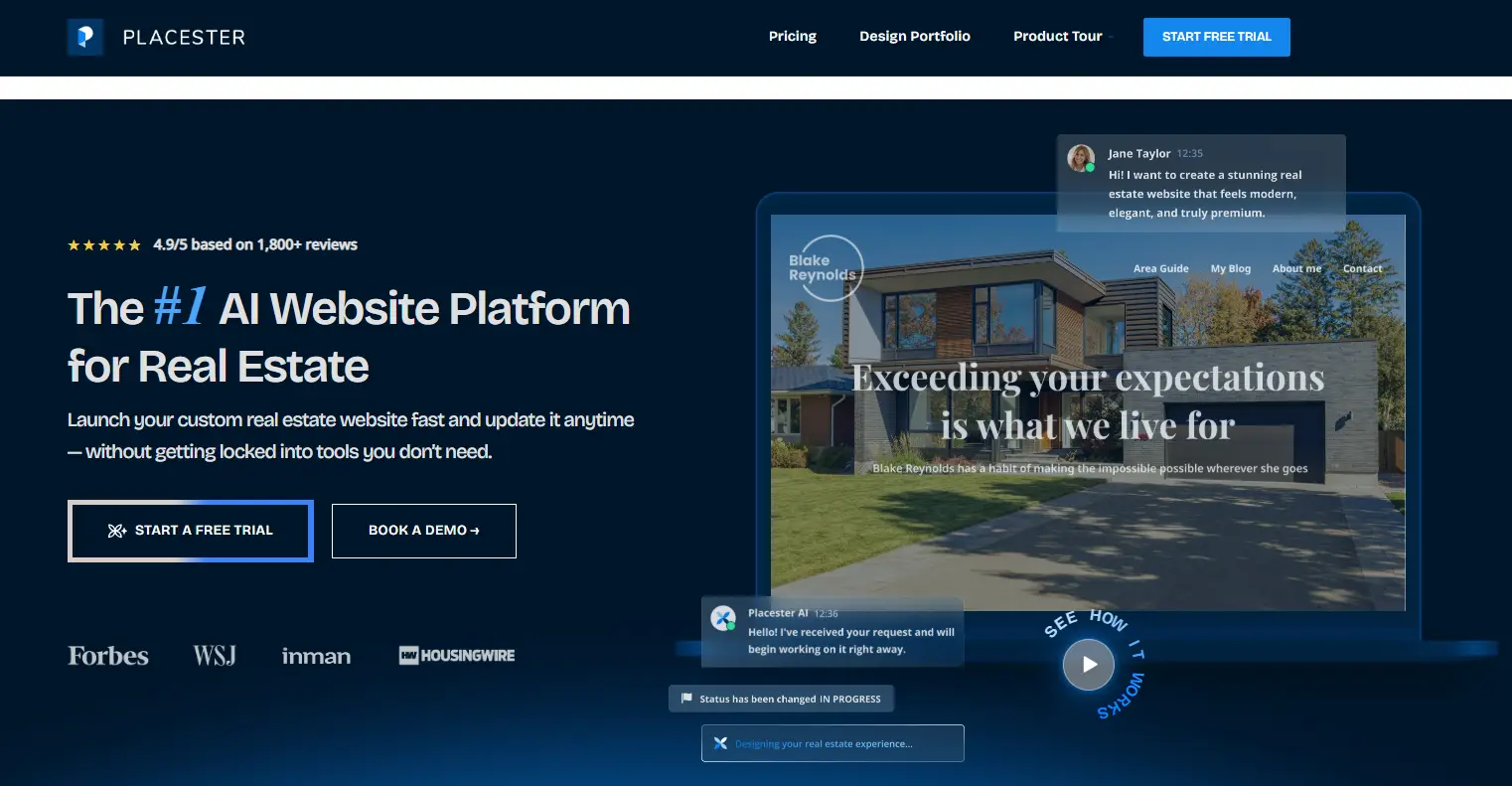
Placester and Follow Up Boss split the website and CRM into two specialized products. Placester handles the IDX website and search visibility, while its AI tools let you create pages or edit content without waiting for a developer. Leads can flow through the native integration to Follow Up Boss, where you manage follow-up and client interactions.
Why does this distinction matter? You can replace the website or CRM independently as your needs change. Follow Up Boss also connects with more than 250 lead sources and real estate tools, so the setup does not revolve around a closed ecosystem.
| ✅ Pros | ❌ Cons |
|---|---|
| Lower entry cost: The combined starting price is well below Sierra Interactive’s monthly rate. | Two subscriptions: Billing and configuration are split between separate providers. |
| Greater flexibility: You can change either part of the stack without replacing the entire system. | Calling costs extra: The Follow Up Boss Grow plan charges an additional $39 per user for calling. |
| AI website editing: Placester lets you update layouts and content with natural-language prompts. | |
| Specialized CRM: Follow Up Boss offers extensive integrations and more focused sales workflows. |
Pricing: Placester starts at $59 per month, with IDX available for an additional $25. Follow Up Boss Grow costs $69 per user, bringing the basic combined monthly cost to approximately $153.
Rating:
4.9/5 based on 1,800+ reviews (Placester)
4.6/5 based on 114 reviews (Follow Up Boss on G2)
2. AgentFire

AgentFire is primarily a real estate website platform rather than a full CRM replacement. Every plan includes IDX, while the site builder focuses more heavily on branding and hyperlocal content. Instead of forcing you to use a built-in real estate CRM, AgentFire integrates with products such as Follow Up Boss, Lofty, and Zapier.
This model gives you more freedom, but there is an upfront design cost. It makes the most sense when the website itself is the priority and you are comfortable choosing a separate system to manage leads.
| ✅ Pros | ❌ Cons |
|---|---|
| Strong website design: AgentFire offers more brand-focused design options than many template-driven platforms. | Upfront setup cost: The least expensive Ignite design package costs $800. |
| IDX included: The base monthly fee covers built-in IDX, subject to possible MLS pass-through fees. | No comparable built-in CRM: Advanced lead management requires a separate platform. |
| Open integration model: You can connect the website to your preferred CRM and advertising partners. | Add-on costs: Local SEO services and other enhancements can raise the total price quickly. |
| No long-term contract: You are not locked into an annual commitment for the website plan. | Longer launch process: AgentFire says implementation can take from 1.5 to more than four weeks. |
Pricing: AgentFire Pro costs $165 per month, while Plus costs $215. Website setup starts at $800, with custom design packages priced from $2,750.
Rating: 4.9/5 based on 204 reviews (G2)
3. Real Geeks
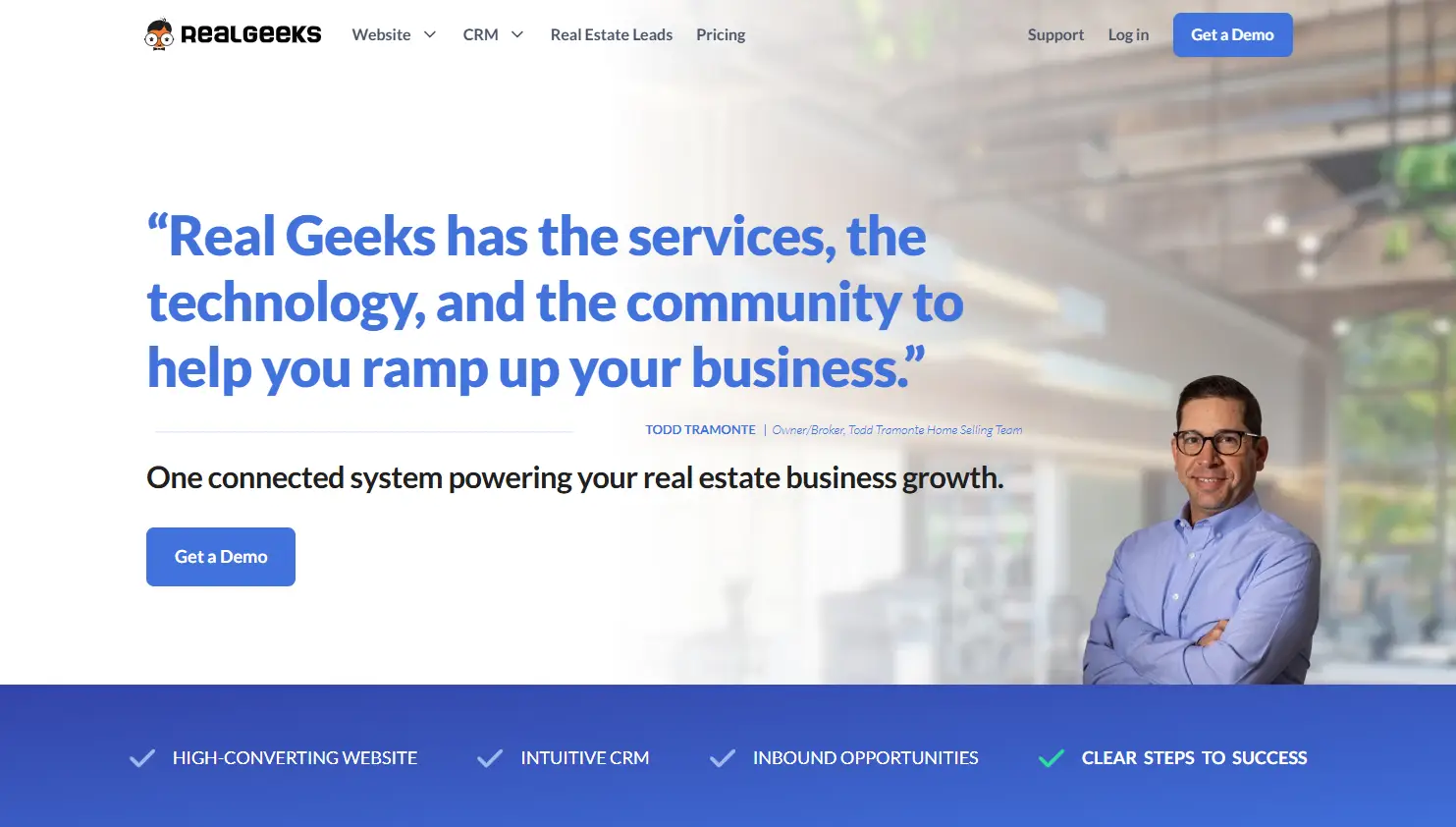
Real Geeks combines an IDX website with a practical CRM focused on internet lead conversion. Website registrations appear in the CRM with browsing activity, while automated email and SMS tools help real estate agents continue the conversation. Its current platform also includes a mobile app and an integrated dialer.
Real Geeks is not the cheapest option on this list, and its standard monthly price now exceeds Sierra’s annual Starter rate. Still, it may appeal to agents who want a more straightforward lead conversion system and do not need Sierra Interactive’s deeper website customization.
| ✅ Pros | ❌ Cons |
|---|---|
| Straightforward CRM: Users often praise the platform for being easy to learn and use. | Annual commitment: The standard $399 monthly plan requires a 12-month agreement. |
| Website activity in the CRM: Agents can see how registered leads interact with listings. | Setup fee: New customers pay a one-time $500 charge. |
| Integrated dialer: Calling is available directly inside the CRM without a separate integration. | Paid lead packages: Managed social and search campaigns cost extra. |
| Lead generation options: Real Geeks offers managed advertising when organic traffic is not enough. | Growing total cost: AI texting, additional users, and advertising can substantially increase the monthly bill. |
Pricing: The standard Real Geeks package costs $399 per month with a 12-month commitment, plus a $500 setup fee. Annual billing costs $3,990, while optional lead packages start at $299 per month.
Rating: 4.5/5 based on 109 reviews (G2)
👉 Not sold on Real Geeks? Review three leading alternatives.
Which Sierra Interactive alternative should you choose?
The right alternative depends on which part of Sierra Interactive you want to replace. Placester with Follow Up Boss offers the strongest balance of website capability and CRM depth. Its lower combined starting price makes it the most cost-effective option. AgentFire puts more emphasis on custom presentation, while Real Geeks keeps the website and daily lead follow-up closely connected.
Is using Sierra Interactive a good idea for your real estate business?
Sierra Interactive is a good choice if organic lead generation plays a central role in your strategy and you have the budget to develop hyperlocal content over time. Sierra Interactive’s SEO foundation is strong, while its CRM can turn website behavior into relevant follow-up. This makes the platform particularly useful for established brokerages with the resources to take advantage of its more advanced workflows.
For most real estate agents, however, Placester offers better value. It starts at a fraction of Sierra’s price and gives you AI tools to build or edit an IDX website without relying on a developer. You can use its native Follow Up Boss integration when you need a more specialized CRM, making it easier to adapt each part of your tech stack as your business changes.
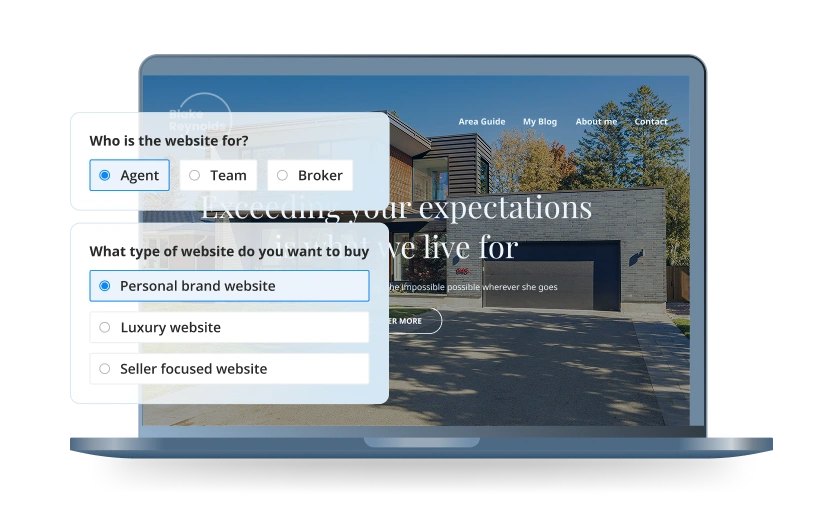
AI Websites for Real Estate
Get a custom, ready-to-edit website
in less than 4 minutes.
FAQ
How much does Sierra Interactive cost per month?
Sierra Interactive costs from $299.95 per month with annual billing or $359.95 on a monthly plan. Essential starts at $399.95 annually, while Growth starts at $599.95. Monthly subscriptions also carry a $500 setup fee. By comparison, Placester starts at $59 per month, with IDX available for an additional $25 per month.
What can you do with Sierra Interactive?
Sierra Interactive connects an IDX website with an integrated real estate CRM, so captured leads and their website activity flow directly into one system. From there, the platform can automate follow-up, while optional communication and advertising services extend the lead generation process. It covers much of the real estate marketing process, although Placester gives you a more affordable website platform that can connect natively with a specialized CRM such as Follow Up Boss.
What do users say about Sierra Interactive?
Sierra Interactive has a 4.7 out of 5 rating on G2, but that score is based on only three reviews. Users praise its fast, SEO-ready websites and straightforward automations, while some mention high pricing, technical glitches, and inconsistent customer support. The sample is too small to represent the typical experience with Sierra Interactive.
Who is Sierra Interactive designed for?
Sierra Interactive is primarily designed for growing real estate teams and brokerages that want their IDX website and CRM in one system. Although its Starter package serves solo agents and small teams, the price and broad feature set may be more than they need. Placester is easier to justify when the priority is an affordable IDX website with the freedom to add a CRM separately.
What is the best CRM for real estate agents?
Follow Up Boss is one of the best CRM options for agents who want strong lead distribution, follow-up automation, and more than 250 integrations without committing to a complete website ecosystem. Plans start at $69 per user per month, with no setup fee or contract. Pairing Follow Up Boss with Placester gives you a specialized CRM and an AI-editable IDX website while keeping each part of your tech stack replaceable.
Does Sierra Interactive help with SEO?
Yes, Sierra Interactive provides fast, indexable IDX pages and tools for creating hyperlocal community content. Its websites also include schema markup and editable metadata, although rankings still depend on the quality of your content and broader SEO efforts. Placester offers a lower-cost alternative with an SEO and AEO foundation designed for visibility in both traditional and AI-powered search.
Published on