(800) 728 8391


Quick summary:
- 🧩 General website builder: Squarespace is great for getting online, but not built specifically for real estate.
- ⚠️ Limited as you grow: Expanding beyond the basics often requires stitching together additional tools.
- 🚀 Real estate first: Dedicated platforms remove much of the extra work involved in building and managing a real estate website.
Millions of people choose Squarespace because it’s one of the easiest ways to launch a professional-looking website without writing a single line of code.
7M
Today, the platform powers around 7 million live websites worldwide, thanks to its polished templates and beginner-friendly editor.
Source: WPBeginner
For real estate professionals, however, an attractive website is only part of the equation. Features like IDX (Internet Data Exchange) integration and lead capture often require additional tools or workarounds. If you’re looking for a platform built specifically for real estate, there are better options available.
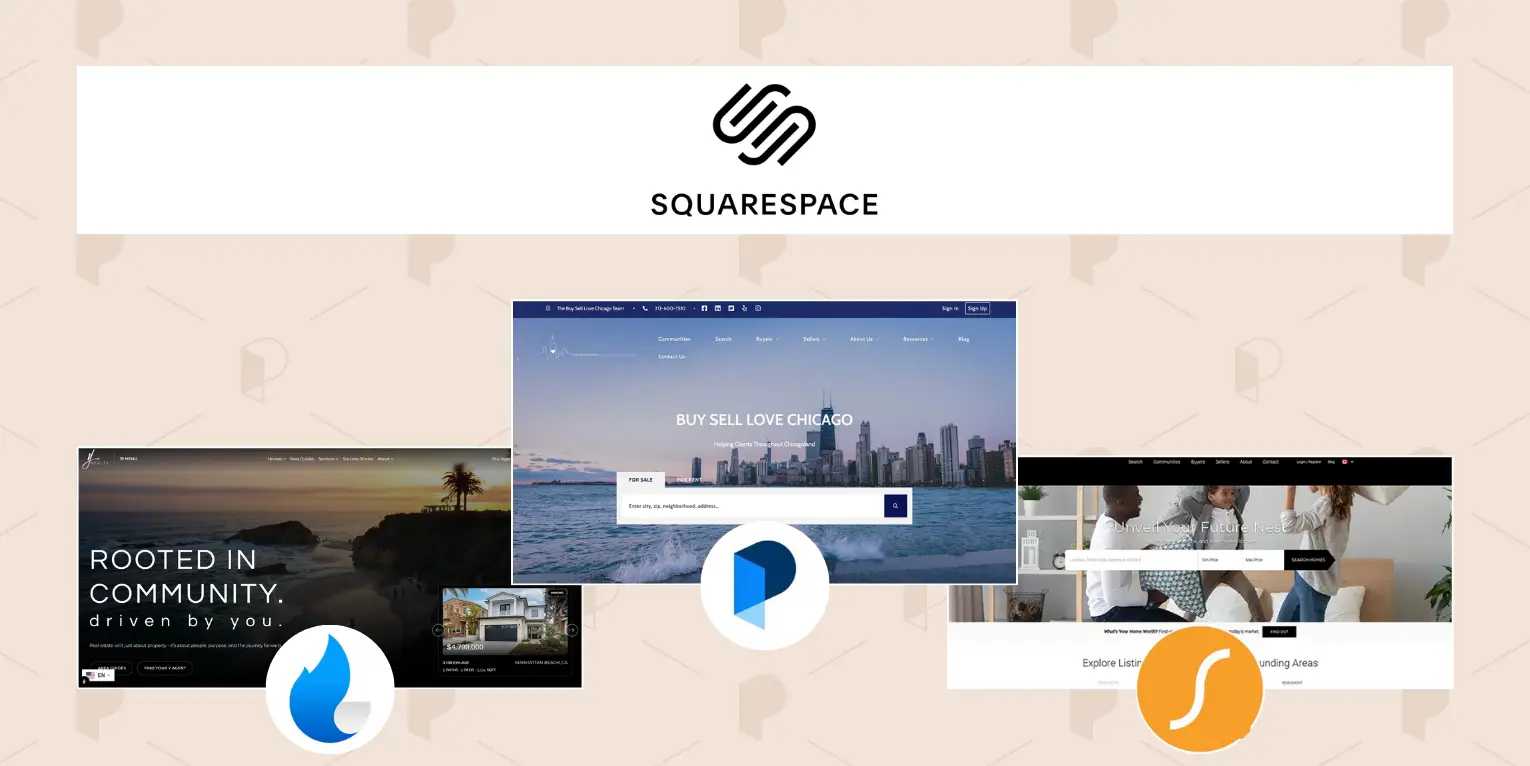
In this guide, we’ll compare three of the best Squarespace alternatives for real estate websites and explain which one is the right fit for your business.
Top Squarespace alternatives at a glance (2026)
| Option | Best for | Website approach | Ease of use | Starting price | Our rating |
|---|---|---|---|---|---|
| Placester | Most real estate professionals | AI-powered website builder with native IDX and built-in real estate tools | High | From $59/mo | ★★★★★ 93.25% |
| AgentFire | Hyperlocal branding & SEO | Highly customizable IDX websites with modular marketing tools | Medium | From $165/mo + setup | ★★★★☆ 89.5% |
| Sierra Interactive | Lead generation & conversion | CRM-first platform with advanced automation and lead management | Medium | From $359.95/mo + setup | ★★★★☆ 84.25% |
AI Websites for Real Estate
Get a custom, ready-to-edit website
in less than 4 minutes.
What is Squarespace for real estate?
Squarespace is a general-purpose website builder that lets you create a professional real estate website without coding. While it wasn’t built specifically for the industry, many agents use it to establish their online presence and connect with potential clients.
Unlike dedicated real estate platforms, Squarespace is based on an all-in-one website-building system. In a single subscription, it combines:
- Hosting
- Website templates
- A visual drag-and-drop editor
- Domain management
- Built-in business tools
Real estate agents can either choose a professionally designed template or generate a website with Squarespace Blueprint AI. From there, the Fluid Engine editor makes it easy to customize every page without any coding experience. The platform also includes AI-powered writing and SEO features to speed up content creation.
Here are some of the most common real estate website examples built on the platform:
| User type | Typical website |
|---|---|
| Real estate agents | Personal branding websites with featured listings, neighborhood guides, lead generation forms, and agent bios |
| Realty teams & brokerages | Company websites with agent profiles, client testimonials, and contact pages |
| Property management companies | Property portfolios or service pages with maintenance requests and inquiry forms |
| Vacation rentals | Property showcases with availability information, galleries, and direct booking inquiries |
Since Squarespace 7.1 uses a single underlying template system (unlike Squarespace 7.0, which relied on multiple template families), almost any template can be adapted for real estate. Some designs are particularly well-suited to the industry:
- Cailles template is one of the most popular solutions for real estate agents and brokerages.
- Palermo works particularly well for luxury homes and premium property showcases.
- Hidano is a strong choice for property management companies and vacation rentals.
- Sellwood emphasizes visual branding and professional photography.
- Suffolk suits service-oriented websites with client testimonials and lead generation.
- Bergen is ideal for local realty businesses looking for a clean, minimalist design.
Beyond website design, Squarespace supports a variety of marketing and business workflows through both optional add-ons and third-party plugins. Depending on your subscription and setup, you can expand your website with features such as email campaigns, appointment scheduling, or analytics. Recent updates also introduced AI visibility reports and AI-powered SEO recommendations.
Squarespace works best for solo agents and small teams that want a polished online presence without managing a complex website. That said, because it’s a general builder, advanced real estate functionality usually requires third-party services or custom integrations.
Why consider alternative website builders for real estate?
While Squarespace is easy to use and offers polished designs, it’s a general website builder rather than a platform built for real estate. As your business grows, you may find yourself relying on additional tools or workarounds to support everyday tasks. Here are the most common reasons why top real estate agents switch to dedicated website builders:
No native IDX or MLS integration
Squarespace does not offer a built-in IDX property search. To display MLS listings, agents need to purchase access from a separate IDX provider and embed its code on their site. Squarespace’s own documentation confirms that this setup requires membership in an IDX service and, in many cases, access to a plan that supports advanced code blocks.
For users, this can result in a less seamless experience, as the property search isn’t fully integrated with the rest of the website. For agents, it also means less flexibility when customizing listing service and more maintenance if they decide to switch IDX providers in the future.
User reviews reflect this limitation:

“You will still need to get a separate IDX provider, pay for custom integration then deal with the bad performance.”
Source: Reddit, kiamori, September 2023
Limited support for lead generation
Squarespace provides general-purpose forms and marketing tools, but it does not include the lead-generation workflows commonly found in dedicated real estate platforms. There is no native system for:
- Saved property searches
- Listing alerts
- Lead routing
- Automated property recommendations
- Or behavior-based follow-up
Agents therefore need to connect separate CRM, email, and automation tools. Some integrations are officially supported, while others depend on third-party extensions. Squarespace also notes that certain integrations require additional paid subscriptions.
Integration challenges
As new tools are added to your Squarespace website, maintaining the entire setup can become more challenging. The platform supports many integrations, but troubleshooting custom code and third-party modifications is left to the user. That means resolving technical issues may require working across multiple services to find the source of the problem.
This challenge is also reflected in user feedback:
“I am learning how to integrate an external newsletter and emailing list and its not as seemless.”
Source: G2, Josephine A., April 2025
Less room to customize
Squarespace makes it easy to launch a polished real estate website, but adding more advanced functionality over time isn’t always as straightforward. As an agent expands into new markets or grows a team, the template-based structure can make it harder to create highly customized pages and unique user experiences.
This limitation appears consistently in user reviews:
“For more complex websites, Squarespace can feel limited. Layout flexibility and deeper customizations are not as easy compared to other platforms.”
Source: G2, Ambar L., December 2025
For an individual agent with a simple brand site, these restrictions may not matter. They become more noticeable when creating:
- Custom neighborhood hubs
- Team structures
- Interactive search experiences
- Multiple lead funnels
- Or large content libraries
Weaker IDX SEO performance
Adding an IDX search to Squarespace doesn’t automatically give you the same SEO capabilities as a platform built around real estate listings. The way search engines process property pages depends largely on how your IDX provider integrates with the website. Since Squarespace typically relies on embedding IDX code, agents may have less control over how listing pages are structured, linked, and indexed by search engines.
This becomes especially important when your organic strategy focuses on attracting buyers searching for local market information. A dedicated real estate website builder can connect IDX content more closely with the rest of the site, making it easier to create a cohesive SEO structure.
This view is echoed by real estate professionals on Reddit:
“I’ve built my own site on SquareSpace and have an IDX integration. My traffic comes from SEO optimized content – lifestyle and some ancillary targeted real estate words. IDX isn’t there for traffic […].”
Source: Reddit, kkj_bk, October 2025
This doesn’t mean a Squarespace website can’t rank in search results. It simply means that long-term organic growth often depends more on manually created pages and editorial content than on the IDX search experience itself.
Higher total cost
Squarespace can initially look affordable, but the website plan is only one part of the total cost. A complete real estate setup often requires additional tools, such as:
- An IDX subscription
- A CRM
- An email marketing platform
- Appointment scheduling software
- Marketing automation tools
- Premium integrations
- Developer assistance
This complaint also appears in verified reviews:
“I dislike the many ‘add-ons’ that now cost extra. I’d prefer an all-in-one platform price.”
Source: G2, Karen F., February 2026
When comparing the best website builders, look beyond the monthly subscription price. A platform that already combines several essential real estate tools into one solution can offer a lower total cost of ownership. At the same time, it reduces the number of services you need to manage.
Methodology: How we compared the best Squarespace alternatives for real estate websites
To identify the best Squarespace alternatives, we focused on the factors that matter most to real estate professionals. Our evaluation prioritizes long-term business value over feature lists, giving greater weight to the capabilities that influence website performance and day-to-day management.
| Criterion | Weight | Squarespace score | Contribution |
|---|---|---|---|
| Website design & branding | 20% | 9.5 | 19.00 |
| Real estate functionality | 20% | 5.5 | 11.00 |
| Ease of website management | 15% | 9.0 | 13.50 |
| SEO capabilities | 15% | 7.5 | 11.25 |
| Pricing & long-term value | 10% | 7.0 | 7.00 |
| AI capabilities | 10% | 8.0 | 8.00 |
| Integrations & flexibility | 5% | 7.0 | 3.50 |
| Customer satisfaction | 5% | 8.5 | 4.25 |
| Total | 77.50 |
These criteria reflect the needs of agents looking for more than a general-purpose website builder. We combined official product documentation with verified customer feedback and independent reviews to evaluate how each platform performs in everyday use.
Our evaluation gave Squarespace a weighted score of 77.50/100. The platform delivers an excellent website-building experience, which explains why it’s so popular among businesses in many industries. However, its general-purpose approach makes it a less compelling choice for real estate professionals, who often need to combine multiple tools to achieve the same functionality available in dedicated real estate platforms.
The three alternatives below achieved comparable overall scores, but each excels in different areas. Depending on your business model and marketing strategy, one of them may be a better fit for you than Squarespace.
3 Best Squarespace alternatives for real estate
If Squarespace no longer meets your needs, Placester, AgentFire, and Sierra Interactive are three of the strongest alternatives for real estate businesses. Compare what each platform offers before making your decision.
1. Best overall: Placester
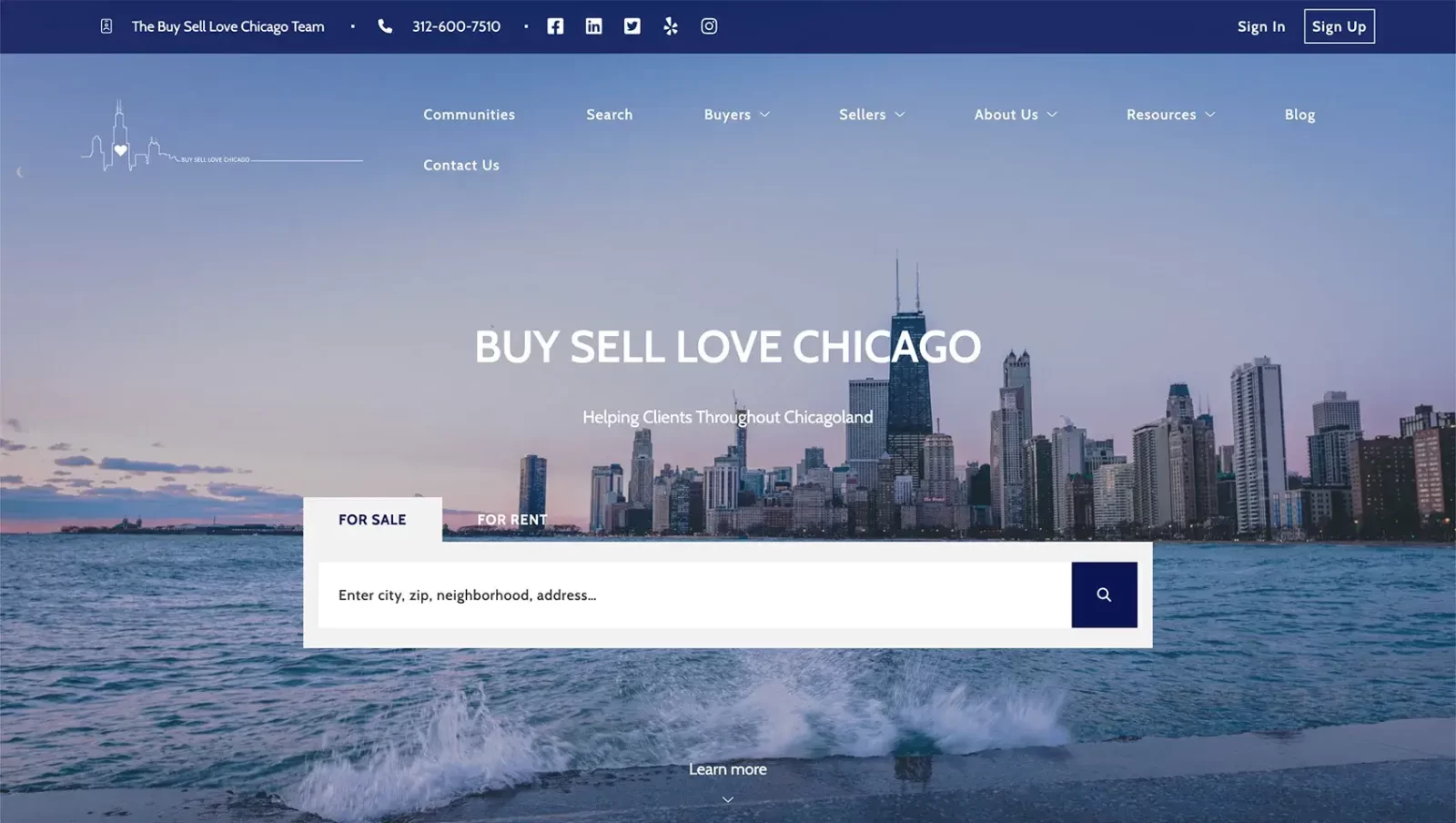
Placester is the best Squarespace alternative for real estate companies because it was built specifically for agents and brokerages. Instead of adapting a general-purpose website builder to fit the industry, it combines website creation with the tools real estate firms use to market listings and grow their business.
AI built for real estate
Placester takes a more practical approach to AI than Squarespace. Both platforms can generate a polished website in minutes, but Placester’s AI Website Builder is built specifically for real estate, creating a personalized website based on your professional background.
The biggest difference comes after launch. Squarespace users refine their websites with the traditional Fluid Engine editor, while Placester’s AI Editor lets you update existing pages or create new ones using natural-language prompts. After reviewing the suggested changes, you can publish them in just a few clicks. This makes ongoing website content management faster and easier.
Native IDX integration
Placester makes IDX integration part of the website, not an add-on. Realtors can set up an IDX feed directly from the Placester dashboard, and once their MLS approves the request, property listings become a native part of the site.
To display MLS listings on a Squarespace real estate website, agents first need to subscribe to an external IDX provider and then embed the supplied code into a page using a Code Block. Some providers also require additional code injection, and Squarespace doesn’t provide support for custom code or assist with compatibility issues.
The difference becomes more apparent over time. Because Placester was built around IDX from the start, property search and listing pages work as an integrated part of the website.
👉 Learn how to add MLS listings to your website.
SEO-ready architecture
Placester is designed to help agents grow through organic search. Beyond standard built-in SEO tools, it includes real estate-specific website features such as:
- Dedicated neighborhood pages
- Area pages
- AI-powered content tools
They make it easier to build topical authority around the markets you serve. Placester’s AI SEO features are specifically designed to create localized, search-optimized content that supports long-term visibility in both traditional and AI-powered search.
Squarespace also provides strong technical SEO out of the box, including automatic sitemaps and AI-powered SEO recommendations. However, those tools are designed for businesses in general. Agents are still responsible for building a real estate content strategy from scratch and integrating it with their IDX experience.
Lead capture without extra software
Placester gives new and independent agents everything they need to start capturing and managing leads in one place. Every website includes lead capture forms and a built-in basic CRM with:
- Contact management
- Autoresponders
- Drip campaigns
- Email tools
Agents who already use another CRM can connect it instead, but those just getting started don’t need to pay for additional software on day one.
Squarespace offers basic built-in contact forms, but more advanced lead management typically relies on additional services or third-party software. As a result, agents who want automated follow-up or a dedicated lead pipeline often need additional software.
More predictable long-term costs
Placester reduces the number of products agents need to purchase and manage. Core real estate functionality is available within a single platform, making it easier to estimate long-term costs and avoid building a website around multiple subscriptions.
Squarespace starts with a lower monthly subscription, but that price only covers the website platform itself. As additional requirements emerge (such as IDX or even basic CRM), the total cost may increase through third-party subscriptions and integrations.
For many agents, comparing the full technology stack provides a more accurate picture than comparing website plan prices alone.
Key features
- AI Website Builder for real estate
- AI Editor with natural-language page updates
- Native IDX integration and MLS management
- Built-in basic CRM
- Lead capture forms and landing pages
- Neighborhood and community pages
- SEO-ready website architecture
- Responsive real estate templates
- Third-party CRM integrations
- Marketing automation and email tools
- Blog and content management
- Visual drag-and-drop editor
Pros
✅ Designed specifically for real estate agents and brokerages
✅ AI tools simplify both website creation and ongoing updates
✅ Native IDX integration eliminates the need for a separate website builder
✅ Built-in CRM and lead capture tools reduce the need for additional software
✅ Easy to customize without coding
✅ Professional templates receive consistently positive feedback from users
✅ Responsive customer support is frequently praised in verified reviews
Cons
❌ Advanced customization options are reserved for higher-tier plans
❌ Advanced lead management requires a dedicated CRM
Pricing
Placester offers three pricing tiers: Agent Essential ($59/month), Agent Plus ($79/month), and Agent Premier ($129/month). Every plan includes AI-powered tools and a fully functional IDX website, while higher tiers add more advanced marketing and MLS features.
Rating ★★★★★
Placester received the highest overall score because it strikes the best balance between simplicity and functionality. It gives agents everything they need to launch and grow a great real estate website while still allowing them to integrate a dedicated CRM as their business evolves. Compared with general-purpose website builders like Squarespace, its overall feature set delivers stronger long-term value for most real estate professionals.
| Criterion | Weight | Placester score | Contribution |
|---|---|---|---|
| Website design & branding | 20% | 9.0 | 18.00 |
| Real estate functionality | 20% | 10.0 | 20.00 |
| Ease of website management | 15% | 9.5 | 14.25 |
| SEO capabilities | 15% | 9.5 | 14.25 |
| Pricing & long-term value | 10% | 8.5 | 8.50 |
| AI capabilities | 10% | 10.0 | 10.00 |
| Integrations & flexibility | 5% | 9.0 | 4.50 |
| Customer satisfaction | 5% | 7.5 | 3.75 |
| Total | 93.25 |
2. Best for website customization: AgentFire

AgentFire is an excellent choice for agents who want complete control over their website and local brand. Instead of offering a one-size-fits-all template, it focuses on creating highly customized, hyperlocal real estate websites with built-in IDX. Compared to Squarespace, AgentFire delivers far more functionality without sacrificing design flexibility.
Hyperlocal website strategy
One of AgentFire’s biggest strengths is its focus on hyperlocal marketing. The platform encourages agents to build neighborhood pages and community guides designed to capture highly targeted organic traffic. This strategy goes well beyond the generic pages typically created with Squarespace and helps agents establish authority in specific geographic markets.
Highly customizable website design
AgentFire offers considerably more design flexibility than Squarespace. Agents can start with a quick-launch theme or invest in a fully custom real estate website design. Then, the built-in Spark Editor makes it easy to customize layouts and content without touching code. For agents who want a unique brand identity, this provides much greater creative freedom than template-first website builders.
AgentFire also includes Spark AI to help generate website content, but its AI capabilities focus on writing rather than AI-powered website creation and page management.
Native IDX with optional providers
Unlike Squarespace, AgentFire includes native IDX with every website. Agents can also connect popular third-party IDX solutions such as RealScout or Lofty if they prefer a different property search experience. This gives users more flexibility while avoiding the manual code embedding required by Squarespace.
👉 Compare the best IDX website platforms.
Extensive real estate add-ons
Rather than trying to be an all-in-one platform, AgentFire lets agents expand their website with specialized tools as their business grows. Available add-ons include:
- ClickMaps
- Home Values
- Neighborhood Quiz
- Google Business Profile optimization
- AI drip campaigns
- Advanced branding services
This modular approach gives agents exceptional flexibility, but it can also make the platform more complex to evaluate and configure, especially for beginners. Since many capabilities are offered as optional add-ons rather than built into the core platform, choosing the right combination of tools often requires more planning.
Modular pricing
AgentFire gives agents the freedom to pay only for the features they need. While this can be cost-effective for experienced users, optional add-ons and one-time setup fees make the overall investment less predictable than a platform where more functionality is included from the start. As a result, estimating the total cost of ownership often requires looking beyond the advertised monthly price, especially if you plan to expand your website over time.
Key features
- Native IDX integration
- Hyperlocal area guides and neighborhood pages
- Spark visual website editor
- AI tools and AI drip campaigns
- Custom website design services
- Home valuation pages
- Built-in lead capture
- CRM integrations
- Google Business Profile optimization
- Team Link for multi-agent websites
Pros
✅ Outstanding website customization and branding
✅ Excellent hyperlocal SEO strategy
✅ Native IDX included with every website
✅ Flexible CRM integrations instead of vendor lock-in
✅ Highly rated customer support and onboarding
✅ Large ecosystem of optional marketing add-ons
Cons
❌ Premium customization increases the upfront cost
❌ Many advanced capabilities are optional paid add-ons
❌ No AI website builder or prompt-based AI page editor
❌ Steeper setup for new users
Pricing
AgentFire uses a modular pricing model. Design packages range from $800 to $6,500 as a one-time setup fee, while monthly plans start at $165/month. Native IDX is included, although MLS pass-through fees may still apply. Agents can further customize the platform with optional marketing and branding add-ons.
Rating ★★★★☆
AgentFire received a score of 89.5% thanks to its exceptional branding flexibility and hyperlocal SEO capabilities. While its modular pricing means costs can increase as you add premium real estate services, it remains one of the strongest Squarespace alternatives for agents who want a highly customized website and full control over their brand.
| Criterion | Weight | AgentFire score | Contribution |
|---|---|---|---|
| Website design & branding | 20% | 9.5 | 19.00 |
| Real estate functionality | 20% | 9.0 | 18.00 |
| Ease of website management | 15% | 8.5 | 12.75 |
| SEO capabilities | 15% | 9.5 | 14.25 |
| Pricing & long-term value | 10% | 7.5 | 7.50 |
| AI capabilities | 10% | 8.5 | 8.50 |
| Integrations & flexibility | 5% | 9.5 | 4.75 |
| Customer satisfaction | 5% | 9.5 | 4.75 |
| Total | 89.50 |
3. Best for high-volume lead generation: Sierra Interactive

Sierra Interactive may be the best real estate platform for teams that prioritize lead generation and conversion over website customization. Unlike Squarespace, the tool is designed to manage the entire lead lifecycle, from the first visit to ongoing client follow-up. As a result, the website serves as the starting point for a much broader sales and marketing ecosystem.
Built-in CRM and marketing automation
Sierra Interactive includes one of the most advanced built-in CRMs in the real estate industry. Agents can:
- Automate email and text campaigns
- Assign leads automatically
- Build custom workflows
- Trigger follow-up based on customer behavior
Compared with Squarespace, which relies on external CRM solutions for these capabilities, Sierra provides a complete lead management platform from day one.
👉 Find out what makes a great real estate CRM.
Functionality over design freedom
Sierra prioritizes lead generation over visual customization. Its websites are clean, fast, and easy to navigate, but the platform offers fewer opportunities to create a unique website design that fully reflects your brand. It also lacks AI-powered website generation and prompt-based page editing, so launching and maintaining a highly personalized website involves more manual work.
Behavior-driven follow-up
Sierra doesn’t treat every lead the same after they register. The platform continuously updates each contact based on website activity, helping agents recognize when interest is increasing and when it’s fading. That makes follow-up more timely and relevant, especially for teams managing hundreds of active leads.
For solo agents who mainly want to build a website and generate occasional inquiries, however, this level of lead intelligence may be more than they need.
Scalable pricing
Sierra’s pricing is designed around growing teams rather than individual websites. Plans scale with the number of users and can be expanded with:
- Premium website designs
- Additional MLS feeds
- Lead engagement tools
- Marketing services
That flexibility makes sense for high-volume teams, but it also leaves the total investment more difficult to estimate than a straightforward website subscription.
Steep learning curve
Sierra isn’t a platform most agents can fully master in an afternoon. Its onboarding process reflects the depth of the product, with guided implementation and training sessions helping users configure the platform. That investment pays off for larger teams, but agents who simply want to launch a website quickly may find the setup process more involved than expected.
Key features
- Native IDX websites
- Built-in real estate CRM
- Email and SMS marketing automation
- Behavior-based lead tracking
- Lead routing and distribution
- Saved searches and listing alerts
- PPC campaign management
- Team reporting and leaderboards
- Custom workflow automation
- CRM integrations and API access
- AI search optimization and local content tools
Pros
✅ Excellent built-in CRM and lead management
✅ Powerful marketing automation and follow-up workflows
✅ Advanced lead routing for teams and brokerages
✅ Native IDX tightly integrated with CRM
✅ Strong behavior tracking for higher lead conversion
✅ Well suited to high-volume real estate businesses
Cons
❌ Website customization isn’t as flexible as dedicated website builders
❌ No AI website builder or prompt-based page editor
❌ More complex to learn than Squarespace or Placester
❌ Higher entry cost than most website-first platforms
❌ Better suited to teams than solo agents
Pricing
Sierra Interactive is one of the more expensive Squarespace alternatives, with plans starting at $299.95/month on annual billing or $359.95/month when billed monthly. Monthly subscriptions also include a one-time $500 setup fee, while annual plans waive it entirely. Instead of unlocking features through higher website plans, pricing scales primarily with team size. Additional users, MLS feeds, premium website designs, and optional services can further increase the total investment.
Rating
Sierra Interactive received a high overall score of 84.25% thanks to its outstanding real estate functionality and flexible integrations. Its lower ranking reflects a steeper learning curve, higher pricing, and a greater emphasis on lead management than on website customization. Overall, it should be a better fit for established teams than for agents who need a simple website platform.
| Criterion | Weight | Sierra Interactive score | Contribution |
|---|---|---|---|
| Website design & branding | 20% | 8.0 | 16.00 |
| Real estate functionality | 20% | 10.0 | 20.00 |
| Ease of website management | 15% | 7.5 | 11.25 |
| SEO capabilities | 15% | 8.5 | 12.75 |
| Pricing & long-term value | 10% | 7.5 | 7.50 |
| AI capabilities | 10% | 7.5 | 7.50 |
| Integrations & flexibility | 5% | 9.5 | 4.75 |
| Customer satisfaction | 5% | 9.0 | 4.50 |
| Total | 84.25 |
From Squarespace templates to a professional real estate website: Conclusions
There’s a reason so many agents get started with Squarespace. It offers a simple way to launch a good real estate website, making it a practical choice for solo agents with relatively basic marketing needs.
As your business grows, however, dedicated real estate platforms often provide more value. AgentFire is the strongest choice for agents who want maximum website customization and a hyperlocal SEO strategy. Sierra Interactive is better suited to teams that prioritize lead generation and automation over website design.
For most real estate professionals, Placester is the best overall choice because it combines modern AI tools with functionality built specifically for real estate. You can have your website up and running in minutes, without relying on a team of specialists. If you’re ready to start attracting more buyers and sellers, Placester is the platform we’d recommend first.
AI Websites for Real Estate
Get a custom, ready-to-edit website
in less than 4 minutes.
FAQ
Is Squarespace good for real estate websites?
For most real estate professionals, a dedicated website builder is the better choice. While Squarespace is excellent for creating attractive websites, it lacks many of the industry-specific features that agents rely on every day. Platforms like Placester provide a more complete solution for managing listings and growing your business.
Does Squarespace support IDX integration?
Yes, but not natively. To display MLS listings, you’ll need to subscribe to a separate IDX provider and embed its code into your Squarespace website. Placester includes native IDX integration designed for real estate, resulting in a more streamlined setup and management experience.
Does Squarespace have a real estate plugin?
No. Squarespace doesn’t offer an official real estate plugin with built-in IDX, listing management, or lead generation features. Instead, agents rely on external IDX providers and integrations, whereas platforms like Placester include these capabilities as part of the core product.
Does Squarespace include a CRM?
No dedicated CRM is included. Squarespace offers contact forms and customer management features for appointments and email marketing, but it doesn’t provide a CRM built for managing real estate leads and transactions. Placester includes a basic real estate CRM while also allowing agents to connect the CRM of their choice.
What are the main downsides of using Squarespace for real estate?
The biggest limitation is that Squarespace wasn’t designed specifically for real estate. Features like IDX, advanced lead management, and industry-specific workflows typically require additional services or integrations. For agents planning to generate leads and grow through their website, a dedicated real estate platform like Placester often provides a more complete solution.
Is Squarespace cheaper than a dedicated real estate website builder?
Not necessarily. Squarespace has a lower starting price, but many real estate-specific capabilities require additional subscriptions, such as IDX providers or marketing tools. A platform like Placester may have a higher monthly fee, but it includes more of the functionality real estate professionals need, which can reduce the total cost of ownership over time.
What is the best Squarespace alternative for real estate agents?
Placester is one of the strongest alternatives for most real estate professionals. It combines AI-powered website creation, native IDX integration, lead capture, CRM capabilities, and SEO tools in a platform built specifically for the real estate industry. AgentFire and Sierra Interactive are also excellent choices, depending on whether you prioritize web design or lead generation.
Published on
(Last updated on
)