(800) 728 8391



Quick summary:
- 💸 Referral fees = easy income from your network: Refer clients, step back, and earn around 25% of the commission when the deal closes.
- 🤝 Referrals drive real estate lead generation: They’re a trusted way clients choose agents—and a key growth driver for your business.
- ⚖️ Clear rules = successful referral: Agree on terms early, put everything in writing, and stay compliant to get paid without issues.
A referral fee in real estate is simply a “thank you” payment between agents for sending a client your way. You pass a lead, they close the deal, and you get a cut. It can also be called a referral commission, agent referral, or real estate referral payment.
Referrals are a normal part of how real estate professionals help each other and how business keeps moving. They also play a key role in the way people choose agents:
4–7%
In 2025, about 7% of buyers and 4% of sellers found their agent through another professional’s recommendation.
Source: National Association of Realtors
If you’re new, referrals may be your fastest path to real clients. If you’re established, they can turn your network into a steady income stream. So, how much is a referral fee in real estate? Here’s what you can expect.
What is a real estate referral fee?
A real estate referral fee is a payment one agent earns for sending a client to another agent who closes the deal. You connect someone with the right professional, step back, and get paid when the transaction goes through.
Why does this matter to you? Because you don’t have to handle every client yourself. Whether the lead is moving out of your area or your schedule is already full, you can pass them to another agent who’s better positioned to help. You stay connected to the client and still earn when the deal closes.
This system keeps the industry moving. Clients often trust a recommended agent more than a random one they find online. The receiving professional gets a warm lead. You turn a contact into income without adding more work to your plate. That’s a win across the board.
You should pay attention to transparency, however. Referral fees must be disclosed, and everything has to follow local laws and brokerage policies. You’re helping someone find the right fit—not selling a name. Keep the client’s best interest first, and referrals become one of the cleanest ways to grow your business.
Expert tip: In most states, only licensed real estate agents can legally receive referral fees.
Who pays the referral fee in real estate?
The referral fee is paid by the agent who closes the deal, not by the client. It comes out of that agent’s commission. From the client’s perspective, nothing changes. They pay the agreed commission, and the agents handle the split behind the scenes. The payment usually happens after closing, so you only get paid when the deal goes through.
So how does this work in practice? Once you know who pays the referral fee, it’s easier to see how each party fits into the process:
- Referring agent: You identify the opportunity but decide another agent is a better fit. You pass the client along and stay connected in the background.
- Receiving agent: They take over the relationship and handle the entire referral transaction, up to closing.
- Client: They work directly with the receiving agent and focus on buying or selling, without worrying about how agents split the commission.
- Broker: They oversee the agreement, make sure everything follows regulations, and handle how the referral fee gets paid.
👉 Find out how much real estate agents make in your state.
How much is a referral fee in real estate?
~25%
A referral fee is typically around 25% of the receiving agent’s commission.
You will often see deals anywhere from 25% to 35%, though. Going much lower than 25% may raise eyebrows. Going higher, on the other hand, usually reflects a stronger lead or a special agreement.
The referral fee isn’t a percentage of the property’s sale, but rather a percentage of the commission earned. You’re getting a share of what the receiving agent is paid.
There’s no fixed rate set by law. Everything is negotiated between agents. That’s why you want to agree on the percentage early, before you even introduce the client. A quick conversation upfront saves you from awkward discussions later.
If you want to estimate your cut, the logic is simple:
(property price × agent’s gross commission) × referral percentage = your referral feeThe main factors that influence a real estate referral fee percentage
While the standard referral fee usually falls between 25% and 35%, the exact percentage depends on several factors. Here are the main ones to keep in mind:
💎 Lead quality
A client who’s ready to act now is far more valuable than someone just browsing. The closer they are to making a decision, the stronger your position when discussing the fee.
🏷️ Property price
More expensive homes come with bigger commissions. That can open the door to a higher referral fee.
📈 Market conditions
In competitive, high-demand areas, agents may offer more attractive referral fees to win business. In slower markets, there’s usually less room to stretch.
🎯 Type of transaction
Not every deal looks the same. Luxury homes, commercial properties, or niche cases often justify different terms than a standard residential sale.
🤝 Relationship with other agents
If you’ve worked together before, you’re not starting from scratch. Ongoing partnerships sometimes lead to better terms, whether that means a higher cut or more flexible agreements.
🌐 Agent background
Experienced agents with strong referral networks tend to command more. They bring higher-quality leads and a better chance of closing.
💡 Strategy to attract referrals
Some agents intentionally offer higher percentages to stand out and bring in more deals. It’s a simple play: give more, get more.
👉 Learn the difference between a client and a customer in real estate.
The key benefits of real estate referrals
Referral opportunities let you work smarter and make sure that your clients receive the best possible service. Here’s what you gain when you use this strategy the right way:
⭐ Better service for your client
You connect them with another agent who can better serve their needs. That builds trust and protects your reputation.
💵 Income without extra workload
You don’t take on the transaction, but you still earn when it closes. It’s one of the simplest ways to monetize your network.
🕒 More control over your time
When your schedule is full, or something falls outside your scope, you can pass it on instead of stretching yourself too thin.
🔑 Access to new markets and niches
You don’t need to know every area or property type. Referrals let you operate beyond your usual space without the risk.
👥 Stronger professional relationships
Every referral lead builds trust with other agents. Over time, that can turn into a steady flow of deals coming back your way.
🛡️ A way to handle tricky situations
Conflicts of interest, personal limitations, or client requests don’t have to cost you the deal. A referral process keeps things clean and professional.
🌱 Long-term business growth
One good referral can lead to more. You stay in the loop, expand your network, and build a system that works even when you’re not directly involved.
32%
The typical Realtor gets about 32% of their referrals from non-personal sources. They include other agents or brokers, industry groups, and referral companies.
Source: 2025 NAR Member Profile
Asking for a real estate referral fee: 7 best practices
Asking for a referral fee is a normal part of doing business. It doesn’t have to feel awkward. When you handle the conversation well, you set the tone for the entire deal. Here are the best practices to follow:
1️⃣ Start with the value of the referral. Before you talk numbers, show why the referral matters. Is the client ready to act? Are they serious and qualified? Make it clear this is a real opportunity, not just a random lead.
2️⃣ Be direct about your expectations. Don’t hint. Say what you want. Share the percentage upfront and make sure the other agent or broker agrees before you connect them with the client.
3️⃣ Use market norms as your anchor. Most deals fall into a familiar range. Mentioning typical referral fee rates makes your ask feel grounded and reasonable.
4️⃣ Get everything in writing. A formal agreement avoids confusion later. Include the fee, when it’s paid, and any key conditions. It protects both sides.
5️⃣ Stay professional, even if there’s pushback. Not every agent will agree right away. Keep the tone calm and open. A short negotiation is normal.
6️⃣ Keep an eye on the deal. You don’t need to manage the transaction, but you should stay informed. A simple check-in shows you’re engaged.
7️⃣ Follow up after closing. Once the deal is done, don’t assume anything. Send a quick reminder and make sure the payment is handled on time.
👉 Explore the top real estate lead generation companies.
Structuring a standard real estate referral agreement: 6 simple steps
Referral fees are generally negotiable, but the safest move is to lock in the terms early and put them in a written contract. Keep in mind that lead compensations are typically allowed between licensed agents. RESPA separately restricts referral payments involving settlement service providers such as lenders and title companies. The exact rules can vary by state, so always make sure that your agreement follows local regulations.
1. Make sure both sides are licensed real estate agents or brokers
Before you set any terms, confirm that both sides hold a valid real estate license and can legally enter a referral arrangement. In many states, you can’t structure this kind of deal outside licensed professionals. The payment also often has to go through the broker rather than directly to the new agent. That’s how it works, for example, in Texas. Take a moment to check your local rules and your brokerage policy. If the legal side isn’t clear from the start, the rest of the agreement won’t hold up.
2. Identify the parties clearly
Spell out exactly who is involved. List:
- The referring real estate brokerage
- The receiving real estate brokerage
- The agents tied to each side
- The client being referred
Add enough detail so nobody has to guess later which lead the agreement covers. A vague agreement is where trouble starts. If the client has a common name or you are sending more than one lead, clarity becomes even more important.
3. Define the scope of the referral
Now answer the practical question: who, exactly, are you referring? Is this:
- A buyer lead
- A seller lead
- A tenant
- Or a landlord?
Is the referral tied to a specific city, state, property type, or time period? Put those details in the agreement. This step keeps the referral from drifting into a gray area later, especially if the client changes direction or starts looking in a different market.
4. Outline the referral fee and how it will be calculated
This is the heart of your agreement. Most agents quote the referral fee as a percentage of the receiving side’s commission, not a percentage of the home price. In many markets, 25% is the common benchmark, but the number itself is negotiable. Write down the exact rate and the method used to calculate it. Don’t leave “standard referral fee” sitting on the page and hope both sides mean the same thing.
5. Add payment terms and the closing trigger
A referral fee is usually earned only if the deal closes. Put that in plain English. Then go one step further and state:
- When payment is due after closing
- Who sends it
- And whether it flows broker-to-broker
If you want the agreement to cover repeat transactions from the same client, renewals, or future deals within a certain period, say so directly. If not, keep the agreement limited to one closing. Either way, define the trigger now so you do not argue about it later.
6. Finish with signatures, dates, and any required disclosures
Last step, but not a small one. The agreement should be signed and dated before one real estate agent refers a client to another professional. That written record protects both sides and helps avoid disputes. You should also make sure the arrangement lines up with:
- Any brokerage policy
- State disclosure rules
- And ethical duties to put the client first
NAR’s Code of Ethics says Realtors must follow the law where legal rules and ethics overlap. The California Association of Realtors has also recently backed stronger referral fee transparency in transactions.
Expert tip: You don’t have to start from scratch. Use a proven referral agreement template to speed things up and make sure you don’t miss key terms.
What is a finder’s fee?
A finder’s fee is a payment made to a person who introduces a buyer, seller, or opportunity that leads to a completed deal. That person makes the connection, and a licensed professional handles the transaction from that point on.
Think of it as a simple handoff. Someone brings two sides together and steps back. They don’t negotiate terms or manage the process. Their role ends at the introduction. If the deal closes, they receive compensation for making that connection happen.
This setup exists outside standard licensed real estate activity. Only the actual work (contracts, negotiations, and closing) remains with licensed agents and brokers. The value of a finder comes from their network and ability to connect the right people at the right time.
You’ll see this model in different contexts. It can relate to property deals, but also to business opportunities, investors, tenants, or hiring. The core idea stays the same: one person connects the opportunity, and another carries it through to completion.
How much is a finder’s fee in real estate?
While there’s no fixed rate for a finder’s fee in real estate, it often falls somewhere between 5% and 35% of the agent’s commission. The exact number is always agreed upon between the parties, though.
A finder’s fee isn’t standardized like agent commissions. It can be:
- A percentage
- A flat amount
- Or even a one-time reward
Everything depends on how valuable the introduction is and what both sides agree to upfront.
Referral fee vs. finder’s fee
Referral fees and finder’s fees may seem alike at first, but they operate differently. One is part of licensed real estate work, while the other typically falls outside that framework. Below, you’ll find a clear side-by-side comparison:
| Category | Referral fee | Finder’s fee |
|---|---|---|
| Who can receive it | Licensed real estate agents or brokers | Typically non-licensed individuals |
| Role in the process | You refer a client and stay within the professional ecosystem | You make an introduction and step out completely |
| Involvement in the deal | Indirect, but tied to the transaction through agents and brokers | No involvement beyond the initial connection |
| Payment source | Paid from the receiving agent’s commission, often through the broker | Paid directly by the broker or party involved |
| Form of payment | Always monetary | Can be money or sometimes a non-cash reward |
| Typical structure | More standardized (often around 20–35%) | No clear standard, varies widely |
| Legal framework | Regulated within licensed real estate activity | Limited or different regulation depending on context |
Understanding referral fees: Conclusions
Referrals are a core part of real estate lead generation. That’s why you deserve a fee for every referred client. When you pass them to another real estate agent who closes the deal, you earn a share of their commission. In most cases, your cut lands around 25%, but the exact number depends on the agreement.
If you want to build a top real estate business, referrals should be part of your growth strategy. But for that strategy to work, you need to pay attention to your online presence. Most people referred to you won’t reach out right away. They’ll Google you first. What they find shapes their first impression and decides whether they move forward or look elsewhere.
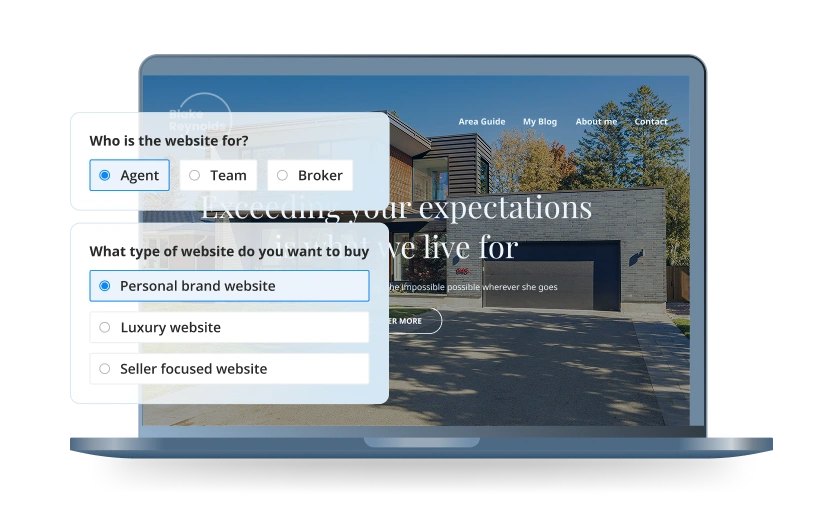
That’s why you need a professional website that builds trust from the start. You don’t need to overcomplicate it. With Placester’s AI Website Builder, you can create a functional, good-looking online presence in just a few clicks. The tool is built specifically for real estate professionals, so you get results aligned with your business goals and set yourself up for successful referrals. Sign up and try it for free!
AI Websites for Real Estate
Get a custom, ready-to-edit website
in less than 4 minutes.
FAQ
How to get real estate referrals?
In the real estate industry, you get referrals by building strong relationships with other agents and brokers. Additionally, you should stay in touch with past clients and be active in your local and online real estate communities. When people trust your work, they naturally send opportunities your way. There are also real estate referral companies you can submit to.
What is a typical referral fee in real estate?
A typical real estate referral fee is around 25% of the receiving agent’s commission. Generally, it can range from 20% to 35%, depending on the deal and agreement. The exact percentage is always negotiated upfront between agents. Payment only happens if the transaction closes.
What are the differences between finder’s fees and referral fees?
Referral fees are paid between real estate agents, and finder’s fees usually involve unlicensed individuals. The former are regulated and always monetary, while the latter are less standardized and can take different forms. As an agent, you’ll typically work with referral fees.
Is a referral fee considered a bribe?
No, a referral fee is not a bribe when it’s properly disclosed and follows the law. It’s a standard, legal part of transactions between licensed professionals within the real estate market. Problems only arise when payments are hidden or involve parties who shouldn’t legally receive them. As long as you stay transparent and compliant, you’re on safe ground.
Published on
(Last updated on
)