(800) 728 8391


Most real estate agents learn marketing the expensive way: by testing a script, a campaign, or a listing photo strategy on a live client and hoping it works. Books on real estate marketing skip that tuition and hand you practical advice instead.
The best real estate marketing books compress years of a top producer’s trial and error, and the marketing strategies that came out of it, into a few hundred pages. That’s a far cheaper way to find out what actually generates leads than relying on traditional marketing guesswork.
This list sorts 14 books into five categories: fundamentals for new real estate agents, digital and video marketing, personal branding, lead generation, and sales psychology classics, the areas that separate a hobby from a successful real estate career.
Most titles here were published in the last few years. A handful of older classics made the cut too, books written decades ago that are still among the most recommended real estate books in the industry, because agents and coaches keep pointing new hires toward them.
Quick summary:
- Gary Keller’s The Millionaire Real Estate Agent remains the most-cited starting point for new agents building their first marketing plan, more than two decades after publication.
- Recent titles from Ryan Serhant, Alex Hormozi, and Krista Mashore reflect how much real estate marketing has shifted toward video, personal brand, and owned digital channels since 2020.
- Reading alone will not generate leads. Every book on this list works best when its ideas turn into a written marketing plan and a weekly routine, not just notes in the margins.
- Three classics, Cialdini’s Influence, Voss’s Never Split the Difference, and Kendall’s Ninja Selling, still shape how top agents negotiate and build client relationships, even though none were written specifically for real estate.
14 best real estate marketing books for ambitious agents
Real estate marketing books tend to cluster around a handful of real problems:
- How to get started,
- How to be found online,
- How to connect with clients who are ready to buy or sell,
- How to keep the pipeline full,
- How to close what the pipeline produces.
Grouping this list by those problems, rather than dumping 14 titles into one flat ranking, makes it easier to find the one or two books that address whatever is actually slowing your business down right now.
Each entry below includes what the book covers, one of its actionable strategies worth taking on its own, and, where a rating or quote could be verified, the evidence behind it.
Is reading real estate marketing books still worth it in the digital era?
Yes, because the marketing trends and channels keep changing, but the psychology underneath them doesn’t. What worked on Facebook in 2015 doesn’t work today. The platform that works in 2026 won’t work the same way in 2030. If a book only teaches you a platform, it expires with the platform.
That’s not what the best books on this list actually teach. Cialdini published Influence in 1984, decades before anyone had a real estate website, and it still shapes how top agents build trust today. Kendall wrote Ninja Selling as a referral-based philosophy, not a social media playbook, and it’s still winning industry book awards years later.
The books worth reading are the ones that teach why a client says yes rather than which app to post on this quarter. That knowledge doesn’t get an update pushed to it. It just keeps working, on whatever channel comes next.
Long before Seth Godin popularized permission marketing, the same principle was already showing up in a digital world that hadn’t been named yet: earn attention before you spend money chasing it.
Top real estate marketing books for beginners
New agents rarely fail from a lack of effort. They fail from spending that effort on the wrong activities before they have a system. These three books for real estate agents are the most commonly recommended starting points for building a real estate business with a repeatable marketing plan instead of a collection of one-off tactics.
1. The Millionaire Real Estate Agent by Gary Keller, Dave Jenks & Jay Papasan (2006)
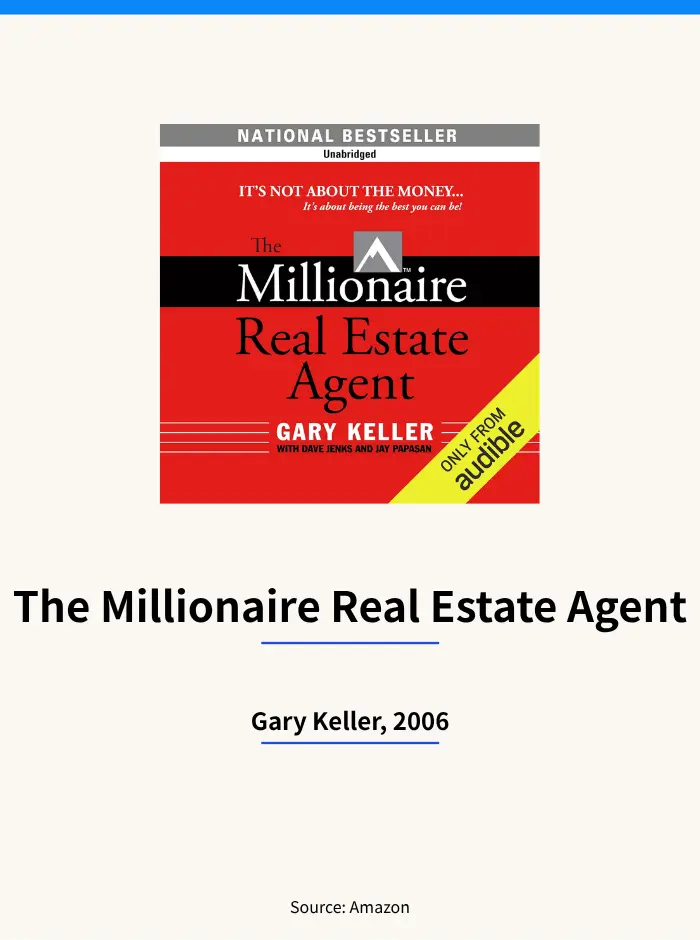
Scope: A systems-first framework built around four models, Economic, Lead Generation, Budget, and Organizational, that Keller argues separate high-producing agents from everyone else.
Keller, co-founder of Keller Williams, wrote The Millionaire Real Estate Agent before “personal brand” was a phrase anyone used, but the book still holds up as a foundational text for structuring a real estate business rather than just working harder inside a disorganized one. It’s the book most other authors on this list reference or build on.
Key lesson to learn: Work your numbers backward from your income goal to the exact number of appointments you need each week, then treat lead generation as a scheduled, non-negotiable block of time rather than something that happens when you get around to it.
Rating: 4.23/5 on Goodreads, based on 4,053 ratings.

“This book presents a new paradigm for real estate and should be required reading for real estate professionals everywhere.”
Robert T. Kiyosaki, author of Rich Dad Poor Dad
2. How to Win in Real Estate by Cameron Van Klei (2024)
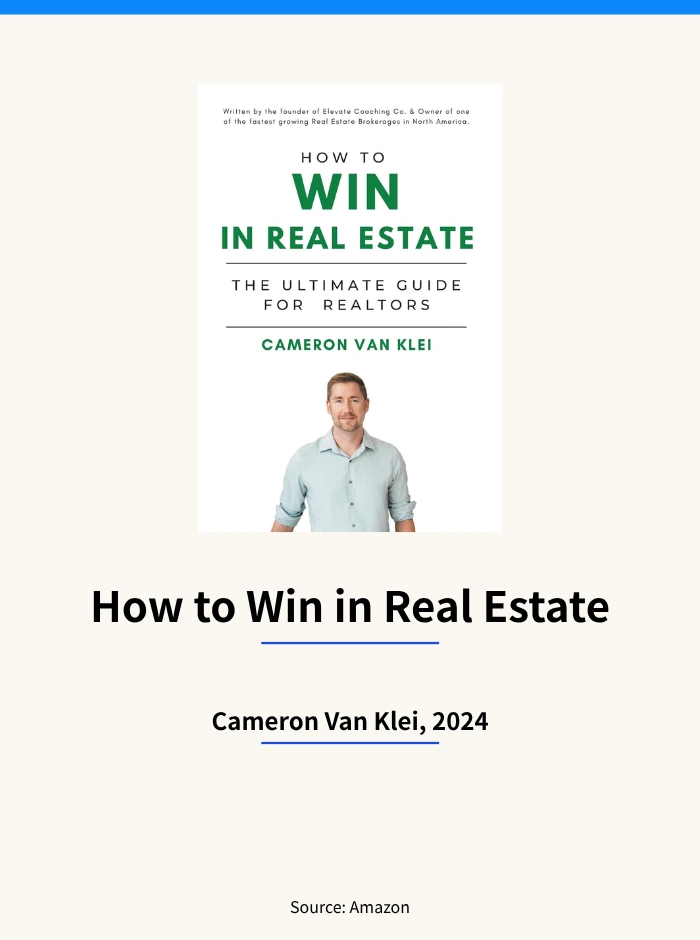
Scope: A step-by-step playbook from a Pacific Northwest broker who grew his brokerage to 120 agents and $1.3 billion in sales in six years, covering attraction marketing, sales skills, and long-term wealth building.
Where Keller’s book is a philosophy, How to Win in Real Estate reads closer to an operating manual, useful for an agent who already understands the “why” and wants the “what to do this week” version.
Key lesson to learn: Build your business around a repeatable attraction system rather than chasing one-off deals, so growth compounds year over year instead of resetting every January.
Rating: 4.67/5 on Goodreads, based on 3 ratings.
In this book, Cameron Van Klei has indeed created the ultimate guide for realtors. And it lives up to its title not only because of the expert knowledge contained within, but because its conveyed in an extremely digestible manner, with page turning engagement and just the right amount of dry wit.
The unneeded frills are forgone for practical knowledge to build your real estate career from the ground up the right way, but it still manages to find its moments to entertain. I highly recommend this to anyone looking to get started in real estate.
Ben Thorne, Goodreads
3. The Aspiring Agent by Martha Melendez & Steve Stark (2024)
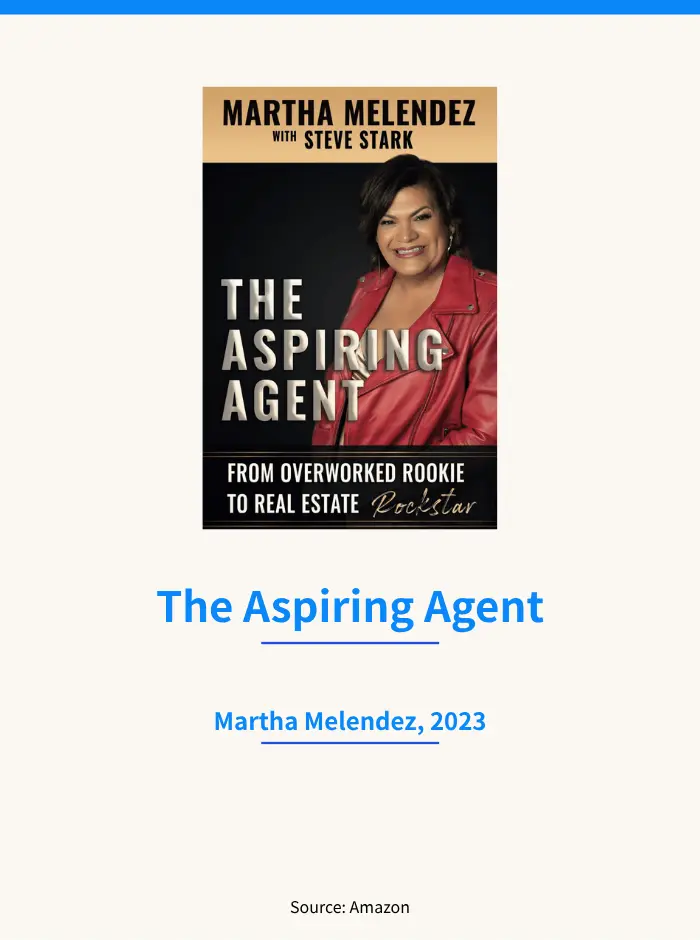
Scope: A tactical roadmap for new agents covering time management, client acquisition, brokerage selection, and early branding, written by a longtime Engel & Völkers broker and Inman contributor.
The Aspiring Agent provides something the two above don’t: a set of proven strategies for the first 12 months, when most new agents have no client base, no reputation, and no idea which marketing efforts deserve their limited time.
Key lesson to learn: Build your first-year calendar around lead-generation blocks before anything else gets scheduled. Protect prospecting time the same way you’d protect a confirmed appointment with a client.
Rating: 5.0/5 on Amazon, based on 137 ratings.
This book is a treasure trove of wisdom and insights, making it an invaluable resource for both rookies and seasoned agents alike.
Her deep understanding of the real estate world, combined with her willingness to share her knowledge, sets “The Aspiring Agent” apart from the rest.
From start to finish, Martha guides you on an inspiring journey, showing you exactly how to transform yourself from a real estate rookie into a genuine rock star in the field.
Benjamin Graf, Amazon review, January 3, 2024
Best real estate marketing books for digital, social & video growth
Digital marketing is the category where “real estate-specific” advice matters most, because generic social media playbooks rarely account for how long a real estate sales cycle actually is. These three books focus on building a searchable digital presence, using social media and video as the main channel rather than paid ads alone, and each one values consistency over chasing analytics or short-term ROI.
4. What to Post by Chelsea Peitz (2020)
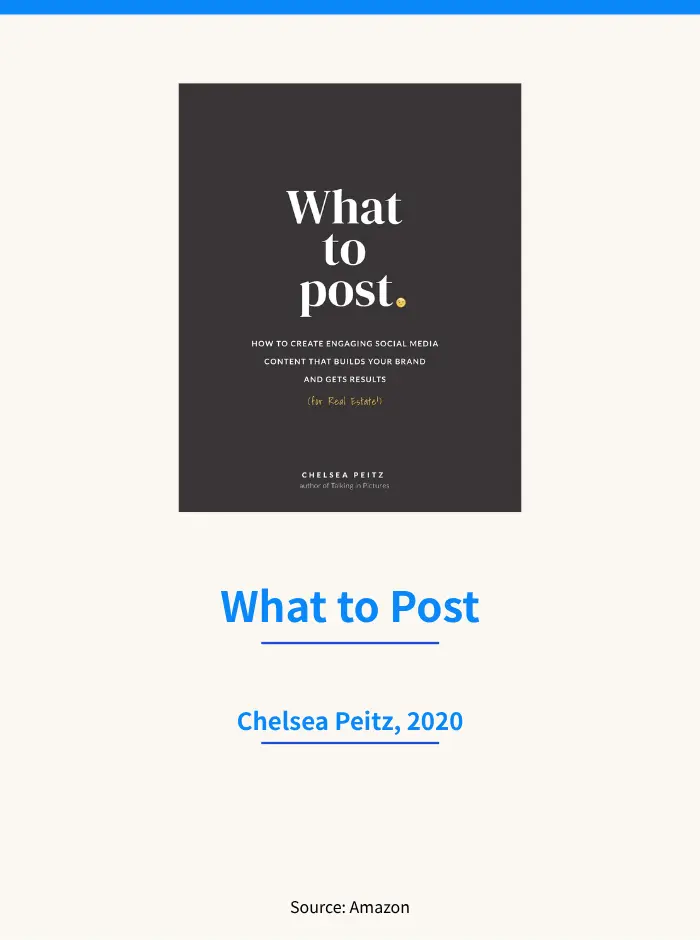
Scope: A three-phase content framework built specifically for real estate social media: what to post, when, and why, across every major platform.
Peitz’s central argument is that most agents post exclusively about listings, which is the least interesting content to the audience they’re trying to build. What to Post is one of the more practical guides for turning a scattered social presence into an actual marketing plan with a content mix.
Key lesson to learn: Use a “Know, Like, Trust, Sell” content mix so the majority of your posts build relationship and authority, and only a minority pitch a property directly.
Rating: 4.26/5 on Goodreads, based on 19 ratings. A small sample, so treat it as directional rather than definitive.
Chelsea is super knowledgeable about social media and she is a great Instagrammer to follow, most especially if you are in the field of Real Estate.
This book is super easy to read and digest and fun to just flip through and open up a page and go from there. It gets you thinking and is always inspiring.
Lisa V Munoz, Amazon.com review, April 28, 2020
5. The Billion Dollar Channel Method by Jackson Wilkey (2023)
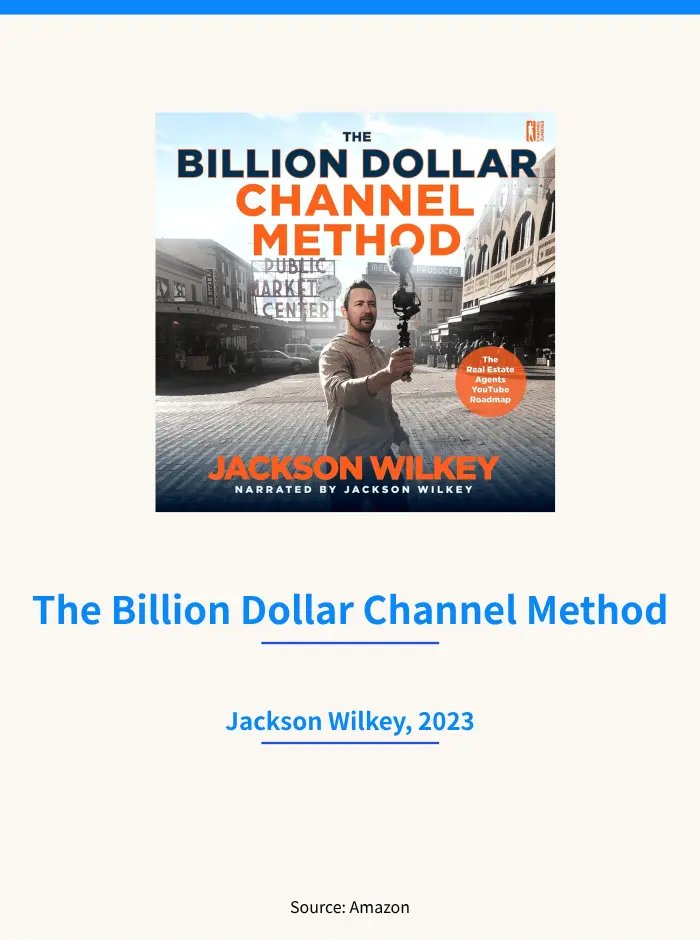
Scope: A YouTube-specific lead-generation playbook from an agent and coach who built a channel-driven referral business at scale.
Video content is the fastest-growing real estate marketing channel this decade, and The Billion Dollar Channel Method is one of the few books that treat YouTube as a long-term SEO asset rather than a place to post the occasional listing walkthrough.
Key lesson to learn: Publish hyperlocal, process-specific videos consistently, like neighborhood guides and step-by-step buyer explainers, rather than chasing viral formats. That’s what compounds into a searchable, evergreen source of leads.
Rating: 4.33/5 on Goodreads, based on 18 reviews.
6. Sell 100+ Homes A Year by Krista Mashore (2018)
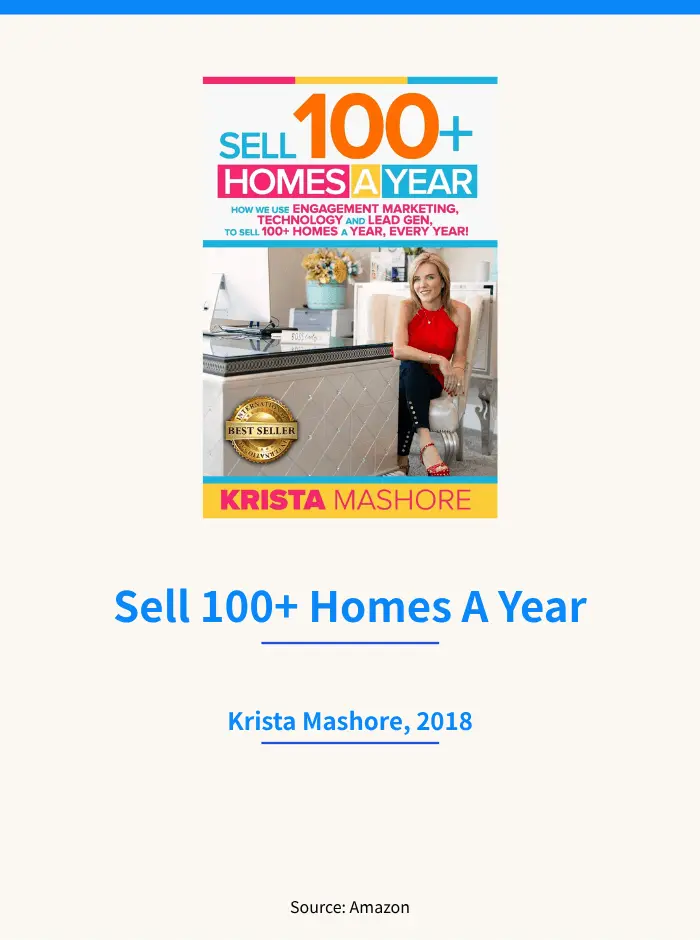
Scope: An “engagement marketing” framework for educating and nurturing prospects through content and technology instead of cold pitching, written by an agent who sold over 100 homes annually.
Mashore’s approach in Sell 100+ Homes A Year predates most of the current wave of “creator” advice for agents, but the core mechanics, automated touchpoints paired with genuine educational content, hold up well against modern digital marketing advice. The book provides enough of the “how,” not just the “what,” to actually put it into practice.
Key lesson to learn: Build automated, tech-enabled touchpoints- video, email, retargeting- that keep you top of mind with your sphere between transactions, not only while a deal is active.
Rating: 4.50/5 on Goodreads, based on 131 ratings.
Packed with useful information. I had a highlighter and sticky notes out for the duration of the book. It’s really no surprise that Krista is in the top 1% of realtors nationwide considering her wealth of knowledge.
I can’t imagine what information is in her other books because WOW. She answered questions I didn’t even think to ask.
Keshia Slater, Goodreads review, April 23, 2023
Best books for building a standout personal brand
Your personal brand is what a prospect remembers after they’ve forgotten which agent showed them which house. These two books, both from the same author, approach personal branding from two different angles: the outward-facing system and the inward mindset behind it.
7. Brand It Like Serhant by Ryan Serhant (2024)
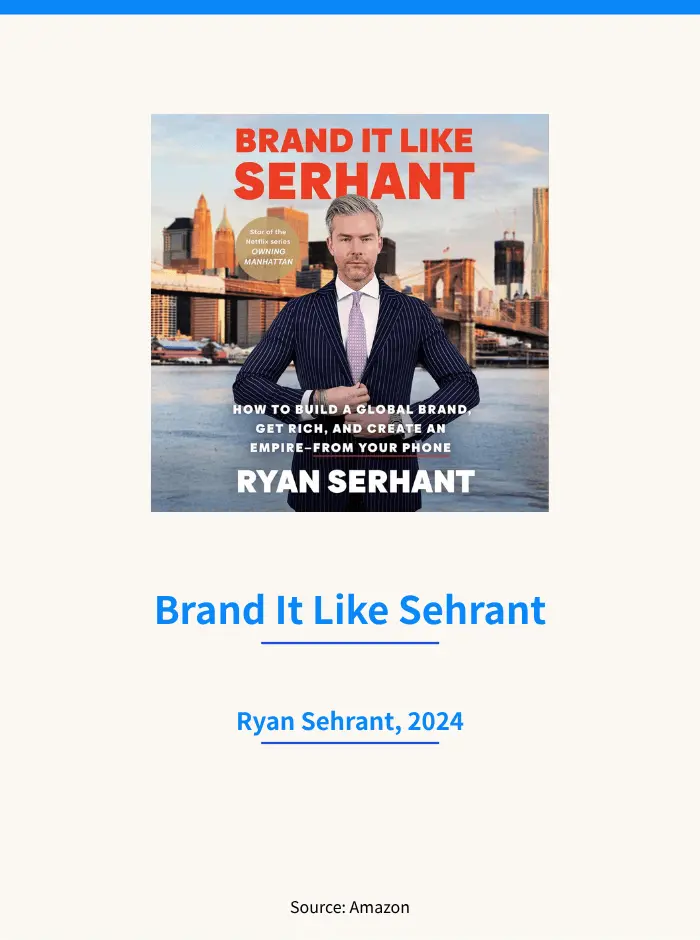
Scope: A framework for building a personal brand and media presence as a real estate professional, from the founder of SERHANT., a brokerage that crossed $4 billion in cumulative sales volume within its first three years.
Serhant built his name in the high-end New York market and then turned that visibility into a media company. Brand It Like Serhant is the closest thing on this list to a modern marketing textbook for treating yourself, not just your listings, as the product, whether you think of your job as an agent or marketer.
Key lesson to learn: Treat your name and face as the product line. Consistent visual and voice branding across every channel compounds trust faster than sporadic, unbranded posting ever will.
Rating: 3.95/5 on Goodreads (219 ratings) and 4.7/5 on Amazon hardcover (88 reviews). The platform split is worth noting; Amazon buyers rated it noticeably higher than Goodreads readers.
I really enjoy Ryan Serhant entrepreneurial content which is why I wanted to check this book out. Turns out I really like his writing style as well. I appreciated all of the research and personal experiences he tied into every lesson of the book.
I do think the branding content is base level as a whole but the real accounts from Ryan, the case study student Sydney and all of the entrepreneurs he referenced made the book worth it.
Daijah, Goodreads review, January 15, 2025
8. Big Money Energy by Ryan Serhant (2021)
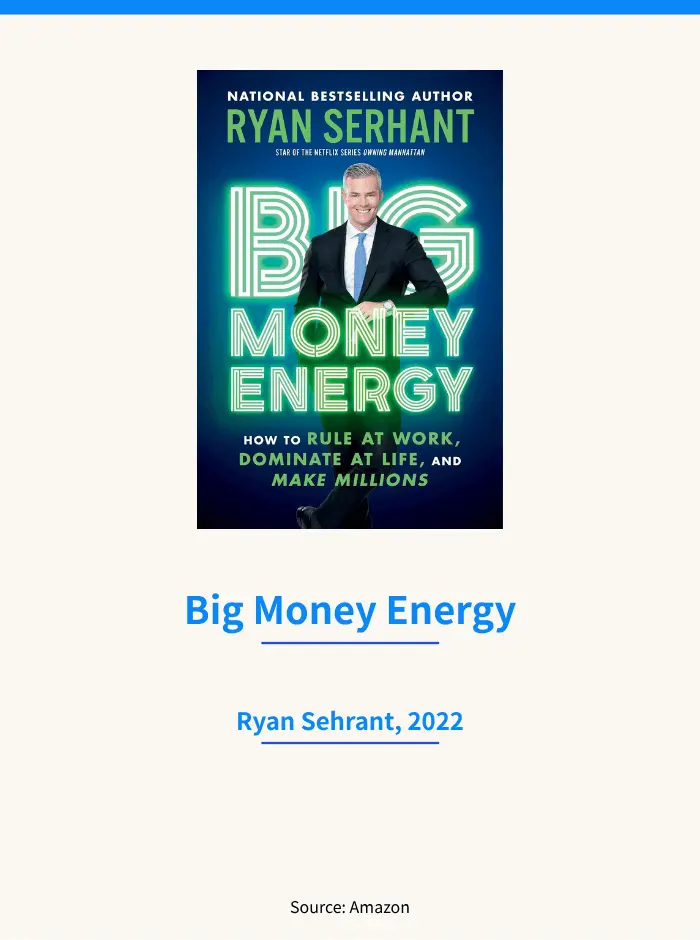
Scope: A mindset and personal development book on translating confidence and presence into sales performance, and eventually, brand recognition.
Big Money Energy is less about marketing tactics and more about the discipline needed to keep showing up long enough for a personal brand to actually build. It pairs naturally with Serhant’s other book, brand strategy on one hand, and the energy required to execute it on the other.
Key lesson to learn: Reframe rejection and slow stretches as data, not identity. Serhant argues that sustained energy management, not raw talent, is what compounds into a recognizable brand over a career.
Rating: 4.16/5 on Goodreads, based on 1,149 ratings.
“Big Money Energy is like a mentor for anyone with a big dream they want to make a reality! Ryan Serhant guides readers to find their confidence, overcome self-doubt, and exceed their own expectations.”
Barbara Corcoran, founder of The Corcoran Group
Best real estate marketing books for lead generation & prospecting
None of the branding or content work matters if it doesn’t eventually generate leads. These three books cover lead generation from three different directions: a channel-agnostic system, exact scripts, and a full prospecting manual.
9. $100M Leads by Alex Hormozi (2023)
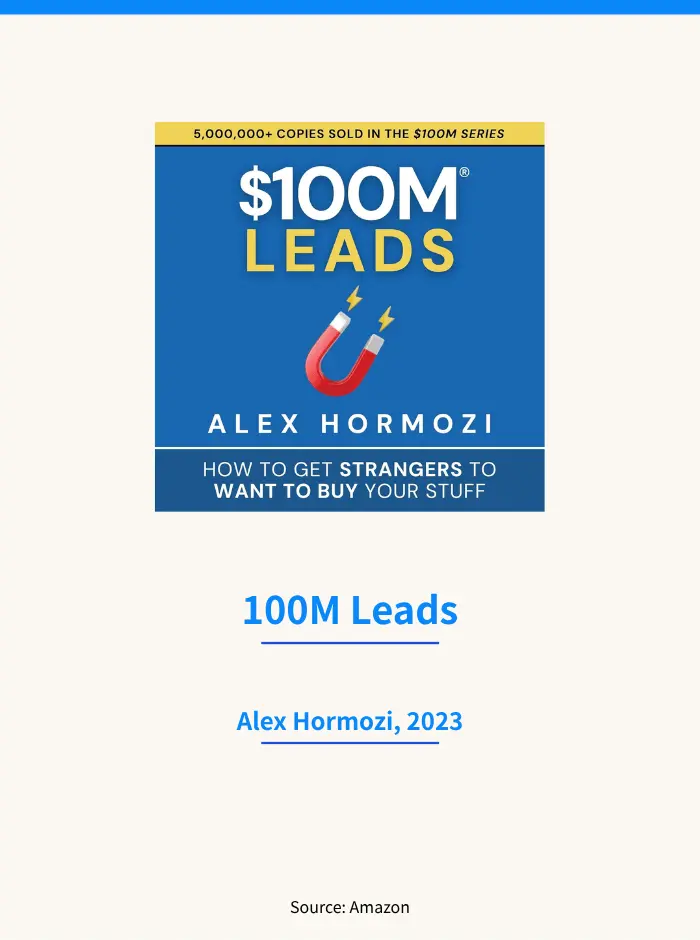
Scope: A channel-agnostic lead generation system, warm outreach, content, cold outreach, and paid ads that agents commonly adapt for real estate prospecting even though it wasn’t written for the industry.
Hormozi isn’t a real estate author, but $100M Leads is one of the more commonly recommended crossover books among real estate professionals, mostly because it treats lead generation as a skill to be practiced rather than a budget line to outsource.
Key lesson to learn: Pick one lead channel and go all in until you’ve genuinely mastered it, instead of splitting weak effort across five channels at once. Hormozi calls chasing the next channel “the grass is greener” trap.
Rating: 4.55/5 on Goodreads, based on 5,782 ratings.
I just finished this book and was blown away by how practical and technical it was. Alex does a great job in describing the people that you need for your business and how to find them; how to evaluate your efforts and knowing how to improve your efforts; and when to expand. Thank you Alex for taking the time to write this work.
Jarrett Lofton, Goodreads review, July 19, 2026
10. Exactly What to Say: For Real Estate Agents by Phil M. Jones, Chris Smith & Jimmy Mackin (2019)
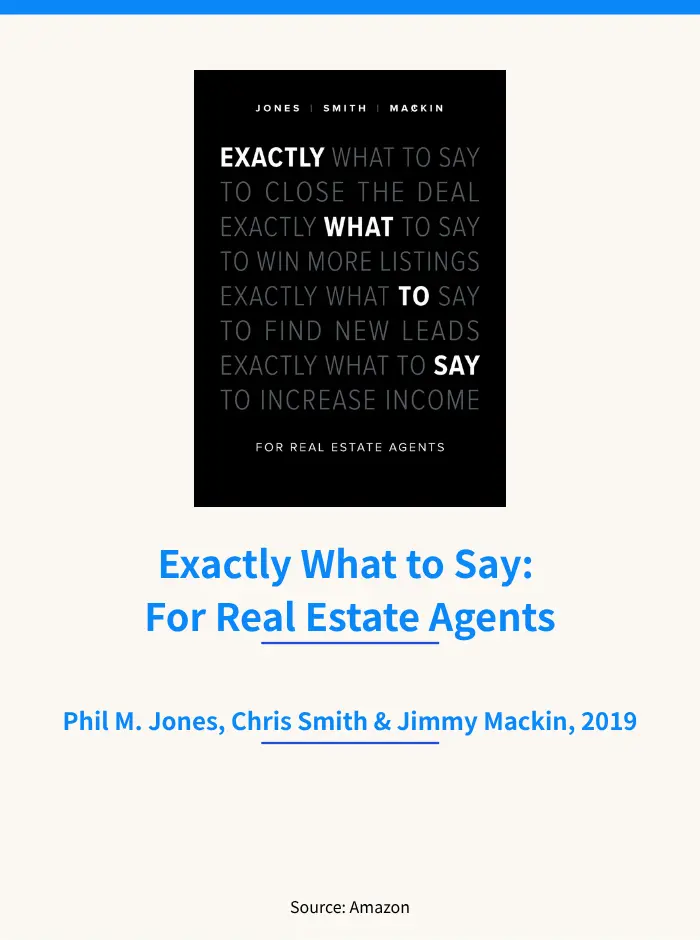
Scope: Thirty scripted phrasings for the hardest conversations agents have: objections, commission talks, expired listings, and buyer consultations.
Exactly What to Say: For Real Estate Agents is the most tactical, low-effort-to-apply book on the list. You can open a page and use an actionable script in a call the same day, which is rare for a marketing or sales techniques book.
Key lesson to learn: Replace vague, agent-jargon phrasing with specific, tested language. Reframing “Are you the decision maker?” into softer, less confrontational phrasing measurably reduces prospect resistance.
Rating: 4.33/5 on Goodreads, based on 655 ratings.
“How many listings did I lose as a young agent because I didn’t know the right words?”
Lisa Sevajian, Real Estate Agent, Compass)
11. PROSPECT: The Real Estate Lead Generation Manual by Brian Icenhower (2018)
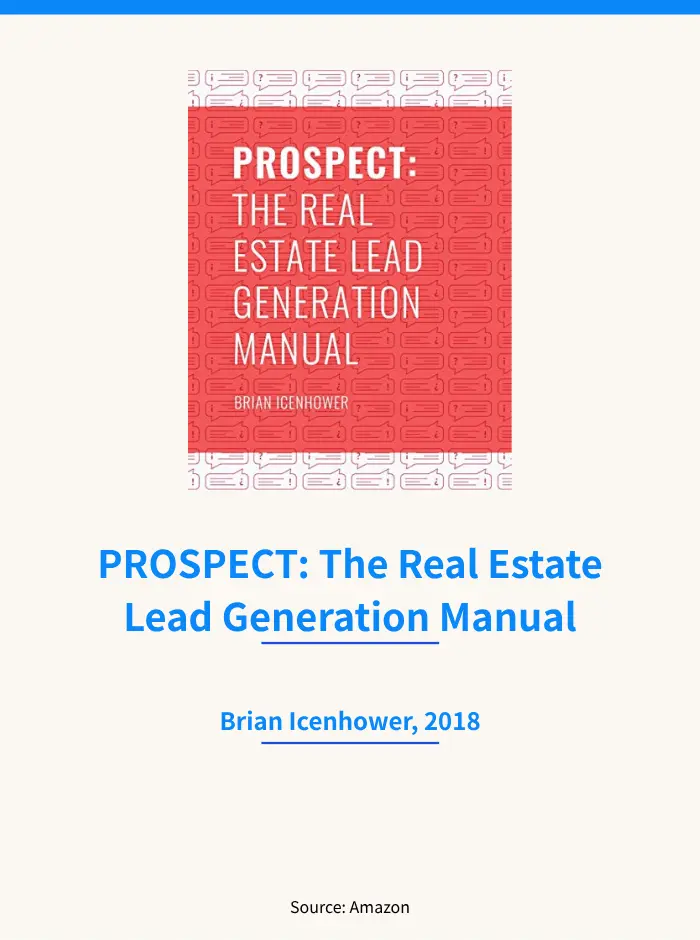
Scope: A 470-page tactical manual covering circle prospecting, sphere of influence, expired and FSBO scripts, door-knocking, and open-house lead capture systems.
PROSPECT: The Real Estate Lead Generation Manual is the densest book on the list and closer to a reference manual than something you read cover to cover in a weekend. Icenhower’s broader body of work averages a 4.19/5 on Goodreads across 138 ratings, though that figure spans his catalog rather than this title specifically, so treat it as an approximate signal.
Key lesson to learn: Build a weekly prospecting calendar that blends multiple lead sources. Relying on a single channel is the single most common cause of income volatility for agents.
Great training material that is simple to implement. I am excited to improve and enhance my real estate career with this knowledge and exceed my potential. I am almost overwhelmed with all that I have learned but grateful to have so much to sort through.
Mrs Tee Booktique, Goodreads review, May 30, 2022
Classic sales psychology & persuasion books every agent should know
None of these three were written for real estate, and that’s exactly why they’ve stayed relevant for years while more tactical books have gone out of date. Several authors earlier on this list reference or build on at least one of them.
12. Influence, New and Expanded by Robert B. Cialdini (1984 / 2021)
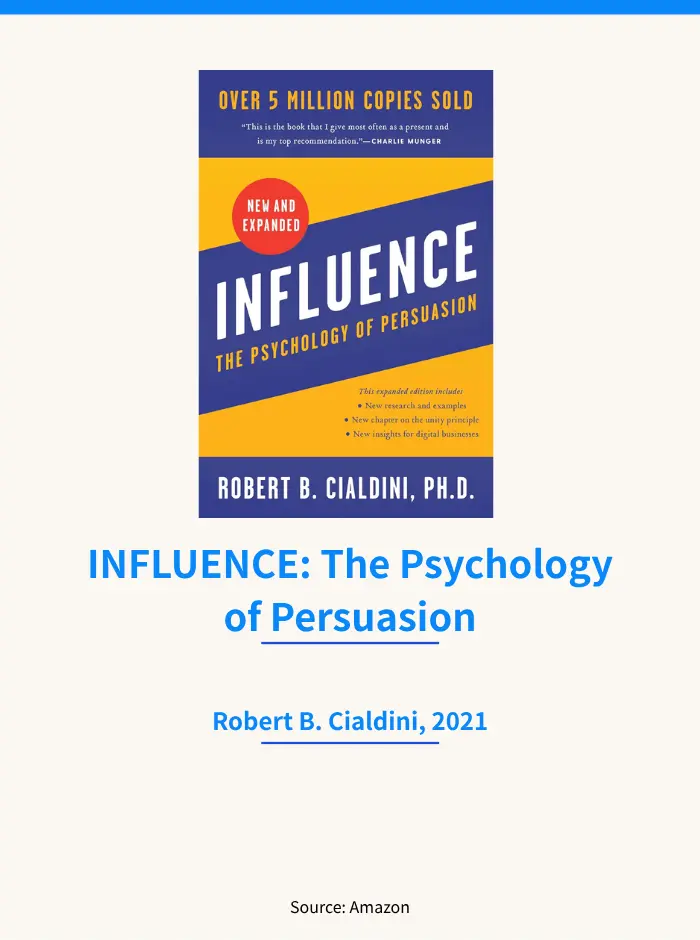
Scope: The foundational research on six principles of persuasion- reciprocity, commitment and consistency, social proof, liking, authority, and scarcity- that shape how buyers and sellers actually make decisions.
Influence, New and Expanded is arguably the single most influential book on this entire list, cited directly or indirectly by nearly every other author here. It’s also the oldest, first published in 1984 and still selling briskly in its expanded edition.
Key lesson to learn: Small, genuine reciprocity gestures early in a client relationship, a real market analysis, a useful local resource, are one of the strongest, most reliable drivers of trust and eventual compliance, according to Cialdini’s research.
Rating: 4.21/5 on Goodreads (New and Expanded edition), based on 182,403 ratings.
A timeless classic on human behaviour and persuasion. Influence breaks down the psychology behind why people say “yes” in a clear, engaging, and practical way. The real-world examples make the concepts easy to understand and apply, whether in business, leadership, sales, or everyday life. One of those rare books that changes how you see human interactions. Highly recommended.
Carlos Nunes, Goodreads review, June 18, 2026
13. Never Split the Difference by Chris Voss & Tahl Raz (2016)
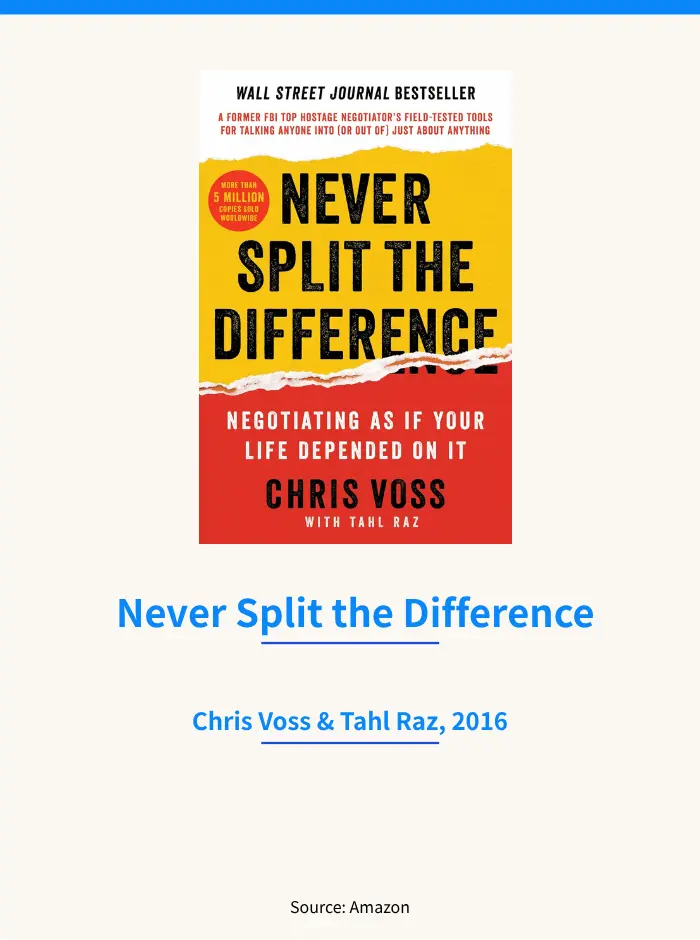
Scope: FBI hostage negotiation tactics, tactical empathy, labeling, calibrated questions, and mirroring, adapted for everyday negotiation and widely used by agents during offer and counteroffer conversations.
Voss’s background as an FBI lead negotiator gives Never Split the Difference a different texture from most sales books: it’s built around de-escalation and information-gathering rather than persuasion tricks, which fits real estate negotiations better than most generic sales techniques.
Key lesson to learn: Use calibrated “how” and “what” questions instead of yes-or-no questions during a negotiation. It gets the other side working to solve your problem for you instead of just defending their position.
Rating: 4.33/5 on Goodreads (hardcover edition), based on 223,971 ratings.
I’ve been in sales a long time. “Never Split the Difference” is a book EVERYONE in sales should read. It’s truly a no Bull way to hand all sorts of business and business interaction. Heck even using it to get a better commission split would be worth it’s weight in gold.
Source: Reddit, /u/reepobob
14. Ninja Selling by Larry Kendall (2017)
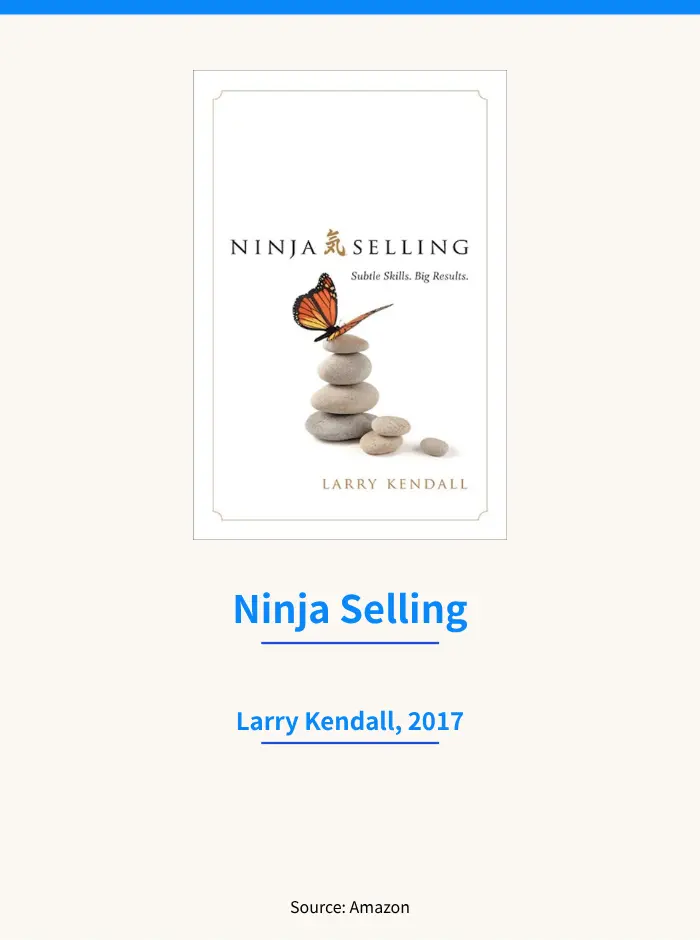
Scope: A relationship-building, not transaction-based, selling philosophy built around listening, referrals, and long-term client relationships instead of high-pressure closing tactics.
Kendall’s Ninja Selling system won the Gold Medal in the Sales category of the 2018 Axiom Business Book Awards, largely because it reframes what “closing more deals” should actually mean for a career-length business rather than a single quarter.
Key lesson to learn: Shift your success metric from how many deals you closed this month to how many people trust you enough to refer you. Kendall’s entire system is built to compound referral business over a full career, not a single quarter.
Rating: 4.50/5 on Goodreads, based on 1,953 ratings.
“If you are a sales leader, division manager, or company CEO, I suggest you have every salesperson on your team read, devour, and apply the information in this book. I can promise you the results will be incredible.”
Bob Burg, co-author of The Go-Giver
Turn these pages into your next marketing plan
Even the best books for real estate agents won’t generate a single lead sitting on a shelf. The agents who get real value out of these 14 titles are the ones who pick one weak spot, a missing content routine, a lead source they’ve never tried, a script they fumble every time, and rebuild that one piece before moving to the next book.
If you’re just getting started, The Millionaire Real Estate Agent and The Aspiring Agent are the most practical starting points for a first real estate marketing plan. If lead generation is the actual bottleneck, PROSPECT and Exactly What to Say hand you scripts and systems you can use this week. And if you already have a pipeline but struggle to close it, Never Split the Difference and Influence are worth a reread every couple of years.
Treat this list as a rotation, not a one-time read. The agents who turn these ideas into consistent business growth are the ones who revisit a title every year or two, pull a couple of actionable tips, and use them to attract more clients and close more deals, instead of reading books once and shelving them. That’s what long-term success in real estate actually looks like: not a single book, but a habit of coming back to a few good ones.
And if you want to take your online presence to the next level as well as your business, you need an amazing website. But instead of spending countless dollars and dealing with developers and designers, you can create your website in minutes using Placester’s AI Website Builder.
Show Up Where Your Next Clients Are Looking
Explore how cutting-edge AI website builders help agents stay ahead of the competition.

Published on
(Last updated on
)