(800) 728 8391


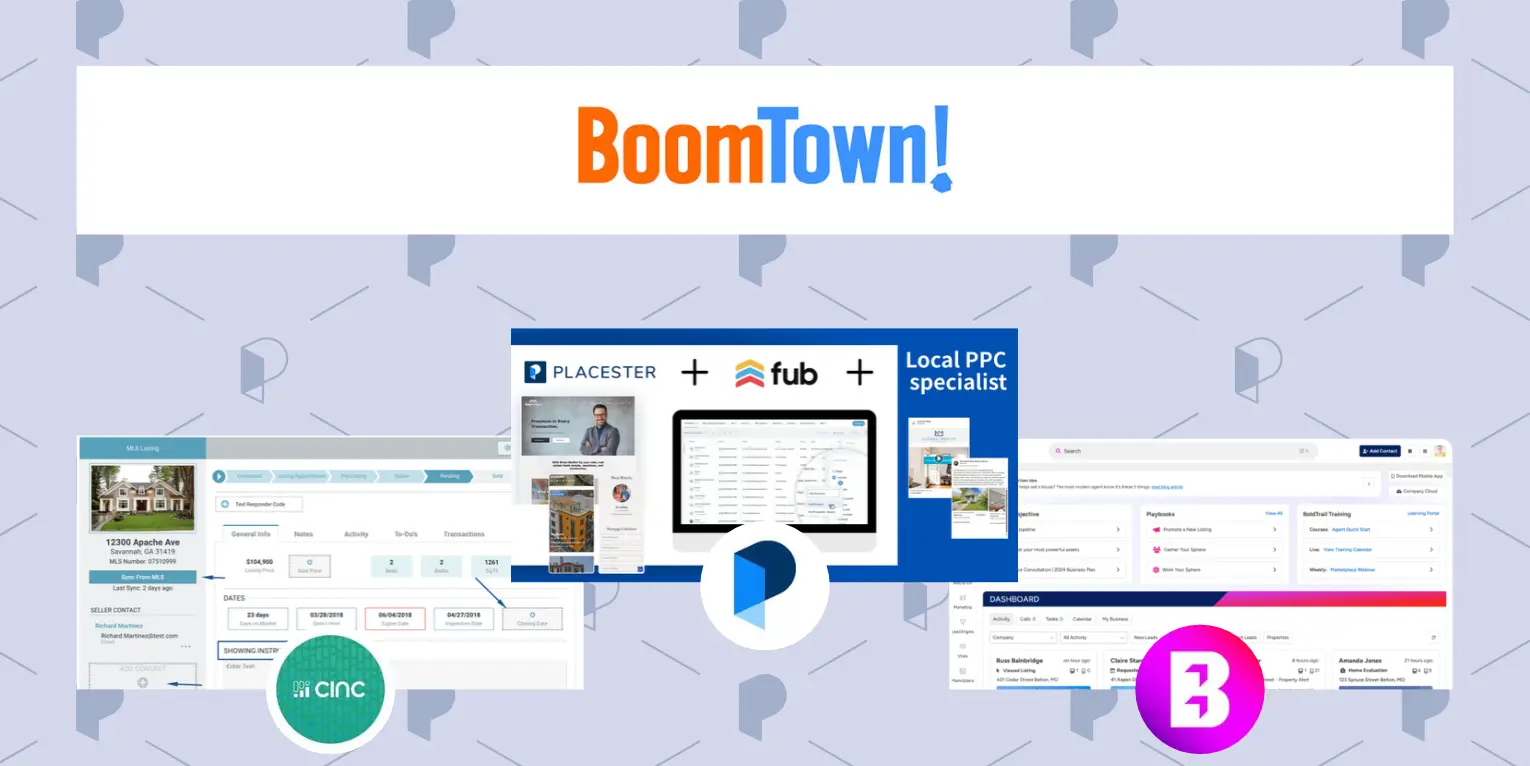
Quick summary:
- 🔄 BoomTown is moving to BoldTrail: The gradual transition makes this a good time to rethink your setup.
- 🧩 A flexible setup can cost less: Choose the tools your agents need without paying for a full all-in-one platform.
- 👉 Find your best fit: Compare the options and see which suits the way your team works.
BoomTown is built for real estate brokers and team leaders who manage a high volume of leads. It brings paid lead generation, an IDX website, a CRM, and agent accountability tools into one platform. That gives you a way to track what happens from a buyer’s first visit to an agent’s follow-up.
Inside Real Estate, which acquired BoomTown in 2023, is gradually moving its users to BoldTrail. Your migration timeline depends on your account, but the transition gives you a reason to reconsider whether this setup still fits your team.
That’s especially worth considering if your agents rarely use the CRM you already pay for.
68%
In a survey of brokerage leaders, 68% said fewer than half of their agents actively used the firm’s CRM.
Source: TotalBrokerage
If you or your agents find a large, all-in-one system difficult to use, a simpler set of tools may serve your team better.
Here are three options to consider as you move beyond BoomTown, including its successor BoldTrail. Each suits a different way of running a real estate team.
Top BoomTown alternatives at a glance (2026)
| Option | Best for | Lead strategy | Flexibility | Cost | Our rating |
|---|---|---|---|---|---|
| Placester + FUB + local PPC | Teams wanting website control and lower costs | Local content and independently managed ads | High | From $153/mo + PPC | ★★★★★ 89.5/100 |
| BoldTrail | Brokerages keeping a shared all-in-one system | Integrated lead capture and managed ads | Low | Custom quote ($499–$750/mo reported) | ★★★★☆ 73/100 |
| CINC | Teams prioritizing managed paid lead generation | Google and Facebook campaigns connected to the CRM | Low | Custom quote ($900–$1,500/mo reported) | ★★★★☆ 74.5/100 |
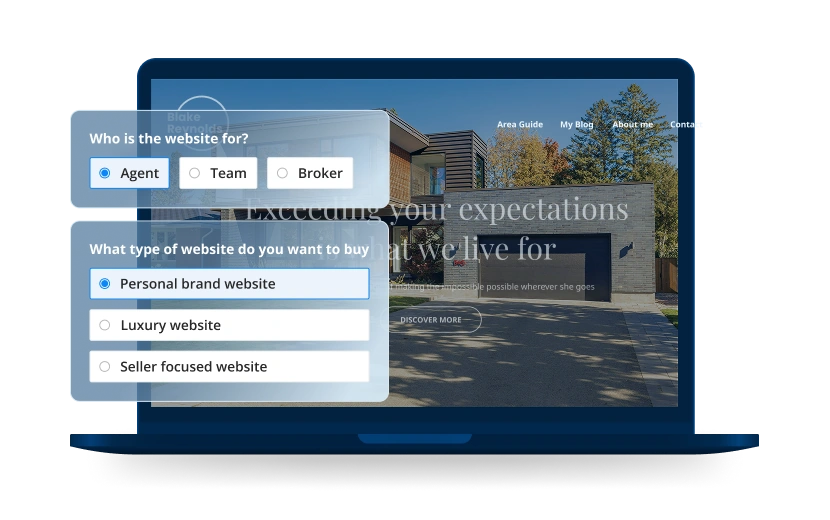
AI Websites for Real Estate
Get a custom, ready-to-edit website
in less than 4 minutes.
What is BoomTown?
BoomTown is a real estate platform for brokerages that want to manage online leads from their first website visit through an agent’s follow-up. When a buyer returns to view more listings, BoomTown’s built-in CRM functionality records that activity and brings the contact back to your team’s attention. The value is in knowing when to pick up a conversation that might otherwise have gone quiet.
Founded in Charleston in 2006, BoomTown was acquired by Inside Real Estate in 2023. Its model combines software with services: BoomTown can run advertising campaigns, while its Success Assurance concierges can contact and qualify leads before an agent takes over. Lead nurture sequences and follow-up workflows help you stay in touch as buyers continue their search.
Inside Real Estate is now phasing out the standalone BoomTown platform and moving customers into BoldTrail, its broader technology ecosystem. The transition follows an account-specific timeline, so an existing BoomTown subscription does not necessarily mean you’re already using the newer platform. That gradual migration is a useful opportunity to decide whether you want to stay with the provider or choose a different setup.
👉 Take a closer look at BoldTrail before making the move.
BoomTown can be effective for teams with enough lead volume to keep a shared pipeline busy. Its published guidance describes setup taking around 30 days and a preference for 12-month contracts. As you consider your next platform, look closely at the bundle you’re quoted and whether your agents will use enough of it to justify that commitment.
Why consider BoomTown alternatives?
BoomTown’s gradual migration to BoldTrail means a platform change is already ahead of you. Before you put time into rebuilding workflows and training your agents, consider what hasn’t worked with your current setup. This is your chance to choose something that fits your team better.
BoldTrail still follows the all-in-one model. If you signed up for BoomTown hoping everyone would work from the same pipeline, but only a few agents use it, moving to another bundled platform won’t necessarily solve that problem. You’ll still pay for the shared system while some agents keep using their own tools.
If you’re weighing a different setup, the experiences of other BoomTown users can help you identify which problems you want to leave behind. Their reviews are the main basis for the reasons below.
Mandatory migration
Inside Real Estate is phasing out standalone BoomTown, with migration timing determined for each account. The move is designed to carry over your core records, including lead history. Your custom workflows need separate attention: the company says BoomTown routing rules and drip sequences will need to be rebuilt in BoldTrail’s interface. Staying with the same provider still means configuration work and training for your team.
Even familiar contact categories work differently. BoldTrail PRO’s transition guide recommends replacing BoomTown’s Hot, Nurture, and Watch timelines with hashtags, because the newer system has no corresponding timeline statuses. Your agents will need to learn where that information lives and how to use it.

“(…) The transition from BoomTown to BoldTrail wasn’t great (…) I don’t like how buggy it still is compared to how BoomTown was.”
~ Cory D., G2, April 2025
If you’re already investing time in changing those habits, you have a practical opportunity to move to tools they find easier to work with.
High total cost
BoomTown’s Launch package includes two users, and its reported prices start at $1,000 a month. If it’s just you and another agent, that’s a substantial bill to weigh against the leads you expect your website to bring in. Larger teams need packages with more seats, so you can’t assume the same monthly price will cover a growing office.
“I’ve been using BoomTown for about 5 years now and thinking about a change. It’s pretty expensive, sitting at close to $1,000 a month just to run my website and CRM. My wife and I are the only ones that use it.”
~ u/SweetPockets51, Reddit, December 2025
Your quote may cover more than the monthly license. BoomTown’s billing guide says it charges a setup fee after you sign. If you run paid campaigns through the company, you pay for the ads and a management fee equal to 15% of ad spend. A $1,000 monthly license would come to $12,000 over a year before those advertising costs. BoomTown says it seeks 12-month partnerships, so it pays to work out the total cost before committing.
“The price was ridiculous and did not bring enough value in order to charge so high. A lot of times the price is backed by the value a system brings but not in this case.”
~ Frank D., Capterra, March 2022
That spend needs enough business coming through the platform to earn its place in your budget. Think about how many online leads your agents can follow up with each week and how often that work turns into clients. If the website mainly serves as a place for people to find you, a smaller setup may fit the way you already get business.
Limited control over your website
BoomTown gives you an IDX site built to capture leads and show their activity to your agents. You can edit content and adjust the design, so you aren’t stuck with an untouched template. For a custom homepage, though, BoomTown directs customers to third-party designers. That matters if your website is where you want to invest most of your marketing effort. A substantial redesign may involve another project alongside the platform’s subscription.
“I’ve been a Boomtown user for the longest time and coudn’t really change my website design and just got tired of dated CRM.”
~ Nikita K., G2, October 2024
That experience won’t apply to every site. BoomTown’s current tools allow you to publish your own pages and make some design changes. If you have a particular homepage in mind, ask to make a change during the demo. You’ll see what your team can handle itself and what needs help from a designer.
Paying for tools you’ve already replaced
BoomTown charges a monthly license for its website and CRM together. Say your agents prefer Follow Up Boss for their daily work. Leads from your BoomTown site flow into it automatically, so they can make that switch. You’ll then have a Follow Up Boss bill alongside a BoomTown license that still includes the CRM they’ve stopped using. BoomTown’s published packages don’t offer a website-only tier.
The same problem appears if you build a website elsewhere and keep BoomTown for lead management. BoomTown provides forms that send contacts from an outside site into its CRM. You can make the connection work, but your license still includes BoomTown’s own website, while the new site adds another bill. That’s how vendor lock-in shows up in your budget: replacing one part of the platform doesn’t remove it from the published bundle.
“A lot of agents are spending $500, $800, or even $1,000 a month on platforms and features they barely use.”
~ Casey Popkins, Head of Growth at Placester
Growth depends on paid traffic
BoomTown’s lead generation service centers on Google and Facebook ads. They bring potential buyers to your property search site, where registrations become contacts for your agents to follow up with. If those campaigns are your main source of new leads, you need an ongoing ad budget to keep that flow coming. The platform license pays for the website and CRM, not the ads.
BoomTown bills advertising spend separately and charges a management fee equal to 15% of what its campaigns spend. A $2,000 monthly campaign therefore costs $2,300 before your platform license. Increase the budget, and the management fee rises with it. More registrations may give your agents more people to contact, but they still have to turn those conversations into clients.
“Expensive. I wish I could receive more leads for what I spend”
~ Kevin C., Capterra, October 2023
For teams evaluating BoomTown, that makes the source of future business a practical question. If you stop funding the campaigns, you can still work the contacts you have, but that paid source of new ones stops. When most of your clients already come through referrals, consider how much you would use BoomTown’s advertising service before committing to the full platform.
Slow setup and a steep learning curve
BoomTown says launching a platform typically takes 30 days, depending on how quickly your team works through setup with the company. Going live is only the first step, though. Your agents still have to learn how to handle new contacts in the CRM and keep their follow-up there. If they fall back on their usual habits, the system you bought for the whole office ends up being used by only part of it.
“It also takes time to customize and fully learn, which can slow things down initially.”
~ Jessica G., Capterra, December 2025
Give an agent who would use BoomTown every day the demo controls. Have them take a new lead through their first follow-up without someone guiding each click. That will tell you more about the training your office needs than a polished tour of the platform.
Poor lead quality
According to BoomTown, its clients close 2–5% of real estate leads on average. That works out to roughly one deal for every 20 to 50 contacts. Those numbers may sound encouraging, yet complaints about lead quality recur in user reviews. Your agents still have to spend time finding people ready for a conversation among everyone who registers while browsing homes.
“I have to call them and most are not interested in buying, they were ‘just looking’.”
~ Lorie C., Capterra, February 2025
Some agents report a more basic problem: leads with unusable contact details. In a 2023 review, a broker associate described receiving fake email addresses and phone numbers. A high lead count means little when your agents can’t reach those prospects to nurture them or turn them into clients.
Slow support
Some changes in BoomTown require someone at the company to act. If you want returning leads in a shared pool automatically assigned to an agent when they inquire about a property, the account holder has to ask BoomTown Support to enable that feature. Until it’s enabled, your team has to handle those handoffs itself.
The same dependence affects paid campaigns. After onboarding, changing or pausing your advertising budget means emailing BoomTown’s Digital Strategy team. When a reply is slow, you’re waiting on the company to make a change that affects your spending.
A website outage raises the stakes. Buyers can’t search listings or leave their details on a site that won’t load, even if your ads are still sending people there. Your agents can work the leads they already have, but the site won’t capture new inquiries until the technical problem is fixed.
Why is this all important? Because complaints about slow responses and difficulty reaching support recur in user reviews.
“As soon as the training is over, good luck getting any support from them because they are suddenly unreachable.”
~ Ericka M., Capterra, May 2024
Methodology: How we compared the best BoomTown alternatives
We scored BoomTown against the questions you’re likely to face when choosing an alternative. Can your team make the website its own? Will agents use the CRM? What will the full setup cost once you add advertising? We gave the most weight to the website, ongoing cost, and follow-up tools because those are the parts you’ll work with and pay for every month.
Scores reflect published product information and user reviews. Each criterion is rated out of 10, then multiplied by its weight. This is our assessment of how BoomTown fits those priorities, not a measure of lead quality or conversion rates.
| Criterion | Weight | BoomTown score | Contribution |
|---|---|---|---|
| Website and editing control | 20% | 7/10 | 14 |
| Total cost and pricing clarity | 20% | 5/10 | 10 |
| CRM and follow-up | 20% | 9/10 | 18 |
| Lead generation setup | 15% | 9/10 | 13.5 |
| Ease of adoption | 10% | 7/10 | 7 |
| Freedom to change tools | 10% | 5/10 | 5 |
| Customer support | 5% | 7/10 | 3.5 |
| Total | 100% | 71/100 |
BoomTown scored 71/100, with its highest marks for CRM and lead generation. Its managed campaigns can bring buyers to the IDX site. Once they register, their property activity appears in the CRM, giving agents a reason to follow up when a buyer returns to search again.
BoomTown lost points because you have limited control over what you keep paying for. Its reported starting price is $1,000 a month, and the license covers both the website and CRM. If your agents switch to another website builder, the original one stays in that bill. You can edit pages as an admin, but many changes still require the company’s help. That dependence matters when calls go unanswered or the site remains down without an update, as users have reported.
Top 3 BoomTown alternatives for real estate teams in 2026
As BoomTown users gradually move to BoldTrail, it’s worth comparing that successor with alternatives such as CINC. However, both still come with the drawbacks of all-in-one platforms. That’s why many agents choose a flexible IDX website combined with a dedicated real estate CRM and a local ads service.
See how it works!
1. Best overall: Placester + Follow Up Boss + a local PPC specialist
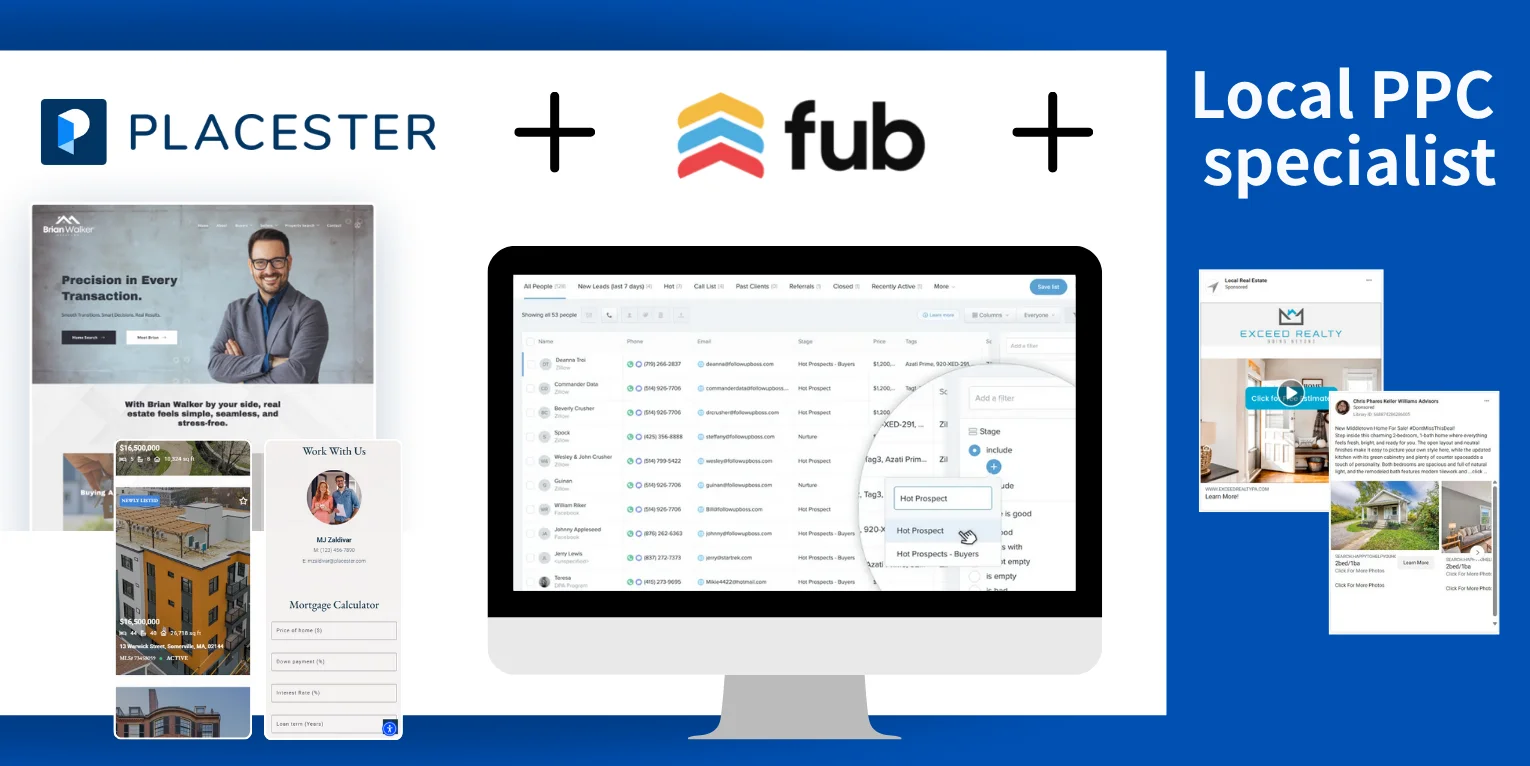
You can build this setup around the way your team works instead of paying for a large platform with features your agents may never use. Placester gives you control over the website, Follow Up Boss focuses on the CRM, and a local specialist runs ads for your market. If one part disappoints you, you can replace it without rebuilding everything else. The combined cost depends on the specialist’s fee, but it’s generally much lower than BoomTown’s.
Easy website customization
Placester creates a first draft of your site in minutes. From there, its AI features let you describe a change in plain English, see it on the page, and publish it yourself. You can choose which listings appear from your MLS feed and build neighborhood pages around what buyers and sellers want to know. You don’t have to wait for a developer to update the site as your business changes.
After launch, the Content Automation add-on can write and publish blog posts on a schedule. Built-in structured data helps search engines and AI tools understand what your site covers, giving useful local content a chance to attract organic leads. Visibility in search engines and LLM-generated answers is the foundation for attracting quality traffic to your website.
Faster lead follow-up
Placester offers basic lead capture tools and a simple CRM for managing website inquiries. When you need more advanced follow-up, its native Follow Up Boss integration sends contacts directly into your team’s workspace. Cloze is another integrated option if you already use it to manage client relationships, so you can keep your website and choose the CRM that fits how you work.
Follow Up Boss gives you precise control over lead routing. You can set assignment rules for each lead source or notify a group so the first available agent can claim the inquiry. If nobody responds within your chosen time limit, a fallback rule assigns it elsewhere. Once assigned, an Action Plan can send an introductory message and schedule the agent’s next steps. Smart Lists then flag contacts who need attention, so follow-up continues beyond that first response.
Local ads with direct control
An independent PPC specialist lets you pay for campaign work without buying another platform. Freelancers offer affordable management services, with direct access to the person running your ads. When a campaign needs changing, you can discuss it with them and agree on the next move without waiting for BoomTown’s customer support. Keep the accounts in your name, and you retain control of your ad investment even if you change specialists.
Your PPC consultant can use Google’s advertising tools to send visitors to a relevant page on your Placester site. When someone submits an inquiry, the native integration passes their details into Follow Up Boss, where your assignment rules and follow-up plans take over. Facebook lead forms can also feed into FUB through Zapier. Its reporting lets you track which sources produce closed deals, giving your specialist evidence to guide the next campaign changes.
👉 Learn how to make PPC work for your real estate business.
Flexible configuration
We recommend Placester with Follow Up Boss and a local PPC consultant because this setup works well for many of our clients. You’re free to build a different combination, though. If you have the skills to maintain a WordPress site yourself, connect it to a compatible CRM and keep your website costs down. You can also hire someone to manage campaigns without handing them the rest of your setup.
If you prefer Placester’s easy editing and AI tools, you can keep them without choosing FUB. Cloze also connects directly, while Zapier lets you send website inquiries to other compatible apps. Changing one tool means a smaller migration project than replacing a whole platform. You decide which features deserve a place in your business and how much you want to spend on them.
Pros
✅ Your website can keep working for you even when you pause paid campaigns.
✅ A growing team can add CRM seats without rebuilding its online presence.
✅ You can keep the tools your agents already know.
✅ Separate bills make it easier to see where your marketing money goes.
Cons
❌ Initial setup takes some coordination between providers.
❌ Each service has its own billing and point of contact.
❌ Finding a PPC consultant who understands your market takes time.
Pricing
For a solo agent, Placester starts at $59 a month, plus $25 for one IDX connection. Add Follow Up Boss Grow at $69, and your website and CRM cost $153 a month. For teams, Placester starts at $199 plus IDX. All these figures use monthly billing. Your PPC consultant’s fee and advertising budget are separate.
Rating
This setup earns 89.5/100 in our editorial assessment, compared with BoomTown’s 71/100. Website control contributes most to the result: you can make changes yourself and publish local content without commissioning a separate redesign. Freedom to replace individual tools also scores highly, because switching CRMs doesn’t mean giving up your website. FUB strengthens the follow-up score with assignment rules that get inquiries to an available agent and practical tools for keeping conversations moving.
For a team seeking more control over its monthly costs, that flexibility makes this combination particularly useful. You do take responsibility for coordinating the services, however. If you prefer one company to handle the entire setup, an all-in-one platform may feel simpler.
| Criterion | Weight | Placester + FUB + local PPC score | Contribution |
|---|---|---|---|
| Website and editing control | 20% | 10/10 | 20 |
| Total cost and pricing clarity | 20% | 9/10 | 18 |
| CRM and follow-up | 20% | 9/10 | 18 |
| Lead generation setup | 15% | 8/10 | 12 |
| Ease of adoption | 10% | 8/10 | 8 |
| Freedom to change tools | 10% | 10/10 | 10 |
| Customer support | 5% | 7/10 | 3.5 |
| Total | 100% | 89.5/100 |
2. Best for brokerage-wide management: BoldTrail (kvCORE)
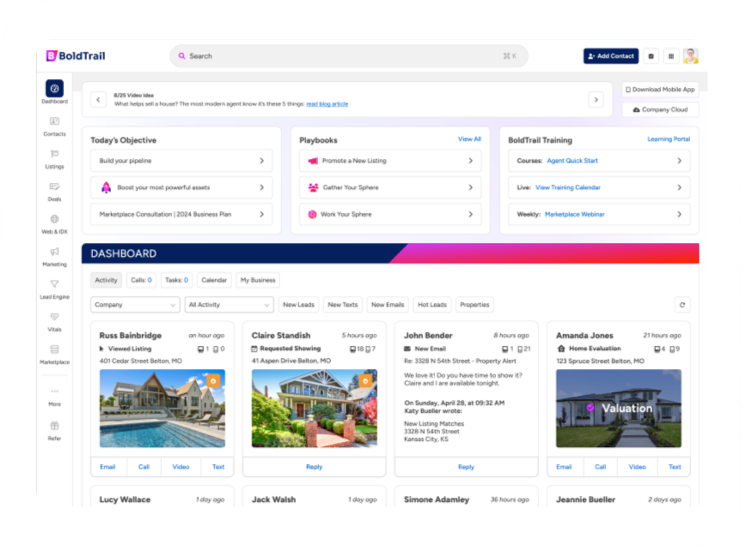
BoldTrail is Inside Real Estate’s all-in-one platform, built on kvCORE’s foundation and expanded into a broader brokerage ecosystem. The brand launched in June 2024:
- Existing kvCORE accounts became BoldTrail accounts.
- Brokermint now operates as BoldTrail BackOffice.
- AmpStats became BoldTrail Recruit.
Those products sit under the same brand, but they are separate modules.
For BoomTown customers, BoldTrail is the successor your provider is moving toward. It makes the most sense for brokerages seeking a shared system across multiple offices, with management oversight built into agents’ daily work. If the all-in-one solution already suits your business, the transition offers more capabilities within that model. On the other hand, it won’t solve the problem of paying for a large platform when your agents only need a small part of it.
Behavior-driven follow-up
BoldTrail’s Smart CRM uses behavioral lead scoring to prioritize contacts based on their activity. A buyer returning to browse properties gives the system a reason to bring that contact forward. Behavioral automation can also trigger outreach, helping your agents reconnect while the buyer is actively searching. That extends the connection between website activity and follow-up that BoomTown users already know.
Your existing follow-up setup still needs work during the move. Inside Real Estate says BoomTown-specific drip sequences must be recreated in BoldTrail, alongside custom agent assignments. Moving the contact database doesn’t recreate the system your team built around it. Teams with extensive customization face a steeper learning curve, because agents have to learn the new interface while administrators rebuild the processes they rely on.
More website editing options
BoldTrail’s Advanced Pages Editor lets you build and update pages through drag-and-drop editing. You can publish neighborhood content yourself, while its property search supports hand-drawn map boundaries and natural-language queries through HomeSearch AI. For a BoomTown team frustrated by website limitations, this gives the move a practical upside: more everyday changes can happen inside your office.
There is still a distinction between configuring a platform website and commissioning a custom design. BoldTrail offers custom WordPress development, and its PRO package includes premium website templates. A specific design may therefore affect the package or project you need. Its published migration guidance promises continuity for core CRM data, but doesn’t establish that your existing BoomTown website will be reproduced unchanged. Treat the website as a separate part of the transition, especially if you’ve invested in custom pages.
Lead generation beyond paid campaigns
BoldTrail keeps managed Google and Facebook campaigns connected to its CRM, so you can continue using advertising management through the same provider. Its Lead Engine also gives agents landing pages for specific offers. Smart numbers and text codes can capture inquiries from offline marketing, making it possible to turn interest from a property sign into a contact your team can follow up with.
That broader toolkit gives you more ways to build a sustainable pipeline, but it doesn’t make paid acquisition cheaper by itself. Recent customer experiences include leads outside the agent’s service area and results that failed to justify campaign costs. The move from BoomTown therefore isn’t evidence that your advertising will perform better. Campaign targeting and the handling of incoming inquiries still determine whether the spending produces useful opportunities.
👉 Explore ways to bring more real estate leads into your pipeline.
Brokerage-wide oversight
BoldTrail supports office and team hierarchies with role-based permissions, giving a brokerage control over who can access and manage information. Its reporting follows leads through the pipeline and shows agent activity, so managers can identify where follow-up stalls. That preserves a central reason teams choose BoomTown: a broker can see what happens after an inquiry reaches an agent.
Recreating that oversight involves rebuilding custom routing rules during migration. The important detail is how your existing assignment logic works in the new account, particularly when leads move between offices. Early transition experiences included frustration with those transfers. BoldTrail also offers BackOffice for commission management, but adding that module expands the implementation beyond replacing your CRM. It’s useful when you need that operational connection. It only creates more setup work when you don’t.
Pros
✅ Managers can oversee multiple offices without collecting separate agent reports.
✅ Agents have ways to capture inquiries from offline marketing.
✅ Brokerage operations can expand within the same provider’s ecosystem.
Cons
❌ A customized BoomTown account needs configuration work during the move.
❌ Extra capabilities can bring additional charges and training.
❌ Switching preserves the bundled model that may have prompted you to look elsewhere.
Pricing
BoldTrail currently publishes BASE, PLUS, and PRO packages without fixed dollar prices. BASE includes the website and Smart CRM. PRO adds premium website templates and access to its PRO Desk team. Your quote depends on account size and the products included. BackOfficeand Recruit can add to the bill, so an old kvCORE price or a reported monthly fee isn’t a reliable guide to what you’ll pay.
Rating
BoldTrail earns 73/100 in our editorial assessment, close to BoomTown’s 71/100. As its natural successor, it offers useful upgrades within the same all-in-one model, though moving to the Placester combination (89.5/100) gives you more control over your setup.
BoldTrail’s CRM contributes most to the score because website activity can influence follow-up, while brokerage reporting gives managers visibility across the team. The website editor also earns credit for making routine updates accessible without a developer.
Pricing clarity and freedom to change tools hold the result down. You still buy into a bundled platform, with some capabilities priced separately. Rebuilding BoomTown configurations also affects adoption, while reports of unresolved service issues reduce the support score. BoldTrail fits an office prepared to standardize its work around one provider. A team that wants to choose its website independently has less reason to follow that path.
| Criterion | Weight | BoldTrail score | Contribution |
|---|---|---|---|
| Website and editing control | 20% | 8/10 | 16 |
| Total cost and pricing clarity | 20% | 6/10 | 12 |
| CRM and follow-up | 20% | 9/10 | 18 |
| Lead generation setup | 15% | 8/10 | 12 |
| Ease of adoption | 10% | 6/10 | 6 |
| Freedom to change tools | 10% | 6/10 | 6 |
| Customer support | 5% | 6/10 | 3 |
| Total | 100% | 73/100 |
3. Best for managed lead generation: CINC
Commissions Inc is an all-in-one platform that unifies paid lead generation with an IDX website and a CRM. It suits established teams that want someone else to run their campaigns while their agents handle the resulting inquiries. You can buy it as an individual user, but its team-management tools make it particularly relevant when several agents share an incoming pipeline.
Fidelity National Financial acquired CINC in 2016 and Real Geeks the following year. Both belong to the same parent company but remain separate products. Choosing CINC gives you a different provider while keeping the bundled model you know from BoomTown.
Managed advertising
CINC’s marketing team runs Google and Facebook campaigns aimed at local buyers and sellers. Retargeting brings previous visitors back to your website, where registrations enter the CRM. The company reports managing more than $30 million in annual advertising spend, giving it considerable campaign experience across real estate markets. For a BoomTown customer, the basic process will feel familiar.
You’re paying for campaign execution and ongoing optimization, but your agents still need reachable prospects. Invalid contact details remain a problem in customer experiences, including numbers that belong to someone other than the person who registered. That gives your team extra work checking whether a lead deserves attention before following the system’s recommendation, reducing the time savings you’re paying for and weakening your ROI.
AI-led conversations
Alex, CINC’s optional AI assistant, texts new inquiries and continues the conversation before handing them to an agent. Your team can take over at any point and see the message history. This gives you an automated way to engage someone who registers while everyone is busy, extending follow-up beyond a scheduled drip campaign.
In September 2026, CINC introduced an upgraded Nurture Engine that draws on browsing activity and CRM notes, giving Alex more context to continue a conversation. Its recommendations still need a closer look: someone who has said they aren’t interested may be flagged as a promising AI lead. Reading the exchange before taking over helps your agents focus on people willing to talk and move those leads toward conversion.
👉 Find the right AI tools for your lead generation and learn how to use them.
A website built around inquiries
Your CINC website lets buyers browse listings under your brand, helping you keep traffic that might otherwise drift to an external portal. You can configure its layout, with hosting handled by the provider. The site sits inside the lead-generation setup, so it makes sense when your main goal is capturing inquiries and getting them into your agents’ workflow.
The website tools have also changed in 2026. New AI & SEO Settings let you add JSON-LD structured data and an llms.txt file describing your business. These provide information that search engines and AI tools can access. They don’t amount to a free-form website editor, however. CINC’s September update placed a more modern, boutique website design on its roadmap. Placester already gives you a flexible IDX website you can reshape yourself, making it the more established choice when website control is your priority.
Shared lead management
CINC routes inquiries to available agents and tracks activity across team members. AutoTracks handles ongoing follow-up, helping contacts stay in the pipeline after the first attempt to reach them. For a manager leaving BoomTown, this preserves the ability to assign incoming business and see whether agents are working it.
You can also bring outside inquiries into the CRM through CRM Connect. CINC’s public API supports deeper integrations, and its directory lists a connection that sends leads to Follow Up Boss through API Nation. That gives you options if agents prefer another workspace, although paying for a second CRM adds to the setup. Zapier access starts with Ramp plan. Solo has a narrower integration offering.
Pros
✅ You can change providers without abandoning a managed-advertising approach.
✅ Outside lead sources can join the same database.
✅ CINC University and live training help agents develop consistent working habits.
Cons
❌ Advanced AI adds another monthly charge.
❌ Some integrations require a higher package.
❌ The bundled setup gives you less freedom to buy only the parts you need.
Pricing
CINC doesn’t publish a fixed subscription price. Its packages follow team size:
- Solo covers one user.
- Ramp supports up to four.
- Pro goes up to 49.
- Select serves accounts with 50 or more.
Published extras include AI starting at $200 a month and a three-line dialer at $75 a month. The terms also identify applicable setup charges and an advertising fee comprising ad spend and management, so the full quote needs to cover more than the platform subscription.
Rating
CINC earns 74.5/100 in our editorial assessment, compared with BoomTown’s 71/100 and the Placester combination’s 89.5/100. Managed acquisition contributes most to the result, with CRM automation providing a way to keep working the contacts those campaigns generate. Training also strengthens the assessment by helping agents turn the software into a repeatable daily process.
Pricing clarity holds CINC’s score down, while the bundled website and CRM limit your freedom to replace individual parts economically. It’s a useful option for a team that wants to keep buying managed online leads through one provider. If your reason for leaving BoomTown is greater website control or a smaller monthly setup, the Placester combination addresses that more directly.
| Criterion | Weight | CINC score | Contribution |
|---|---|---|---|
| Website and editing control | 20% | 7/10 | 14 |
| Total cost and pricing clarity | 20% | 6/10 | 12 |
| CRM and follow-up | 20% | 9/10 | 18 |
| Lead generation setup | 15% | 9/10 | 13.5 |
| Ease of adoption | 10% | 7/10 | 7 |
| Freedom to change tools | 10% | 6/10 | 6 |
| Customer support | 5% | 8/10 | 4 |
| Total | 100% | 74.5/100 |
Conclusions
BoomTown is being phased into BoldTrail anyway, so this is a good moment to decide whether another all-in-one platform fits your business. Choosing a competitor with a similar bundle may leave you paying for features your agents ignore.
For teams looking to cut costs, a customized IDX website connected to their preferred CRM and locally managed ads offers more flexibility. Your agents get the tools they need to help leads convert, and you stop paying for the rest.
Placester and Follow Up Boss both offer free trials, so you can build a professional website and try a dedicated lead-management system before committing. Their month-to-month billing also gives you room to adjust as you learn what your team needs. Start now to see how easily this setup fits your daily work.
AI Websites for Real Estate
Get a custom, ready-to-edit website
in less than 4 minutes.
FAQ
What other BoomTown alternatives should I consider?
Beyond the options covered here, consider Real Geeks or Sierra Interactive if you want another website-and-CRM platform. Lofty’s automated lead engagement tools also make it worth comparing if you want to reduce manual follow-up. If you prefer to choose your website separately, AgentFire connects with Follow Up Boss, as Placester does.
What is the best BoomTown alternative for a real estate team?
Placester with Follow Up Boss and a local PPC consultant is our top recommendation for a team that wants more control over its setup. Your highly customized website sends inquiries directly into FUB, where assignment rules and follow-up plans help agents work them consistently.
Are there cheaper alternatives to BoomTown?
Yes. Placester with one IDX connection and one Follow Up Boss Grow seat starts at $153 a month with monthly billing, before campaign costs. Sierra Interactive’s Starter package costs $359.95 a month with monthly billing under a 12-month agreement, plus a $500 setup fee. Compare the complete bill, including advertising and additional users, against your current BoomTown subscription.
Can Follow Up Boss replace BoomTown?
Follow Up Boss can replace BoomTown’s CRM, but it does not provide a public IDX website or run your advertising campaigns. Pair it with Placester for the website and hire a PPC consultant if you need paid lead generation. FUB now also offers listing search and property alerts for eligible Zillow-program users in supported MLS markets.
Can I keep my contacts and property alerts when switching from BoomTown?
You can transfer your contacts, and Follow Up Boss has a documented process for importing BoomTown notes too. BoomTown’s lead export is restricted to Broker/Admin users, so agents need their account administrator’s involvement. Existing property alerts are a separate part of the move: importing contacts does not automatically recreate their saved searches or email schedules. Confirm whether your new provider can transfer those settings or needs to rebuild them before you close the old account.
Published on
(Last updated on
)