(800) 728 8391

Placester vs Lofty
Lofty is a complex brokerage platform that bundles its IDX website with a CRM and broader operating system, leaving you to configure and pay for software you may never use.
Lofty Front is its website-focused alternative, but every plan still requires a mandatory paid build that delays launch.
Placester gives you a faster, more flexible path: build your website with AI in minutes and manage it yourself without waiting for a mandatory design service.
3 Top Weaknesses with Lofty:
Months-long website launch: Lofty Front publicly quotes delivery times of up to eight weeks, while users report waiting four to six months.
Long-term contract required: The $109 monthly rate locks you into a two-year contract, with a mandatory build from $499 bringing the minimum cost to $3,115.
No free trial: You have to pay before you can test the platform or see your finished website.
Why choose Placester over Lofty
Placester keeps your website separate from the rest of your real estate software. Instead of paying for a broad operating system, you choose the website plan and services that match your current needs.
This model reduces both the financial commitment and the work required to adopt the platform. As your business changes, you can adjust your website stack without rebuilding your entire workflow around one vendor.
Faster launch
Create your personalized website draft with AI in about five minutes.
Lower upfront cost
Start from $59 per month without paying a mandatory build fee.
Risk-free trial
Explore the platform with a 14-day free trial.
Direct website control
Update pages, content, and design with AI or point-and-click editing.
Freedom to choose
Pay only for the tools you need instead of funding features you never use.
Optional expert help
Add professional website services only when you need them.
Compare Lofty vs Placester
More in this guide:
Features comparison
Lofty is designed to become the central system behind a real estate business. Its value depends on agents adopting the platform across their daily sales and marketing processes. That breadth can suit established teams with a consistent lead flow, but it also creates a heavier setup and a steeper learning curve.
The full Lofty platform lets users customize template-based websites with its visual editor. Lofty Front follows a more restrictive model: a software developer must complete the initial build before the agent can manage the finished site. Access to Lofty’s Agentic CRM and broader sales operations requires a paid upgrade to the full platform.
Placester puts website creation directly in your hands. Its features work together around a clear goal: helping agents, teams, and brokers build a strong online presence and turn website visitors into opportunities. This makes the platform easier to understand and ensures that its value does not depend on adopting an entire business operating system.
| Feature or capability |  |  |  |
| Personalized website generated by AI | ✔ | ✔ | ✅ |
| Plain-English AI editing of an existing website | — | — | ✅ |
| Manual no-code website editing | ✔ | ✔ | ✅ |
| Launch without a mandatory managed build | ✔ | — | ✅ |
| Direct control over website publishing | ✔ | — | ✅ |
| Integrated IDX property search | ✔ | ✔ | ✅ |
| Standalone website without a full CRM subscription | — | ✔ | ✅ |
| Basic built-in lead management | ✔ | ✔ | ✅ |
| Native Follow Up Boss integration | ✔ | — | ✅ |
| Native Cloze integration | ✔ | ✔ | ✅ |
| Published website pricing | — | ✔ | ✅ |
| 14-day free trial | — | — | ✅ |
| No mandatory website build fee | ✔ | — | ✅ |
| Multi-agent website management and lead routing | ✔ | — | ✅ |
| Full all-in-one CRM platform | ✔ | — | — |
| Built-in transaction management | ✔ | — | — |
What does it take to get up and running?
Lofty is not a platform you simply switch on. Its own team setup guide covers 21 website and CRM tasks. Before the system reflects how your business works, you need to configure account roles, pipeline stages, Smart Plans, lead routing, integrations, and data migration.
Lofty offers guided onboarding and more than 50 live training sessions every week. That support is useful, but it also reveals how much there is to learn. Users regularly report that getting comfortable with the platform takes time and training, while large brokerages may need a phased rollout led by an implementation manager.
Lofty Front removes much of the CRM setup, but replaces it with a managed onboarding process. AI creates the initial website, after which a software developer refines it and provides you with training before launch.
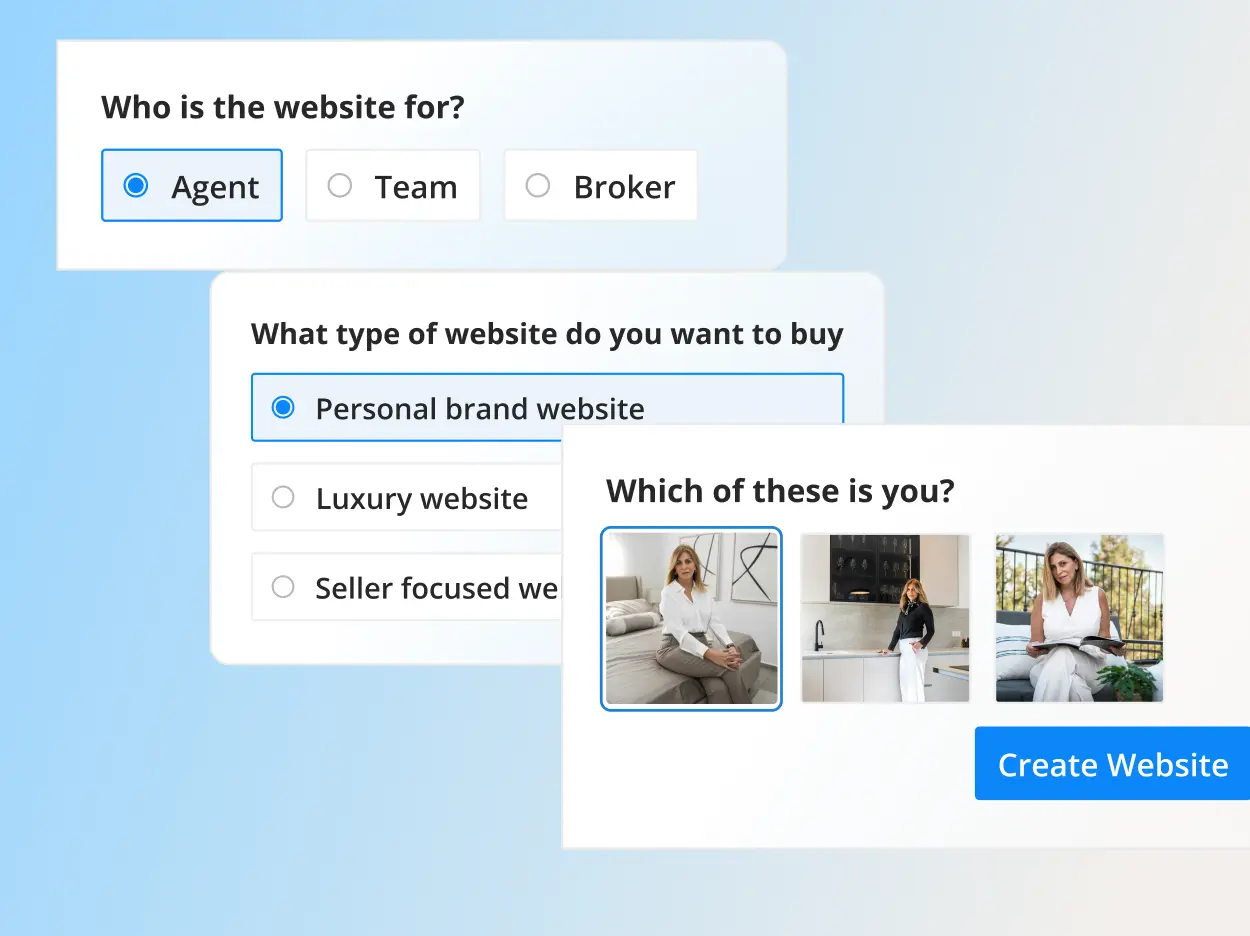
Placester keeps the learning curve focused on the website itself. Start with a personalized draft generated by the AI Builder. Then refine it from a live preview with plain-English prompts in the AI Editor or make changes manually. You can start making meaningful updates without first learning how to administer an entire sales platform.
How predictable is the total cost?
Lofty makes it difficult to estimate your annual software budget before speaking with sales. The full platform uses custom quotes, while many tools that expand its core capabilities are sold as add-ons. Lead generation can also introduce management fees tied to ad spend, so the final cost depends on more than the selected plan.
Lofty Front publishes its subscription structure, but the recurring fee is only one part of the expense. Every new customer must purchase a separate website build, while ongoing SEO, advertising, and the Agentic CRM remain optional upgrades. The lowest advertised rate also requires a longer commitment, which makes the headline price a poor measure of the real cost.
By comparison, Placester’s published plans show what you will pay, while recurring IDX charges and optional professional services are listed separately. You can calculate your website costs in advance and add services later without requesting a custom quote.
How long until your website goes live?
With Lofty Front, an AI-generated draft is only the beginning. The website then enters a managed production process, and you cannot launch until Lofty’s team completes the build. The company promotes an average turnaround of about three weeks, but its detailed estimates vary significantly by tier:
➡️ The basic Launch service is quoted at about seven business days.
➡️ Grow extends the process to four or five weeks.
➡️ Scale is estimated to take roughly two months.
These are delivery estimates rather than guaranteed deadlines, and any additional revisions can move the launch further back.
Placester removes that internal production queue. Its AI Website Builder delivers a complete, ready-to-edit draft in about five minutes, and you decide when it is ready to publish. Even Lofty’s own 2026 website builder comparison recognizes Placester as the fastest option and says its websites can go live within days.
IDX approval can delay the full launch on either platform because the final decision belongs to the MLS. With Placester, however, you can complete and publish the website without waiting for a mandatory design service to finish its work.
What can you test before you commit?
Lofty offers a personalized demo, but no free trial of its core platform. A sales presentation can explain the system, yet it cannot show how the software will fit your daily workflow. To test it with your own business, you must first become a paying customer.
Lofty Front follows the same pay-first model. Your subscription and mandatory website build begin once payment is confirmed. This means committing before you can use the editor yourself or evaluate the finished website created for your brand.
Placester gives you 14 days to test any plan before making that decision. Build a personalized website, work with the AI Editor, and judge the experience using your own content. You gain practical evidence that the platform suits you, with the freedom to walk away if it does not.
How much will you depend on support?
Lofty provides phone and email assistance seven days a week, along with a 24/7 Help Center. This access matters because the full platform can be difficult to manage alone. User reviews frequently mention slow responses or answers that fail to resolve more complex problems. When an important workflow depends on the vendor, weak support becomes more than an inconvenience.
Lofty Front reduces some of that complexity, but it does not remove the dependency. You can handle routine edits yourself after launch, while larger design changes and adjustments to the SEO page structure often need help from a developer or support team. MLS feed changes also go through the Lofty team. This leaves you waiting whenever a request falls outside the editor’s self-service options.
Placester’s support and professional services remain available when you want them, but everyday website management does not depend on their response time. You can make changes when your business needs them instead of joining a support queue.
What happens when your tech stack changes?
The full Lofty platform ties your IDX website to its CRM and broader operating system. You can export lead data, but the website and Lofty-specific workflows do not move with it. Switching providers may therefore require rebuilding several connected parts of your setup. Lofty Front reduces this dependency by allowing you to send leads to an existing CRM through selected integrations, Zapier, or an API.
Placester is designed to work as an independent layer in your tech stack. Use its simple CRM or connect the website natively to Follow Up Boss, Cloze, or Rechat. You can replace your CRM without rebuilding the website or changing how visitors find your business.
Neither website platform offers a one-click transfer of the complete site to another host. Placester’s flexibility advantage is strongest against the full Lofty platform. Compared with Lofty Front, the difference is narrower, although Placester provides native connections to Follow Up Boss and Rechat at a significantly lower overall cost.
Placester vs Lofty pricing
For a solo agent who needs an IDX website, Placester Agent Essential is the most cost-effective option. The plan costs $59 per month, with IDX available for an additional $25. Choose annual billing and the website costs $566 per year, bringing the first-year total with IDX to $866. There is no mandatory build fee.
Lofty Front starts at $199 per month and requires a website build priced from $499. That brings the minimum first-year cost on monthly billing to $2,887. The annual plan lowers the subscription rate to $139 per month, but the build fee still pushes the first-year total to $2,167. Placester therefore saves you $1,301 on a comparable annual website subscription with IDX.
Lofty advertises a lower rate of $109 per month, but only with a two-year term. Combined with the minimum build fee, that creates a commitment of at least $3,115. Pricing for the full Lofty platform is not published and depends on the selected package, seats, and add-ons, so it shouldn’t be included in a direct price comparison.
| Pricing factor | Agent Essential + IDX | Launch build |
| Website subscription, monthly billing | $59/month | $199/month |
| IDX | $25/month | Included |
| Mandatory build fee | None | From $499 |
| First-year cost with monthly billing | $1,008 | $2,887 |
| First-year cost with annual billing | $866 | $2,167 |
| Two-year commitment required for lowest advertised rate | No | Yes, $3,115 |
| Free trial | 14 days | None |
Which platform fits the way you work?
Lofty makes the most sense when you are prepared to move your business into one vendor’s system and adapt your workflow around it. The full platform may be excessive if you only need a website, while Lofty Front still requires you to pay for a mandatory build and wait for the company’s team. It is a narrower fit for agents who accept higher costs and less direct control.
Placester fits a much wider range of agents, teams, and brokers. You might be launching your first website today or bringing an established business with a CRM you already rely on. Either way, you can shape the platform around your workflow and add expert services as your needs change. Instead of committing to one predefined way of working, you get a website that can evolve with your business.
What customers are saying about using Placester vs Lofty

I love Placester. The customer service has always been great. We recently found a small error that we couldn’t fix, and Adrian took care of it ASAP. Thanks again for running a great service.
Steve Norton
Norton Reality

My website has been live for a couple of weeks. I needed to make some edits and I didn’t know how to publish a new agent or a change to an existing agent. I emailed support and within a short period of time everything was done!! Quick, reliable and knowledgeable!
Julie Converse
Newfound Properties

Placester makes it incredibly easy to have a very versatile and professional website for business promotion, lead capture, and so much more. With top-notch customer service and a very user-friendly platform, there is no other website builder that compares.
Jordyn Hillner
Hillner Homes

Placester has been great to work with. My website looks amazing and I have to thank my consultant Pauline for that. She listened to my vision, gave me ideas, helped me incorporate my own ideas, and guided me all the way through the creation process!
Tammy Bond
007 Tamy Bond
Still comparing?

Casey Popkins
Director, SMB Sales
Get a personalized Placester walkthrough and see how we beat the competition.
We’ll answer your questions and highlight key features for your business.
Frequently Asked Questions
How much does Lofty cost monthly?
Lofty does not publish prices for its full CRM platform, so you need to request a custom quote. Lofty Front costs $199 with monthly billing, $139 per month on an annual plan, or $109 per month with a two-year commitment. Every option also requires a website build starting at $499.
Is Lofty a CRM?
Yes. The full Lofty product is a real estate CRM combined with websites, marketing automation, and other business tools. Lofty Front is primarily a standalone IDX website product with streamlined lead management, while the more advanced Lofty CRM remains a separate upgrade.
Is Lofty good for solo real estate agents?
Lofty Front is designed for solo agents, but its price and managed build process make it a relatively heavy commitment for a first website. The full Lofty platform, on the other hand, may offer more functionality than one agent can realistically use. Placester is easier to fit around a solo business because you can start with a lower-cost website and expand only when necessary.
Can I try Lofty before buying it?
No. Neither the full Lofty platform nor Lofty Front currently offers a free trial. You can request a demonstration, but you must pay before using the product with your own website and workflow. Placester gives you a 14-day free trial, so you can test the platform before committing.
Can I edit a Lofty website myself?
Yes, but the level of control depends on the product and the type of change. Lofty Front lets you handle routine edits after launch, while larger design changes and adjustments to its SEO page structure may require the Lofty team. By comparison, Placester lets you make everyday changes directly with its AI Editor or codeless editing tools.