(800) 728 8391

Placester vs ChatGPT, Claude, and other general-purpose AI
ChatGPT or Claude can turn your description into a convincing first draft of your website, but that draft cannot give buyers access to live MLS listings on its own.
Until you connect an authorized data source and build a reliable search experience around it, your website is little more than a polished brochure. And every visitor who cannot find a property has another reason to leave.
Placester brings AI into a real estate website platform with an established IDX integration process and tools for handling the inquiries your site generates.
You can build and manage your website yourself, with far less technical work competing for your selling time.
3 top weaknesses of external AI website builders:
No native MLS connection. That gap can create extra development work and send ready-to-act prospects to a portal that already has the listings they want.
Technical responsibility stays with you. Custom functionality needs testing, and problems beyond your experience can require a developer.
The free plan leaves costs unresolved. With IDX, infrastructure, integrations, and developer support, running the website can cost hundreds or even thousands of dollars per month.
Why choose Placester over ChatGPT, Claude, and others
Placester gives you a practical way to keep control of your website without making software development part of your job. Its AI works inside a platform already designed for real estate businesses.
That makes the same system useful whether you are launching your first agent website or managing lead routing across an entire brokerage.
AI website building
Describe the site you want and refine it in Placester’s editor.
IDX integration support
Connect your MLS through an established approval process.
Codeless customization
Make everyday changes without hiring someone to edit code.
Built-in lead capture
Give visitors a direct way to contact you from your website.
Connected lead management
Manage leads in Placester or your integrated CRM.
Brokerage tools
Use Agent Manager to organize agent profiles and website assignments.
Compare Placester vs general-purpose AI tools
More in this guide:
Features comparison
External AI tools can produce usable website code and revise it through conversation. Some now handle publication as well: ChatGPT Sites publishes interactive websites, while Lovable and Replit provide environments for building and hosting applications. Claude Artifacts gives interactive content its own public link. These capabilities make the first version accessible, even to people who have never written code.
A working real estate website needs more than a polished preview, though. You need to define how the site should behave and verify the result beyond its preview. You must spell out requirements that a specialist platform handles by default. Maintaining the resulting application also becomes your responsibility unless you hand it to a developer.
Placester gives you an established product to configure for your market. Its real estate features reduce the number of workflows you have to design from scratch. For an agent managing a website between appointments, that is a strong reason to choose it. A brokerage also gets a clearer way to administer agent websites as the organization grows.
| Capability | General-purpose AI tools: ChatGPT Sites, Claude Artifacts, Lovable, Replit |  |
| Generate or revise website content using prompts | ✔️ | ✅ |
| Publish a website or interactive web experience | ✔️ | ✅ |
| Connect your own domain within the platform | ✔️ Except Claude Artifacts | ✅ |
| Native MLS/IDX integration service | — | ✅ |
| Dynamic listing pages | — | ✅ |
| Built-in IDX property search | — | ✅ |
| Native real estate CRM | — | ✅ |
| Content automation | ✔️ | ✅ |
| Scheduled content publishing | — | ✅ |
| Social automation | — | ✅ |
| On-demand website and design services | — | ✅ |
| Native agent website management | — | ✅ |
| Human support specialized in real estate websites | — | ✅ |
| Ongoing free plan | ✔️ Except ChatGPT Sites | — |
MLS and IDX
The property cards on a website drafted with a general-purpose AI tool may look ready for buyers. To display current MLS inventory, however, the site needs authorized listing data and a working connection to it.
One way to add that data is Repliers. During development, its MCP server lets ChatGPT or Claude query live inventory directly inside the assistant. Turning that prototype into a property search for website visitors requires the Repliers API, which sends listing data to the site. The free Preview plan only provides sample records. Production access starts at $199 per month, and you must be a licensed real estate professional with the required MLS authorization.
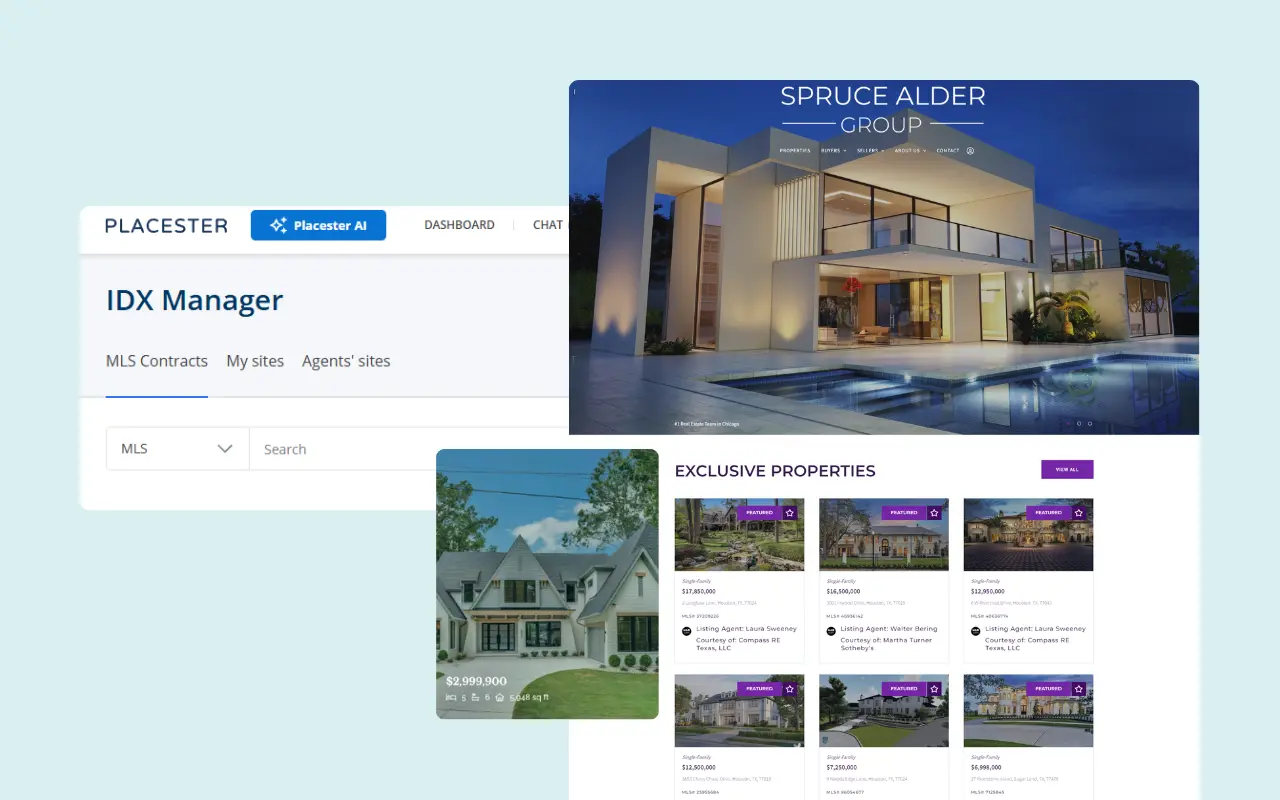
Placester offers an established integration service across more than 600 MLSs. After you request IDX, our team helps move the necessary documentation through approval. The website already has property-search functionality ready to use with the approved feed. That removes a substantial implementation task from your launch.
A buyer who opens your Featured Listings page should not have to sort through homes that are already off the market. Placester’s dynamic featured-listing and open-house pages refresh automatically as the MLS feed changes, so buyers see current opportunities without manual cleanup. As transactions close, sold properties populate a separate showcase that gives prospective sellers concrete proof of your track record. You keep both sides of your business up to date without maintaining every listing by hand.
Before your property search and dynamic listing pages can go live, the MLS must approve the connection. This process typically takes up to 10 business days when the paperwork is complete, although the final timing depends on the MLS. You can continue building the rest of your site during that time. Confirming coverage early helps you set a realistic launch date and prevents you from planning around data you are not yet authorized to display.
Domain and hosting
Once your new website is ready, the address on your business card needs to take clients straight to it. Placester includes managed hosting on every plan and lets you connect a domain you already own. You only need to purchase the domain itself.
Some general-purpose AI tools also provide hosting. ChatGPT Sites hosts published websites, while Lovable and Replit offer their own deployment infrastructure. Claude Artifacts uses public links, so turning generated code into a standalone business website requires a separate hosting and deployment process.
However, included hosting may come with traffic caps or additional charges. Exceeding your ChatGPT Sites plan allowance can make a high-traffic website temporarily unavailable. Lovable and Replit use their own resource limits and pricing models.
With Placester, hosting is already part of the website service you are buying, so increased traffic does not create another service to monitor or another bill to calculate.
From homepage to complete website
Your website should look and feel like your business from the first click. General-purpose AI builders rely on you to define both the brand and the website structure. ChatGPT Sites will not know how to present your market or organize buyer and seller journeys unless you provide detailed instructions. Replit’s Plan Mode can structure those requirements, but it will build around an incomplete plan without recognizing what is missing.
Claude Artifacts often begin as single-page prototypes that need further work before they function as complete business websites. The result may look polished while still requiring extensive prompting, navigation planning, review, and deployment work.
Placester’s AI Website Builder only needs your business name to create a complete, branded real estate website draft in about five minutes. It automatically builds the page structure, applies your brand identity, and organizes the navigation around the needs of buyers and sellers.
You can then refine the copy and layout with the AI Editor or make precise changes in the Codeless Customizer. This gives you a distinctive website that stays consistent with your brand, without writing detailed prompts or hiring a developer.
For brokerages, Placester makes it easier to extend the same brand across multiple agent websites. Agent Manager lets your team create and assign branded sites without rebuilding each one from scratch in a general-purpose AI tool.
Everyday editing
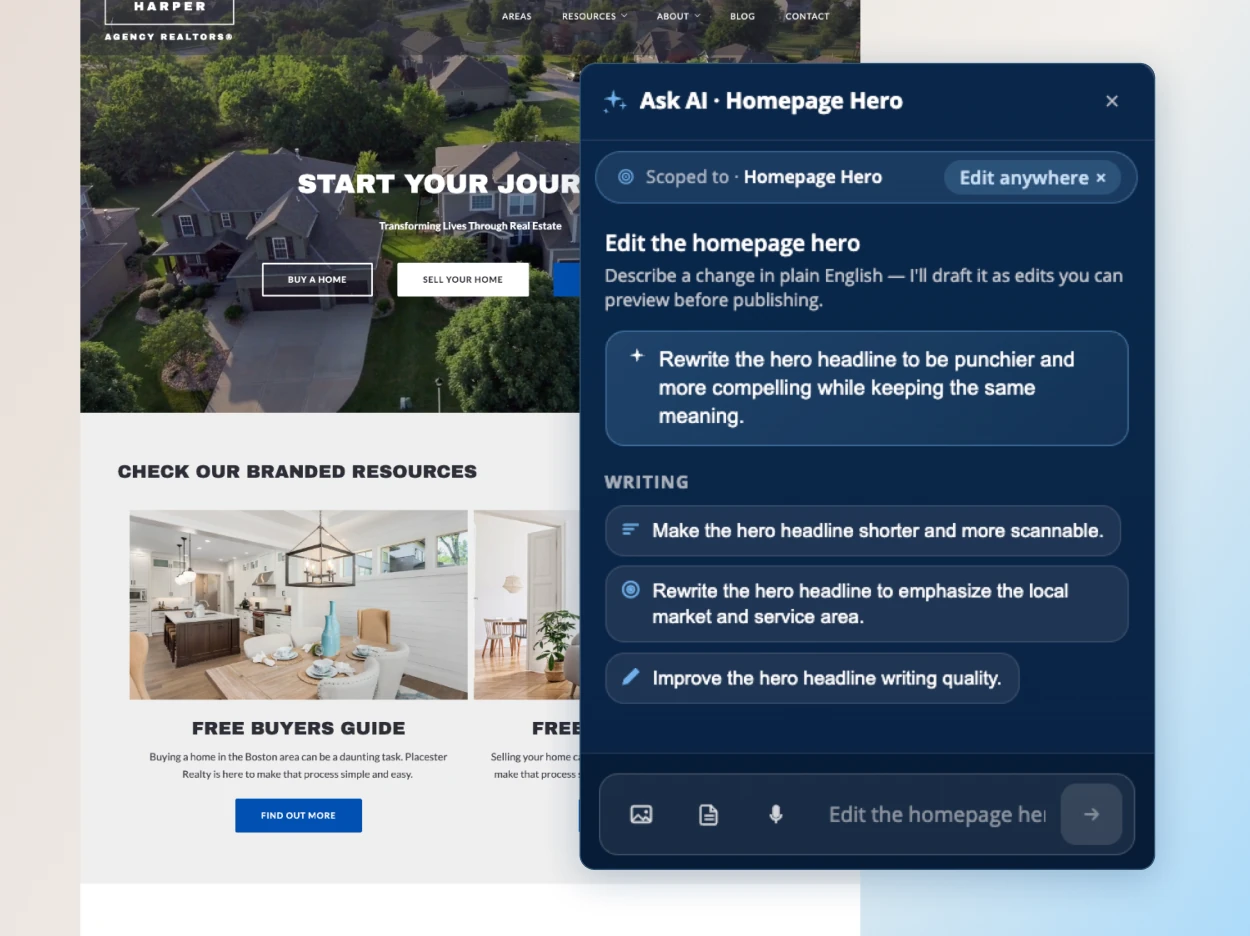
Suppose your seller consultation process changes and several pages need updated wording. Placester’s AI Editor can work across multiple pages from a natural-language request. You can also make direct edits in the same workspace.
The editor lets you review the proposed work and inspect the changes before publishing. That gives you a useful checkpoint when an update affects information clients rely on. This way, routine content and design changes stay within a workflow you can manage yourself.
Conversational editing is available in competing AI tools, too. With a custom application, however, a change can affect code shared by several pages or alter a connected workflow. Someone needs to check the result in context. When a problem falls outside what you understand, resolving it may mean another round of troubleshooting or paid technical help.
Placester makes that ongoing responsibility more manageable by keeping normal website updates inside a supported real estate product. You can make a change when your business needs it, without commissioning a coding task.
Tasks that need a human
Support from a general-purpose AI vendor focuses on the builder itself. It does not give you a real estate website team that can investigate an IDX connection or complete a site change inside your account.
Placester customers can reach the support team through chat or email when their website needs attention. When you want the work taken off your plate, you can submit an On-Demand task and work directly with a Creative Assistant through the Services portal. This gives you a simple way to delegate website or design work without searching for a developer.
AI property search
A buyer may know exactly what they want without knowing which filters to select. Placester’s AI Listing Search lets them describe their requirements in ordinary language and converts the request into supported IDX filters.
For example, a visitor could ask for three-bedroom condos in Boston under a specified price. After they apply the filters, the search results update using your approved listing inventory. The visitor can see the selected filters and refine them manually. This gives buyers a more approachable way into your property search while keeping the results tied to your MLS data.
Adding a general AI chat box to a custom website does not provide that connection by itself. Repliers can provide the missing MLS data, but it does not turn an AI-built website into a working property search. Its MCP server acts as a connector that lets ChatGPT or Claude query live listings inside the assistant. Website visitors cannot use that connection on your domain.
A public search requires a separate API implementation that securely sends each request to Repliers, converts natural language into available MLS filters, and displays the returned properties correctly. Building and testing that system remains your responsibility and will usually require development support.
Placester includes this capability on Agent Plus and higher subscriptions, subject to site eligibility and approved IDX. You can enable it within the website’s existing search experience.
SEO and AI visibility
Some custom AI builders include SEO tools, but optimization remains a separate task. Lovable’s SEO & AI Search panel audits whether search engines can crawl and understand the project, yet some essential elements may be missing from the initial build and applying fixes consumes credits. Replit evaluates the published site through SEO Rating, while its paid SEO Agent proposes technical corrections. Neither workflow creates the local expertise or market authority an agent needs to compete in search.
Websites coded with ChatGPT or Claude have no built-in SEO review unless you request and configure one. Generated metadata may look complete, but you still have to check whether every page targets a clear search intent and remains indexable after future changes.
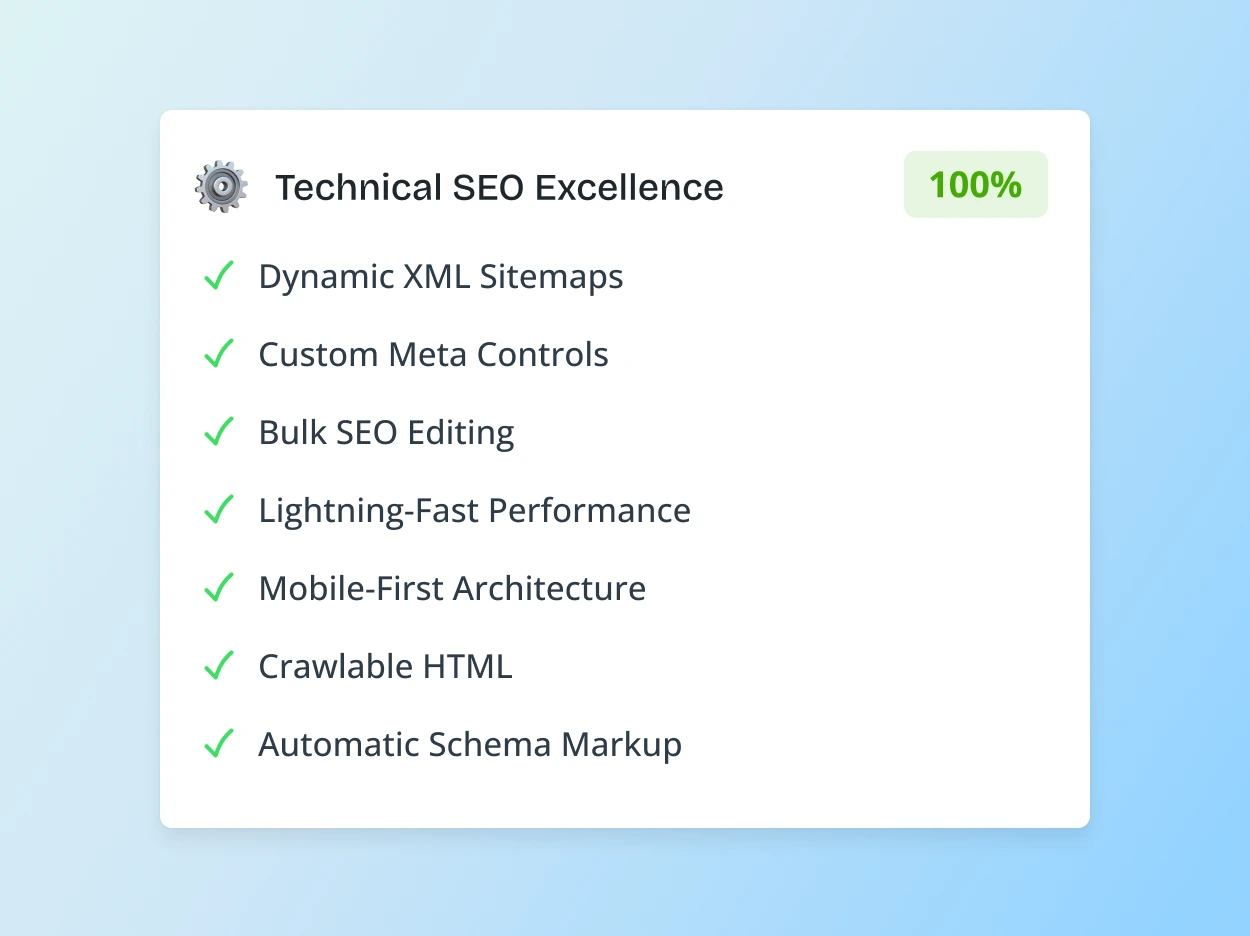
Every Placester website starts with an AI-ready SEO foundation built for real estate. Titles and descriptions can be managed at page level, while editable URLs let you create clear addresses for communities and service areas. Indexing controls, internal linking, and 301 redirects are available without code, so you can protect existing visibility when a page moves or its address changes.
Placester also creates an llms.txt file automatically. It gives AI systems a structured reference to the website and its content without asking you to create or maintain another technical file. Your time stays focused on publishing accurate local information that distinguishes your business.
Content automation
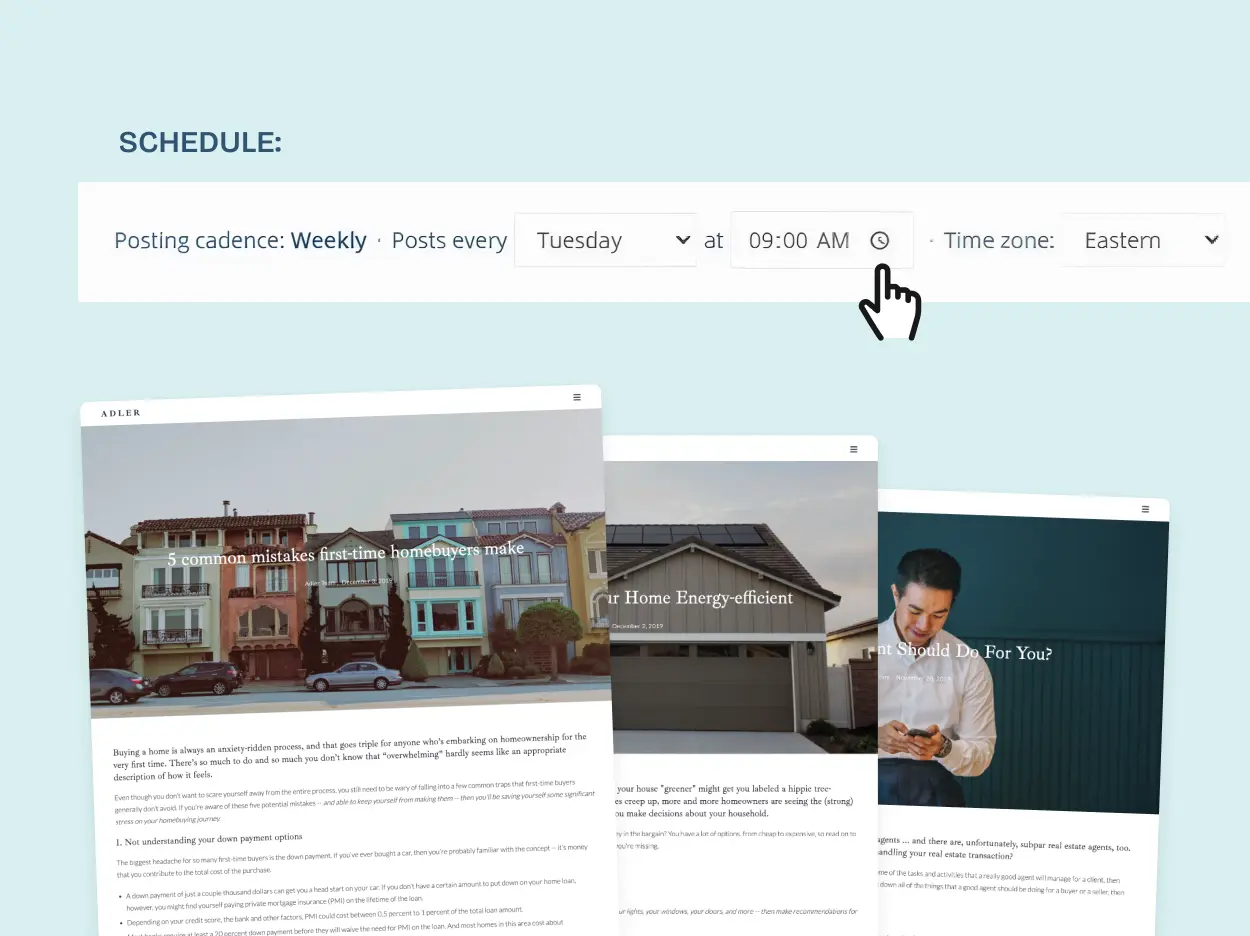
An unfinished blog post can stay on your to-do list for weeks during a busy closing season. Placester’s Content Automation add-on takes the work from topic selection through to scheduled publication on your website.
You choose subjects from the catalog, and Placester uses your Business Profile to tailor each article to your brand and operating areas. Monthly, weekly, and daily publishing options are available. If you want to review the content first, “Draft, then publish” prepares the article one day before it is due to go live. The post is published on schedule unless you cancel it.
General-purpose AI tools also support recurring content creation, but you still have to assemble the path from draft to publication. ChatGPT Scheduled Tasks generate articles on a timetable and work with connected tools. Replit Routines run recurring jobs, while Lovable supports automations built into a custom application.
None of these options gives your real estate website a ready-made publishing schedule. You must define where each post belongs and how it reaches the live site. In ChatGPT Sites, saving a new version and deploying it are separate steps, so scheduled generation alone does not keep your blog updated.
Placester connects content creation directly to your real estate website. Once an article goes live, the Social Automation add-on can turn it into a branded vertical video and publish it to your Facebook Page and linked Instagram account. The same system responds to eligible listing activity, turning relevant property updates into social content.
This gives each article and listing a longer marketing life without asking you to copy content between disconnected tools. Your website and social profiles stay active and both channels lead prospects back to the same real estate platform.
CRM and integrations
A website inquiry is valuable when you can act on it. If a buyer submits a form during a showing, you need a dependable place to find the details afterward.
Placester includes a simple CRM in its entry plan. Higher plans add lead activity and saved-search information, giving you more context for follow-up. These are established product features you can configure, which saves the work of assembling a lead-management application around a generated form.
If your business already uses Follow Up Boss, Placester offers a native integration that transfers website leads and their data into that system. Eligible plans also support Zapier. You can keep an existing follow-up process while using Placester for the website.
General-purpose AI can help build similar connections, but you still have to define the handoff and verify that it works. Replit handles supported services through Agent Integrations: when a connector is available, you sign in and the platform writes the code needed to transfer the data.
For an external service, you provide its API key. A CRM outside the connector catalog requires a custom connector or direct API integration. You must specify where the lead should be created, how website fields map to the CRM record, and what the visitor sees when the transfer fails.
Lovable provides a similar Connect any API route for services without a ready-made connector. The AI can help write the request, but it still needs the endpoint, authentication method, and field structure. Afterward, the owner has to verify that a test inquiry reaches the right CRM pipeline with the correct source and contact details.
Placester vs AI tools pricing: The real cost of a “free AI real estate website”
Placester’s entry agent plan with one approved IDX integration starts at $84 per month on monthly billing: $59 for Agent Essential plus a $25 IDX support fee. Domain registration and any separate MLS access charges are additional. This gives you a concrete starting figure before you invest time in building.
If you choose to build with a general-purpose AI tool, a free account can keep the initial experimentation cost low. It does not establish the operating cost of the website you eventually publish. That figure depends on the product you use, the features you build, and the outside services the implementation needs. Some hosting and database usage may fit within included allowances. Custom work and commercial listing data can introduce separate charges.
| Cost | | General-purpose AI route |
| Website and hosting | From $59/month | Free to test; publishing and usage may cost extra |
| Live IDX feed | $25/month per approved feed | API from $199/month, plus implementation |
| AI editing | Included | Subscription or credit limits |
| Lead capture and CRM | Included | Build or pay for separately |
| SEO tools | Included | Varies by platform; fixes may use credits |
| Domain | Purchased separately | Purchased separately |
| Blog automation | From $15/month | Requires extra tools and setup |
| Developer | Not needed for routine updates | Custom IDX and integrations can cost thousands |
| Starting cost with IDX | $84/month plus MLS fees | Hundreds per month, plus potential development costs |
For a concrete custom-build example, Claude Pro and Repliers Standard together cost $219 per month, before any additional website services or development work. That is one possible setup, not a market-wide minimum or a like-for-like package. It shows how a modest AI subscription can become a larger operating budget once live property data enters the project.
If you want Placester’s AI Listing Search and richer lead context, Agent Plus is $79 per month, or $104 with one approved IDX integration, before the other charges noted above. Team plans begin at $199 per month before IDX. Broker Standard costs $399 per month and includes 25 agent websites with CRM, making the scope of the subscription particularly relevant when you are budgeting for a brokerage.
Your own time belongs in the comparison, too. Consider what you would otherwise do with the hours spent tracing a failed connection or checking a code change. Placester’s commercial advantage is a defined website service with most of the real estate functionality already built, so fewer implementation decisions stand between your subscription and a useful business tool.
Conclusion: Build a page with “free AI” or run a real estate website with Placester?
A general-purpose AI tool can make sense for a temporary page or a custom application supported by someone with development experience. If your business has unusual software requirements and a budget to maintain them, that flexibility may justify the extra work.
For agents and brokers who want to manage an IDX website themselves, Placester is the stronger practical choice. Its codeless workflow makes everyday ownership easier, and its established real estate features reduce the custom integration work that can delay a launch. A clear starting price helps you commit with a realistic budget.
You can assess that fit using your own business details. Build the pages a prospective client would visit and check the editing experience before choosing a plan.
Start your 14-day Placester free trial and see how much of your next website you can manage yourself.
What customers are saying about using Placester vs ChatGPT, Claude, and others

I love Placester. The customer service has always been great. We recently found a small error that we couldn’t fix, and Adrian took care of it ASAP. Thanks again for running a great service.
Steve Norton
Norton Reality

My website has been live for a couple of weeks. I needed to make some edits and I didn’t know how to publish a new agent or a change to an existing agent. I emailed support and within a short period of time everything was done!! Quick, reliable and knowledgeable!
Julie Converse
Newfound Properties

Placester makes it incredibly easy to have a very versatile and professional website for business promotion, lead capture, and so much more. With top-notch customer service and a very user-friendly platform, there is no other website builder that compares.
Jordyn Hillner
Hillner Homes

Placester has been great to work with. My website looks amazing and I have to thank my consultant Pauline for that. She listened to my vision, gave me ideas, helped me incorporate my own ideas, and guided me all the way through the creation process!
Tammy Bond
007 Tamy Bond
Still comparing?

Casey Popkins
Director, SMB Sales
Get a personalized Placester walkthrough and see how we beat the competition.
We’ll answer your questions and highlight key features for your business.
Frequently Asked Questions
Can ChatGPT or Claude build a real estate website?
Yes. Both can create and publish a working website. What remains is adding the real estate infrastructure your business needs. This is where Placester differs: the platform already includes property-search functionality and a dedicated service for connecting it to an approved IDX feed.
Can AI add IDX listings to a website?
AI can help implement an integration with an authorized listing-data provider. It cannot grant MLS access simply because you ask it to display properties. Placester gives you a documented process for connecting an approved feed to its existing website search.
Is a website built with AI good for SEO?
It can be, but the result depends on the published site and the usefulness of its content. AI-generated code or an “SEO-friendly” prompt does not guarantee visibility. Placester gives you built-in settings to manage key page information without commissioning those controls yourself.
Do AI website tools include a domain, hosting, a database, and backups?
Inclusions vary by product and plan. Some AI builders provide hosting and storage, while your own domain usually needs separate registration. Check data recovery separately, because restoring a code version does not necessarily restore submitted customer records. Placester includes managed website hosting, so a normal agent site does not require you to provision its own application database.
How much does it cost to build a website with ChatGPT or Claude?
You can create the first draft for free, but the production costs add up quickly. Repliers alone starts at $199 per month for live listing data, before the AI builder’s paid plan and hosting charges. If you hire a developer to implement IDX and prepare the site for launch, the setup bill can reach thousands of dollars. Later fixes and updates create further costs. Placester offers a defined entry point of $84 per month for Agent Essential with one approved IDX integration.