(800) 728 8391




Real estate clients use the internet to browse through their options in the evenings or weekends. Where do they find you? On social media.
Sharing, Learning, Interacting, Marketing – these are the main reasons people use social networks today. A social network for real estate gives you the same space to connect, show your expertise, and reach potential clients where they already are.
The average person now spends two and a half hours daily on social media platforms (DataReportal, 2024). But clients expect to see you online, not just on listing sites. That makes social platforms one of the most effective ways to grow your influence and opportunities.
In this post, we’ll show you real estate social network examples and highlight the platforms that matter most in 2026. You’ll also learn the main benefits of using social networks in real estate and the best practices you can use in your business.
Let’s get into it.
7 Values you can win with real estate social networks
If you’re searching for opportunities to win new business in a competitive real estate market, social media is one of the best places to start. With the right tactics, you can share your listings and real estate expertise and convert them into properties sold.
Here are the biggest wins you can expect in 2026:
1. Increasing visibility and reach
Using a real estate social network app gives you the power to reach far beyond your current client base. Once you achieve this visibility, the other benefits, like trust, authority, and leads, naturally follow.
2. Lead generation
Social media is now a top tool for getting real estate leads. Social media remains the most widely used lead-generating technology in real estate. In NAR’s 2025 Realtor Technology Survey, 75% of respondents said they used social media in their business, while 39% identified it as the technology that generated the most leads. That’s higher than MLS sites, paid ads, or email marketing.
3. Building authority and trust
A consistent social media presence shows you’re active and reliable. Reviews, testimonials, and professional content all help position you as the local expert.
4. Networking with other real estate agents
Other agents are a major source of client referrals. When they know and trust you and can clearly associate you with a specific area, they’re more likely to send clients your way.
5. Expanding professional connections
Social platforms help you connect with lenders, contractors, and other professionals who can support your real estate business. They also let you keep up with real estate industry trends, laws, and market changes that matter for your potential clients.
6. Supporting local community & businesses
When you share local events or recommend nearby businesses, you show that you care about your area. In return, those businesses often support you too, which helps you get noticed and trusted locally.
7. Learning buyer and seller needs
Watching what buyers and sellers react to online gives you early signals about what’s trending in your area. If you ask the right questions, you’ll be the first to know what people want.
Best Real Estate Social Networks – Top 10 Platforms
Social media success comes from publishing content that is either educational or content that sparks emotions. Real estate marketers use this approach to build hyper-local connections and trust.
Different social media channels bring different results for real estate agents. When reading through our list, keep these questions in mind:
Which channels are the best fit for my focus areas?
Which ones reach my target audience?
Which feel natural for me to create content on?
Rather than trying every platform, focus on one or two to start with and expand over time. But, where should you start? Here’s our list of the best go-to platforms for 2026.
Facebook is still one of the most used social media platforms for real estate in 2026. 92% of Realtors use this channel to generate quality leads, as stated in The Close, 2024. Facebook works for many age groups and gives real estate agents plenty of tools to connect with potential clients.
People go to Facebook to keep up with local businesses, events, and property posts shared by agents and community groups.
2025 Backlinko team’s research says that nearly 6 in 10 Americans use Facebook. The audience is fairly balanced, with nearly 54% of Facebook users being female and 46% male.
By age, Millennials make up the largest share of US Facebook users. By age, the picture looks like this:
- 67% of users are 18–29
- 75% are 30–49
- 69% are 50–64
- 58% are 65 and older
How to use Facebook for real estate?
🔹Image posts: Bright, high-quality photos of yourself, your offerings, and your property listings always grab attention. Mix in single posts for quick updates, photo albums to showcase multiple properties, and infographics to share market stats or real estate tips.
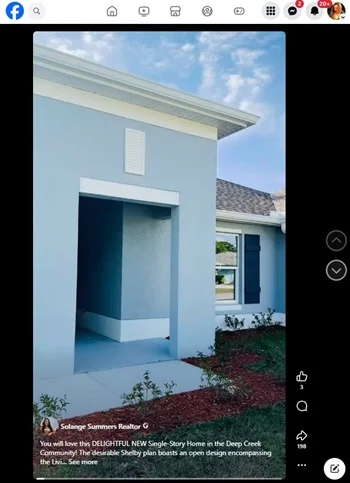
🔹Video posts: Short video content works great in the feed. A quick look around the house or the neighborhood, an invite, or a simple buyer tip often grabs people’s attention.
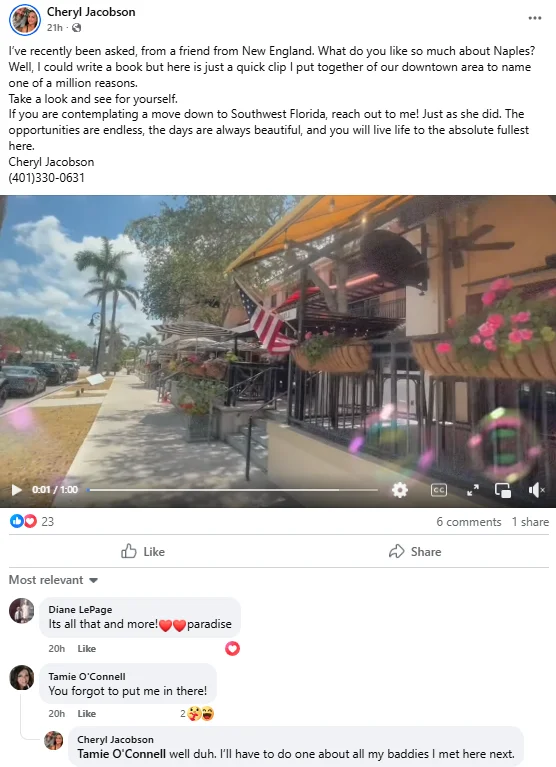
🔹Video tours & open houses: Walk-throughs bring properties to life for people scrolling at home. They also stay in your feed, building a portfolio of your work that potential clients can revisit.
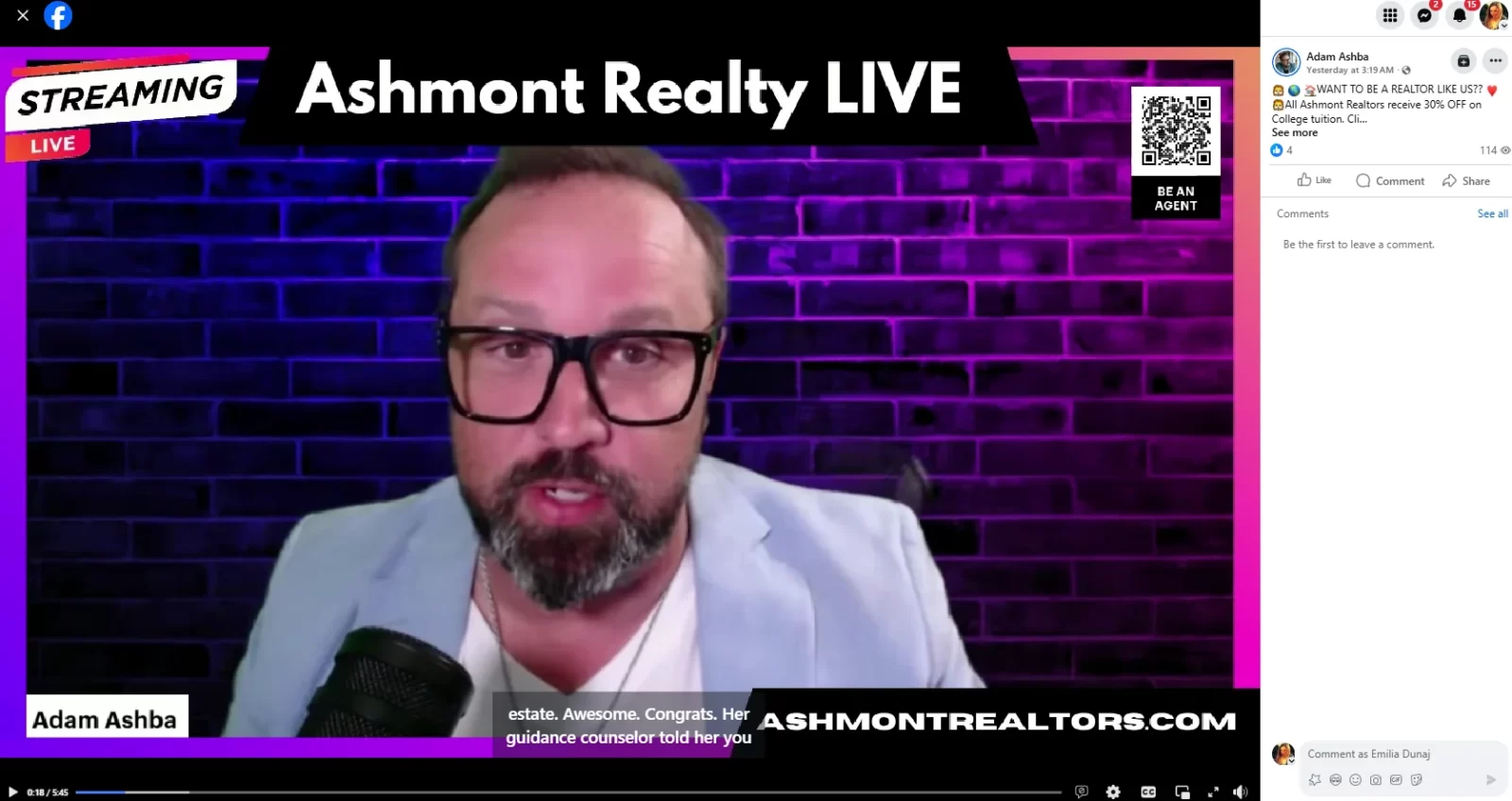
🔹Live video: Use Facebook Live to host Q&A sessions, market updates, or virtual open houses. Live streams help you connect directly with your audience in real time, answer questions, and build trust. You can also save the video on your page so people who missed it can watch later.
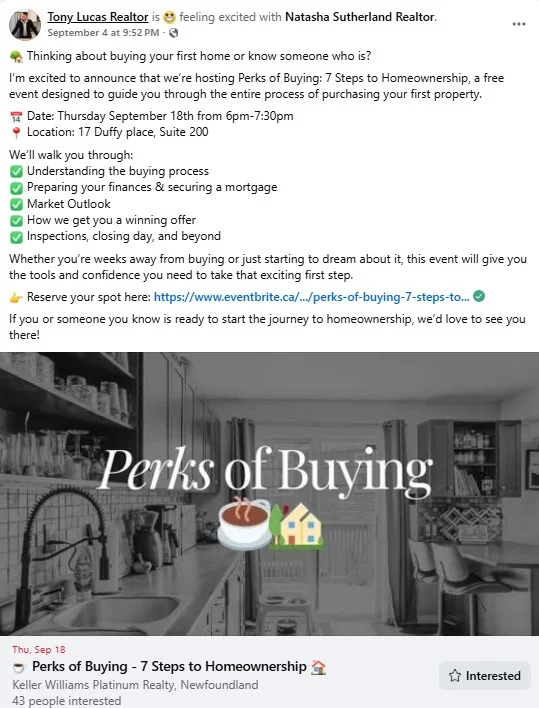
🔹Events: Create event pages for open houses, community, and educational meetups. They’re easy to share and make it simple for people to RSVP.
🔹Client testimonials & success stories: Happy clients sell your services better than any promise. A ‘Just Sold’ post with a smiling photo builds instant trust.
🔹Blog articles: Share links to articles from your real estate blog. Posts about market updates, real estate tips, or neighborhood insights drive traffic to your website and position you as a knowledgeable resource.
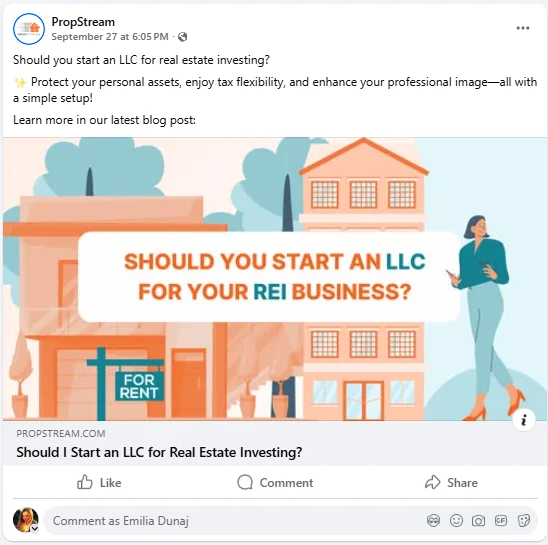
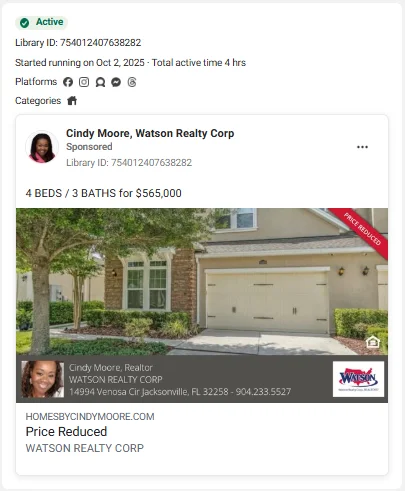
🔹Facebook Ads: With location and interest targeting, plus a small budget, social media advertising you can get your listing in front of the right people’s eyes.
Mistake to avoid
Avoid posting too much unoriginal or low-quality content. Facebook is cracking down on spammy posts, and if your content doesn’t spark interaction, the social media algorithm will show it less often.
Instagram is your resume. When potential clients check out your profile, they see how professional you look, how active you are, and whether they can trust you. In many cases, they will scroll your feed before they ever reach out.
More than 60% of agents use Instagram as part of their real estate marketing (Resimpli, 2024). Engagement is also high compared to other platforms.
Because the platform is highly visual, it’s excellent for showing properties, lifestyle images, area highlights, and … you.
Over 50% of the US population uses Instagram, and the majority of them are women – 55.5%.
It’s also where younger buyers spend much of their time, so it’s a great place to attract clients who are first-time homeowners. In the US, the platform reaches across the following age groups:
- 18–24: 24%
- 25–34: 29%
- 35–44: 19%
- 45: 28% combined
(Source: NapoleonCat, Jan 2025)
How to use Instagram for real estate?
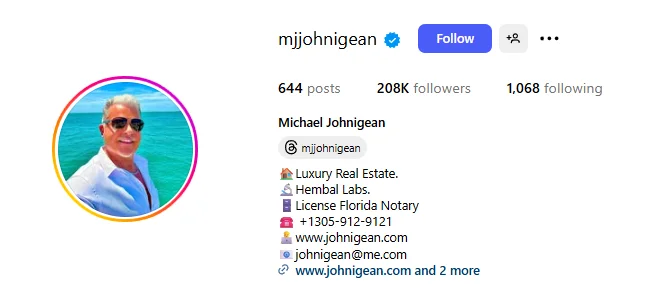
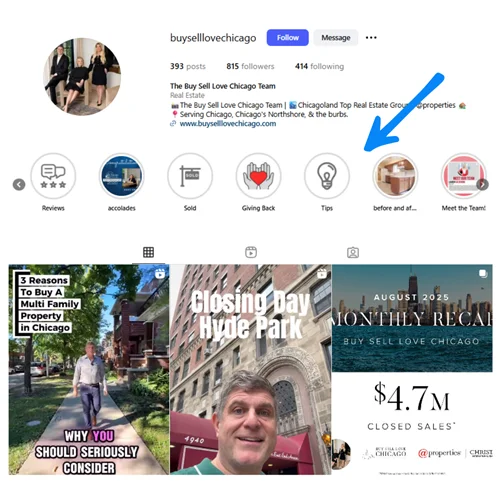
🔹Profile page: For agents and teams, your grid, Stories, and Reels together show who you are. Your bio is prime real estate. Add a professional headshot, your role, the area you serve, and up to five links, including your real estate website.
🔹Photos & carousel posts: Share high-quality photos. Show professional pictures of yourself, your brand, your property listings, and your satisfied clients.
🔹Reels: Publish high-quality videos and keep them short, ideally under 30 seconds. Share quick clips of properties or local areas, and occasionally simple market tips to educate your followers.
🔹Stories disappear after 24 hours, but they’re perfect for keeping your account active without overloading your feed. Use them to share quick updates, behind-the-scenes moments, or new listings in a more casual way.
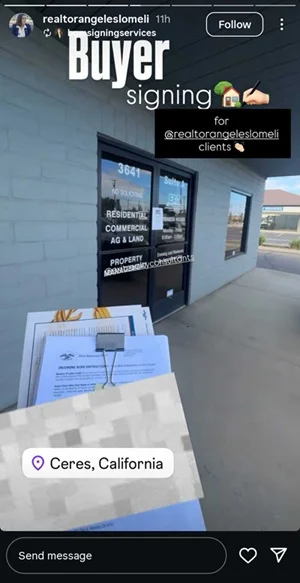
🔹Highlights: Save your best Stories in organized categories. These Highlights sit at the top of your profile, so visitors immediately see your most important social media content.
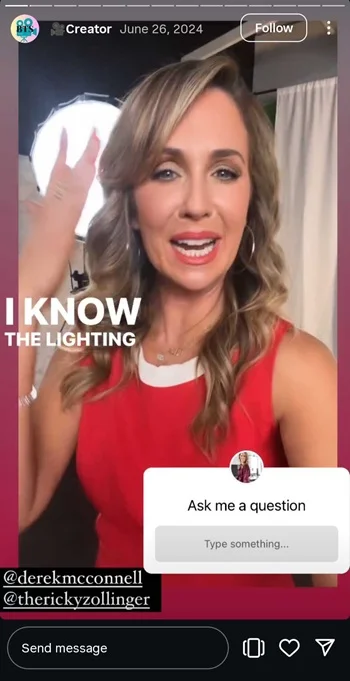
🔹Interactive content: Questions, polls, and quizzes get people to stop swiping. Use the ‘Ask me a question’ sticker in Stories or try polls like ‘Which kitchen would you pick?’ or ‘Guess the price.’ These Instagram features make it easy for followers to engage and start conversations with you.
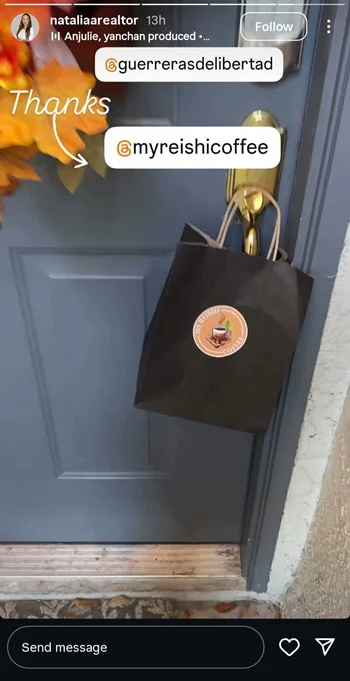
🔹Tagging: Tag local businesses, partners, or locations to increase reach and show your connection to the community. When others tag you back, their audience also sees your profile, which helps you reach new potential clients.
Mistake to avoid
Do not fill your captions with broad or unrelated hashtags. Instagram now allows up to five hashtags per post, so choose only terms that accurately describe the property, location, or topic.
You may also be interested in: 20+ Best Real Estate Instagram Accounts to Follow
LinkedIn now reports more than 1.3 billion registered members worldwide. This figure represents total accounts rather than monthly active users, but it still reflects the scale of its professional network.
Unlike other social media platforms, LinkedIn works on direct connections, so people see more of your content once they accept your invite.
LinkedIn helps you position yourself as an expert, find referral partners, and target real estate investors. Approximately 52% of real estate agents say they use this social media platform in their business activities (REsimply, 2025).
How to use LinkedIn for real estate?
🔹Connections: Send connection requests, starting with people you know, other real estate professionals, your colleagues, past clients, and local businesses. Once you have a base, keep sending the requests to grow your following.
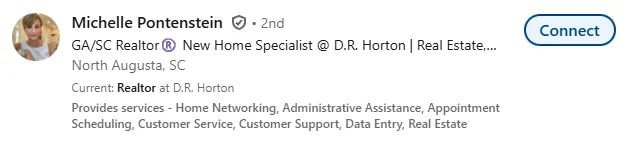
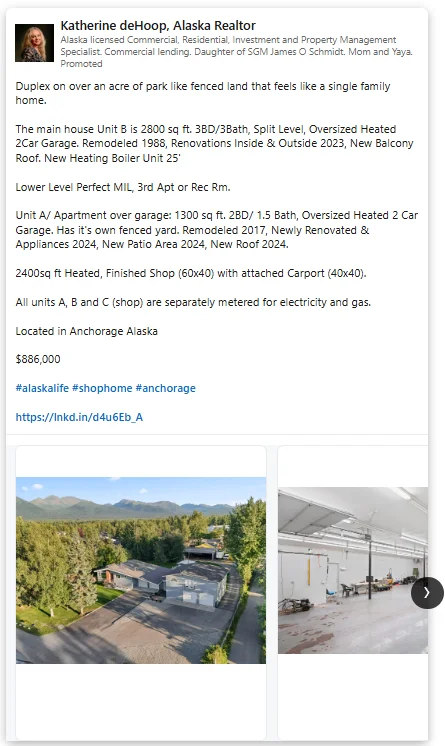
🔹Posts: Use visuals or documents posts to share investment opportunities, market insights, quick tips, recent closings, and local updates. Regular posts keep you visible and show your expertise.
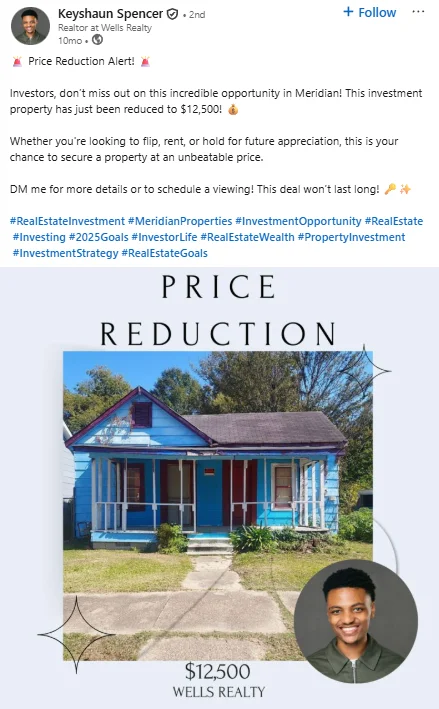
🔹Videos: Post high-quality video content to showcase your listings, highlight unique features, and attract more interest from potential LinkedIn leads.
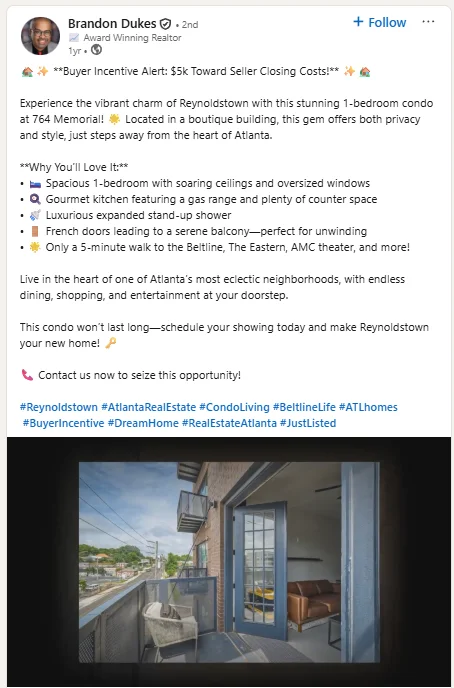
🔹Sharing and commenting: LinkedIn’s algorithm loves accounts that engage. Resharing and commenting on others’ content boosts your visibility and shows you’re interested in networking.
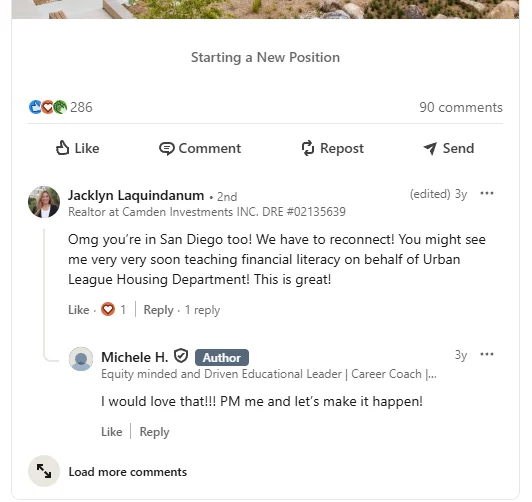
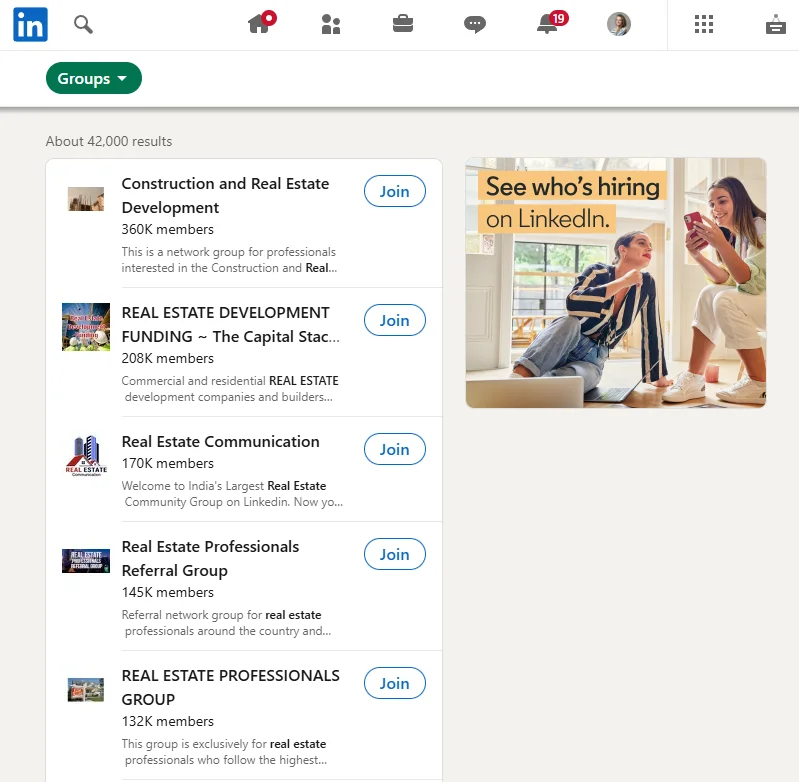
🔹Groups: Join real estate or local business groups to meet people and stay visible. Jump into discussions, answer questions, and share useful advice.
🔹LinkedIn Ads: Targeted advertising lets real estate professionals reach people by location, job title, or industry. It’s effective for promoting your personal brand, investment opportunities, or new developments to the right target audience.
Mistake to avoid
Don’t go too casual on LinkedIn. People know what to expect when they go there, and you may lose credibility by posting fluff or off-topic memes. Stick to professional, helpful content.
TikTok
TikTok continues to grow as a real estate marketing channel. Short videos let agents reach younger buyers and renters in a format designed for quick discovery. The platform also supports longer uploads, giving real estate professionals more room for property tours and detailed market explanations.
TikTok’s advertising tools indicated that the platform could reach 153 million U.S. users ages 18 and older in late 2025. This represents potential advertising reach rather than monthly active users. Separately, Pew Research Center found that 37% of U.S. adults use TikTok. (DataReportal, 2026)
On TikTok, real estate professionals can be more casual. Yes, even in their pajamas. Authenticity often matters more than polished production, so showing your personality can help your content feel different from a standard listing video.
What started as an entertainment app has become a useful place to market a real estate business to Gen Z. However, its audience is broader than many people assume. TikTok is used by 63% of U.S. adults ages 18–29 and 44% of those ages 30–49. (Pew Research Center, 2025)
How to use TikTok for real estate?
🔹Short videos: Share 30–60 second clips of properties, quick tips, or local spots. Use captions so your videos are clear even on mute.
🔹Longer videos: In 2026, there’s a clear shift toward longer content, and TikTok is keeping up with the market trend. You can now record videos up to 10 minutes within the app, and upload videos up to 60 minutes. Real estate professionals use this format for full property tours, home buying process explainers, and detailed market insights.
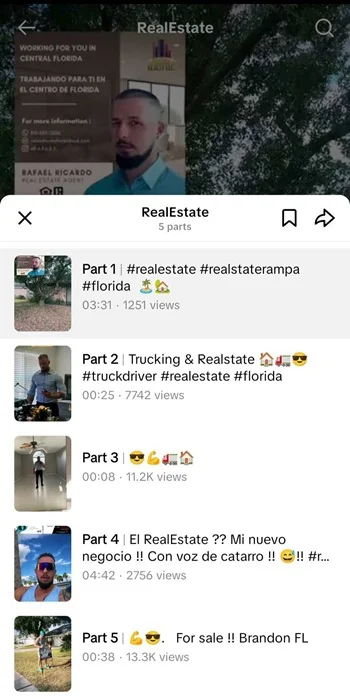
🔹Playlists: TikTok lets you group related videos into playlists, so it’s easier for viewers to binge your content and find exactly what they’re interested in.
🔹Live streams: Go live during open houses or Q&A sessions. Users tuning in can ask questions, comment, send likes, and use gifts as you broadcast.
“The type of content you post attracts the type of clients you’re going to have.”
Omer Reshid, top-producing real estate professional, educator, and content creator
Mistake to avoid
TikTok’s algorithm favors videos where people talk, show personality, or appear on camera. If you’re not comfortable with that, TikTok probably isn’t the ideal platform.
YouTube
YouTube is the second-largest search engine and a powerful tool for real estate marketing. It’s one of the best platforms for evergreen content, giving space for detailed videos that continue to bring in views months or even years later.
As of 2025, YouTube has more than 2.5 billion monthly active users globally. It has an average of 48 minutes and 42 seconds spent daily on the platform. (Demandsage data)
In the US, the 25–34 age group is the single biggest demographic on YouTube, making up about 21.7% of its users (SproutSocial 2025 article). For the real estate industry, that’s a key audience of first-time buyers and young investors.
Real estate videos do well in YouTube’s search engine and should be a key part of your real estate marketing strategy. They’re also easy to reuse across other channels, for example:
- Embed them directly into your website pages.
- Add them to email marketing campaigns.
- Place them on your listing landing pages.
- Send a client a link if you’ve already made a video answering their question.
One video can run on several channels, so you get more out of your effort.
How to use YouTube for real estate?
🔹Videos: Publish full property tours, area guides, and educational explainers. Longer YouTube videos let you go deeper and position yourself as the local expert. You can also stream live for open houses, Q&A sessions, or market updates to connect with viewers in real time.
🔹YouTube Shorts: Publish vertical videos up to three minutes long. Use them for listing highlights or condensed answers that lead viewers to a more detailed video.
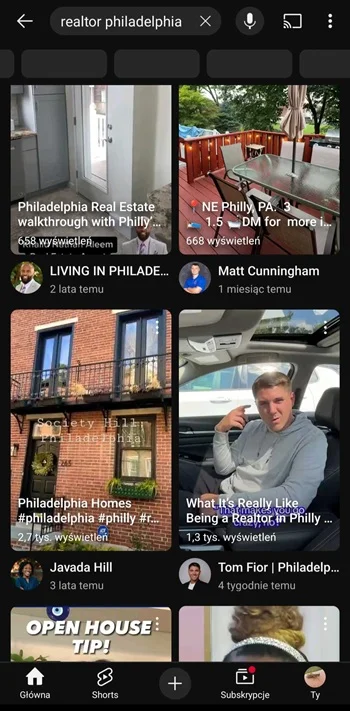
🔹Playlists: Organize your YouTube videos into collections to make your channel easier to navigate. They also boost watch time since videos play one after another, which helps your channel get more visibility.
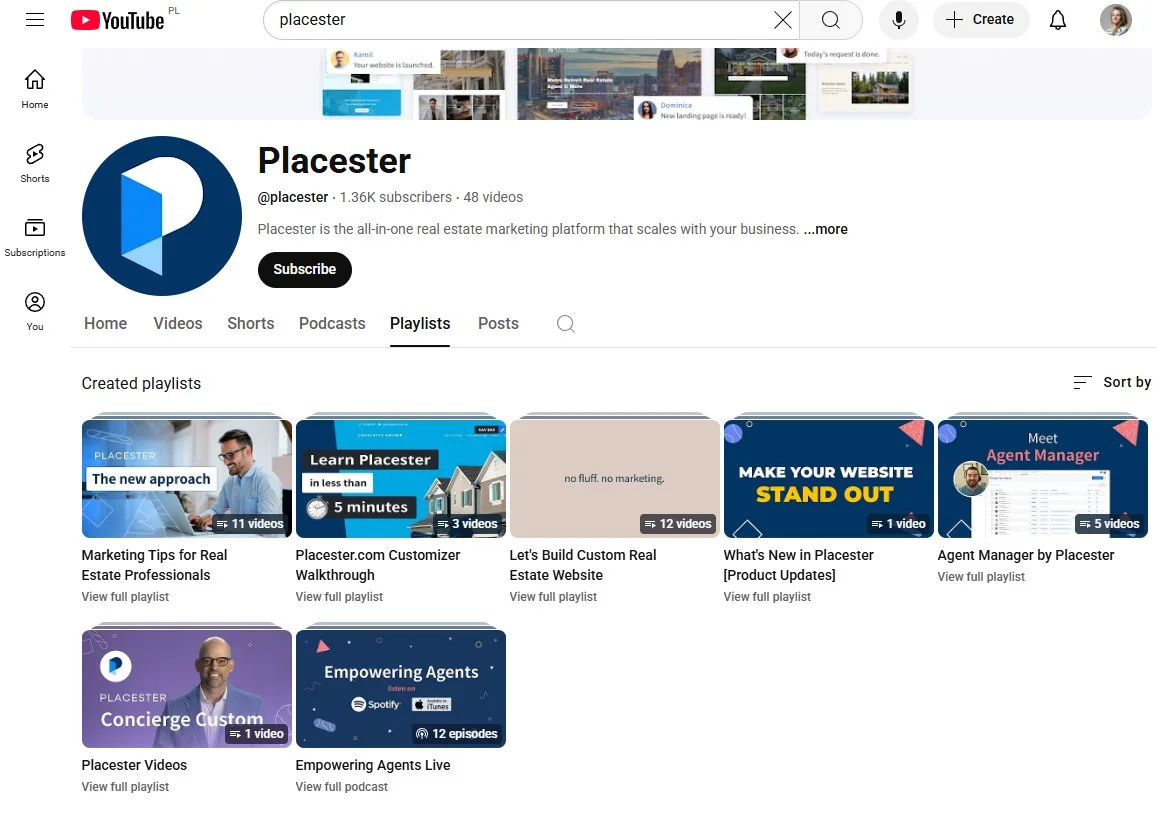
🔹Tags, titles & descriptions: If you’re posting a YouTube video about first-time buyer tips, you need to use clear keywords so it shows up in search and reaches broader audience.
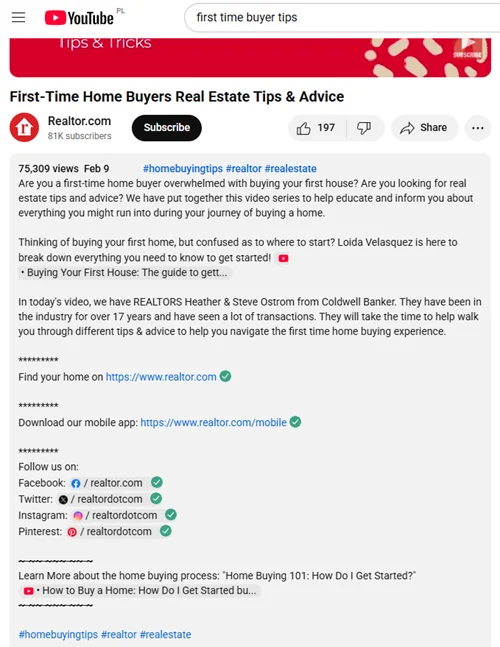
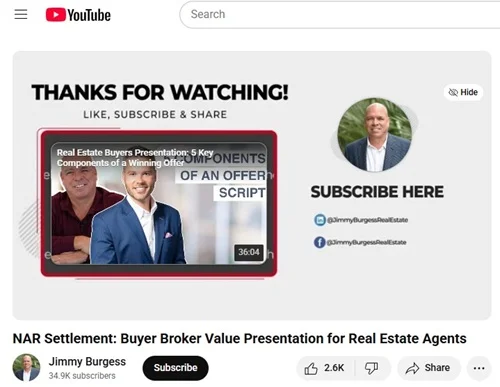
🔹End screens & cards: At the end of your video, you can guide viewers to watch another video or click through to your branded website or your other social media sites.
Mistake to avoid
Don’t forget to introduce yourself. Every video is someone’s first. Say your name, role, and area so viewers know who you are right away.
BiggerPockets
Real estate social networks extend beyond mainstream platforms such as Facebook and Instagram. Industry-specific communities give agents a more direct way to connect with investors, home shoppers, and other real estate professionals.
BiggerPockets is an online community for real estate investors. Its central feature is an extensive discussion forum where users ask questions, evaluate deals and exchange experience. The platform also publishes educational materials and provides tools for researching and analyzing properties.
The community has more than 3 million members. It includes both people preparing for their first investment and experienced property owners. Real estate agents can use the platform to reach clients who are actively looking for opportunities and may complete more transactions over time.
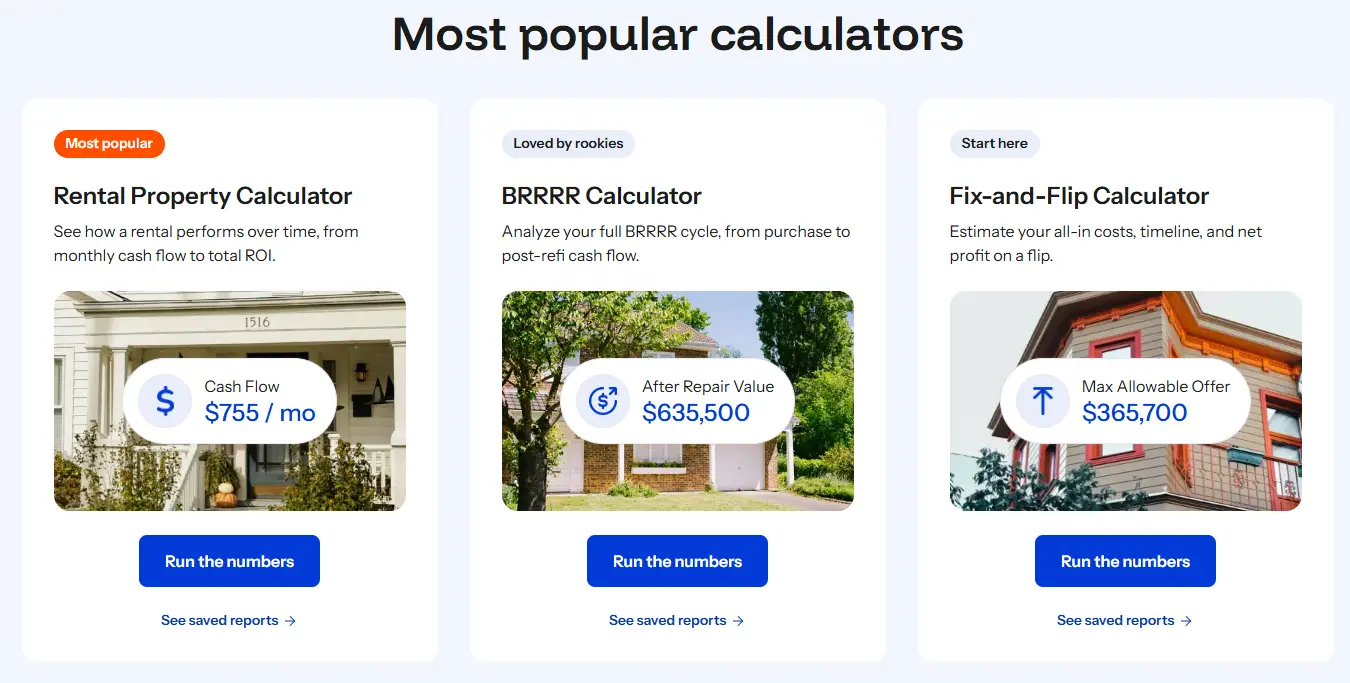
A free account allows agents to join discussions and build a professional profile. The optional Pro plan adds property calculators, market research tools and advanced networking features. It costs $39 per month or $390 per year when paid annually.
How to use BiggerPockets
🔹Forum answers: Look for discussions about your market and explain how local conditions affect a potential purchase. You can also clarify the transaction process when someone needs help understanding a particular step.
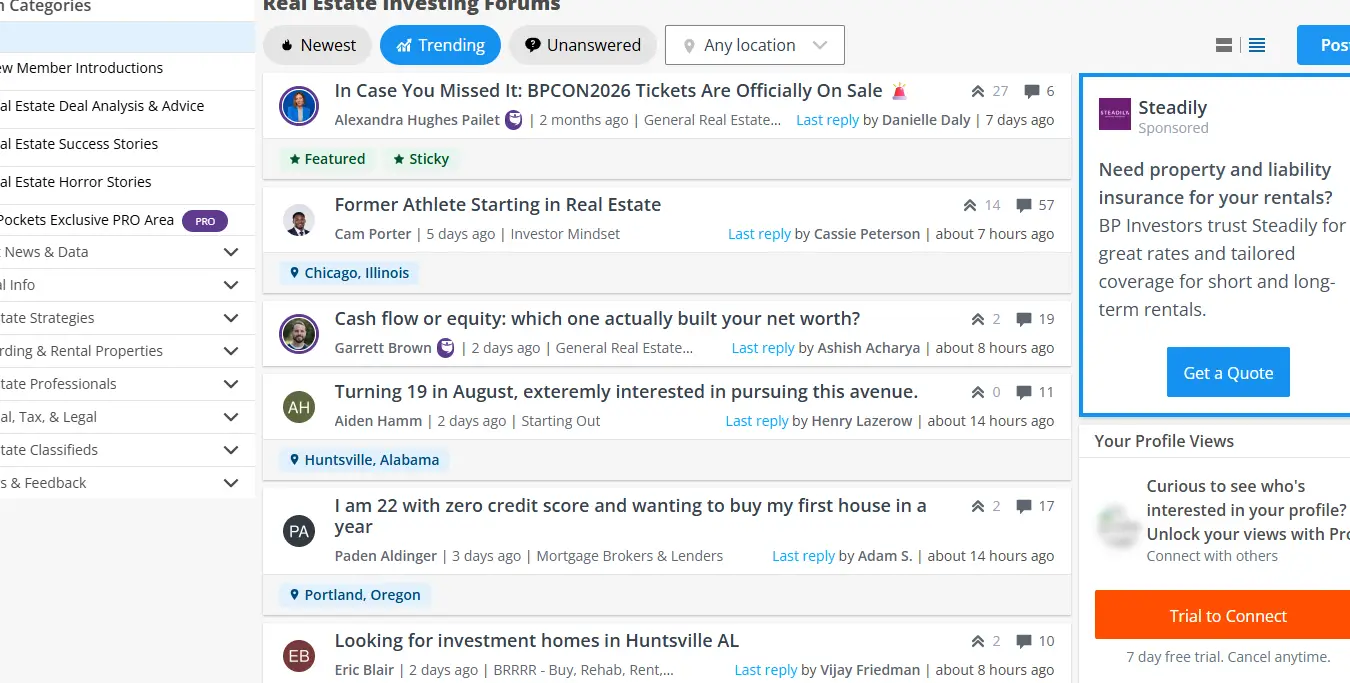
🔹Deal analysis: Comment on opportunities shared by members and point out factors they may have overlooked. Your knowledge of comparable sales or neighborhood demand can add context that online property data does not provide.
🔹Educational posts: Write about problems your investor clients regularly encounter. A practical explanation of how you assess a rental property will demonstrate your expertise more effectively than a promotional post.
🔹Referral networking: Take part in conversations with investors and other professionals working in your area. Helpful exchanges can develop into direct inquiries or referrals without requiring an immediate sales pitch.
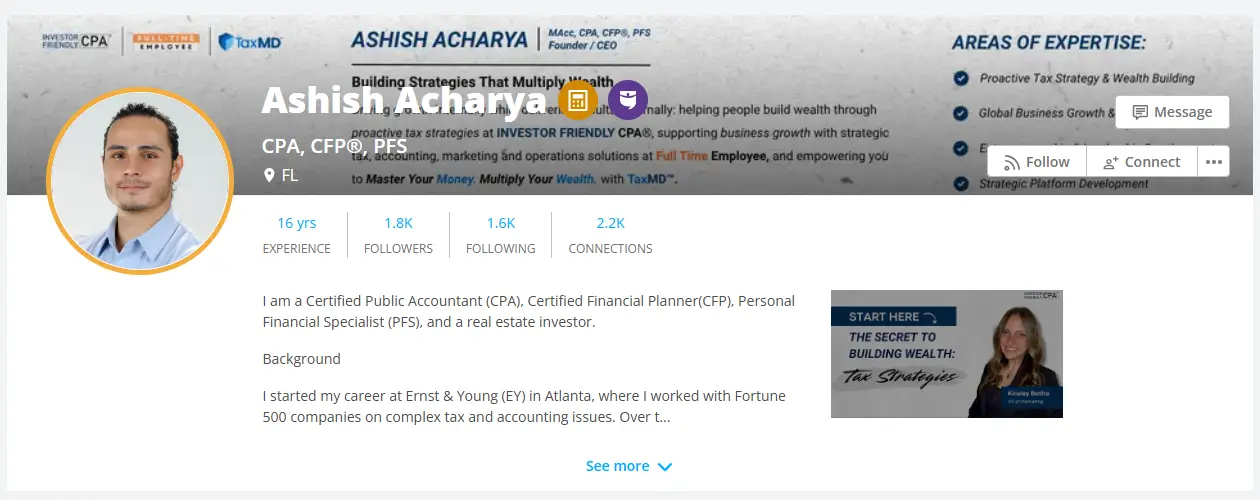
🔹Audience research: Use forum discussions to identify what investors want to know about a particular location. These questions can help you choose topics for your website and prepare resources for future clients.
Mistake to avoid
Do not use BiggerPockets as another place to advertise listings. Members expect informed answers that address the question being discussed. Repeated links and generic invitations to contact you can make your activity look like spam. Avoid promising returns or commenting beyond your expertise. Your profile will gain credibility when your contributions remain useful even if the reader never becomes your client.
Nextdoor
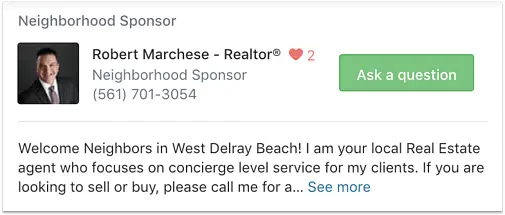
Another real estate-specific platform is Nextdoor. It’s a neighborhood-based social network that connects people living in the same local area. Users must verify where they live, so agents can reach homeowners in the communities they serve rather than build a geographically scattered audience.
The platform reaches one in three U.S. households and has more than 110 million verified members. In the second quarter of 2026, it recorded 22.9 million weekly active users.
Nextdoor is particularly relevant to residential real estate because homeowners account for 74% of its members. According to internal Nextdoor data, one in four conversations on the platform relates to real estate. Agents can create a free Business Page and use paid advertising to reach selected ZIP codes.
How to use Nextdoor
🔹Business Page: Add your contact details and service area so local residents can find you when they search for a real estate professional. Complete the verification process before publishing business content.
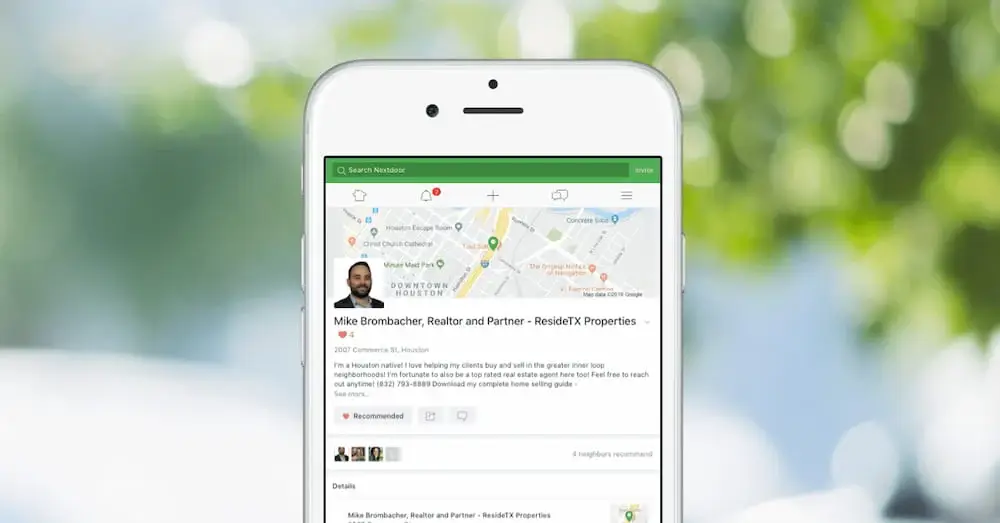
🔹Neighbor recommendations: Ask satisfied clients who use Nextdoor to recommend your business. Recommendations come from verified local residents and appear on your Business Page, providing relevant social proof within the neighborhood.
🔹Business Posts: Share updates that matter to local homeowners. Useful topics include changes in property values or explanations of how new development could affect the area.
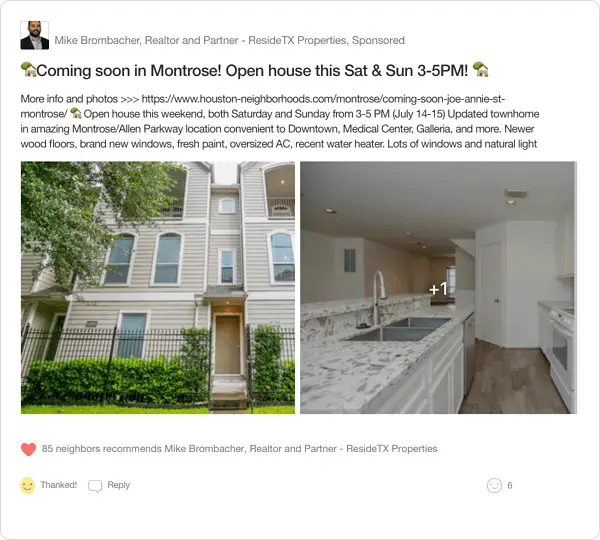
🔹Local market updates: Turn recent sales and inventory changes into short explanations for residents. Focus on what the data could mean for someone considering a move instead of reporting numbers without context.
🔹Community discussions: Respond when residents ask about the housing market or need information related to a potential move. A helpful answer can introduce your expertise without turning the conversation into a sales pitch.
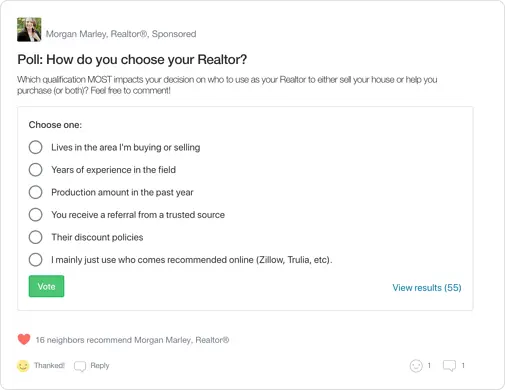
🔹ZIP code ads: Use paid campaigns to promote your services in areas where you want to win more listings. Ads can direct residents to your website or encourage them to send you a message.
Mistake to avoid
Avoid sharing private information about clients or making claims about property values without enough local data.
Zillow Premier Agent
Zillow Premier Agent works differently from a traditional social network. It is a paid advertising and lead generation program that connects agents with people searching for homes across Zillow Group’s platforms.
The process begins when a buyer or seller submits an inquiry. Zillow verifies the person’s interest and may introduce them to a participating agent through a live call. Other connections can come from tour requests or users who have already received mortgage preapproval. A connection is an opportunity to speak with an active home shopper, not a guaranteed client.
The program gives agents access to one of the largest online real estate audiences in the United States. Zillow Group recorded 243 million average monthly unique users and 2.6 billion visits across its apps and websites in the second quarter of 2026. These figures cover the wider Zillow Group ecosystem rather than Premier Agent alone.
Pricing depends on the market and expected connection volume. Zillow currently reports an average cost of $223 per connection in major metro areas and $139 outside them. The company also states that Premier Agent partners close 60% more transactions than agents who do not participate.
How to use Zillow Premier Agent
🔹Agent profile: Complete your bio and add your professional information before paying for connections. Reviews and verified sales help shoppers evaluate your experience when they encounter your profile.
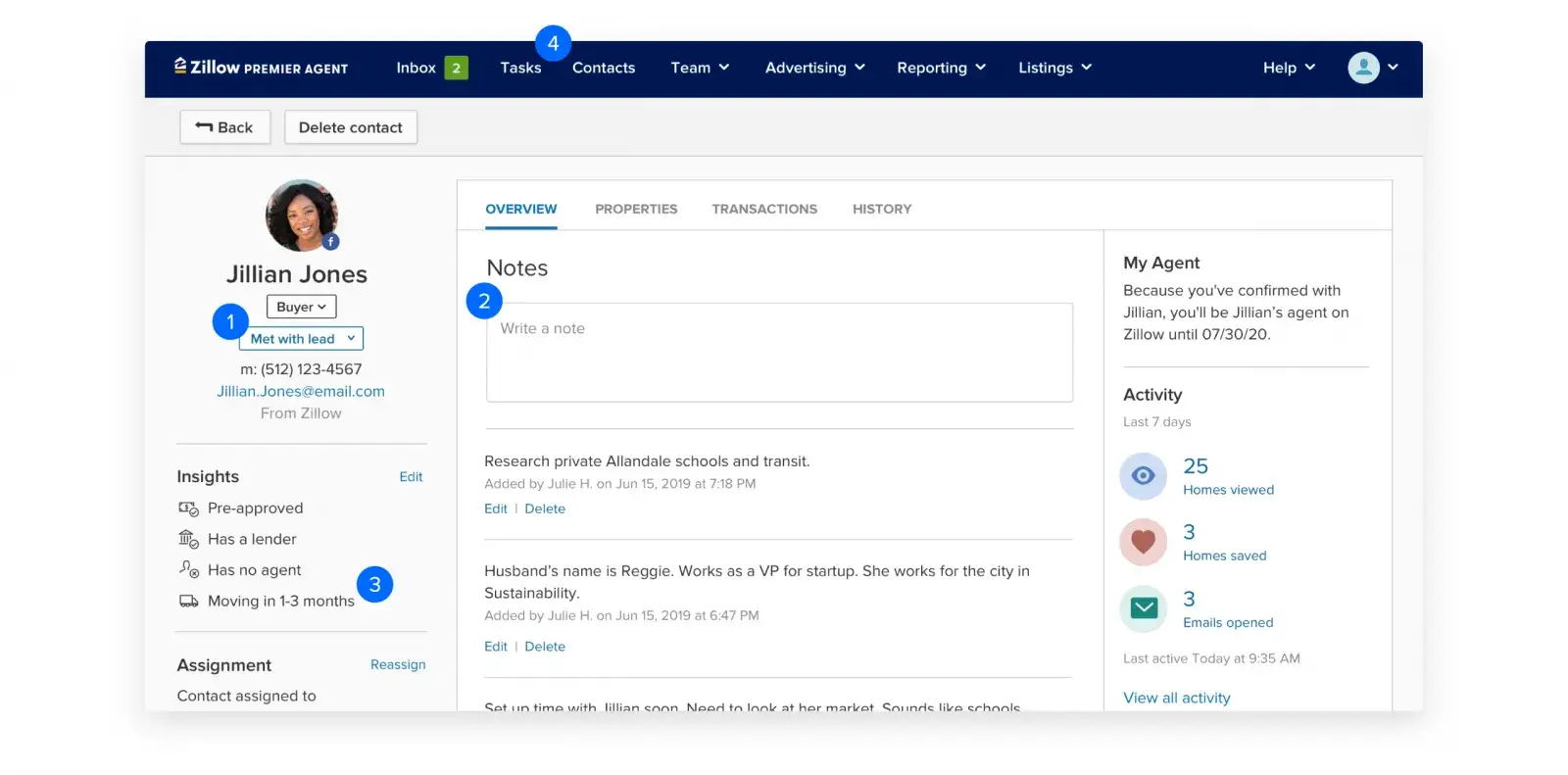
🔹Live connections: Answer Zillow calls quickly and use the first conversation to understand what the shopper needs. Delayed responses reduce the value of a connection because users often expect immediate help.
🔹My Agent: Establish this relationship after connecting with a buyer. You can then appear as the only buyer’s agent shown to that person across Zillow listings for an initial 30-day period.
🔹Buyer insights: Review the homes a client saves and the searches they perform after they agree to share this activity. These signals can help you recommend relevant properties without repeatedly asking for the same information.
🔹Premier Agent CRM: Record notes and schedule follow-ups within the platform. Mobile notifications can help you respond when a connection becomes active again.
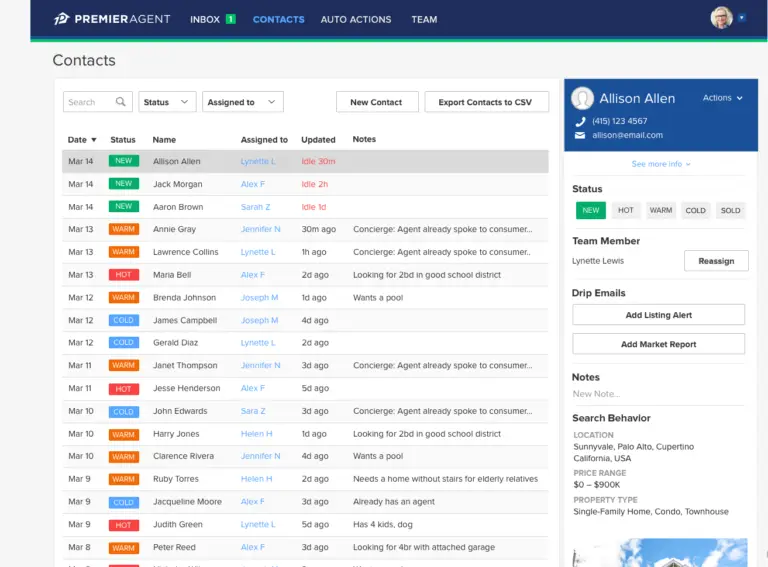
🔹Team routing: Direct incoming connections to agents according to rules set by the team lead. Zillow’s reporting tools then show how individual agents handle and convert those opportunities.
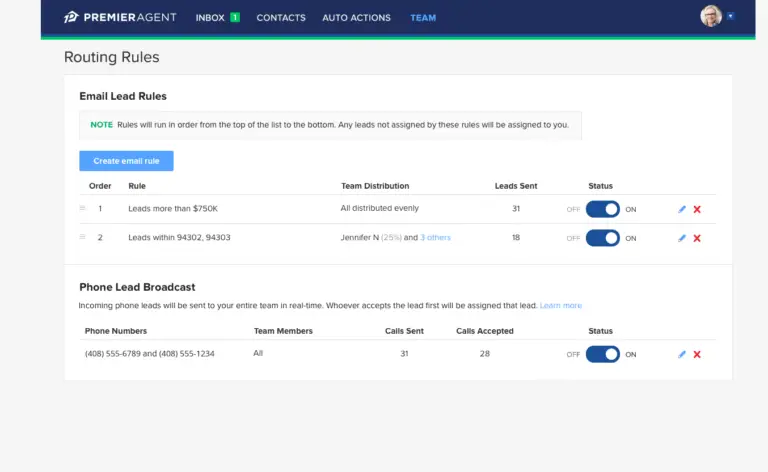
🔹CRM integrations: Send Zillow connections to systems such as Follow Up Boss when your team already manages its pipeline elsewhere. This prevents agents from maintaining separate follow-up processes.
Mistake to avoid
Do not judge Premier Agent by the number of connections alone. A connection still needs to be qualified and followed up, so purchasing more volume than your team can handle may reduce conversion. Zillow’s operational guidance recommends maintaining the capacity to manage 10–15 connections per agent each month.
Realtor.com
Realtor.com gives agents two ways to reach potential clients. You can build visibility through a free professional profile or pay for leads generated by people using the property portal. This makes it closer to a search and lead generation platform than a conventional social network.
The free profile appears in Realtor.com’s agent directory and displays your contact information, listings and professional background. Consumers can search for agents by location and review their profiles before getting in touch. You manage this information through the Realtor.com professional dashboard.
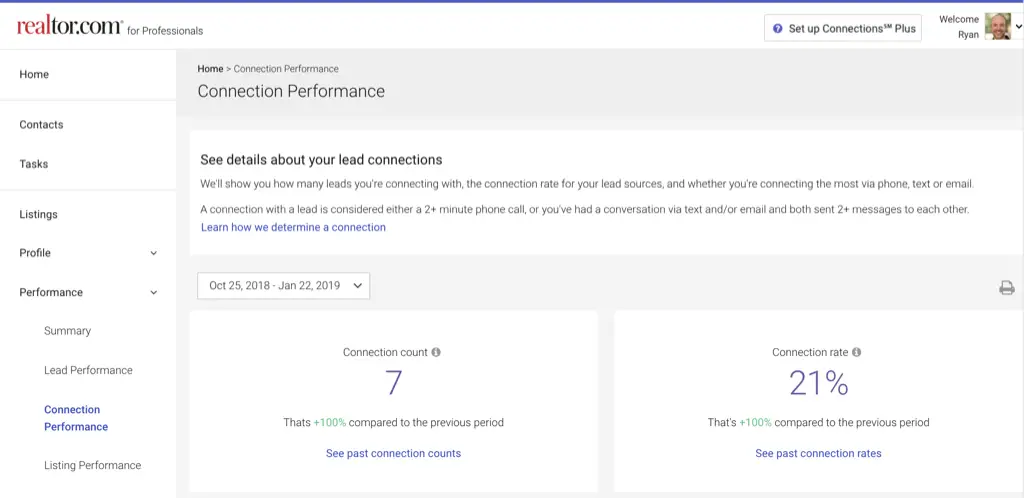
Paid lead generation is available through Connections Plus. When a user requests help while searching for a property, the system sends the inquiry to a participating agent. Connections Plus also provides automated follow-up tools and a dashboard for managing the resulting pipeline. Pricing is not publicly standardized because agents must request an offer based on their market.
Realtor.com reached an average of 66 million monthly unique users across its website and mobile products in the third quarter of fiscal 2026. This figure represents the portal’s total audience rather than the number of people who submitted agent inquiries.
How to use Realtor.com
🔹Agent profile: Complete your professional information and keep your contact details current. A strong profile gives home shoppers more context when they compare agents serving the same market.
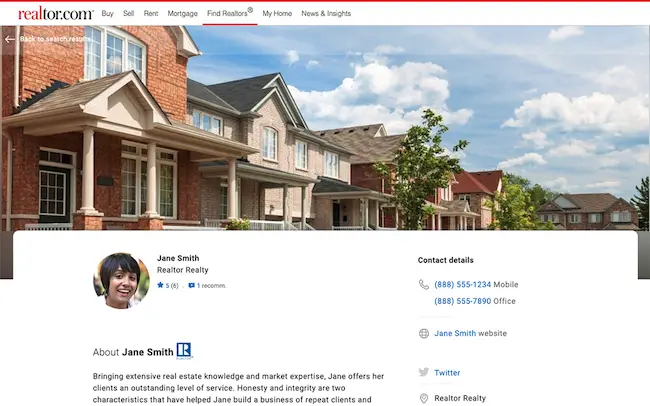
🔹Listing attribution: Check whether your active listings and previous sales are connected to the correct profile. This information provides visible evidence of your experience in a particular location.
🔹Connections Plus: Purchase buyer leads when you have a reliable follow-up process in place. The service is designed to connect agents with users who have already taken action while browsing properties.
🔹Automated follow-up: Use the tools included with Connections Plus to respond when immediate personal contact is not possible. Automation should keep the inquiry active until an agent can continue the conversation.
🔹Lead dashboard: Track each inquiry after it enters the pipeline. Reviewing response times and closed transactions will show whether the program generates enough business to justify its market-specific cost.
🔹Research Data Library: Use Realtor.com’s housing data to prepare local market updates for your website. The library includes inventory and market activity data for areas as specific as ZIP codes.
Mistake to avoid
Do not assume that a complete profile will generate the same exposure as a paid lead program. The free profile improves your presence within Realtor.com, while Connections Plus actively sends inquiries to participating agents. Keep these functions separate when evaluating results, and calculate the return on paid leads using completed transactions rather than the number of contacts received.
Real Estate Investment Network (REIN)
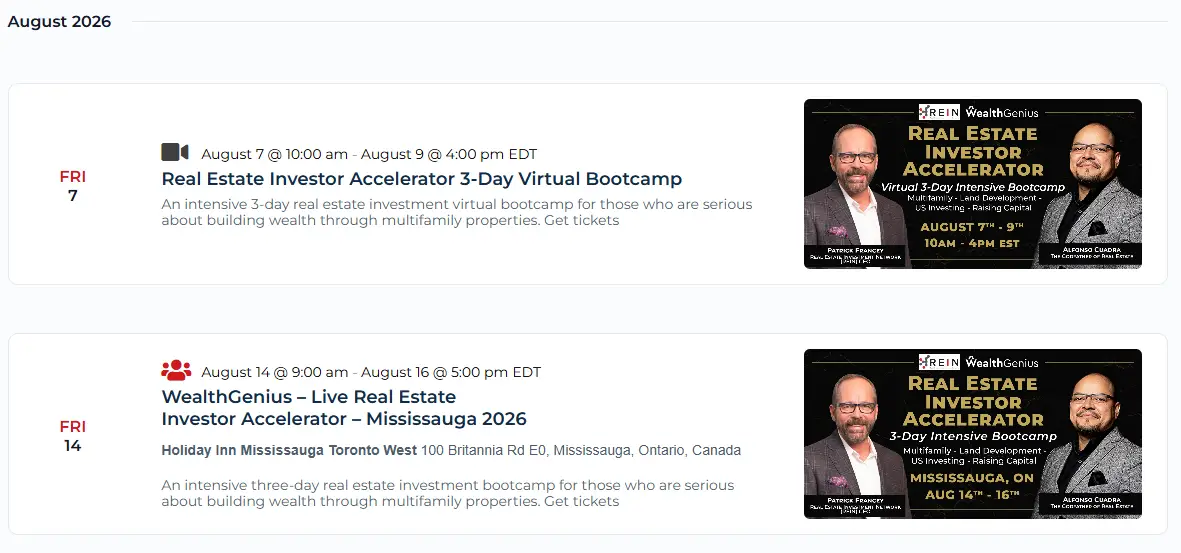
REIN is relevant primarily to agents working with investors in Canada. It operates as a membership and education network rather than an open social media platform. Most interaction takes place through member events and training programs built around the Canadian property market.
The network teaches members how to evaluate investments and understand the economic factors affecting different locations. Its programs also address topics such as raising capital and building investment partnerships. Agents can use this environment to meet potential clients before they begin looking for a specific property.
REIN reports that it has served more than 153,000 clients and members. The organization also states that its community has collectively generated over CAD 5.4 billion in real estate wealth.
How to use REIN
🔹Member meetings: Attend online or in-person sessions to meet investors and learn what opportunities they are currently considering. Conversations at these events can lead to longer-term professional relationships.
🔹Investment education: Use REIN courses to better understand how Canadian investors evaluate properties. This knowledge can help you discuss cash flow and risk in terms that match a client’s decision process.
🔹Property Analyzer: Compare potential investments using the analytical tool available to members. Its calculations can provide a starting point for a more detailed conversation about a property.
🔹Market insights: Follow REIN’s economic analysis to understand how changes in a local market could affect an investment strategy. You can apply these insights when preparing recommendations for clients.
🔹Strategic partnerships: Connect with investors who need local market knowledge or help finding properties. You may also meet professionals whose services complement your own.
🔹Live events: Join discussions about the current market cycle and emerging investment opportunities. These events provide more direct interaction than publishing content for an unknown online audience.
Mistake to avoid
Do not treat REIN as a general real estate network for agents across North America. Its resources are focused on Canadian investing, so its value depends heavily on where you work and whom you serve.
How to use social networks for real estate? 12 Best practices
Being on social media is one thing. Using it effectively is another. Real estate agents who see results are the ones who post with purpose. Here are the best practices that make a real difference in 2026:
Practice #1: Build a recognizable local brand
In real estate, you are the brand. Who you are, how you work, and the value you bring matters more than the company name on your card. Make sure people know the areas you serve. Mention your city or neighborhoods often in posts so your audience connects you with your local market.
Practice #2: Post content consistently
Real estate social media is a numbers game. You need to post a few times a week, every week, to start seeing growth. Create a simple posting schedule you can stick to and keep your audience engaged.
Practice #3: Study what other agents are doing
Find 10 real estate professionals who sell in your market and look at what they do on social media. Study their social media content pieces from the last two weeks and see what got the most engagement. Then think about how you can create something similar but add your own twist to make it unique.
Practice #4: Mix content types
Do post your property listings, but also share tips, local updates, personal insights, and behind-the-scenes moments. Mixing content keeps your feed fresh and interesting.
Practice #5: Engage with your audience
Like and share other people’s content, reply to comments, and answer DMs. Also, be proactive: provoke conversations–ask questions in your social media posts and encourage feedback.
Practice #6: Publish educational content videos
In 2026, short videos, Stories, and Reels get more attention than plain text or images. Even simple educational videos recorded on your phone can perform well. Build your audience on that, and then you can go to long-form content, which is also super valuable.
Practice #7: Share proofs
Post testimonials, clips from closings, try to show how great your service is rather than promising it. It works tons better on social media.
Practice #8: Track your results
Most social media platforms offer free analytics with key metrics. Use them to see what works best, then double down on the content that keeps your audience engaged and brings new leads.
Practice #9: Use paid ads as additional marketing tool
Social media platforms give you powerful targeting options. Reach potential buyers, sellers, or renters who match your ideal client profile and get your content in front of the right people straight away.
Practice #10: Cross-post
Repurpose your videos across different channels, adjusting the format slightly for each audience. For example, you can convert long-form videos into short clips for Instagram Reels or TikTok, while keeping the full version on YouTube or your website.
Practice #11: Automate
Use scheduling tools, like Buffer or Hootsuite, to plan posts ahead of time. Automation keeps your profile active even on busy days and helps you stay consistent. Schedule content for times when your audience is most active. Evenings and weekends often work best for real estate.
Scheduling tools help you publish posts you’ve already created. Full automation goes further. With Placester’s Social Automation, your new listings, recent sales and blog articles are turned into branded videos with AI captions and posted to Facebook and Instagram automatically, including Stories. You still add personal posts whenever you want, and everything sits in one Social Calendar.
Practice #12: Use AI to save time
AI tools for real estate agents can help you draft captions, repurpose videos, or come up with post ideas when you’re short on inspiration. Marketing tools like ChatGPT or Jasper are built to speed up the process and keep your content consistent.
>> Also read: 25 Expert Social Media Tips for Real Estate Agents (2025)
Conclusion
Social networks are one of the most important tools for real estate agents in 2026. They keep you visible and connected with past and prospective clients directly in their hands, on the apps they use most.
Here, attention is the currency. Your best social media marketing strategy is to focus on your content. Pick one or two platforms that fit your target audience and just start publishing. Post consistently, engage with people, and track what works.
In 2026, a strong social media presence on a real estate social network can bring brand recognition and more leads. Combined with your professional website, it creates a powerful real estate marketing engine.
Placester makes this simple–it’s the fastest, easiest way for real estate professionals to launch a high-performing website. With customization, automation, and support built in, you can focus less on tech and more on building real relationships on your social media networks.
You’re good to go! Lift up your smartphone and start posting today.
Show Up Where Your Next Clients Are Looking
Explore how cutting-edge AI website builders help agents stay ahead of the competition.

FAQ
What platforms do real estate agents use?
Real estate agents use Facebook, Instagram, YouTube, LinkedIn, and TikTok to reach potential clients and build their personal brand. The choice depends on your target audience and the type of content you want to share.
Is Facebook or Instagram better for Realtors?
Realtors tend to use both Facebook and Instagram. 92% of Realtors use Facebook because it’s the best for reaching a broad local audience and generating leads. Instagram is stronger for visual branding and attracting younger buyers, with 60% of agents using it as part of their social media marketing strategy.
Which social media do real estate millionaires use?
Real estate millionaires use LinkedIn (47%), Facebook (42%), and YouTube (30%) most often. On average, millionaires use two social channels, with 33% active on three or more. Interestingly, only 3% of millionaires use Instagram. However, researchers point out that Instagram is one of the most appropriate platforms for luxury because of its highly visual nature.
Published on