 (800) 728 8391



Updated on
Local SEO For Real Estate: Ultimate Guide for 2025

Local SEO helps your real estate business show up when people search for services in a specific area. You can also call it neighborhood SEO or Google Maps optimization. Note that 84% of consumers search for local businesses online every day. If you’re not showing up in those searches, you’re leaving money on the table.
In this guide, you’ll learn how to master real estate local SEO in 2025. See how to optimize your Google Business Profile and create neighborhood-focused content.
What is local SEO?
Local SEO is the process of optimizing your online presence so people in your area can easily find you in search results. It’s about making sure you show up when someone looks for services you offer within their neighborhood, city, or ZIP code.
For real estate, local SEO means showing up when someone searches “condos in downtown Miami” or “best real estate agent near me.” It involves, among other things:
- Fine-tuning your Google Business Profile (GBP)
- Building consistent listings across directories
- Adding hyper-local keywords to your website and content
- Managing reviews
- Making your domain mobile-friendly.
Done right, local SEO positions you as the go-to expert in your community.
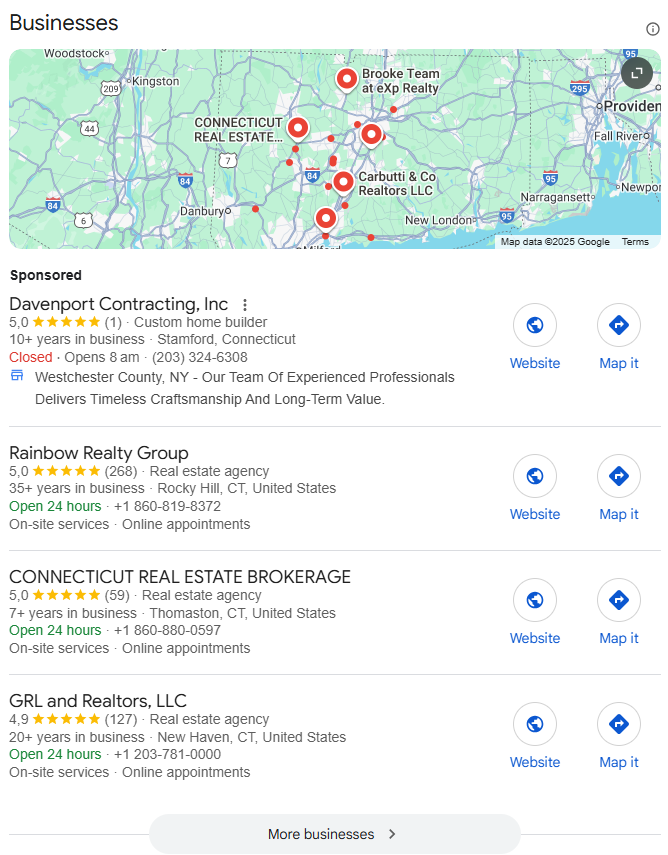
Local seo vs. traditional seo – differences
Local SEO and traditional SEO both aim to get your website noticed, but they target different goals and audiences.
Traditional SEO focuses on broad visibility. It helps your site rank nationally or even globally. Keywords are general, like “real estate tips” or “how to buy a home.” Your audience can be anywhere.
Local SEO, on the other hand, is all about your neighborhood. It targets people searching for services near them. Keywords include city names, neighborhoods, or phrases like “homes for sale near me.” Google shows these results in local packs, maps, and neighborhood listings.
The strategies differ too. Standard SEO leans heavily on content, backlinks, and site authority. Local SEO focuses on Google Business Profile optimization, reviews, and local citations.
Results also show up differently. Traditional SEO grows organic traffic over time from anywhere. Local SEO drives nearby leads fast—the people most likely to call, email, or visit your office.
Here’s a clear side-by-side comparison of local SEO and standard SEO:
| Feature/aspect | Local SEO | Traditional SEO |
|---|---|---|
| Goal | To attract clients in your local area | To gain broad, national/global visibility |
| Target audience | People near your business | Anyone searching online |
| Keywords | Neighborhood, city, “near me” queries | General topics, broad phrases |
| Google features | Local Pack, Maps, Google Business Profile | Organic search results, featured snippets |
| Main strategy | Optimizing Google Business Profile, local citations, reviews | Content creation, backlinks, site authority |
| Traffic type | High-intent, local leads | Broader traffic |
| Results timeline | Fast, immediate leads | Slower, long-term growth |
| Best for | Real estate agents, local services | Blogs, national brands, e-commerce |
Why local SEO for real estate agents is important
Local SEO matters for real estate agents and brokers because it helps you reach people ready to transact nearby. If your business isn’t visible locally, those clients will find your competitors instead. Main reasons to capture local search traffic are:
Attracting high-intent leads
When people search “homes for sale near me” or “real estate agent in [city],” they aren’t just browsing. They want to buy or sell now. Improving real estate SEO in your area puts your name in front of them first. The more visible you are in local search results, the higher the chance they’ll contact you.
Compared to general online traffic, these leads are more qualified. Local real estate SEO fills your pipeline with clients who are actually ready to make a move.
Standing out in your community
Being visible in local search results makes you the agent people recognize and trust. Think of it like being the friendly face everyone nods to at the local coffee shop. Your online presence mirrors that familiarity.
Optimizing for local search puts your agency on the map—literally. Appearing in Google’s Local Pack or Maps makes your business look credible and easy to reach.
Building trust
Local SEO relies on positive reviews and consistent business info across directories. They show professionalism and prevent confusion. It’s an easy way to boost client confidence before the first conversation.
29% of consumers always read online reviews when browsing for local businesses. 42% do it regularly, according to BrightLocal.
Getting fast results
While national SEO can take months to show impact, local SEO often brings qualified leads quickly. A well-optimized GBP can attract nearby clients almost immediately.
In real estate, timing is everything. Buyers and sellers often act quickly when they spot the right property or agent. Local SEO ensures you show up exactly when and where they’re searching.
Maximizing mobile and voice search
With the increasing use of smartphones and voice assistants, your listings should be easy to find on any device. When someone says, “Find a real estate agent near me,” a well-optimized profile can put you at the top. That’s a huge advantage over competitors who ignore this growing search trend.
NAR (National Association of Realtors) reports that 69% of homebuyers used a phone or tablet to search for a home.
15 steps to master local SEO for real estate agents, brokers, and realtors
Many local SEO tactics overlap with standard SEO—like using the right keywords and creating useful content. The difference? As a real estate professional, you need to double down on location. That means putting extra focus on your Google Business Profile, consistent NAP data, and reviews.
See what levers make local SEO work for real estate brokers, agents, and realtors.
1. Audit your website and analyze the competition
Your real estate website is often the hub of your marketing. You need to know exactly how it performs before making any changes. An SEO audit gives you the baseline. It shows what’s working, what’s broken, and where you can grow. Skipping this step is like selling a house without checking the foundation.
Look at your site structure, titles, meta descriptions, and headings. Check if your content answers real questions buyers and sellers ask. Make sure your pages are user-friendly and guide visitors to contact you. Use tools like Google Analytics or Search Console to spot performance gaps. These quick wins can improve your visibility almost immediately.
Next, turn your eyes to the competition. If other agents show up above you for “homes for sale in [city],” pay attention. Google is telling you that their content checks more boxes than yours. Study their listings, site content, and Google Business Profiles. Then use that intel to refine your own local SEO strategy. The goal isn’t to copy but to learn what works, improve on it, and claim those top spots for yourself.
2. Do your keyword research and grab the long tail
Keywords decide who finds you online. The mistake most agents make is chasing broad terms like “real estate” or “homes.” Those searches are too vague. People typing them in are often just curious, not ready to call an agent. Capturing this kind of traffic early in the buyer’s journey is still valuable, but it doesn’t lead to immediate conversions.
The real opportunity is in long-tail, hyperlocal searches. Think “3-bedroom house in North Burbank” or “condos for sale near Downtown Dallas.” These searchers know what they want and are closer to making a move.
Backlinko estimates a whopping 91.8% of Google searches are long-tail phrases.
Type queries like “homes for sale [city]” into Google. Scroll to the bottom of the search engine results page and check the “related searches.” Those are real phrases your clients are using. Collect them and expand your list by researching extra terms and their search volumes.
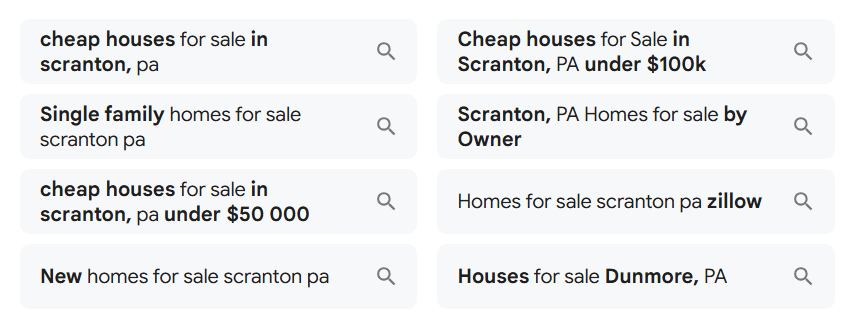
Don’t ignore small numbers. Ten searches a month might not look exciting, but ranking for 100 of these low-competition keywords adds up fast. That’s how you build steady, targeted traffic. And the best part? Every single one of those clicks comes from someone looking for homes in your area—not random browsers.
Tool tip: Use free tools like Google Keyword Planner, Keywords Everywhere, or SpyFu. They help you find more long-tail keywords and check how competitive they are.
3. Optimize your website for local rankings
Local SEO starts on your own website. Each page should clearly show where you operate:
- Include your city or region in meta tags to make it obvious to Google and users.
- Use local keywords in your headings (H1, H2, H3) to reinforce relevance.
- Make your contact information (NAP – Name, Address, Phone) visible on every page, including landing pages.
- Embed a Google Map to show your office location.
- Add LocalBusiness schema markup using schema.org.
- Consider dedicated location pages if you serve various neighborhoods or cities.
- Publish local content such as blogs, guides, and news from your region (more on this below).
Expert tip: Ensure every location page has unique content specific to that area. Copying the same text across pages can trigger duplicate content penalties.
4. Create localized content
The real estate industry has a reputation for producing some fairly lame content. That’s why standout marketing examples are hard to find. But, it doesn’t have to be that way.
Creating relevant content that educates, informs, and engages consumers is a must. Any business looking to survive in the decades to come will need to meet this standard. Clients are in the driver’s seat and have grown to expect value-added experiences.

You should also consider looking at what some of your competitors are doing in the space. It can be a source of inspiration and give you insight into what types of content are resonating with similar audiences.
Tool tip: Use BuzzSumo to see which content performs best for your competitors.
Localized content signals to Google that your site is relevant in specific areas and positions you as a local authority. You have various formats, for example, articles, infographics, videos, or interactive maps. You can use them to publish:
- Neighborhood guides: Highlight schools, amenities, parks, and lifestyle.
- Market updates: Share monthly or quarterly stats for your city or region.
- Local news and events: Blog about events, new developments, or zoning changes.
- How-to guides: Offer advice specific to your area.
- Virtual tours: Walk through neighborhoods or listings.
- Client success stories or case studies: Analyze transactions in specific areas.
5. Complete your Google Business Profile
Your Google Business Profile is one of the most powerful tools for local search visibility. It often appears before your website in search results, making it a critical first impression for buyers and sellers. Optimizing it should be a top priority in any local SEO strategy.
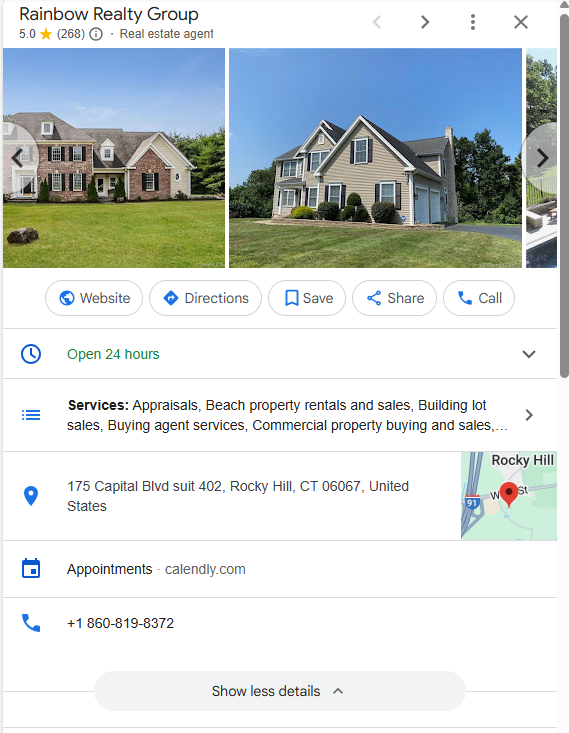
Discover how to optimize your GBP step by step:
- Claim and verify your listing. Use fast, reliable methods like phone or video verification. Avoid postal verification—it slows things down.
- Include your business name, address, and phone number. Add your real estate website, business hours, and relevant categories. Consistent info helps Google trust your business listing and boosts local search rankings.
- Add high-quality photos of your office, team, and properties. Visuals attract attention and make your profile more engaging.
- Publish regular posts about new listings and events. Regular updates signal to Google and potential clients that your business is active.
- Track your profile’s performance. Check views, clicks to your website, and map interactions. These insights tell you what’s working and where to focus next.
- Keep your profile updated. Adjust hours, contact info, or service offerings whenever something changes. A fresh, accurate profile builds trust and avoids frustrating potential clients.
- Consider individual practitioner listings if your team members want personal profiles. These can improve visibility for your real estate agents. Manage the profiles carefully to avoid conflicts with the main office listing.
- Engage with reviews. Respond to both positive and negative feedback. Thank happy clients and address concerns promptly. This demonstrates professionalism and builds credibility (more below).
According to Google, customers are 2.7 times more likely to view a company as reputable if it has a complete GBP. They’re also 70% more likely to visit and 50% more likely to consider buying from that business.
6. Manage and grow your reviews
In real estate, trust drives every decision, and nothing builds it faster than seeing real clients share their experiences. A strong collection of positive reviews wins over buyers and sellers. It also signals to Google that your business deserves higher visibility.
You should make review requests part of your closing process. As soon as a deal wraps up, send a simple, direct request. Don’t overthink it. A short text or email with a direct link to your GBP works best.
Ask everyone—not just the happiest clients. Google cracks down on “review gating,” and if you cherry-pick who gets asked, it can hurt your credibility.
Don’t stop with one ask either. Use your email newsletter or even your social channels to remind past clients to share their feedback. People are busy, and a friendly nudge often makes the difference.
BrightLocal found that 96% of consumers are willing to leave your business a review.
Once reviews start rolling in, treat them like gold. Respond to every single one. A quick thank-you shows happy clients you value their effort. With negative feedback, stay calm, professional, and solution-oriented. A thoughtful reply can turn a critic into an advocate. It shows future clients you handle challenges with grace.
Remember about consistency. Make review management a routine, not a one-time push. Check your profile weekly, reply promptly, and keep the momentum going. Over time, the volume and quality of your reviews will snowball.
As a result, reviews spark trust and turn curious browsers into real leads, pushing your business higher on Google.
According to BrightLocal, 83% of consumers use Google for reading business reviews. 89% expect companies to respond to all types of opinions.

7. Build local citations
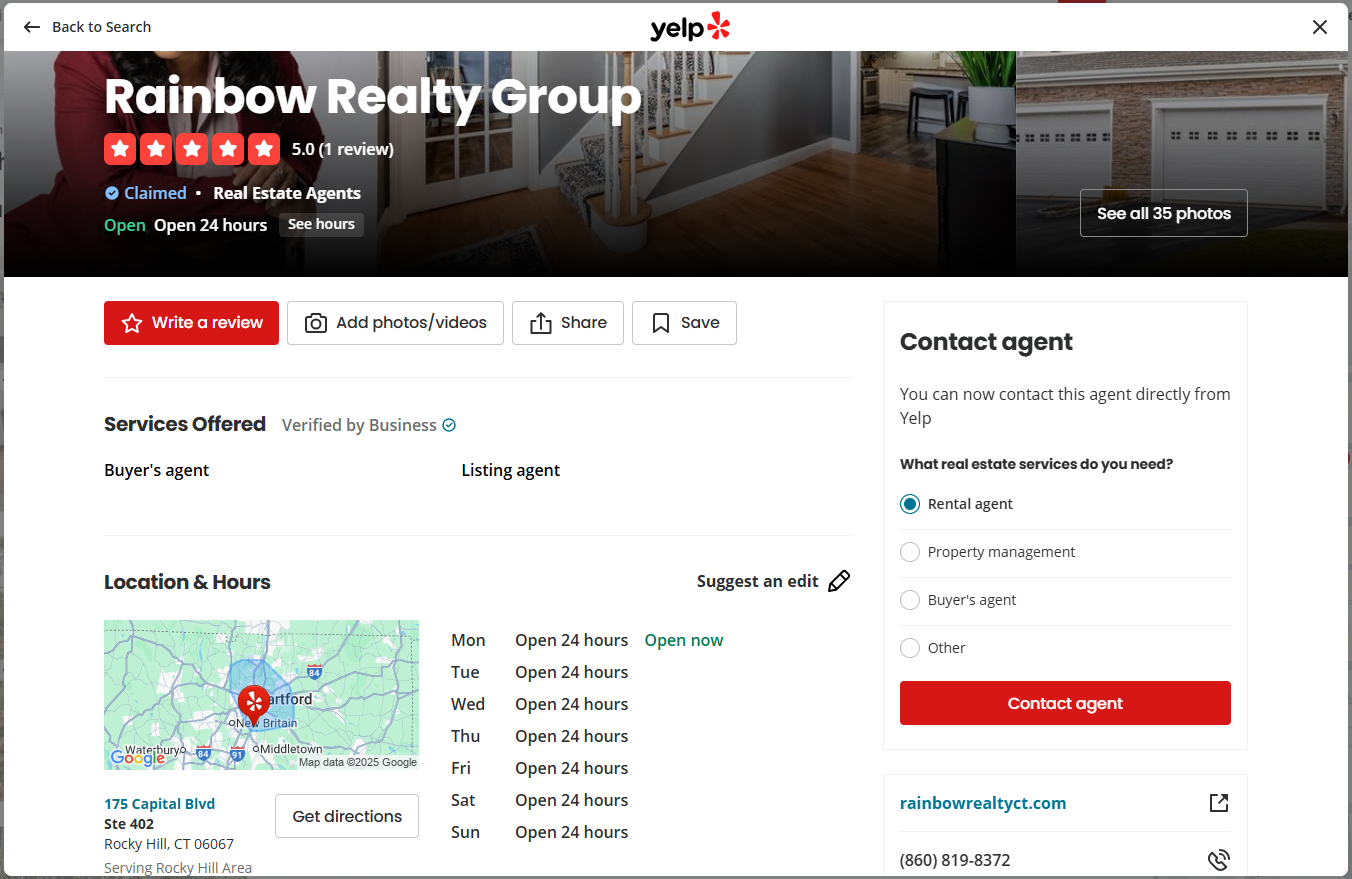
Local citations are online mentions of your NAP information. They appear on local business directories like Zillow, Realtor.com, and Yelp. You can also include them in blogs, news articles, and social media posts.
They guide potential clients to your business. The more accurate and consistent your citations, the more search engines trust you. That improves your local search rankings.
How to get it right:
- List your real estate business on major platforms where buyers and sellers search first. Think about GBP, Zillow, Realtor.com, and Yelp.
- Audit your existing citations regularly. Tools like Moz Local and BrightLocal scan listings and flag inconsistencies before they hurt rankings.
- Focus on high-impact directories first. Having 100 listings with errors is worse than a few perfect, authoritative ones.
- Encourage clients to leave feedback on these platforms. As you already know, positive reviews amplify credibility and drive more traffic.
Expert tip: You can check the current list of top citation sites for the real estate market on BrightLocal’s website.
8. Maintain NAP consistency
Your business name, address, and phone number must match exactly across every platform. Even minor variations can confuse search engines and irritate potential clients.
That’s why you should follow NAP best practices:
- Double-check every listing: website, directories, social profiles, and maps.
- Update immediately when your office moves, your phone number changes, or hours shift.
- Maintain a master record of your business info to prevent errors creeping in.
- Perform regular audits to prevent small mistakes from turning into lost leads.
Tool tip: Use spreadsheets or dedicated tools like Yext to track NAP info. Automated alerts can notify you when mismatches appear.
9. Get valuable local backlinks
Backlinks aren’t just a general SEO play. When they come from local sources, they show Google that you are active and trusted in your community. You can get backlinks from local news outlets, neighborhood blogs, or professional associations.
Focus on quality over quantity, for example:
- Sponsor a local sports team.
- Support community events.
- Write guest posts for local blogs.
Offer expert insights on real estate market trends or neighborhood updates. Local media often link back to contributors who add real value.
Stay active in monitoring your link profile. Identify which local sites are referencing you, and look for gaps where you could contribute. Avoid shady practices like buying links or spamming directories. Search engines can penalize such tactics.
Tool tip: Use tools like Ahrefs or Moz to track backlinks. These platforms help you discover new local linking opportunities and check competitor links.
10. Leverage social media for local SEO success
Social media doesn’t directly boost your SEO rankings, but it creates signals that Google notices. A strong, consistent presence across platforms reinforces your brand. It also confirms your NAP information. Treat your social channels as extensions of the website that help Google verify your business’s credibility.
Optimize all your profiles by using the same business name, address, and phone number everywhere. Complete every section—bio, services, contact info—and include local keywords naturally. An optimized profile ensures you show up in real estate searches both on the platform and across Google.
This is also a great space for building social proof. Clients trust recommendations and experiences shared by peers online. Encourage satisfied clients and customers to engage with your content, share posts, and leave feedback. Every interaction signals to search engines that your business is active.
Different social platforms serve different purposes:
- Facebook: A must for local engagement. Google indexes content from public pages, and reviews here can influence clicks even if they don’t directly affect rankings. Local keywords in your posts and profile help you appear in relevant searches.
- Instagram: A real estate Instagram account is great for visual storytelling. Use it to showcase listings, neighborhood highlights, and client success stories. Hashtags and location tags help increase discoverability.
- Pinterest: Powerful for driving web traffic. Pins have long lifespans and can push users to your website directly. Optimize pins with local search terms and property-related descriptions.
- YouTube: Video content ranks in Google search results. You can publish, for example, short property tours, “how-to” videos, or market updates. They will attract buyers and lead them to your website for more details.
- Quora: Answer local real estate questions to prove expertise. Include relevant links when appropriate. Each answer can generate traffic and expose your brand to potential clients searching for guidance.
Remember to post regularly and engage with your followers. Keep an eye on analytics to see which content resonates. If you manage it well, social media can indirectly boost your local SEO by driving traffic, shares, and backlinks.
BrightLocal discovered that 34% of people check local business reviews on YouTube and 31% on Instagram. TikTok and Reddit each attract 20% of users, while 13% look to X (Twitter). These are the go-to platforms beyond Google and Facebook for local feedback.
>> More on real estate social media: 25 Expert Social Media Tips for Real Estate Agents (2025)
11. Publish video content
According to BrightLocal, over one-third of U.S. consumers prefer videos made by businesses. That’s ahead of content from influencers, friends, or even everyday reviewers. This means your own video asset can be the first thing people look for when they’re close to making a decision.
For real estate agents, this opens huge opportunities. You can experiment with different video formats, such as:
- Short property tours
- Market facts and updates
- Neighborhood spotlights
- Quick Q&A clips.
Each of these gives potential clients what they want: a clear picture of who you are and what you offer. The key is to keep videos focused, authentic, and easy to find. Upload them to YouTube, embed them on your site, and share them across social media platforms. YouTube is especially valuable because Google often shows these videos in local search results.
Another trend worth noting is that 31% of consumers also turn to everyday social media users for video reviews or experiences. Platforms like TikTok make this type of content highly visible. While you can’t control what others post, you may encourage satisfied clients to share their stories on video. These organic mentions add trust and can indirectly support your SEO efforts through brand exposure and backlinks.
Video content helps you show up where buyers and sellers are already searching. What’s more:
- It builds trust faster than text alone.
- It drives more traffic.
- It strengthens your visibility in local search results.
For a broker or agent, investing in video is a direct path to staying competitive in local real estate market.
BrightLocal reports that more than 75% of U.S. consumers watch videos when researching local businesses.
12. Adjust your website for mobile
Mobile optimization is one of Google’s local pack ranking factors. In the competitive real estate market, it’s the difference between showing up in search results or getting buried.
In the second quarter of 2025, mobile devices (without tablets) drove 62.54% of all global website traffic. For real estate, that number hits even harder. Many buyers and sellers now search for “agents near me” to quickly find someone on the local market.
Mobile optimization should include:
- Responsive web design: It makes your website adjust automatically to any screen size. That means no awkward zooming, endless scrolling, or clunky navigation. A responsive website keeps your branding consistent. It also ensures clients get the same smooth experience whether they’re on a laptop, tablet, or phone.
- Mobile page speed: A one-second delay can cause prospects to bounce before they even see your listings. Compress images, switch to WebP formats, and use lazy loading so pictures only appear when someone scrolls. These small fixes can have a big impact on user experience and search engine rankings.
- Accelerated mobile pages (AMP): These lightweight versions of your pages load instantly. They’re a smart move if you want to keep mobile users engaged and give your content a boost in visibility.
Tool tip: Use Google PageSpeed Insights or Sitechecker’s Mobile-Friendly Test. They’ll show you if buttons are too small, text is hard to read, or pages are loading too slowly.
13. Apply local schema markup
In technical SEO, people sometimes mix up “structured data” and “schema,” but they aren’t the same. Structured data is any information organized in a standard way so search engines can read it easily. Schema is the specific language—usually from Schema.org—used to label that data and explain what it means.
Done right, schema can unlock rich results. That means showing ratings, prices, or event dates directly in search results.
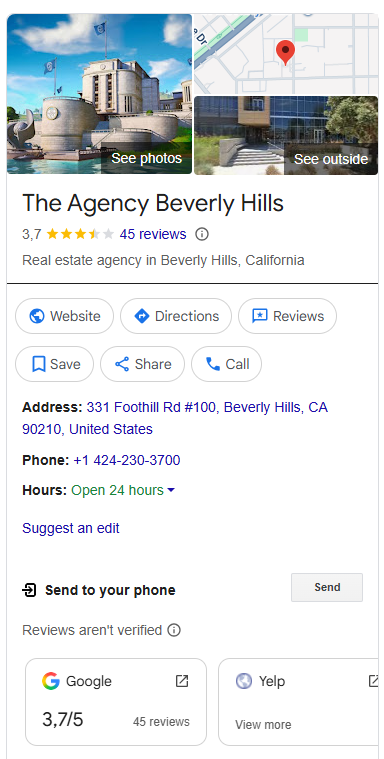
LocalBusiness Schema is a type of structured data tailored for local companies. It highlights key details about your business—name, address, phone number, hours, and services. This helps search engines show your information accurately in local searches.
Why use schema in a local real estate SEO strategy?
- Appear in local searches. Schema makes it easier for Google to understand your business so you show up in maps, local packs, and relevant searches.
- Get rich results. Key info like contact details, ratings, and location can show right in search results, making your listing more noticeable.
- Gain more clicks. When users see important info immediately, they’re more likely to visit your website or contact you.
- Keep info accurate. Schema ensures your details are consistent across search engines and other listings.
- Ensure better accessibility. It helps screen readers show your hours, services, and contact info to users with disabilities.
- Optimize for voice search. Schema helps assistants like Siri or Alexa read your business info correctly (more below).
Tool tip: Generate your LocalBusiness schema quickly using Schema.org or Google’s generator. In the next step, apply it on WordPress, using plugins like Yoast SEO, Rank Math, or Schema Pro.
14. Tune your content for voice search success
Voice search is booming, and local real estate is right at the center of it. Buyers and sellers grab their phones or smart speakers and say things like, “homes for sale near me”. To win those leads, start with FAQs targeting local search queries.
Think about real questions clients ask in person or over the phone. Next, create clear, concise answers on your website. Use natural language—people speak differently than they type. For example, instead of “top properties in downtown,” use “What are the best homes in downtown [city] right now?”
Keep your content local and specific. Mention neighborhoods, schools, landmarks, and even local events. Search engines use these signals to match voice queries with nearby results. Short paragraphs and bullet points help assistants pull the right answer quickly.
Structure your answers so they directly solve a problem. Include exact addresses, open house hours, and contact info. Pair your FAQ content with LocalBusiness schema to increase the chance it shows as a featured snippet or answer box.
Finally, test your setup. Ask voice assistants common local questions and see if your business comes up. Refine your phrasing based on what triggers your site. Doing this ensures that when someone asks for an agent “near me,” your name is the one they hear—and click.
Demandsage reports that 20.5% of people worldwide regularly use voice search. It serves collecting local information, so you should include it in your SEO efforts.
15. Use local SEO tools for analytics
You can’t improve what you don’t measure. In the local real estate market, you need to know exactly what’s working and where to double down.
You will find a lot of valuable metrics among your Google Business Profile insights. Track views, clicks, calls, and requests for directions. Each of these numbers tells a story:
- Which listings grab attention
- Which neighborhoods engage most
- Whether your recent updates are resonating.
Look beyond raw numbers—spot patterns over weeks and months to see what drives actual leads.
Google Analytics is your next weapon. Check which pages draw visitors and how long they stay. Are your neighborhood guides keeping clients engaged? Are property listings converting clicks into inquiries?
Then pair this with Google Search Console, which shows the exact search queries that lead clients to your website. This is where you uncover the hidden local keywords that your competitors might be missing.
For reviews and reputation management, specialized tools give you a clear lens. You can use, for example, BrightLocal, Whitespark, or Yext. Track review trends, star ratings, and even compare your standing against other local agents. Understanding this feedback tells you which real estate services to highlight and where your listings might need a boost.
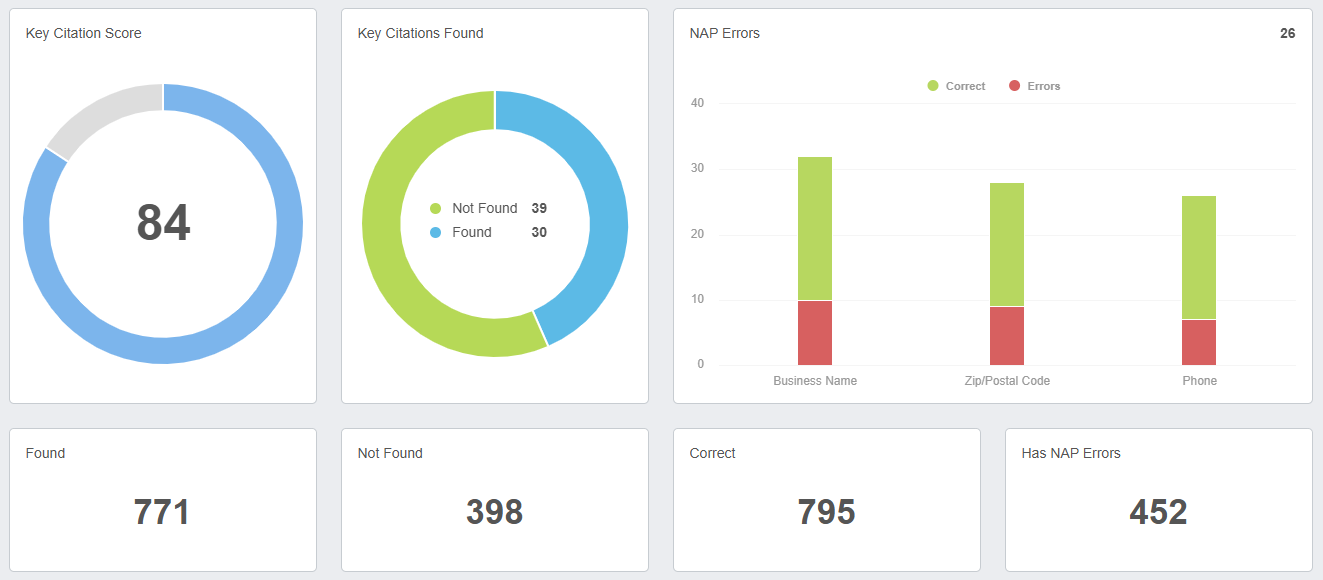
Don’t overlook local rank trackers. Tools like SEMrush, Moz Local, or LocalFalcon let you map your rankings across different ZIP codes or cities. You can see exactly how your optimizations impact visibility in real time. This is particularly powerful for targeting hyper-local searches like “homes near [specific neighborhood].”
Social signals matter too. Engagement on posts aimed at your local community sends positive signals to Google. Platforms like Hootsuite and Sprout Social help you measure likes, shares, comments, and clicks.
Finally, bring it all together with a monthly dashboard. In one view, combine:
- Calls
- Map clicks
- Website visits
- Review trends
- Local rankings.
This makes it easy to spot opportunities, track improvements, and adjust strategies.
Use Placester to boost real estate local SEO
Local search engine optimization takes a lot of work, but you can make it easier with the right tools and strategies. Placester is one of them. It helps you build a mobile-friendly website and get noticed by clients nearby thanks to built-in SEO features. Ready-to-use content and CRM tools let you stay ahead of the competition without extra hassle.
Show Up Where Your Next Clients Are Looking
Explore how cutting-edge AI website builders help agents stay ahead of the competition.

Published on


Take your real estate website to the next level with Placester!
Discover new opportunities and save thousands of dollars every year.